Add plants bees and butterflies love to your yard!
Bees have been a worry to me all summer. They haven’t been feeding on the plants that are usually loaded with bees. Wild geranium, Culver’s Root, chives and a flowering maple they usually are passionate about have been lacking bees.
Bees love bee balm and hyssop, but this year not so many bees.
In August with the blooming hyssop, cone flowers and golden rod the bees are here, but not in the typical numbers for this time of year.
We must do better to make sure our yards have flowers pollinators love and avoid all chemicals. It frightens me that some of the plants we purchase are still laden with heavy chemicals and neonicotinoids. I wonder how all these chemicals are going to affect human health? How is neonicotinoid farm run-off going to affect aquatic life?
MINNEAPOLIS TAKES ACTION TO PROTECT POLLINATORS AS A POLLINATOR-FRIENDLY CITY
The City of Minneapolis urges all Minneapolis property owners, residents, businesses, institutions and neighborhoods to become more pollinator friendly by adopting practices including:
Committing to not use pesticides, including insecticides that stay in the plant, on their properties.
Avoiding planting flowering plants that are treated with insecticides that stay in the plant.
Discontinuing the sale of pesticides and plants that are treated with insecticides that stay in the plant.
Planting more pollinator forage on their property and using organic or chemical-free lawn and landscaping practices.
Wow, who doesn’t love June? The weather is perfect, and everyday brings new budding/blooming flowers, birds and butterflies. The red-eyed vireo, song sparrow, and least fly-catcher sing constantly in our yard. Painted lady, northern-crescent, and tiger swallowtail butterflies add to the beauty of the days.
Northern-crescent in a Daisy Fleabane
The best plants are those that pollinators frequent. The bees and the hummingbirds love
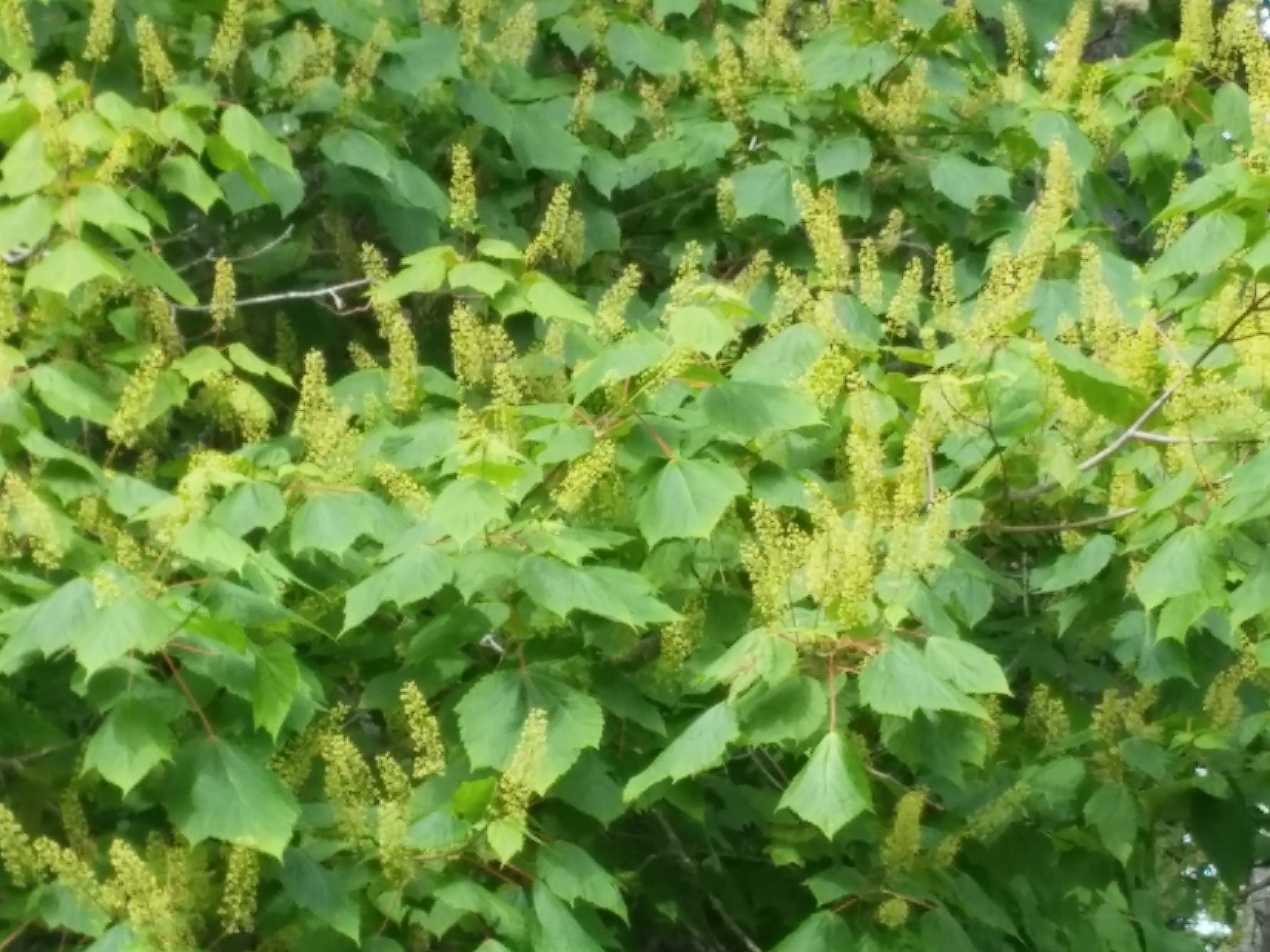
Bees buzz on the flowering candlesticks of this maple
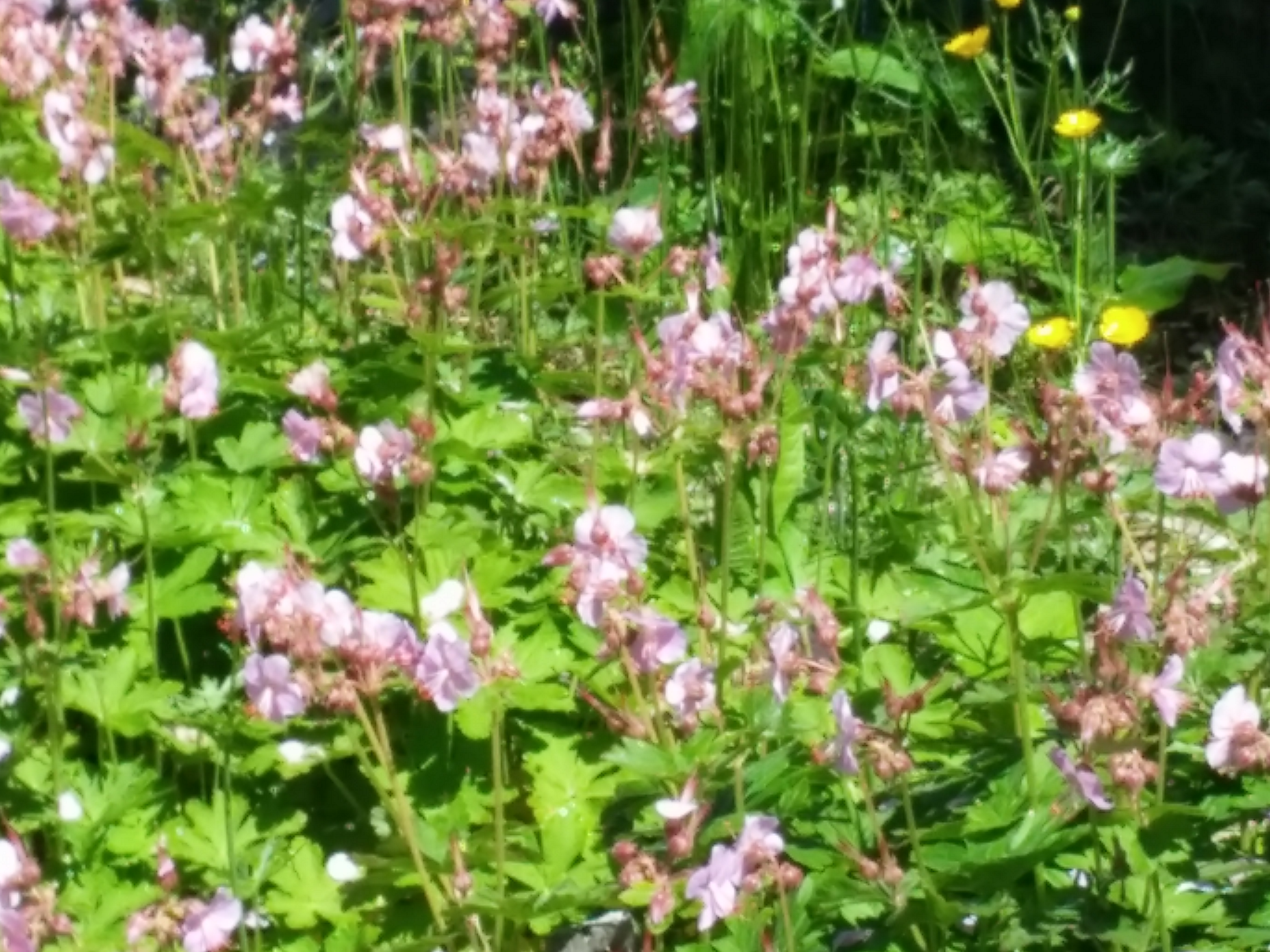
the wild geranium, and the flowering maple is a favorite for bees and many birds.
The dominant roadside flowers are daisies, lupine, hawkweed and buttercups that create a beautiful mix designed by nature. Unfortunately, the road crew of my town cut down all these blooming beauties. So much for our butterflies and bees which are now in a struggle to survive. Mowing roadsides in late September would help pollinators and enhance enjoyment for you and me.
“While insects and other animal pollinators may come in small sizes, they play a large partnership role in the production of the food we eat, in the future of our wildlife, and in the health of nearly all flowering plants. A garden without bees, butterflies, beetles, birds and even bats, is a garden devoid of the life-giving relationships that sustain plant reproduction.” http://www.fws.gov/pollinators/
Good suggestions below, and please don’t use chemicals:
Plant a Pollinator Garden.
An excellent book by Heather
Provide a variety of flower colors and shapes to attract different pollinators.
Whenever possible, choose native plants. Native plants will attract more native pollinators and can serve as larval host plants for some species of pollinators.
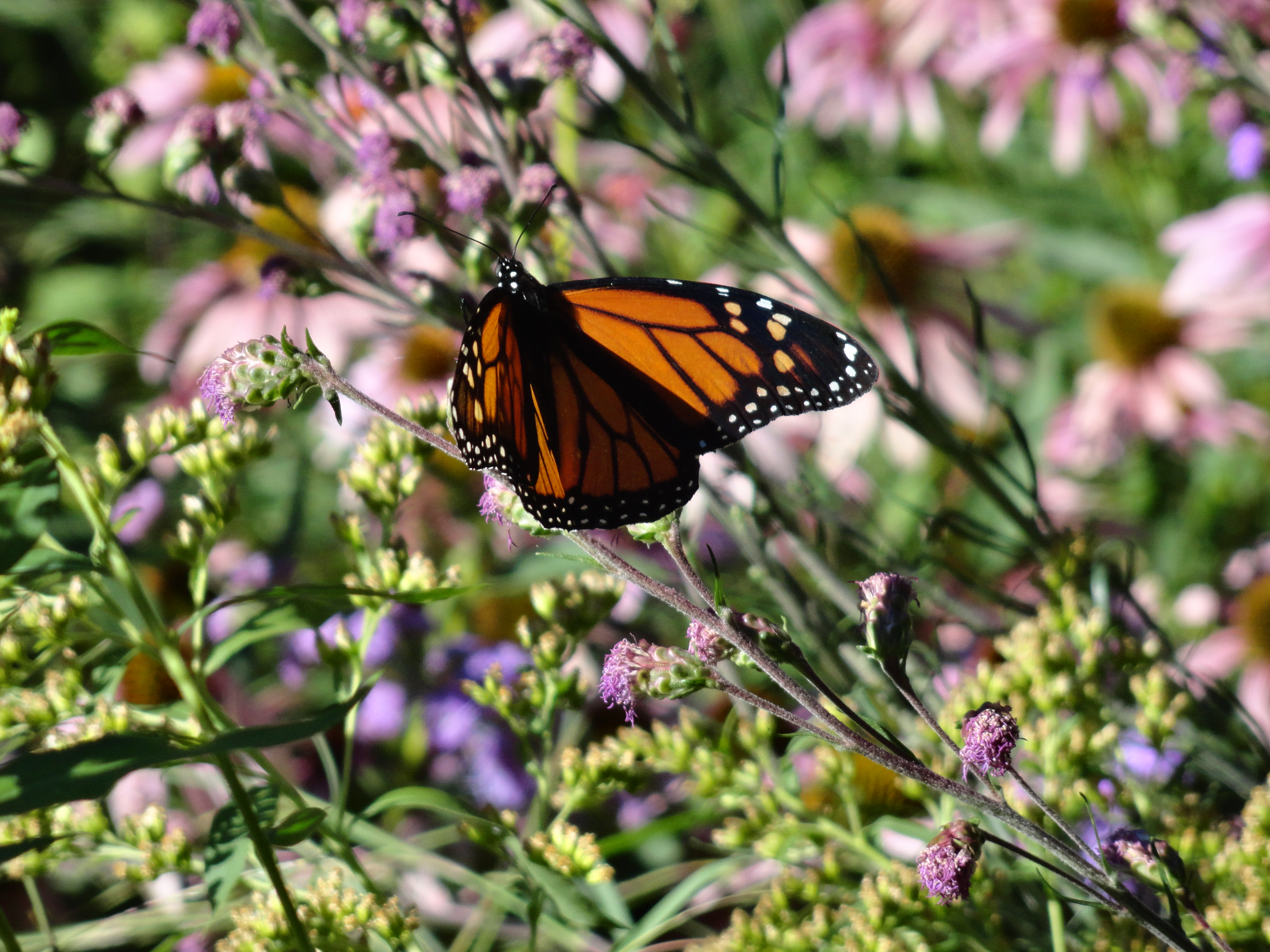
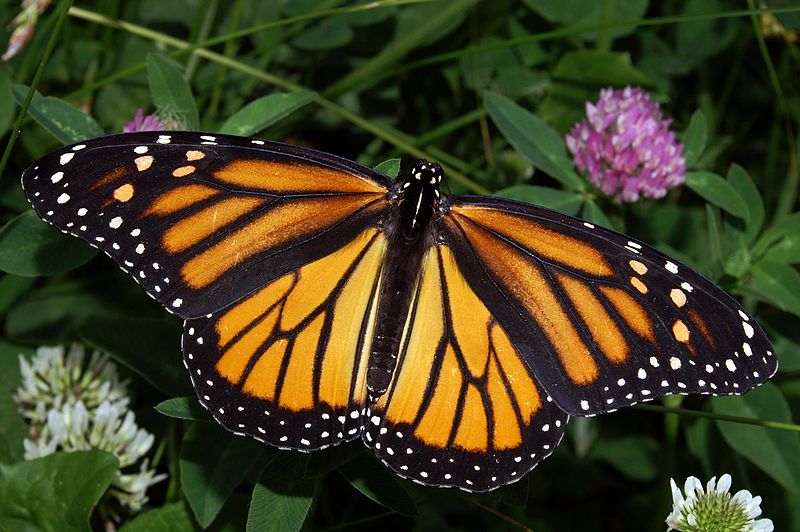
If monarch butterflies live within your area, consider planting milkweed so their caterpillars have food.
Plant in clumps, rather than single plants, to better attract pollinators
Choose plants that flower at different times of the year to provide nectar and pollen sources throughout the growing season http://www.fws.gov/pollinators/
Everyone can plant a flower for National Pollinator Week!
Once again, it is National Pollinator Week and a fantastic time to thank the bees, butterflies, and other pollinators by giving them a hand. There are so many threats to pollinators — pesticides, diseases, habitat loss, and more — that one can be discouraged. But everyone can easily do one thing to help pollinators: plant a beautiful bee-friendly flowering plant.Whether adding bee-friendly perennial wildflowers to frame your front yard, planting a pollinator hedgerow along your farm road, including bee-flowers in your vegetable garden, or just planting a pot with a sunflower on your porch, any effort to increase the number of flowers available for bees can help pollinators and beautify your home or farm. Plus, it is a great joy to watch the bees visit the flowers you plant and to share this wildlife with your friends and neighbors.Here are some places you can go to find information about which plants are best for your area.
Xerces Society fact sheets: Plant lists for all regions of the U.S., including the first of a new series of regional lists. (We’ll be rolling out more new regional plant lists for bees over the coming months.)
Attracting Native Pollinators: Our best-selling book includes page after page of illustrated plant lists, as well as a host of other information about pollinators.
Don’t forget to sign the Pollinator Protection Pledgeand join the ever-expanding community of pollinator enthusiasts — and enjoy yourself as we celebrate pollinators!
Find Out More:
To discover more ways to support pollinators, including ideas for creating a bee garden in your own community, visit our Bring Back the Pollinators webpage.
I am a firm believer in Education, and thank the media for making an issue of the loss of our bees. News today that two major garden stores/growers, Bachmans and Gertens, in the Twin Cities will not use neonicotinoids on their own plants this year. They are also educating their sales force on neonicotinoids. This does not mean all their plants will be neonicotinoids free, because some of their suppliers might still be users. As you shop for garden plants this year, you still need to ask, OR just purchase local native plants. http://findnativeplants.com/ Read the full story: http://www.startribune.com/lifestyle/homegarden/250843241.html
“Neonicotinoids are a class of neuro-active insecticides chemically similar to nicotine. In March 2013, the American Bird Conservancy published a review of 200 studies on neonicotinoids including industry research obtained through the US Freedom of Information Act, calling for a ban on neonicotinoid use as seed treatments because of their toxicity to birds, aquatic invertebrates, and other wildlife. The use of some members of this class has been restricted in some countries due to some evidence of a connection to honey-beecolony collapse disorder.” From Wikopedia
It seems crazy to be talking about pollinators as another Polar Vortex hits Minnesota, but I really liked the below post on “10 things You Can Do To Help Bees.” Also, the thought of flowers makes us happy!! I consider myself a pollinator plant gardener and get enormous joy from the birds, bees, butterflies and other wildlife that love my chemical free plants and yard. Bees are important for the survival of many of our foods and flowers, and the drastic decline of our bees and butterflies can be blamed on many things, but habitat loss from droughts and floods; pesticide use; and the mono culture that has been created with our corn and soybean culture are three of the top concerns. All of us can do better for our bees and butterflies. See what you can do.
What can you do for pollinators?
1. Plant bee-friendly plants. A few of my favorites that bees also love are chives, Anise Hyssop, bee balm (Menardia), golden rod, and asters. Do not purchase plants at Lowes or Home Depot. They may contain hidden pollinator killing chemicals. Find native plants for your area: http://findnativeplants.com/2. Dandelions and clover are good for pollinators and bring many pollinators into your yard. Both bees and monarch butterflies love dandelions!
3. Don’t use chemicals or pesticides on your lawn or garden, and never use the Neonicotinoid pesticide.
“Unless someone like you cares a whole awful lot, nothing is going to get better. It’s not.” – Dr. Seuss
This story breaks my heart. It will be a sadder earth if we lose our Midwest monarchs. The news story below highlights what is harming and happening to the monarch butterflies that we love.
The new farm bill has passed. Does the farm bill do anything to protect our pollinators?*** When I travel through the heartland of the United States, even Kansas and Missouri, I see mostly fields of corn and soybeans which they often irrigate, and require the use heavy herbicides. Wheat production which is better for our earth has become a minor player!! Below a monarch expert offers her ideas.
This is a quote from monarch expert, Karen Oberhauser, of the Universtiy of Minnesota:
The vast majority of monarchs that arrive in Mexico grew up eating milkweed in the United States and Canada, according to Karen Oberhauser, professor at the University of Minnesota who has studied the monarch for more than 30 years, and is a leading scientist on this butterfly. “Numerous lines of evidence demonstrate that the Corn Belt in the US Midwest is the primary source for monarchs hibernating in Mexico,” said Oberhauser. Large part of the monarchs’ reproductive habitat in this region has been lost to changing agricultural practices, namely an explosion in the use of crops that allow post-emergence treatment with herbicides. “These genetically modified crops have resulted in the extermination of milkweed from many agricultural habitats,” added Oberhauser.
What can we all do? Controlling farmers is impossible, but in our yards there are a few things we can do to have a healthier yard.
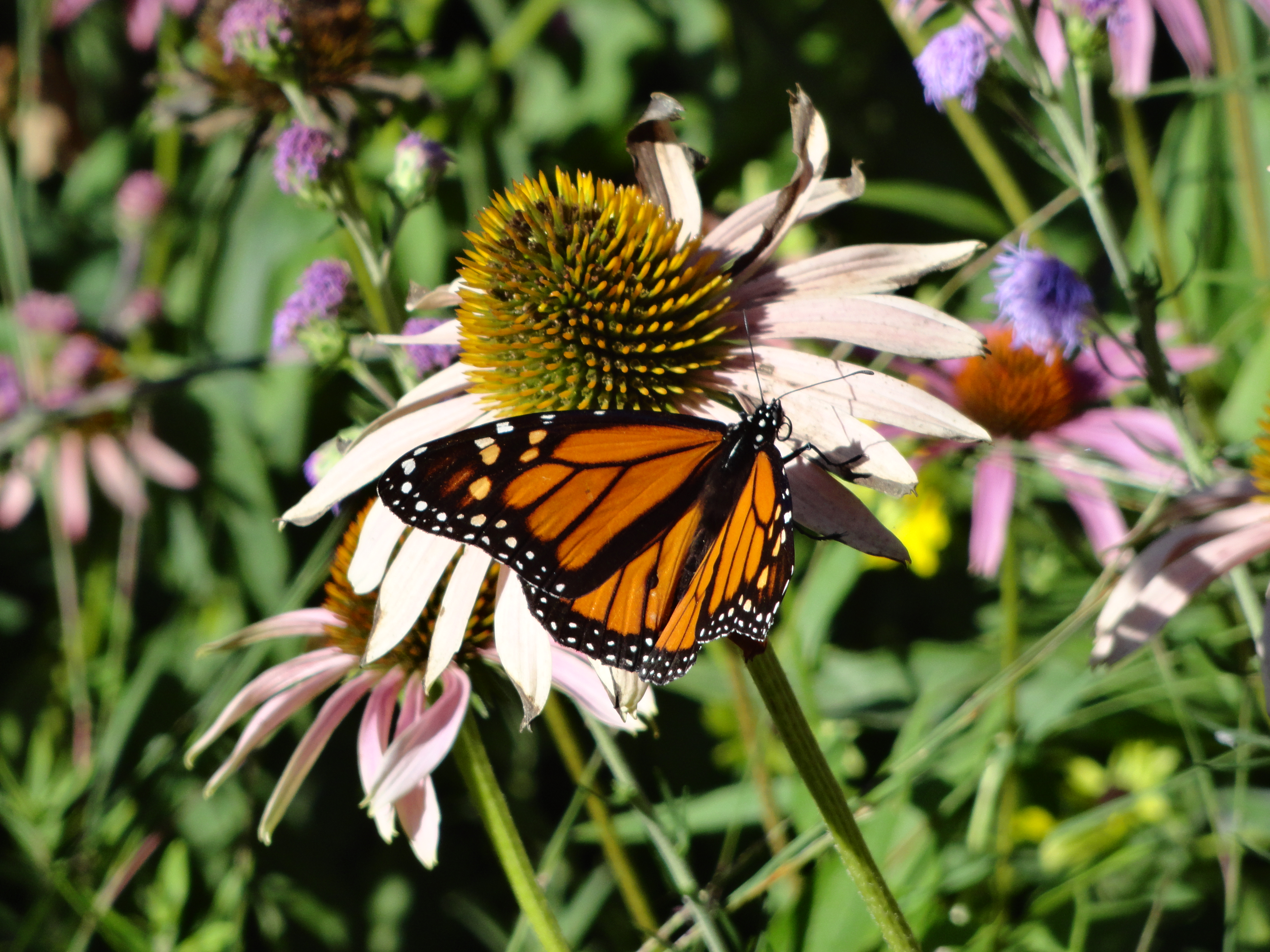
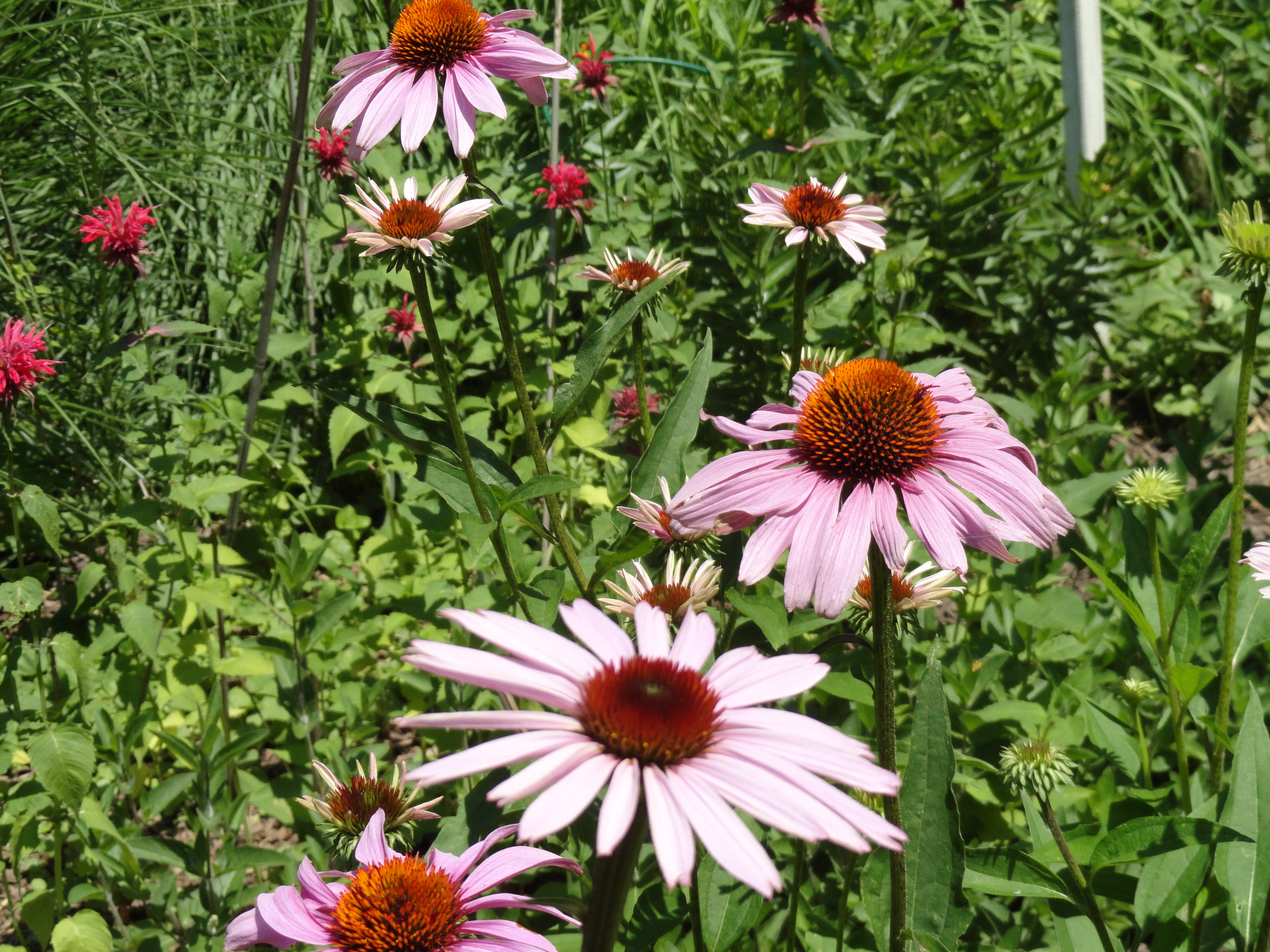
*Reduce your use of chemicals by reducing your lawn just a small amount and plant milkweed, liatris, coneflowers, butterfly weed, and menardia (bee balm) or for shade heart leaf asters or wild geraniums. http://findnativeplants.com/
*Do not support GMO products, but purchase organic products
*Never never use lawn products that contain Neonicotinoids.
*By helping to save butterflies we help all pollinators, AND we help the health of our families. Following is a great article on ways to have a healthy yard: http://www.startribune.com/lifestyle/homegarden/243547751.html
*Join a native plant organization, like Wild Ones, in your area and http://www.xerces.org
***From the Union of Concerned Scientist on the just passed farm bill:
“While the local foods and organic programs fared well in this farm bill, the USDA’s conservation programs didn’t make out as well. With our “healthy farm vision,” UCS advocated for increased funding for programs like the Conservation Stewardship Program, which provide incentives for farmers to prevent water pollution, plant cover crops, and preserve wildlife habitat. Unfortunately, these programs have been cut by $6.1 billion, or 9.5 percent over 10 years. “(The National Sustainable Agriculture Coalition)
Summer is late this year because of a rainy cold spring, and the strength of the sun is needed everyday to warm the air near the big lake. Because of the crisis with bees I am closely watching all pollinator plants. Without a doubt I am see more bees and butterflies in Northern Wisconsin than I observe in Minneapolis
Canada Anemone
Carpets of bunch berries cover the forest floor, wild geraniums, Canada anemone and flowering chives are the first to bloom.
Lupine is not blooming yet along the lake, but dominates the roadsides with the hawkweed, daisies, and buttercup. A magnificent composition!









 Health4earth