
Plastic is everywhere. Plastic breaks down into harmful pieces called microplastics. We consume them when we use plastic water bottles, plastic containers and utensils. Below is an article from Wirecutter on how to avoid plastic. It is excellent.
Our bodies are taking in plastic, and it’s more than nature intended.
1. Cut back on bottled water
Some research indicates plastic bottled water may be a significant source of microplastics. While scientists are still studying just how significant, one study from 2019 of water and other commonly consumed food and drink found it to be the most concentrated source.
There is emerging evidence that on average, bottled water contains more microplastics than tap. (One study published in 2024 suggests that we have underestimated measured concentrations.)
Drinking bottled water in a pinch isn’t the end of the world, but if you have concerns about it, you could always consider carrying a reusable steel or glass bottle or tumbler when out and about.
2. Get an NSF-certified water filter
Switching to tap water from plastic bottled water will likely significantly reduce your routine exposure to plastics. But while the average plastic water bottle contains more microplastics and nanoplastics than tap, research shows that tap water may also be a source of microplastics.
Several of our water filter picks are specifically NSF/American National Standards Institute–certified to reduce microplastics, which means they’ve been rigorously tested in an accredited lab. They’re certified only to reduce since the filters cannot guarantee total elimination. Our picks include under-sink filters, such as the Aquasana AQ-5200, and the Brita Elite.
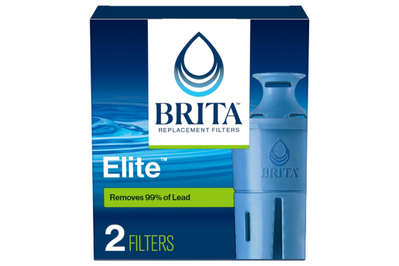
Brita Elite Filter
Yes, it’s ironic that most NSF/ANSI-certified water filters contain plastic. But any microplastic shedding from using the plastic filter is likely to be minimal, as long as you avoid running hot water through the filter and store your water in the fridge, since heat accelerates plastic degradation.
Research suggests that boiling tap water, cooling it, and then filtering it may be especially effective at reducing microplastics, although it’s less practical for most people than simply using a filter.
3. Don’t use plastic to store food
Plastic food storage and packaging is so common that it’s difficult to avoid entirely. But your safest bet is to avoid storing food or liquid in plastic when possible and to minimize exposing any plastic (even those that say they’re BPA-free or microwave-safe) to high heat. Sunlight, acids, and physical erosion can also degrade plastic.
4. Don’t reuse single-use plastics for food and drinks
It’s great to reuse single-use plastic—just not for food. Unless you’re using the plastic in the freezer, save it for something that isn’t food storage or reheating, said Dr. Gillian Goddard, an endocrinologist and author at ParentData, a science-based online resource for parents. That means don’t reuse plastic takeout containers, breastmilk bags, or drink bottles.
5. Don’t microwave in plastic
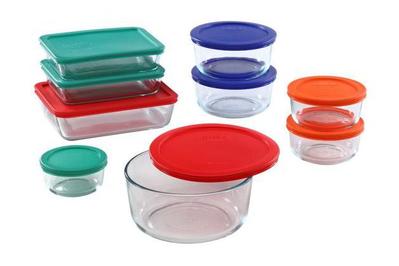
Avoid microwaving or heating food or water in plastic—even if it says it’s microwave-safe, said Tracey Woodruff, director of the Program on Reproductive Health and the Environment at University of California San Francisco. Instead, consider glass or ceramic. The Pyrex Simply Store 18-Piece Set is our pick for the best food storage containers, and they survived our drop tests, stack neatly, and come with user-friendly lids (although you may not want to microwave the plastic lids). Our runner-up, the leakproof Glasslock 18-Piece Container Set, is another great option.
Top pick
6. Wash plastic by hand
Dishwasher temperatures run very hot and can degrade plastic—even dishwasher-safe plastic—and lead to microplastic shedding. Try to wash your plastic food containers by hand.
7. Use wood or bamboo cutting boards
Some research suggests that plastic cutting boards can be a significant source of microplastics in your diet, since repeated cutting on their surface can dislodge particles that adhere to food. Wood cutting boards also have some other advantages: They’re better for your knife blades and last longer than plastic when properly taken care of.
Take special steps for infants and young children
Infants may be exposed to microplastics and nanoplastics in much higher concentrations than adults. Research shows that this exposure may be cause for concern, particularly at critical stages of early development. But much like health risks to adults, it’s important to think of microplastics exposure as just one piece of a child’s overall health.
“I emphasize that before putting much energy and resources into minimizing unknown risks, it is worth attending to reducing the risks we know about,” said Dr. Carlos Lerner, a pediatrician and professor of clinical pediatrics at UCLA Health. He cited following safe sleep recommendations for infants, avoiding secondhand smoke, and practicing good nutrition as examples.
If you want to take a more precautionary approach, avoid using plastic to warm formula or breastmilk. This is the main point of advice from the experts I spoke with, as well as the Cleveland Clinic.
1. Avoid microwaving or heating formula in plastic
Recent evidence shows that polypropylene-bottle-fed babies may swallow very high levels of tiny plastics due to the high temperatures used to sterilize bottles and prepare formula, as well as shaking the bottles to mix. If you want to feed your baby warmed formula and use plastic bottles, consider premixing the formula in a glass container, then cooling it down before transferring it to the feeding bottle.
2. Rinse heat-sterilized plastic bottles before adding formula or breastmilk
If you use heat to sterilize plastic bottles, leave them to cool then rinse them several times before filling them with formula or breastmilk, Lerner suggested.
3. Consider glass or silicone over plastic bottles
If your baby prefers warmed milk or formula, consider heating it in a glass or silicone bottle. (If you don’t use a bottle warmer, we have advice about how to safely do this without one.)
4. Wash hands before eating
For young kids who eat with their hands, try to establish a habit of handwashing before eating, said Woodruff. While handwashing is not always possible, it can help reduce exposure from touching microplastics in dust and soil (and maybe, just maybe, stem the tide of germs).
How worried should you be about microplastics?
Scientists are still studying the exact connections between these teeny tiny pieces of plastic and human health. But it’s clear that exposure to plastic—whether it’s those tiny particles, the chemicals they leach, or a combination—is being linked to a variety of worrying health issues.
Some of those connections still require more research, such as ties to colon cancer, respiratory disease, metabolic function, and disruption to endocrine systems, while others—like a recent study that found those with levels of plastics in their arteries were at a higher risk for heart attacks, strokes, and death—seem a little more clear.
It’s important to remember that these links point to concerns about the impact of microplastics on public health, but they are not specific, predictable outcomes. “What I’m thinking about is population risk, not a risk to a specific individual,” said Goddard.
The tricky thing is that microplastics and nanoplastics are impossible to avoid, no matter how diligent you are: They’re in the air we breathe, our drinking water, and our food. But scientists aren’t sure what levels of microplastics and nanoplastics we’re each taking in from those sources.
The oft-cited estimate that the average person eats a credit card’s worth of plastic every week has been called into question. But our bodies are certainly taking in plastic, and that’s more than nature intended.
Given the growing body of evidence, it’s possible that we’ll start to see more public health measures that address microplastic pollution. Until then, taking care of your overall health is the first line of defense, followed by taking reasonable steps to reduce microplastic exposure.
dHere is the link if you would like to read their recommendations https://www.nytimes.com/wirecutter/reviews/how-to-avoid-eating-microplastics/
Sources
- Tracey Woodruff, director of the Program on Reproductive Health and the Environment at UCSF, phone interview, April 25, 2024
- Gillian Goddard, MD, endocrinologist and adjunct assistant professor at NYU Langone Hospital and author of “Hot Flash” newsletter from ParentData, phone interview, April 26, 2024
- Carlos Lerner, MD, pediatrician at the Children’s Health Center at UCLA and professor and Jack H. Skirball endowed chair in Pediatrics at UCLA, email interview, April 26, 2024
- Hayley Goldbach, MD, board-certified physician and dermatologic surgeon at Brown University, email interview, April 29, 2024

 Health4earth