
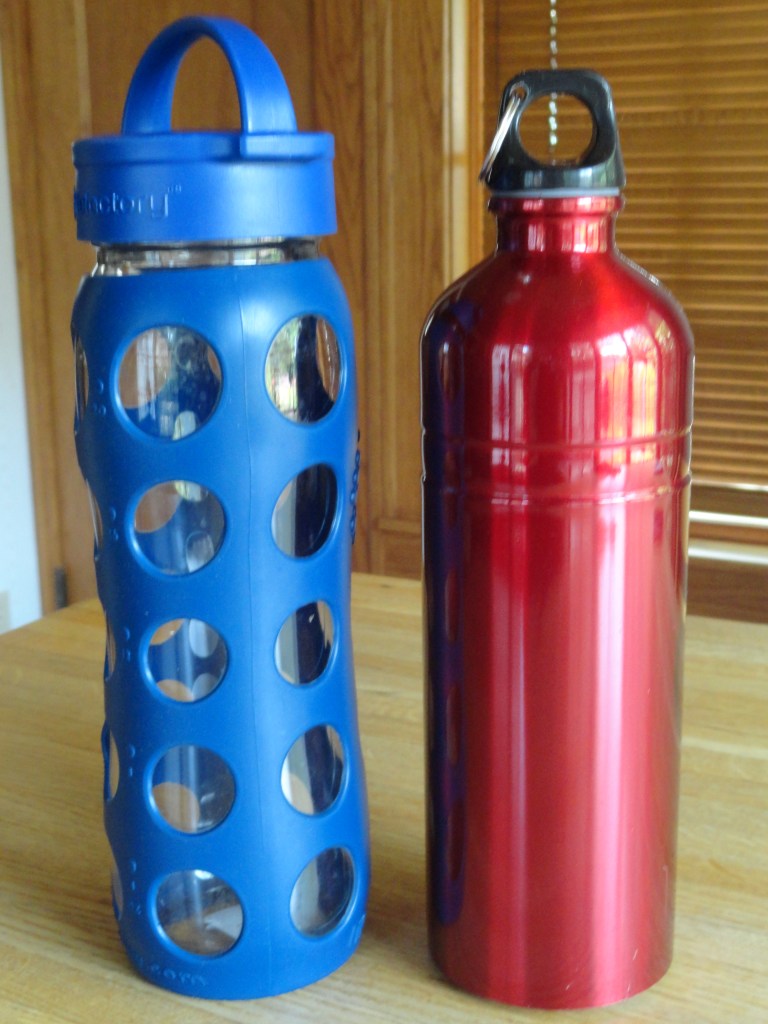
Many reasons to use a non-plastic reusable water bottle.
New studies on plastic start to emerge.
In a trailblazing new study, researchers have discovered bottled water sold in stores can contain 10 to 100 times more bits of plastic than previously estimated — nanoparticles so infinitesimally tiny they cannot be seen under a microscope.

The plastic water bottle industry is booming. Here’s why that’s a huge problem
At 1,000th the average width of a human hair, nanoplastics are so teeny they can migrate through the tissues of the digestive tract or lungs into the bloodstream, distributing potentially harmful synthetic chemicals throughout the body and into cells, experts say.
One liter of water — the equivalent of two standard-size bottled waters — contained an average of 240,000 plastic particles from seven types of plastics, of which 90% were identified as nanoplastics and the rest were microplastics, according to the new study. https://www.cnn.com/2024/01/08/health/bottled-water-nanoplastics-study-wellness/index.html?utm_term=17051508781315d4f59f626ee&utm_source=cnn_Weekly+LBB+Automated&utm_medium=email&bt_ee=uul4Fxg9FZKZA30rzJn08%2BUBxjUR1MOAuPwj1fjq3OFfXysulwJVn0gwksla8rm%2B&bt_ts=1705150878134 Source CNN
And from Consumer Reports:
Another new report finds that 84 out of 85 supermarket foods and fast foods had plastic chemicals in them — including cereal, yogurt and even baby food.1
We shouldn’t be so nonchalant about harmful chemicals in the food we eat, and especially not in the food we serve to babies.
Tell the U.S. Food and Drug Administration: Test for, limit and, wherever possible, eliminate plastic chemical contamination in food.
Among the chemicals found in the food were “plasticizers” like BPA, once found in so many plastic water bottles, and phthalates, a chemical used to make plastic more durable.
Companies have allowed these plasticizers into a dizzying range of food products. But they seem to have forgotten to ask themselves: Should we?
After all, chronic exposure to plasticizers can disrupt the production and regulation of estrogen and other hormones, and potentially increase the risk of birth defects, cancer, diabetes, infertility, neurodevelopmental disorders, obesity and other health problems.2
We can’t keep letting companies get away with this “ask for forgiveness, not permission” approach to harmful substances in our food.
Join PIRG in urging the FDA to help get plastic chemicals out of our food. Add your name
1. Jonathan Stempel, “Consumer Reports finds ‘widespread’ presence of plastics in food,” Reuters, January 4, 2024
 Health4earth