No chemicals needed!Plant for the monarch butterfly
Today my yard is teaming with pollinators. The bees are in abundance, house finch and hummingbirds are loving the fresh blooming plants, and I am thrilled. Butterflies have been slow to appear, but today I had a giant swallowtail, several red admirals, a painted lady, and a monarch!
The Giant Swallowtail Butterfly. Photo credit: Brian Gratwicke
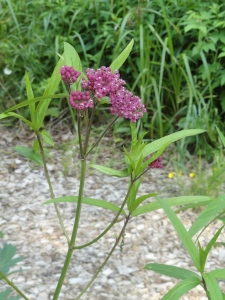
An American ladySwamp milkweed ready for monarch butterflies
Bee balm, cone flowers, and milkweed will bring butterflies, bees and butterflies.
Have you looked carefully at a butterfly? They are some of the most beautiful living species on our planet. The past few years I have loved learning about butterflies. Butterflies often sit so we can see them, and many binoculars make it possible to examine them closely.
Be sure to get outside this summer and look around for butterflies and other wildlife in your backyard. If you see a but aren’t sure about the species, you can consult this handy identification guide. This is from http://ecowatch.com
Here are 10 fascinating facts to consider next time you cross a butterfly’s path:
1. There are more than 17,500 recorded butterfly species around the world, 750 of which can be found in the U.S.
2. Butterflies and moths are part of the class of insects in the order Lepidoptera. Butterflies are flying insects with large scaly wings. Like all insects, they have six jointed legs and three body parts: the head, the thorax and the abdomen. The wings are attached to the thorax and they also have a pair of antennae, compound eyes and an exoskeleton.
3. The Cabbage White, is the most common butterfly in the U.S. Although it appears mostly white with black markings on the top of its wings, underneath those wings are yellowish-green. These butterflies have a wing spread of just about two inches. Males have only one spot on each wing, while females have two. As you probably know, you can find Cabbage Whites in most open spaces, including gardens, roadsides, parks and cities.
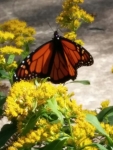
4. Monarch butterflies migrate to get away from the cold. However, they are the only insect that migrates an average of 2,500 miles to find a warmer climate. The iconic North
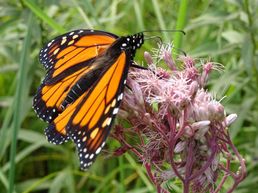
Monarch Butterfly
American Monarch has been greatly affected by extreme weather events, going through drastic dips and spikes in numbers over the past several decades. The overall pattern continues to point downward, with a 95 percent population decline over the last 20 years, but conservation efforts are helping: There were more monarch butterflies migrating in 2015 than there were in 2014.
5. Monarchs are not the only butterfly that migrate. The Painted Lady, American Lady, Red Admiral, Cloudless Sulphur, Skipper, Sachem, Question Mark, Clouded Skipper, Fiery Skipper and Mourning Cloak are among the other butterflies that also migrate, but not as far as the Monarchs.
6. The Common Buckeye Butterflyis one of the most striking butterflies, with its bold multicolored eyespots and thick upper-wing bars, all designed to frighten away any birds that might be tempted to chomp on them. If you look under its wings, you’ll find a more abstract profusion of brown, orange and beige. These insects are pretty common all over North and Central America, although you won’t find them in the Pacific Northwest or in the far north of Canada.
The Common Buckeye Butterfly. Photo credit: Thinkstock
10. The Giant Swallowtail Butterfly, as its name implies, is one of the biggest butterflies, with a wing spread of four to seven inches. The female is once again bigger than the male. It too is found throughout North America and sometimes as far south as South America. These butterflies are called “swallow” because they have long tails on their hind wings that resemble the long, pointed tails of the birds known as swallows.
The Giant Swallowtail Butterfly. Photo credit: Brian Gratwicke
Butterfly Weed is blooming along some interstate highways.
When I see the mowing down native plants pollinators I get angry. My husband and I have just completed a driving loop from Minneapolis to Chicago and back through Iowa. We have traveled Interstate East 94, West Interstate 80 and Interstate 35 North. The entire road trip I surveyed the status of mowing and blooming plants. The shoulders of most of the interstates are not over-mowed, but they are mowing the center median which doesn’t make sense? The best plants can grow in the median if allowed to survive. Some farmers are mowing along the interstates and they do get a little extreme with their mowers. Educating, educating and educating is what we need to continue to do, and it does make a difference. Below is a sample letter I sent to my rural town road crew. I hope you can modify it and send to your local and state government.
Dear local government road crew,
Pollinators, (bees, butterflies and birds) are in trouble in the United States. They have faced serious habitat loss. Last year and the past few years their numbers seemed smaller compared to the years before. Bees and butterflies need the nectar and pollen from flowers for their survival. The Obama Administration is working to plant pollinator plants along our interstate highways to improve bird, bee and butterfly habitat. The plants along the roadways in our town are a natural habitat for birds, butterflies and bees. Now as the daisies, lupine and other wild plants bloom we have beautiful roadways for residents and food for butterflies and bees.
I am writing to ask you to not mow the entire right-a-way along our town roads until maybe late August or even better would be September. I know you need to mow for safety, and that is important. Could you please not mow every flower down until early fall? Maybe mow just a strip along the roads leaving plant food for our pollinators. The bees, butterflies, birds and humans would thank you for the needed nectar, and fabulous summer beauty.
If I can get a commitment from you to mow a little later, I will spread milkweed seeds along the town roads creating more butterfly and bee habitat.
Thank you,
Your name
Wisconsin energy co-ops to create monarch butterfly habitat
Searching for milkweed along our roads and highways!
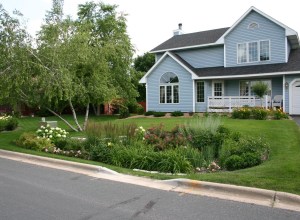
It’s raining this week where I live. How can we use all this water rushing into the storm drains and at the same time improve the quality of the water runs from our roofs, sidewalks, driveways and streets? This water picks up many pollutants as it races to our lakes and rivers. There are things we can do to lessen this pollution such as sweeping our driveways and sidewalks and not using chemicals on our lawns. A good way to clean this polluted run-off is to direct the water into a garden, a rain garden. Today as it rains I can see the water rush into my rain gardens where my deep-rooted plants help clean this water as it drains into the earth below. This past week I have been part of a team that installed two rain gardens. Both gardens captured water that would run into the Mississippi River. We had fun, and were thrilled we helped to “plant for clean water.”
What is a rain garden?
The water that runs off our houses sidewalks, driveways and streets contains pollutants that run directly into our streams and lakes. A rain garden captures this water and the plants in the garden actually purify the water filtering out the pollutants. Like a friend said, “It’s like magic!”
An aspect of climate change is we can go for months without any precipitation then watch out…. inundation, too much rain. Rain gardens are a valuable tool to use and manage the water that falls on our properties. The plants should not need to be watered so we conserve water
Advantages of rain gardens:
1. They conserve water by managing rainfall
This is a narrow ditch for collecting run-off
2. Rain gardens filter out pollutants
3. Blooming plants add beauty to your yard
4. Rain gardens often use native plants that bees, birds and butterflies love.
Simple steps to creating a rain garden:
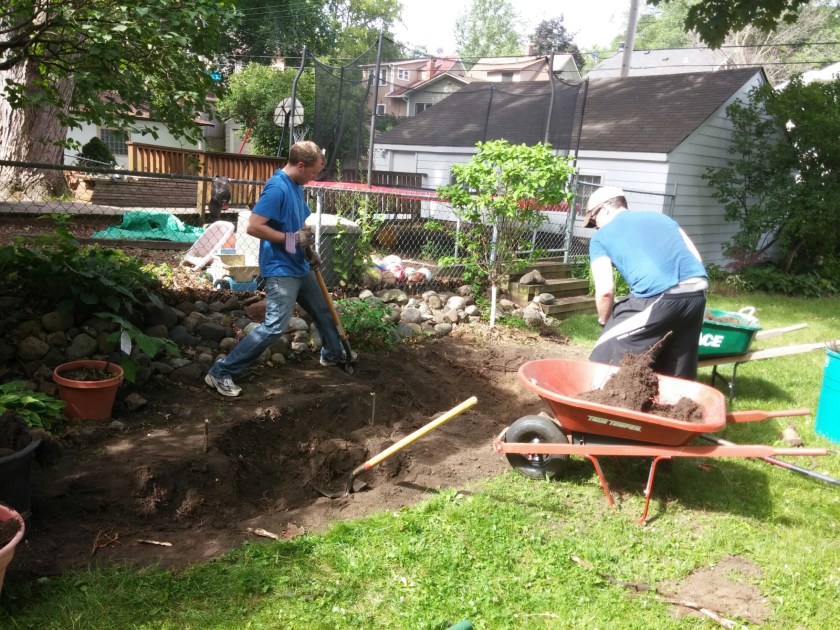
1. Remove the sod and dig a hole. It must be at least 10 feet from your house and where you can direct a drain-spout, driveway or sidewalk to drain rain water. Most rain garden holes are about 12 inches deep with wide 3 feet slanted sides surrounding the garden. The bottom of the garden should be flat.
Digging the hole for the garden
2. Mix in about one inch of compost to the bottom and sides of your new garden
3. Cover the garden with a layer of several inches of double or triple shredded mulch.
Spreading the compost, next add the shredded mulch
4. Plant deep-rooted plants. Most of the plants you love will work matching the degree of sun and shade. Also, always work to have a variety of plants that bloom at different times for the bees and butterflies.The bottom plants need to be water tolerant. Some bottom plants I have used are: liatris, swamp milkweed, turtlehead, Culver’s root, blue flag iris, sensitive fern, cardinal-flower, blue lobelia and many kinds of sedges.
5.. Water–If it is dry, you need to water the new plants for the first couple of months.
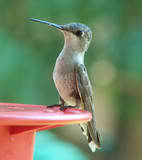
Why are we so fascinated with hummingbirds? Is it their tiny size, incredible energy or maybe it is that we can really observe them close up in comparison to other birds?Hummingbirds love red and bright pink flowers,, and as in this video they will visit absolutely every bloom of a plant they love.
My local newspaper did two stories on hummingbirds this week and I had to share thoughts about these amazing little pollinators. 1. The female raises and feeds the babies all on her own. After June male ruby-throats in the north country, become almost non-existent. 2. Amazing, she builds her nests to expand as her babies grow. Read Val Cunningham’s article and see hummingbird nest pictures here
What can you do to attract hummingbirds to your yard and neighborhood?
1. Put up a feeder, and make your own nectar** 2. Never use chemicals on your plants, and purchase neonicotinoid free plants. 3. Plant colorful flowers like cardinal-flower, and red bee balm.
**From Nature Notes and Jim Gilbert: “Their food consists of nectar and small insects. They will come to sugar-water feeders. I like to use a mixture of one part granulated white sugar dissolved in four parts water to lure them close enough so we can hear the humming sound from their rapid wing beats. Rinse your feeder with water and scrub with a stiff brush to remove any dirt or sticky spots to help halt fermentation and mold growth. Do not add food coloring, some of which is not safe, or honey. Hummers are drawn to colors, so use a feeder made with colorful materials.” Link to the entire article on hummingbirds.
Spring is slow to crawl out of winter next to the big lake, but early June brings hope that warmer weather and summer is coming.
Female American red start
The trees are filled with singing warblers, many are building nests, and a female red start has worked for days pulling threads from last years swamp milkweed stalks for her nest. It’s amazing how hard they work creating their nests!
Forget-me-nots and dandelions are the flowers the bees and butterflies depend on at this time, but the hummingbirds and bees attack each wild geranium flower that starts to bloom. Also, lupine is just beginning to bloom.
Carpets of bunch berries cover the forest floor
An American lady on a dandelion
Butterfly watching is at some of it’s best with the American Lady, Monarchs, tiger swallow-tail, spring azure, and dusty wings. What are your outside joys for June?
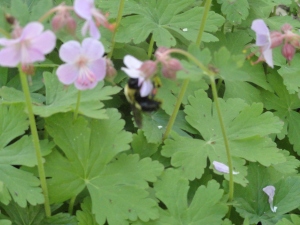
Wild geranium, easy to grow, is loved by bees and butterflies.
How can we help our pollinating wildlife? If everyone added just a few native plants to their yard it would make a big difference to help bees, butterflies, and birds stay healthy. I love spring plants and love the bees, butterflies and birds they bring. Because we don’t use chemicals our yard is pollinator friendly.
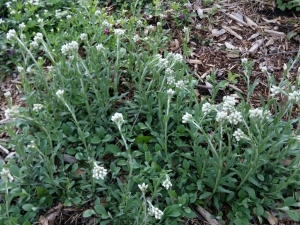
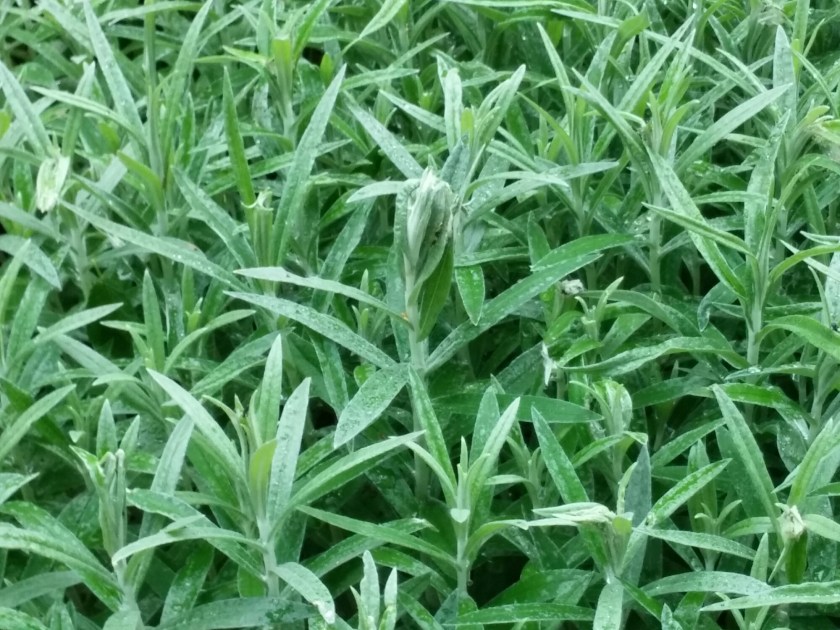
Pussy toes add texture and interest, and are hosts to the American lady butterfly
This time of year we are share and transplant our plants to other people’s gardens. I am thrilled to be able to spread these bee and butterfly magnets to anyone who will love them.
This morning we had chickadees building nests(front and back yards), wrens building nests in two house(they couldn’t decide on one), three bunnies, and a hungry hummingbird. This is an end of May view of some of the best pollinator native plants blooming now in our Minneapolis yard:
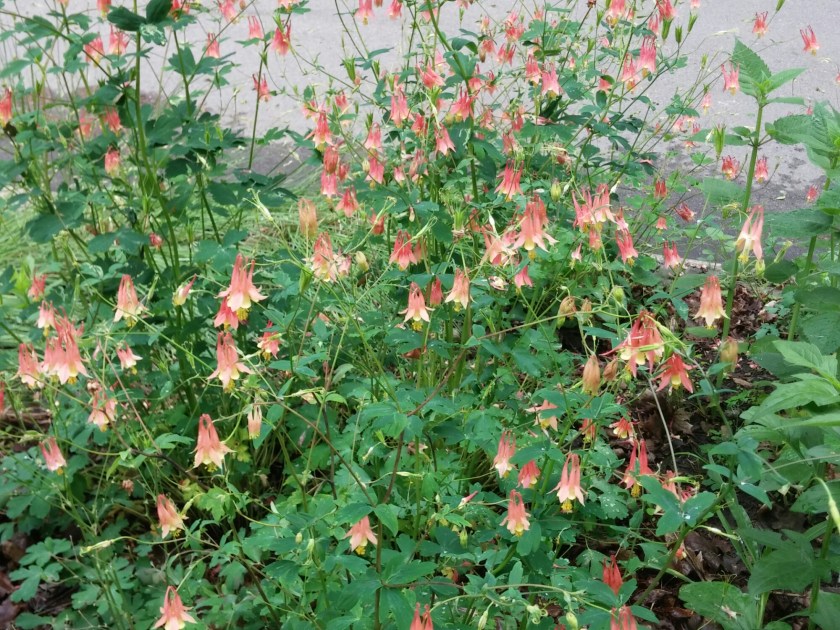
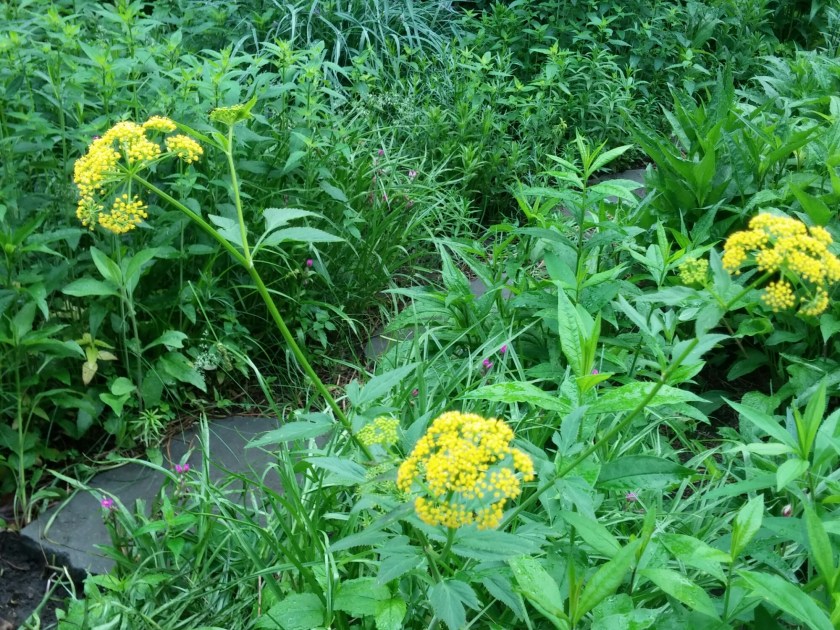
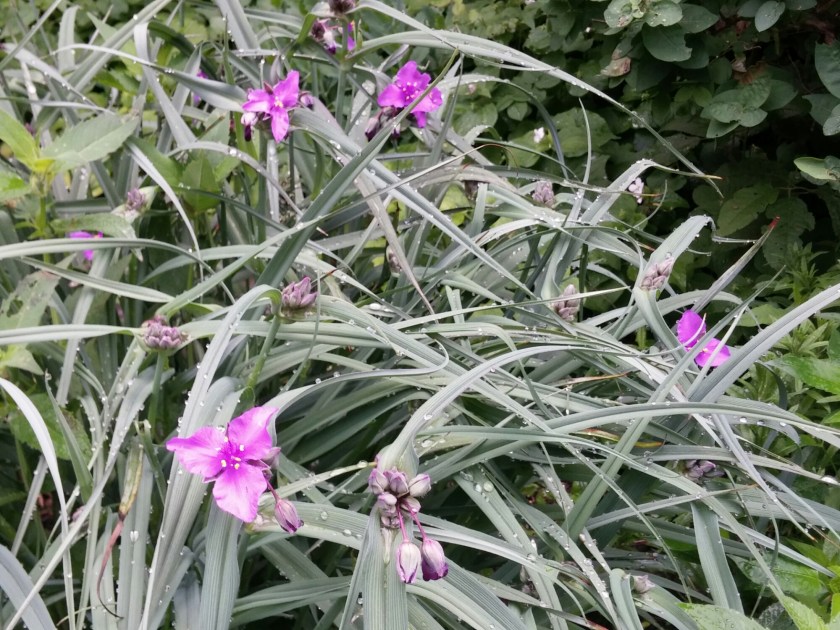
The native columbine is a magnet for bees, butterflies and hummingbirds and people!The golden Alexander is a host to the black swallow tail butterflyBees love the spiderwortThe Painted lady butterflies have laid eggs on these pearly everlasting.
Canada anemone
Violets(hosts for the fritillary butterflies) Virginia waterleaf, and many other groundcover also are blooming
If each of us does a little bit, we can make a BIG difference!
Below is from the Minnesota Pollution control. View on their website here
Turf grass lawns require lots of maintenance—watering, the burning of fossil fuels for mowing and other upkeep, pesticides, and fertilizers—which impact water quality and can contribute to climate change.
Many of the non-native, ornamental plants we plant in our gardens have little value to wildlife. Some of these flowering ornamental plants produce no nectar or pollen for bees or butterflies.
You can play an important role in helping to preserve species and biodiversity in your own yard by landscaping and gardening with native plants. Replacing turf grass and non-native plants with natives—even in small sections of your yard or garden—pays big environmental dividends!
Some of the many benefits of native plants
Planting a variety of native plants increases biodiversity. We need biodiversity—it runs the ecosystem on which we depend.
Native plants provide food and shelter for wildlife. Many insects require a specific host plant to lay their eggs on and the young to feed on (e.g. monarchs and milkweeds). Animals require many different plants throughout their life cycles to remain healthy and robust.
Native plants are adapted to the local climate and soil conditions where they occur naturally. Many native plants have deep roots, and require little to no watering once established. These deep roots decrease erosion and filter stormwater, nutrients, and pollutants that would otherwise end up in our lakes, ponds, wetlands and streams.
Tips to get you started
Learn what you have. This will save you time and energy later on. Learn to distinguish non-native weeds from native plants. Manage the aggressive, perennial invasive plants that will compete with the native plants for space, water and nutrients. Leave or transplant any native plants you might already have in your yard.
Start small. Perhaps you have an area of your lawn or garden that needs a re-do. Areas of lawn where grass doesn’t grow well or that you are tired of mowing are perfect candidates to get you started. Reduce some areas of turf and add a pollinator garden or a raingarden.
Pick the right plants for the right place. Native plants come in a variety of colors, shapes and sizes. Some plants grow well in full sun with sandy soils, others prefer wet soils or shady areas.
Variety is the spice of life. Try to have plants that flower in succession—different plants that bloom from early spring all the way through to the fall. Plant a variety of different types of plants—flowers, grasses, sedges, shrubs and trees. The larger variety of plants you have will support a larger variety of life.
Avoid neonics. Neonicitinoid pesticides are systemic pesticides that are taken up within the plant. There is mounting evidence that neonics are harmful to pollinators and other beneficial insects. To avoid harming beneficial insects, ask the retailer before purchase if plants have been treated with systemic pesticides.
Native landscaping doesn’t have to look “wild.” You may prefer a wild look. If you want a more manicured garden, plant selection is important. You can also utilize mulch, spacing, strips of grass, paths, and attractive fencing for a more formal look.
Support local native plant nurseries and companies. There are many great companies in Minnesota that specialize in growing or managing native plants/invasive plants. They have the expertise to give you some ideas of what plants might work for your situation. Native plant nurseries in your area will have grown local ecotype native plants—ones that came from your region that are adapted to local conditions.
Be okay with bugs!Only a small percentage of insects are pests, and the damage they do is aesthetic and oftentimes tolerable. Insects form the base of the food web. Without insects, there can be no mammals, birds, reptiles, or other forms of “higher” life.
Don’t have a yard? Consider adopting a local park or open space for planting natives. Be sure to ask for permission first. Or support non-profits and other organizations that are doing this type of work.
If each of us does a little bit, we can make a BIG difference!
How can you help our pollinators? Our pollinators are struggling to survive. There are things we can do in our yards to help pollinators. The mono-culture of perfect green turf grass lawns does nothing to help our struggling pollinators.
Blue Salvia are loved by bees. (not native)
I have been on a road trip from Minnesota, through Iowa, Missouri, Kansas, Nebraska, and South Dakota, and have been amazed at the manicured thick turf grass that dominates in parks and lawns. Turf grass has no value for pollinators, and when fertilized adds unhealthy chemicals harmful to pollinators, humans, pets, wildlife and our water bodies. Adding a diversity of fresh new plants and removing some lawn can make a big difference for our pollinators.
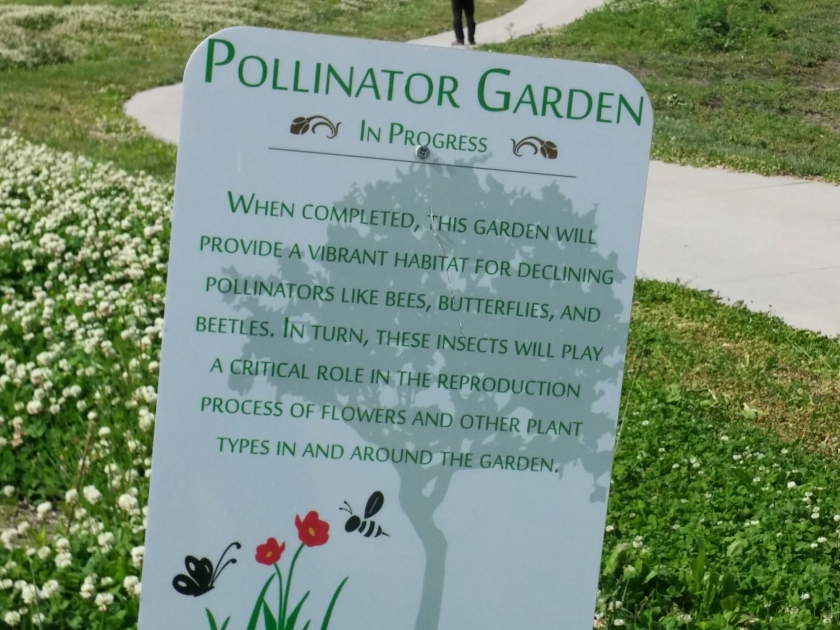
Walking a trail in Lincoln, Nebraska I was thrilled at their efforts to help our pollinators. They are allowing clover and native plants to grow. I even saw a few milkweed popping up.
Just a few changes can make a big difference for pollinators.(bees, butterflies, and birds)
Spring is a fabulous time to add new plants to your yard. A wide diversity of plants helps
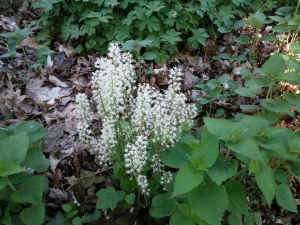
Foam flower is an early blooming plant
our pollinators. Native plants don’t need chemicals so they are the healthiest for you, children, pets, and the pollinators. More garden diversity, and less chemicals creates a win-win for our earth and us all!
Always consider how to add more milkweed. Swamp milkweed has been the most successful for me.Wild geranium, easy to grow, is loved by bees and butterflies and is early blooming
The first Earth Day on April 22, 1970, was a day set aside to think about creating lifestyles to reduce waste and destruction of our environment.
One of the main messages many of us heard that day was that human life can continue on Earth only if people cooperate with nature. Strides have been made over the past 46 years in cleaning up many rivers and lakes, recycling, protecting natural ecosystems, becoming more aware of hazardous materials, and the list goes on. But we have a long way to go if we are to live in a sustainable way in harmony with nature.
There are things to do and things not to do when it comes to being a good steward of our planet, but one of the best may be to take pleasure in the true beauty of the Earth’s ecosystems and its creatures. Too, take time to learn about some of the plants and animals that share the Earth with us. It’s just about impossible to destroy something you understand and love.
Throughout the year, and especially April 22, with the wonders of spring all around us, we should make a point to get out and observe. Every forest, wetland and prairie remnant is full of spring signs — evidence that our Earth is designed as a place for life, no matter what foolish acts people may commit. Jim Gilbert http://www.startribune.com/appreciating-earth-s-beauty-is-one-way-to-steward/376565231/


 The Giant Swallowtail Butterfly. Photo credit: Brian Gratwicke












 Health4earth