Pollinator Week

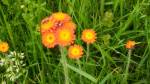
The rudbeckia is just starting to bloom.

Pollinator Week has been a rainy week where I live in Minnesota. I was going to list all the pollinators coming to my yard, but it’s hard to see much activity when it rains hard every day! The rain doesn’t bother hummingbirds, and they are entertaining us at our hummingbird feeder.

Spiderwort, a native plant beauty!

The purpose of Pollinator Week is to heighten everyone’s awareness of how important pollinators are to us all. Our bees, butterflies and birds are having a hard time with loss of habitat and our overuse of chemicals. We use too many harmful chemicals to kill insects and fertilize our lawns and farm fields.

My message to you this pollinator week is reduce your dependence on harmful chemicals that kill pollinators. This includes butterflies and birds. Since 1970 North America has lost 3 billion birds. We can’t keep killing the insects and caterpillars the birds need to raise their young.

Birds and butterflies add so much to the quality of our lives Bees and other pollinators touch our lives every day in ways we may not realize. Imagine a world without most of the foods you love. Without bees we wouldn’t have the abundance of apples, pumpkins, strawberries, blueberries, or almonds that we enjoy. Pollinators even help milk production: the alfalfa and clover cows graze is replenished by seed pollinated by bees. A world without pollinators would not only leave us with fewer food choices, but would make it substantially harder to find the nutrition we need to survive.

Thoughts on creating a pollinator Garden:

  • Provide a variety of flower colors and shapes to attract different pollinators.
  • Whenever possible, choose native plants.  Native plants will attract more native pollinators and can serve as larval host plants for some species of pollinators.
  • If monarch butterflies live within your area, consider planting milkweed so their caterpillars have food.
  • Plant in clumps, rather than single plants, to better attract pollinators
  • Choose plants that flower at different times of the year to provide nectar and pollen sources throughout the growing season http://www.fws.gov/pollinators/

“Of 30 commonly used lawn pesticides, 19 are linked with cancer or carcinogenicity, 13 are linked with birth defects, 21 with reproductive effects, 26 with liver or kidney damage, 15 with neurotoxicity and 11 with disruption of the endocrine (hormonal) system. Of these same pesticides, 17 are detected in ground water, 23 have the ability to leach into drinking water sources, 24 are toxic to fish and other organisms vital to our ecosystem, 11 are toxic to bees, and 16 are toxic to birds.”

Read more here: https://www.beyondpesticides.org/…/factsheets/30enviro.pdf

https://www.epa.gov/pollinator-protection/protecting-monarch-butterflies-pesticides

May be a graphic of text

All reactions:

4444

Butterflies

It’s always exciting when the Monarchs arrive!

Joy, we had our first Monarch butterfly in our yard today!

I was surprised to read this about the Monarch butterflies. See below from Minnesota Public Radio

Everyday concentrate on clean air and never burn wood or put dirty air into the atmosphere. That includes driving less!

This is from Minnesota Public Radio:

People can help by planting both native nectar and host plants, like milkweed, reducing pesticide use and mowing less grass less often.

Monarch butterflies are beginning to return to Minnesota and should start arriving in droves in the next two weeks. But the population returning from Mexico will likely be much smaller than in years past.

This winter, the number of eastern monarch butterflies wintering in Mexico was the smallest researchers had recorded in a decade.

A years-long drought pattern, winter whiplash and warming temperatures are all hurting the vulnerable species and the plants it relies on to survive, according to University of Minnesota Professor Emilie Snell-Rood, who studies monarchs and other pollinators.

The Elegant Mourning Cloak

Mourning Cloak, often the first butterfly to appear

March 14, is National Learn About Butterflies Day. Have you seen a butterfly yet? A perfect reason to go for a walk, to look for butterflies. On sunny March days it is possible to see Mourning Cloaks even in northern North America and southern Canada.
The Mourning Cloak is often the first to appear and lives in most of North America. This large ( 3-4 inch wingspan)) elegant velvety butterfly is a real treasure. They often overwinter hidden in bark or woodpiles. Tree sap is their food source, and willows, elms, birch and aspens are hosts for their caterpillars. Mourning Cloaks often live longer than other butterflies with a life span of 10 to 11 months, and even after sleeping all winter they are beautiful. Let me know if you spot one.

Reading and watching list:

Butterfly: A Life | National Geographic – Bing video

How to Attract Butterflies (joyfulbutterfly.com) 

National Learn About Butterflies Day – Things Everyone Should Know (nationaldaystoday.com)

10 Fascinating Facts About Butterflies (thoughtco.com)  

10 Tips for Attracting Butterflies to Your Backyard (thoughtco.com)

A Magical Time on Lake Superior

swallow tail butterfly
Swallowtail butterfly

June can be the best time of the year for pollinators. In northern Wisconsin and Minnesota it is an awesome time for seeing bees, and butterflies! Within two minutes I observed monarchs, swallowtails, sulphurs, northern crescents, painted ladies, dragon flies, and many skippers and bees on a small patch of hawkweed and daisies.

Hawkweed
Orange Hawkweed

Everyone comments about the beautiful lupine near Lake Superior, and it is beautiful to human eyes. If you look closely, very few butterflies and bees crave lupine like they crave Canadian anemone, blooming chives, wild geraniums, blooming trees, forget-me-nots or daisies. The blooming plant that has surprised me the most this year is the orange hawkweed. It is not a native plant, but the butterflies love it.

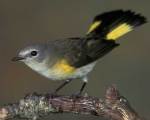
Female American Redstart

It’s not the best time of the year to see birds, but if you can recognize their songs they bring constant musical joy. The song sparrow, chestnut sided warbler, and a pair of red starts joyfully sing all day.

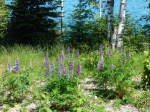
Lupine on Lake Superior

As long as the sun shines the birds, bees and butterflies seem oblivious to the battle taking place on the big lake. The cold lake ties to dominate the warm tropical winds from the south, and the temperature can fluctuate from 60 degrees to 80 degrees every few minutes. It’s fascinating and refreshing!
The days are long in these northern climes with the sun setting past 9pm and twilight lasting beyond 10pm. No matter where you live get outside and enjoy the marvelous butterflies of summer, in a few weeks they will be gone!

National Pollinator Week

What can you do to help our birds, bees and butterflies?  Can you plant some milkweed or other native plants? Can you become aware and reduce the chemicals you use? Can you learn about neonicotinoids and be sure you never purchase plants that have been treated with them? For your information, neonicotinoids have recently been banned from use by the European Union.

Yesterday I had a mourning cloak, a painted lady, a red admiral, hummingbirds, and monarch caterpillars in my yard.  Milkweed and native plants make a big difference for pollinators. I am not a fan of lists because experience is better, but here are some native plant lists to get you started: https://www.nwf.org/NativePlantFinder/About  and from Audubon

Planting purple cone flowers, bee balm, black-eyed Susan and milkweed are easy ways to get started. After years of trying to get milkweed to grow, I now have swamp milkweed everywhere. It has reseeded itself and thrives in my yard. Also, common milkweed and butterfly weed have sprouted up, but only a few monarch butterflies. The few monarch butterflies have a big job ahead of them, and I am still hopeful we can get their numbers to improve! If everyone does a small part, it can make a big difference!

Below is a video from PBS about monarch caterpillars, enjoy!


Enjoy the Butterfly Explosion

Painted Lady

Painted lady butterflies are one of my favorites. This week in Minneapolis we had an explosion of painted ladies as they migrate south. Other cities have experienced painted lady migration also. Read about their  migration at Fargo and Lawrence.

Pearly everlasting, painted lady host plant.

Pearly everlasting is a host plant for the painted lady caterpillars and I watch their lives cycle all summer in my yard as they transform from caterpillar, to chrysalis to butterfly on these interesting white flowered plants.

Want to know more about the painted lady? Thoughtco has more information on them. Read at painted lady

Go for a walk and see if you can find migrating monarchs and painted lady butterflies.

Painted Lady by Dave Carpenter, Nokomis Naturescape


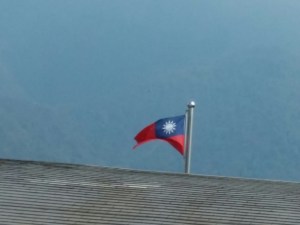
186 MPH Winds Hit Taiwan

Taiwan
Taiwan

Celebrating migrating butterflies

Taiwan has been struck by three typhoons in the past month. A few weeks ago Taiwan was pummeled by Typhoon Meranti with winds of 186 MPH. In July  they were struck by Typhoon Nepartak. As the earth warms, most of this warming is in the oceans causing instability. Global warming is making typhoons worse.

Earlier this year I was able to travel around the island of Taiwan with my husband. The people we met were so gracious and happy, and the food fabulous. This rugged mountainous country is beautiful.

Many Motor Scooters
Many Motor Scooters

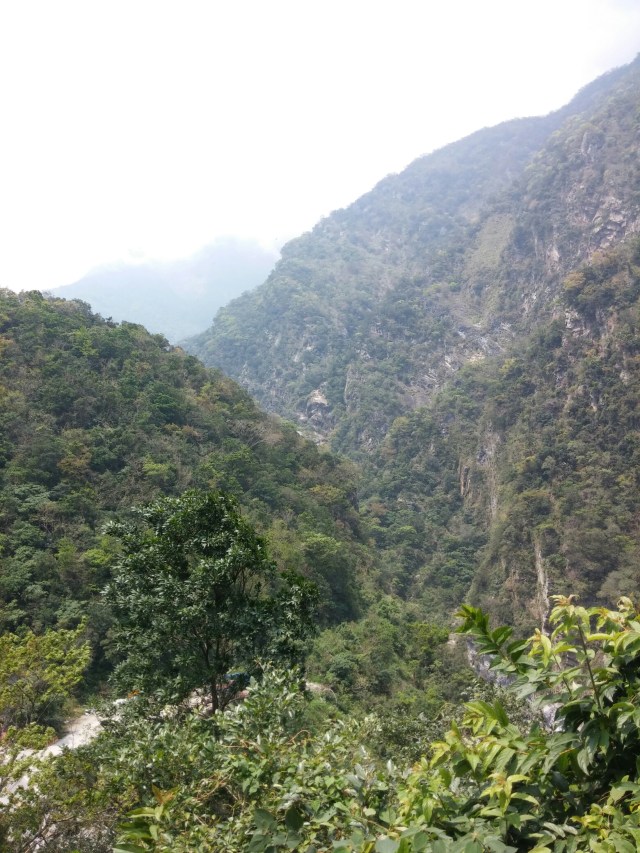
Because of storms hitting the east side of the island, the Pacific Ocean side, most of the people live on the west side of the island. Map of Taiwan here. My thoughts and best wishes go out to the charming people and marvelous landscapes of Taiwan. I wish Taiwan a quick recovery, and I recommend Taiwan as an interesting place to travel.

Hello to the United States

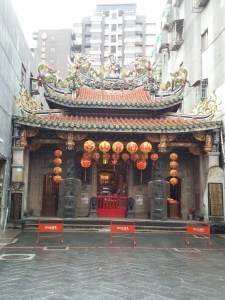
Temples on every street

A mountainous island
A mountainous tropical island

These two explained the life-cycle of the purple butterfly in English

Butterflies migrate from the southern part of Taiwan over the mountains to northern Taiwan. This was a butterfly festival celebrating migration.


Plant For Clean Water

I am at the Minnesota State Fair talking to individuals about rain gardens and native deep-rooted plants. Native plants help absorb pollutants, keep rain water in our yards, save on watering, and are loved by bees, butterflies and birds.

Plant deep-rooted plants for pollinators and clean water.

prairie-grasses
Deep rooted plants absorb run-off

Minnesota Takes the Lead for Bees and Butterflies

Hope for pollinators

“Today, Minnesota set the strongest rules in the nation to protect pollinators from pesticides,” said Lex Horan of Pesticide Action Network. “The plan will help ensure that bee-harming pesticides won’t be used unnecessarily, and it lays the groundwork for reducing the use of neonicotinoid seed coatings. This decision is rooted in the resounding scientific evidence that neonicotinoids are harmful to pollinators. It’s past time for state and federal decisionmakers to take action to restrict the use of bee-harming pesticides, and today Minnesota did just that.”  Read the whole story here.  Another story from Minnesota Public Radio.

An American painted lady