“Whatever befalls the earth, befalls the people of the earth.” Chief Seattle
If Everyone Does a Little It Can Add up to A Lot!
Fritillary on bee balm
Have you noticed how few butterflies are flittering around this summer? Researchers find that butterfly species throughout the world are disappearing because of pollution, pesticides, and habitat loss. A newly released study says many butterflies are vanishing.
The author suggests we remove some of our lawn, and plant more flowers. Yes, we should plant more flowers, but beside planting more flowers we need to reduce the use of the chemicals we put on our lawns, in our gardens and on our agricultural fields.
Reducing chemicals and planting host plants for butterflies can make a big difference. Many of us are actively working on planting milkweed for monarchs, but there are many other butterfly species. Besides milkweed I have pearly everlasting for the American painted lady, turtlehead for the checkerspot butterfly, and golden Alexander for the black swallow-tail. Violets are great for the fritillary butterflies. This is one of the best charts I have seen on plants for butterflies from Bringing Nature Home And some ideas from the University of Minnesota for plants that are favored for butterflies an moths. Please let me know what your best plants for butterflies are?
Have you looked carefully at a butterfly? They are some of the most beautiful living species on our planet. The past few years I have loved learning about butterflies. Butterflies often sit so we can see them, and many binoculars make it possible to examine them closely.
Be sure to get outside this summer and look around for butterflies and other wildlife in your backyard. If you see a but aren’t sure about the species, you can consult this handy identification guide. This is from http://ecowatch.com
Here are 10 fascinating facts to consider next time you cross a butterfly’s path:
1. There are more than 17,500 recorded butterfly species around the world, 750 of which can be found in the U.S.
2. Butterflies and moths are part of the class of insects in the order Lepidoptera. Butterflies are flying insects with large scaly wings. Like all insects, they have six jointed legs and three body parts: the head, the thorax and the abdomen. The wings are attached to the thorax and they also have a pair of antennae, compound eyes and an exoskeleton.
3. The Cabbage White, is the most common butterfly in the U.S. Although it appears mostly white with black markings on the top of its wings, underneath those wings are yellowish-green. These butterflies have a wing spread of just about two inches. Males have only one spot on each wing, while females have two. As you probably know, you can find Cabbage Whites in most open spaces, including gardens, roadsides, parks and cities.
4. Monarch butterflies migrate to get away from the cold. However, they are the only insect that migrates an average of 2,500 miles to find a warmer climate. The iconic North
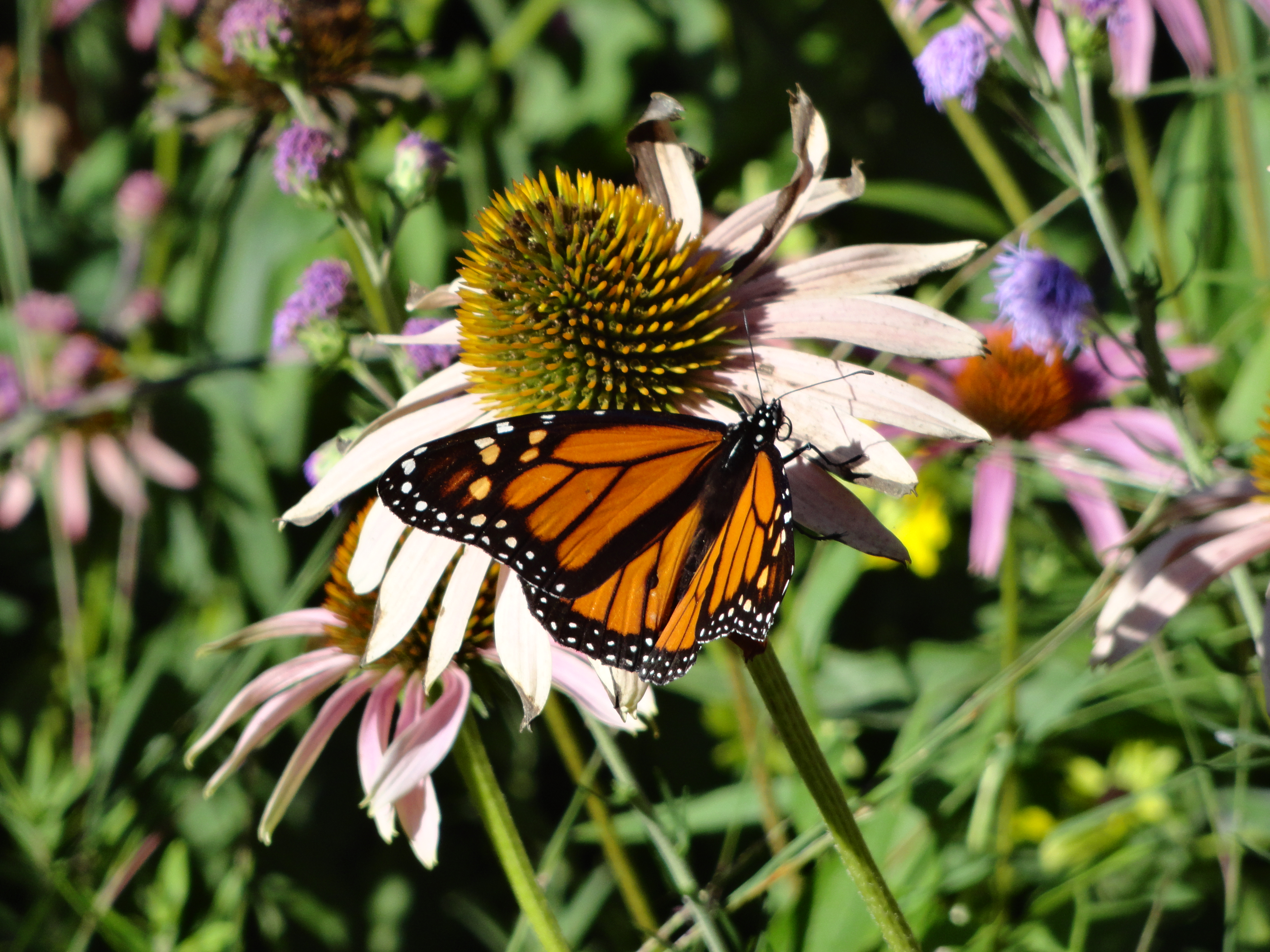
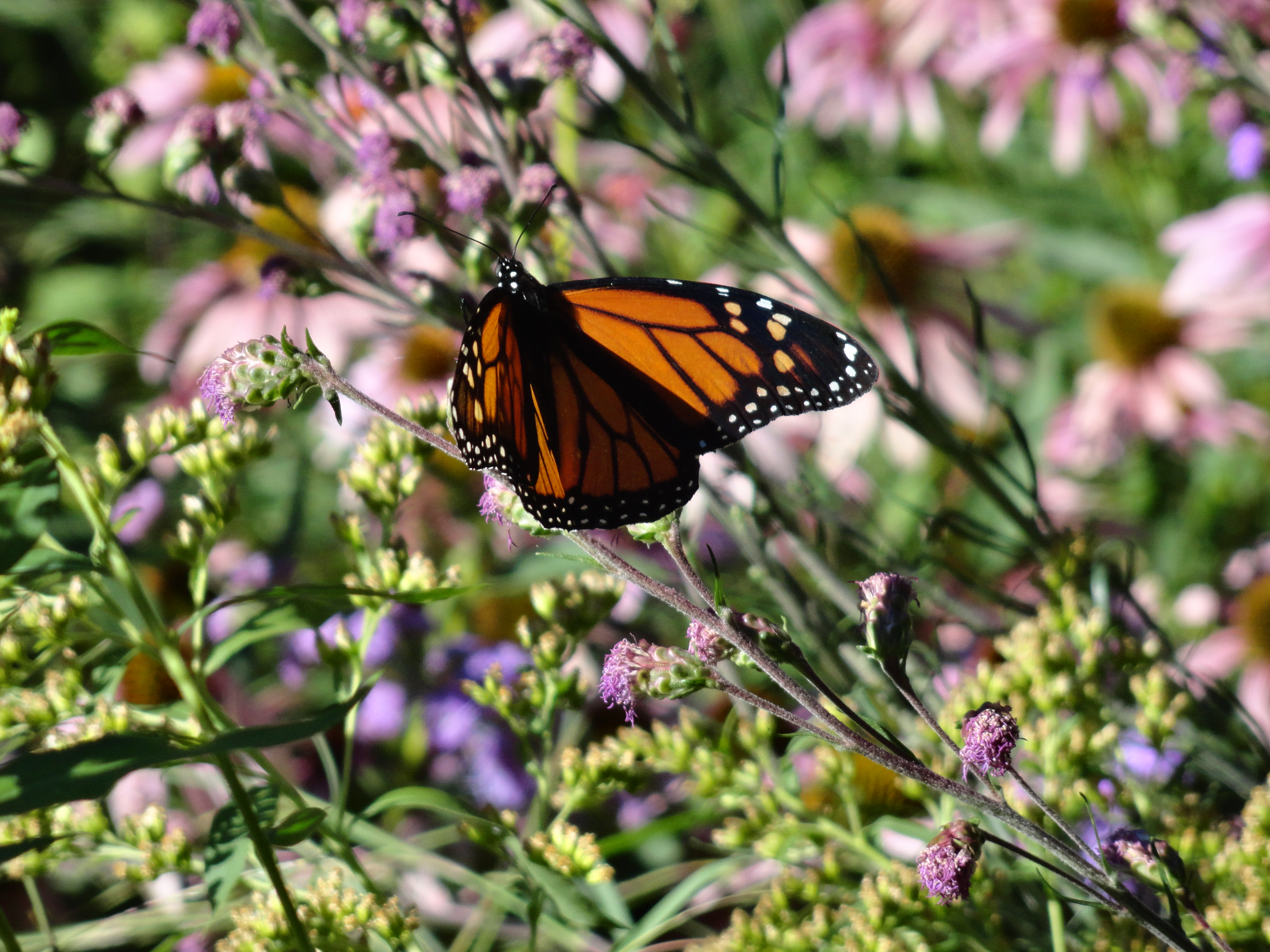
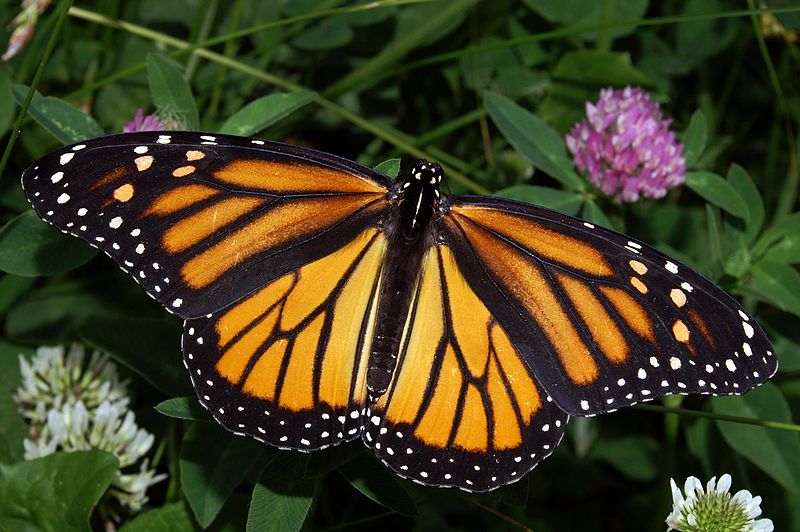
Monarch Butterfly
American Monarch has been greatly affected by extreme weather events, going through drastic dips and spikes in numbers over the past several decades. The overall pattern continues to point downward, with a 95 percent population decline over the last 20 years, but conservation efforts are helping: There were more monarch butterflies migrating in 2015 than there were in 2014.
5. Monarchs are not the only butterfly that migrate. The Painted Lady, American Lady, Red Admiral, Cloudless Sulphur, Skipper, Sachem, Question Mark, Clouded Skipper, Fiery Skipper and Mourning Cloak are among the other butterflies that also migrate, but not as far as the Monarchs.
6. The Common Buckeye Butterflyis one of the most striking butterflies, with its bold multicolored eyespots and thick upper-wing bars, all designed to frighten away any birds that might be tempted to chomp on them. If you look under its wings, you’ll find a more abstract profusion of brown, orange and beige. These insects are pretty common all over North and Central America, although you won’t find them in the Pacific Northwest or in the far north of Canada.
The Common Buckeye Butterfly. Photo credit: Thinkstock
10. The Giant Swallowtail Butterfly, as its name implies, is one of the biggest butterflies, with a wing spread of four to seven inches. The female is once again bigger than the male. It too is found throughout North America and sometimes as far south as South America. These butterflies are called “swallow” because they have long tails on their hind wings that resemble the long, pointed tails of the birds known as swallows.
The Giant Swallowtail Butterfly. Photo credit: Brian Gratwicke
Round up kills the plants bees and butterflies love!
A Big Reason to be Thankful for California!
I was shopping for a vegetable peeler the other day. The label said, “This product is known to cause cancer according to the California EPA. Be sure you wash your hands after use” Yikes, who would buy such a product? Why would a company manufacture such a product? Below is more watchdog work by California’s EPA:
Big news! California EPA Moves to Label Monsanto’s Roundup ‘Carcinogenic’ http://ow.ly/RQOdP #BanRoundup
In a first for the country, California’s Environmental Protection Agency (Cal/EPA) has issued plans to list glyphosate—the toxic active ingredient in Monsanto’s Roundup herbicide—as known to cause cancer. http://ecowatch.com/2015/09/08/california-becomes-first-state-to-label-monsantos-roundup-as-a-carcinogen/?utm_source=EcoWatch+List&utm_campaign=4a984bb080-Top_News_9_9_2015&utm_medium=email&utm_term=0_49c7d43dc9-4a984bb080-85912169
“While insects and other animal pollinators may come in small sizes, they play a large partnership role in the production of the food we eat, in the future of our wildlife, and in the health of nearly all flowering plants. A garden without bees, butterflies, beetles, birds and even bats, is a garden devoid of the life-giving relationships that sustain plant reproduction.” http://www.fws.gov/pollinators/
Good suggestions below, and please don’t use chemicals:
Plant a Pollinator Garden.
An excellent book by Heather
Provide a variety of flower colors and shapes to attract different pollinators.
Whenever possible, choose native plants. Native plants will attract more native pollinators and can serve as larval host plants for some species of pollinators.
If monarch butterflies live within your area, consider planting milkweed so their caterpillars have food.
Plant in clumps, rather than single plants, to better attract pollinators
Choose plants that flower at different times of the year to provide nectar and pollen sources throughout the growing season http://www.fws.gov/pollinators/
Everything is green and lush. Everyone loves their yard in June. Whether you have a grass turf yard or native plants, urban yards are beautiful. How can you create a vibrant living landscape with a more friendly tilt to pollinators?
I watch the monarch butterflies and the swallow tiger tail and hope they leaving eggs as
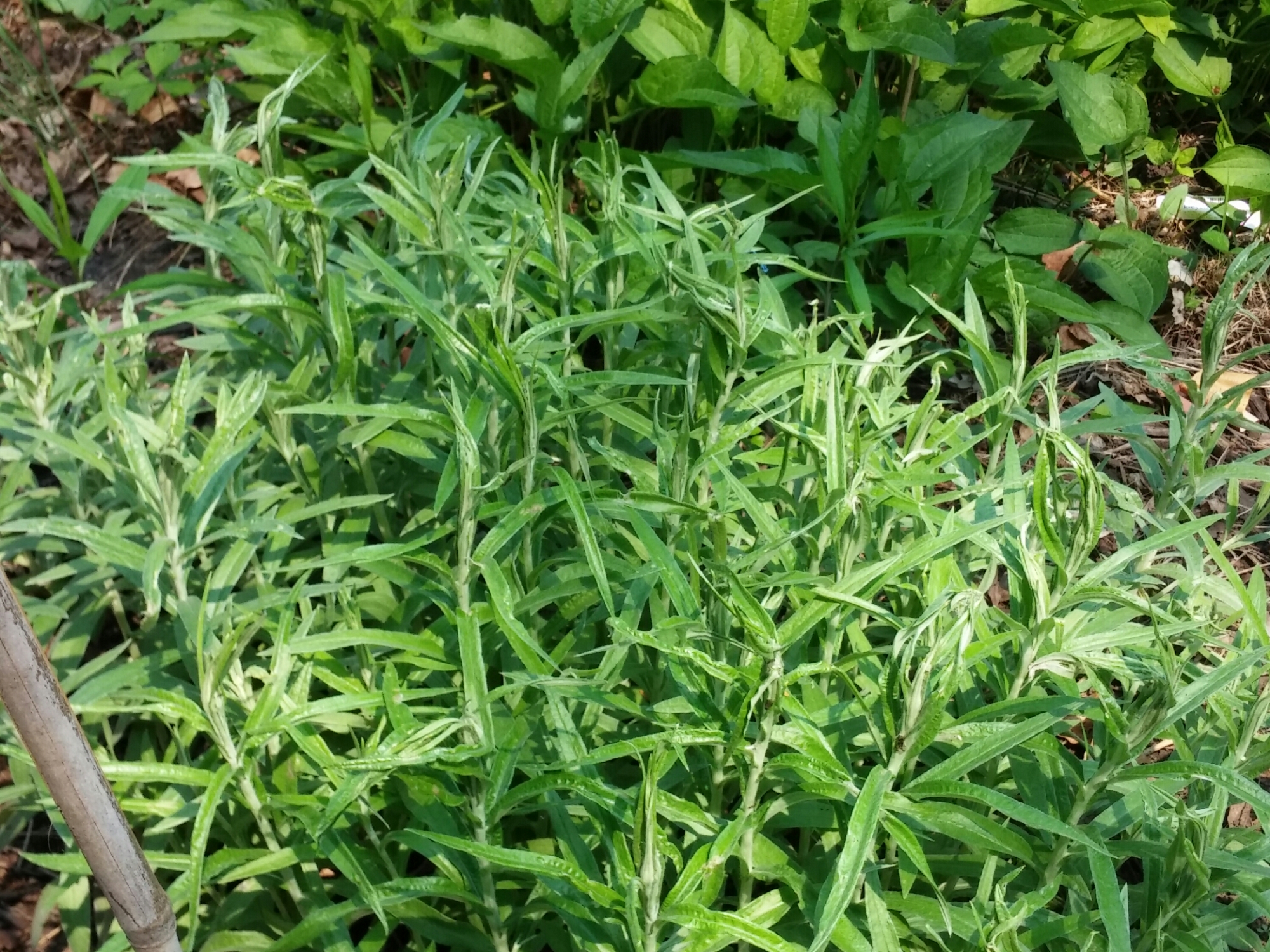
Pearly Everlasting
they flit around. The painted lady butterflies have deposited egg fuzz on the pearly everlasting making them look wilted and sick. In just a short time the caterpillars will emerge and the pearlys will be normal and healthy. Hopefully, the cycle will continue and new butterflies will live long enough to plant more eggs. Birds eat these butterflies.
The native Canada Anemone is blooming now!
The columbine and the wild geranium have almost completed their blooms, but the Canada Anemone and the spider-wort are magnificent!
We are digging our rain gardens deeper and wider. Then we plant blazing star, cardinal-flower, and turtle head to the bottom of these rain capturing gardens. The butterflies, bees and hummingbirds will love these new additions.
See the article below for ways you can create a vibrant living landscape with a more friendly tilt to pollinators: http://www.startribune.com/planting-with-pollinators-in-mind/306646301/
“I arise in the morning torn between a desire to improve the world and a desire to enjoy the world. This makes it hard to plan the day.” E. B. White
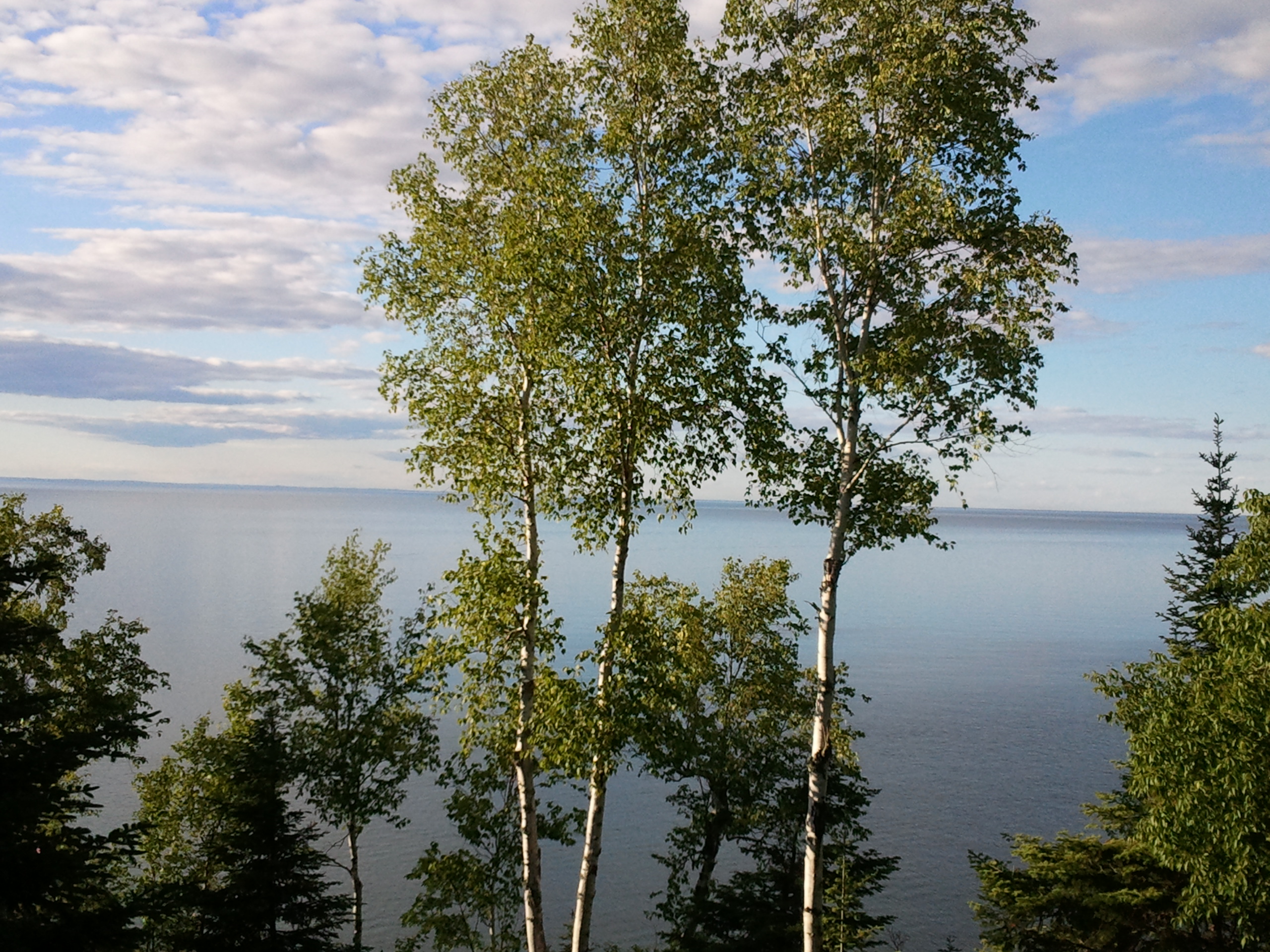
Superior Views, early July 2014
Finally, beautiful weather! Unfortunately, after rainy June, the gnats and mosquitoes take
White Admiral Butterfly on the shore of Lake Superior
fun away from the enjoyment of the magnificent sunny calm days!
Redstart warblers sing and love all the mosquitoes! Also, song sparrows, Northern parula, and red-eyed vireo sing in constantly until a fox walks down the driveway. Hummingbirds, finch and pine siskin frequent our feeders. Other birds that nest in our neighborhood are: Chestnut sided warbler, common yellow throat, white-throated sparrow, winter wren, and oven birds. They sing a symphony of joy soon to end with July nesting season.
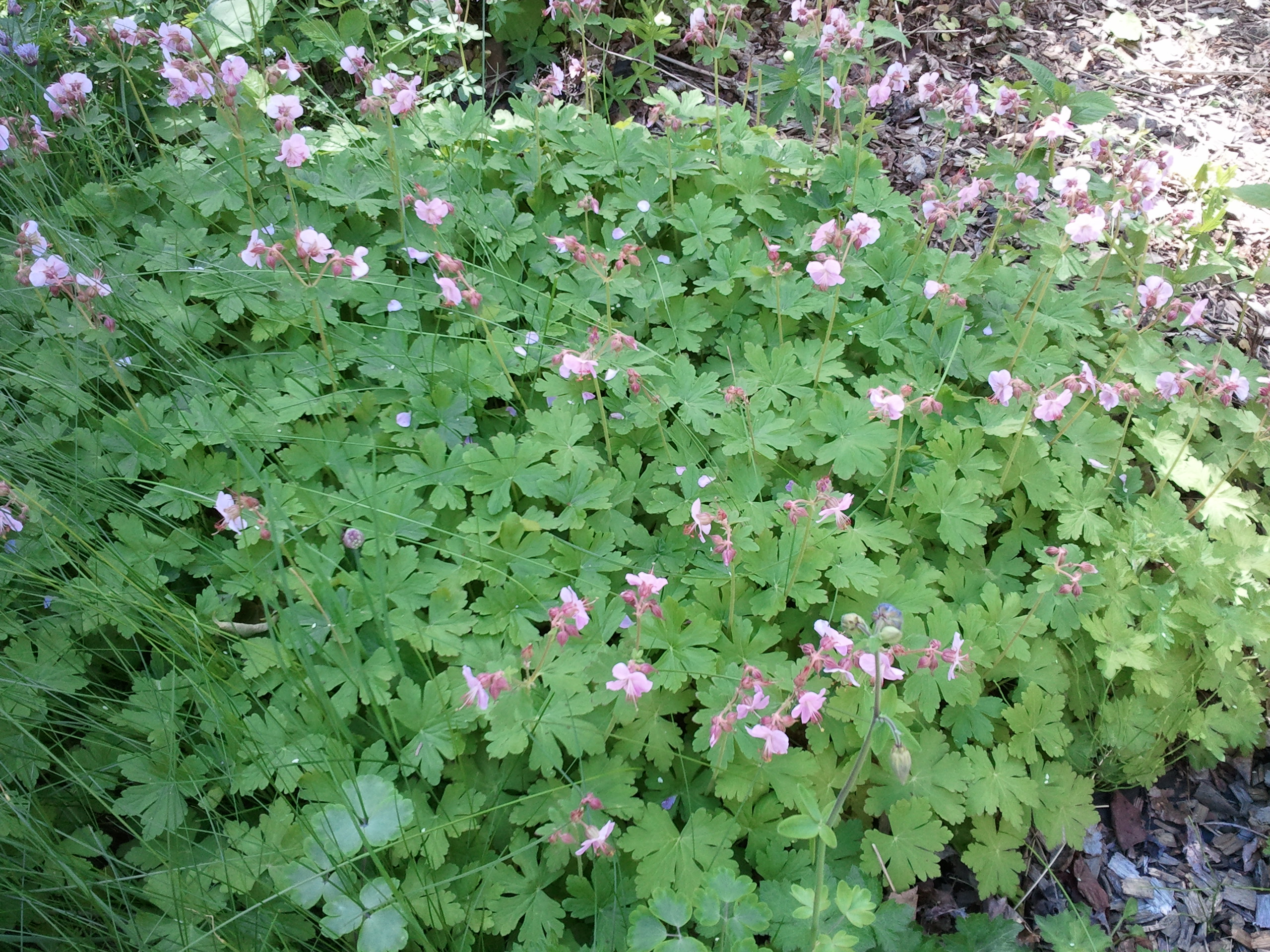
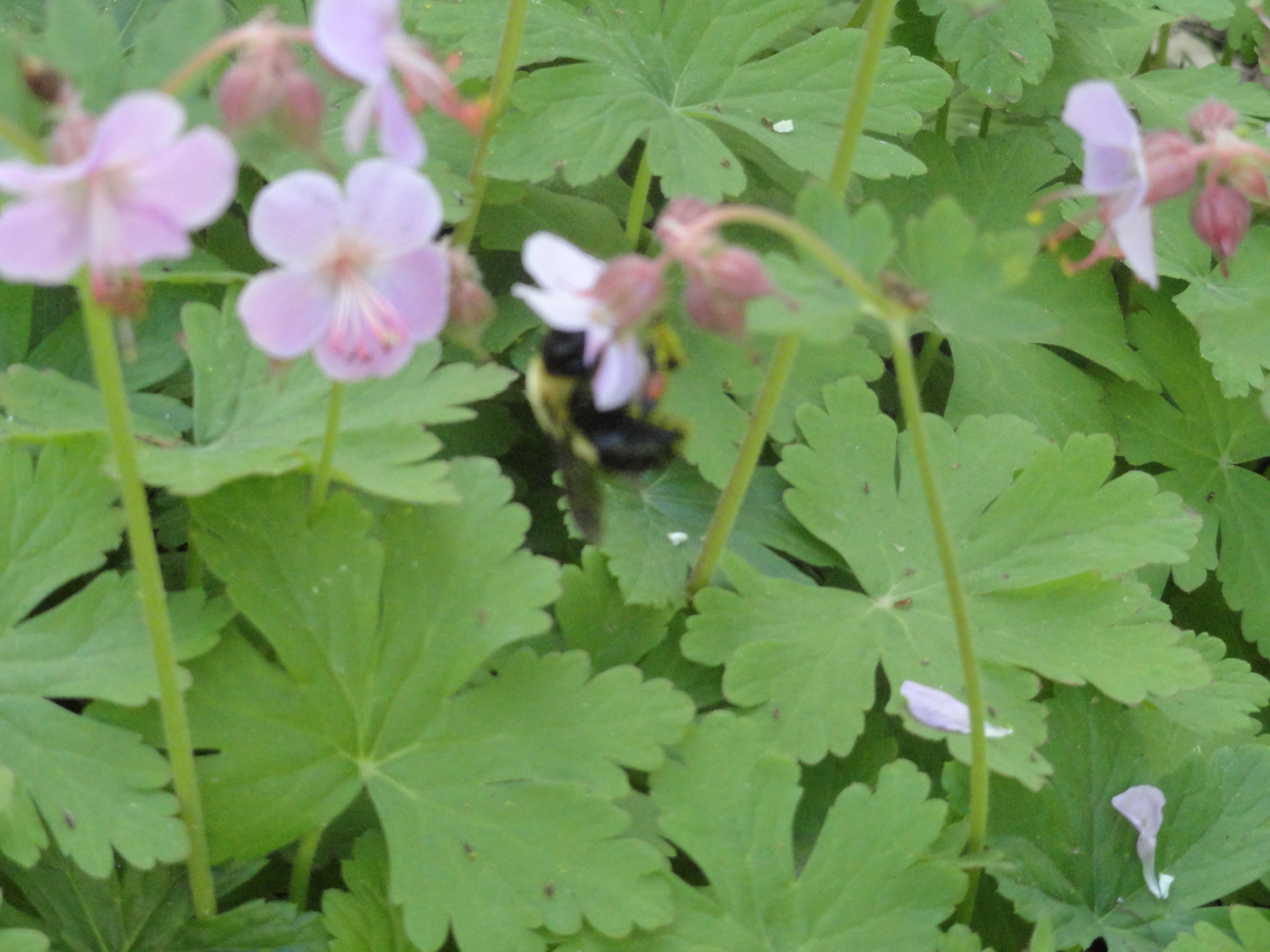
The best plant for pollinators in early July is the wild geranium.
The hummingbirds and bees love wild geraniums
The birds can be heard, but seeing them is difficult. However, the swallow-tail butterflies, a few monarchs, viceroys, painted ladies, white admirals and northern crescent add to the beauty of each day. Eggs from the painted lady butterfly sit on the pearly everlasting plants, and we watch for caterpillars.
In the past two weeks I have spent 5 days in Iowa, and then a week in Northern Wisconsin away from the agricultural belt. As I biked and walked in Iowa the lack of butterflies was disheartening. I even saw and smelled the Iowa DOT spraying along the highway. In contrast northern Wisconsin is more grass/hay country, lower pesticide use, and the butterflies aren’t like what I would like to see, but they are flitting around when you look for them. The bee population up north is still questionable, but better than what I saw in Iowa.
I agree with this excellent letter to the editor in today’s Minneapolis Star Tribune:
Thank you for “Bees at the brink” (June 29). Our rural surroundings have changed since we moved to south-central Minnesota in 1960. Our small farms have mostly disappeared, and our once-vibrant town struggles to stay alive. There was much more variety in the landscape: I remember picking strawberries along Hwy. 169 with my children; we heard and saw meadow larks and pheasants, and clouds of monarch butterflies were a part of every spring and summer. Now what do we have? Corn and soybeans from horizon to horizon; hedgerows with their diversity of plants and animal life gouged out; wetlands drained, and herbicides ensuring that few bee-friendly flowers grow on roadsides and lawns. Our state and federal supports, with their continuing crop insurance programs — even for marginal land — and cutbacks on set-aside acreage such as CRP and CREP help to perpetuate the increasing sterility of our natural environment.
Economic success should not be the only determinant of wealth. We lose too much if it is.
It is worrisome that most plants still contain neonicotinoids!Native plants areNeonicotinoid free
Purchasing plants that are free of neonicotinoids is a challenge. I went to the local nursery that claimed to not use neonics. They don’t use the neonic pesticide, but their suppliers might. The clerk was very helpful, but most of the annuals
Swallowtail on a dianthus
were not neonic free. I had to search through the plants for specific containers, but the large majority of the plants still available could have been treated with neonics.
Report Release from Friends of the Earth: Gardeners Beware 2014
In a study commissioned by Friends of the Earth and conducted by independent scientists at the Pesticide Research Institute, findings show that most “bee-friendly” garden plants sold at major retailers in the US are routinely pre-treated with bee-harming pesticides, with no warnings to consumers.
Bees are dying at alarming rates, and neonic pesticides are a key contributor to recent hive losses. Bees and other pollinators are essential for two-thirds of the food crops humans eat every day, and contribute over $20 billion dollars to the US economy. Our own food security is tied closely to the survival of bees and other pollinators – we must take swift action to protect them.
The power to practicing bee-safe pest control is in your hands. Read the full report here and learn how to get started.
Everyone can plant a flower for National Pollinator Week!
Once again, it is National Pollinator Week and a fantastic time to thank the bees, butterflies, and other pollinators by giving them a hand. There are so many threats to pollinators — pesticides, diseases, habitat loss, and more — that one can be discouraged. But everyone can easily do one thing to help pollinators: plant a beautiful bee-friendly flowering plant.Whether adding bee-friendly perennial wildflowers to frame your front yard, planting a pollinator hedgerow along your farm road, including bee-flowers in your vegetable garden, or just planting a pot with a sunflower on your porch, any effort to increase the number of flowers available for bees can help pollinators and beautify your home or farm. Plus, it is a great joy to watch the bees visit the flowers you plant and to share this wildlife with your friends and neighbors.Here are some places you can go to find information about which plants are best for your area.
Xerces Society fact sheets: Plant lists for all regions of the U.S., including the first of a new series of regional lists. (We’ll be rolling out more new regional plant lists for bees over the coming months.)
Attracting Native Pollinators: Our best-selling book includes page after page of illustrated plant lists, as well as a host of other information about pollinators.
Don’t forget to sign the Pollinator Protection Pledgeand join the ever-expanding community of pollinator enthusiasts — and enjoy yourself as we celebrate pollinators!
Find Out More:
To discover more ways to support pollinators, including ideas for creating a bee garden in your own community, visit our Bring Back the Pollinators webpage.
We are all worried about our bees and our butterflies! Have you ever wondered why in a city full of gardens of flowers there are so few bees and butterflies? In contrast, I observe a large diversity of bees and butterflies walking roads in northern Wisconsin where deer eat every flower within reach. The city, teaming with flowers, has less pollinators?
Unattractive flowers: Many of the attractive flowers we purchase have been hybridized so they don’t appeal to bees and butterflies.
Habitat: A combination of the two above. Have we destroyed so much native habitat that pollinators are not interested in the flowers we plant?
The purpose of this post is to encourage you to reduce or eliminate the chemicals you use in your yard. and build habitat for our pollinators by planting more native plants in your yard. Native plants do not need chemicals. With their deep root structure natives are flood and drought resistant. Also, they are resistant to invasive pests. But the best about natives is that the bees , butterflies and birds love them, and they love areas without chemicals!
It is important we plant for our pollinators. What can you do to help?
** Take a pledge not to use chemicals nor dump them into drains: The Great Healthy Yard Project http://tghyp.com/
** Build Habitat: Find a sunny place in your yard to plant pollinator loving plants or some native shrubs or trees. Plant bee balm, milkweed, liatris, cone flowers, asters and golden rod. www.xerces.com











 Health4earth