Saturday, May 9, is Minnesota’s fishing opener, and is an exciting time for sportsmen. Minnesota, the state of over 10,000 lakes, works draws people from all over the country for this big day. The state even kills the sleek black cormorants to protect the ability to fish walleye. See the story below:
The irony to me is we shoot beautiful birds for individuals to fish, but are unable to regulate harmful farm run off. Chemicals that are harmful to people, fish and other wildlife! Half the lakes and rivers in southern Minnesota are too polluted much of the time for safe swimming and fishing. Story below: http://www.startribune.com/lifestyle/health/301702651.html
Farmers under the Clean Water Act are not regulated like every other community and industry. Farmers should have to meet the same water pollution standards as everyone else. The taxpayers in Des Moines, Iowa and communities in Minnesota need to spend millions to make their water safe to drink because of nitrates from farm run off in their drinking water: http://www.npr.org/2015/04/07/398123397/iowa-water-lawsuit-calls-some-farming-practices-into-question Iowa’s largest water utility is suing county boards for polluting rivers the city uses for drinking water. At the heart of the fight is whether or not farmers should be forced to comply with federal water quality standards. What do you think?
Styrofoam I pulled from Lake Harriet in Minneapolis. It is breaking into small pieces and could last forever!
I am happy, it is Earth Day, and I am very happy that the city of Minneapolis took a bold stand on Styrofoam containers. Congratulations to Minneapolis for banning Styrofoam “To Go” containers. The ban begins on Earth Day, April 22, 2015.
Minneapolis is a city of many lakes, many creeks, and the Mississippi River. Materials like plastic and Styrofoam break into tiny pieces and could exist for hundreds of years in these water bodies.
“It’s estimated that 10 million Styrofoam containers are thrown away in Minnesota each year. Styrofoam is not impossible to recycle, but is difficult to clean and far costlier to recycle than other, more sustainable containers. Styrofoam also contains potentially cancer-causing chemicals that leach into food, especially when heated.” City Pages http://blogs.citypages.com/food/2014/05/styrofoam_officially_banned_in_minneapolis.php
Minnesota has moved from drought to flooding. The drought was a problem, but now can we manage all this heavy rain? We have been trained to get this water away from our houses and off our land, but does flushing all this water down the storm drain help our yards and gardens? Some of the rain is absorbed, but most of this rain rushes into our storm sewers washing winter salt, and chemicals from our houses and yards into our lakes and streams. What can we do to slow water down and keep more water working to waterour gardens and yards? How can we keep our lakes and rivers clean?
You don’t want this water in your basement so it needs to be diverted 10 feet away from your foundation as you manage this water, and try to keep it from gushing down the street and alleys
A few things you can do to improve water quality:
1. Redirect downspouts onto your lawn.
2. Plant native grasses and deep rooted plants to absorb water
3. Use less winter salt and less lawn chemicals.
4. Learn about rain gardens and find out if one is possible in your yard. http://bluethumb.org/raingardens/
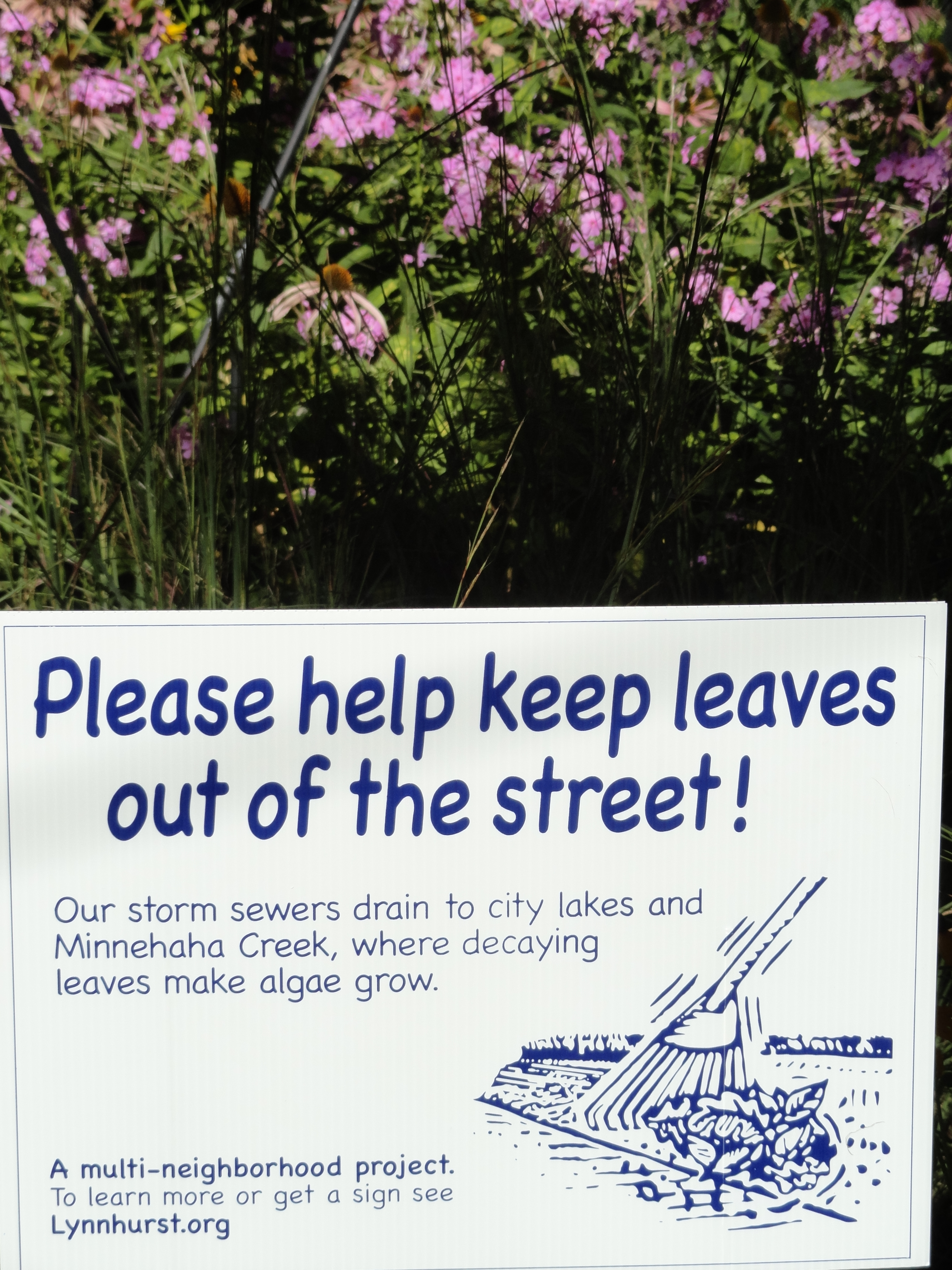
5. Keep sidewalks, driveways and streets free of leaves and debris.
6. Let your turf-lawn grow longer (3 inches)
7. Install a rain barrel to capture rain, and use this for watering plants.
Living in the land of Ten Thousand Lakes and having a love affair with Lake Superior, I know first hand that clean water is important! I think of the West Coast of the United States and their severe drought every time I turn on the faucet. Below are water saving ideas from me and The World Wildlife Federation. This is serious. Water will be the next “most valuable resource,” and our survival as a people depends on adequate sources of clean water.
Ideas to help you protect the earth’s fresh water:
My List (doing one thing can make a difference!)
1. Reduce or eliminate all your use of chemicals in cleaning agents, and lawn and garden products. Tough I know, Read on…
3. Use plants in your yard that do not require chemicals(native plants) and reduce the size of your lawn. Most native plants don’t need to be watered! http://findnativeplants.com/
4. Install rain barrels under your drain spouts or put rain gardens in areas where your water drains. Use this water to water your plants. AND redirect your drain spouts so they water your lawn.
5. Install a septic holding tank if your sewage does not drain into a public sewage system.
6. Purchase as many products you can afford that are organic or GMO free to reduce the amount of nitrates running into our lakes and streams.
7. Adopt a storm drain, keeping leaves, trash and yard waste from washing into our streams and lakes.
9. Purchase products made from recycled materials. Recycled paper uses 60-70% less energy than virgin pulp and 55% less water.
10. Pick up after your dog, and never use salt on your sidewalk.
And from The World Wildlife Federation:
We all can do something to help fresh water. This World Water Day, March 22, you too can take action. Here’s how:
Raise a Glass…and Awareness
Express appreciation of fresh water by making a toast, taking a picture, and sharing it across social networks with #ToastToWater.
Crowdsource Scientific Data
Next time you’re near a river, stream or lake, take and pictures of the freshwater fish you encounter and upload them for conservation scientists around the world.
Adopt a Freshwater Species
Make a donation to symbolically adopt a freshwater species, such as a pink river dolphin or hellbender salamander.
Build a Rain Barrel
The average roof collects 600 gallons of water for every inch of rain. Capture some of that stormwater and help protect freshwater resources by building a rain barrel.
Learn about Unseen Water
Water is in almost everything. Take your average cotton t-shirt as an example: it can take 2,700 liters to produce the cotton needed to make a single t-shirt. While it’s important to fix leaky taps and buy efficient washing machines, we need to also be conscious of the unseen or “virtual water” we consume every day.
Minnesota is warmer than it used to be. Rain falls in bigger downpours. Hay fever sufferers have a longer sneezing season, and the ticks that deliver Lyme disease are expanding their range. Red maple trees are moving north. So are purple finches. Moose numbers have shrunk.
Without question, the state’s climate has changed in recent decades. And that’s had an impact on the lives of its wildlife, its plants, its people.
Minneapolis will probably set a record cold for this week’s temperatures, and British Columbia and the Arctic might set record heat records.
When I travel, people often say, “Minnesota, it is really cold there!” This week’s cold spell during the All-Star Game is going to reinforce those beliefs. Usually this is the hottest week of the year in Minnesota with average highs in the 80s F.
As someone who loves outdoor activity, I love cooler temperatures, but what is scary is the record heat in British Columbia and the Arctic.
From Minnesota Public Radio:As Minnesota shivers today in record July cold, western Canada is baking, and literally burning up in record heat.
This unprecedented “high amplitude” jet stream pattern is producing record cold and record heat at close range within North America.
Temperatures reached 105 degrees Sunday in parts of British Columbia. At least 20 weather stations across western Canada set high temperature records Sunday.
And from Paul Douglas at the Minneapolis www.Startribune.com
Climate Change for Dummies.Here’s an excerpt of an Op-Ed at theConcord Monitor: “…I distinctly remember my professor Richard Bopp, researcher at Goddard Institute for Space Studies, telling us that the only thing he knew was that you could not overload such a delicately balanced system like our atmosphere and not have something change. The idea that everything in the world would gradually and evenly rise in temperature was unlikely, but he and his colleagues could not offer an alternative at that time. Well, 25 years later, we have a better idea. Thanks to the Intergovernmental Panel on Climate Change, a voluntary 2,000-member group of scientists committed to understanding climate change, we can verify that we are experiencing more severe weather and increases of ocean levels, glacial melting and average temperature…”
Minnesota prides itself in being number one, but who would think that land locked Minnesota would top the list in weather insurance claims?? We are all paying for climate change with our health and wallets. Minnesota has become the “New Florida” of the Midwest in paying for weather disasters. The new numbers from 2013 bring Minnesota into the top three states in the United States for catastrophic weather losses. AND…Insurance rates in Minnesota have increased 267% since 1997 according to Bob Johnson of the Insurance Federation of Minnesota.
The tornadoes in Illinois probably bumped Minnesota out of the number one spot for 2013, but the trend continues, and the frequency of extreme rains and hail is one of the triggers of insurance rate increases for Minnesota.
The changes in climate are happenings faster than we have ever seen, and it is clear we are changing the composition of the atmosphere according to Meteorologist Paul Huttner on Minnesota Public Radio.
Yes, we are already paying enormous costs because of the changes in our atmosphere and those that pollute should be paying their fair share. Polluters should be responsible for paying a fee for their contribution of carbon entering the atmosphere. This is a global problem. Minnesota, and the United States together with the EU, need to take leadership to work with the entire world to do what we can to mitigate the climate effects we are seeing. And we should all strive to reduce our individual pollution footprint. Our health and the health of our earth depend on an enormous cooperative effort.
Looking at this above chart, it is not surprising there are super storms on our oceans. Tens of Thousands are paying for the price of carbon with the loss of lives, homes, and destruction of their world.
I am grieving for the people of the Philippines. What a horrific storm for this Pacific island to withstand. As Typhoon Haiyan was destroying the Philippines, individuals in Minnesota were meeting to plan how to adapt to our changed Minnesota climate. Is it possible for the Philippines, Hawaii, Florida or other ocean locations to adapt to super storms like this? It seems impossible to adapt to a winds of 195 miles an hour or mountains of water washing over the land. Without a doubt the warming and rising oceans played into this disaster. Residents reported, “Surges of water as high as the trees.” Can humans continue to inhabit land with the threat of such devastation? Yes, they are paying for the cost of carbon pollution with their health, their lives, and the loss of their world as they know it as they become climate refugees.
I thought the extreme weather event I experienced in 2012 was frightening when thunderstorms kept rolling across Duluth and northern Wisconsin for 2 days and 3 nights. The heavy rain, thunder and lightning just wouldn’t stop! Today I am happy to be land-locked.
While this storm was pounding and destroying life on the islands of the Pacific, Minnesota leaders were meeting to discuss how to adapt to Minnesota’s changed and changing climate. How are we going to adapt and prepare for climate change? The average temperatures on earth continue to rise. 2013 will be the 37th consecutive year with a global temperature above the 20th century average. These rising temperatures allow the air to hold more water, More water in the air creates more of these extreme weather events. In Minnesota we have droughts alternating with floods.
Below is a must read op-ed by Mark Seely of the University of Minnesota about Minnesota’s changed climate.
Everything is interconnected. Pollution in China affects weather and ocean levels everywhere else on earth.
A year ago was the Super Storm Sandy, and climate change just won’t go away! Sandy was the 2nd most expensive storm ever for the United States! Because of the rising oceans, the damage of these storms will just continue to increase. But this was not the only extreme weather event in the past year – floods, drought and many forest fires also added expense to tax payers and the cost of insurance. And most important the loss of human lives. It is a reality that we are all paying for extreme weather. http://www.huffingtonpost.com/2013/10/29/hurricane-sandy-impact-infographic_n_4171243.html
This is from meteorologist, Paul Douglas in the Startribune on 11-3-13 :
It is a fact that the growing season in Minnesota is 2 weeks longer than it was just a few years ago. “It is what we don’t know that makes scientists nervous. The unknown unknowns. The Arctic is warmer than any time in the last 120,000 years – the Pacific Ocean is warming faster than any time in the last 10,000 years. Everything is connected, How will this impact us? Great question. Climate volatility is favoring all-weather now.”
In Alaska, October also has set records for warmth and rain instead of snow:
Pollution is a human caused factor creating the reality of climate change and harming the health of all people, our oceans, and all living things. See articles below:
http://www.startribune.com/local/228250501.html Minnesota is trying to adjust for the future to the changes in the climate for the north woods. What new trees might thrive or will the north country become prairie?







 Health4earth
