I have a love-hate relationship with spiders. They are a mess to pick up after, leaving droppings on my floors and the outside of my house. They build webs in every corner and under chairs and furniture. And Spiders are scary.
BUT
They do so much good for the earth and are one of the most interesting living things on our planet. Spiders eat more insects than birds and bats combined, and they are valuable food source for birds and bats. Hummingbirds use spiderweb material to build their nests. The most fascinating thing about spiders are those incredible webs, and famous stories in literature are Charlotte’s Web and Arachne. Some spiders build a new nest every day, and in Ukraine Christmas spiders are good luck. Factretriever.com has put together 83 amazing facts about spiders. Read them here.
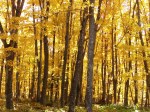
October has been spectacular on the south shore of Lake Superior. The lake is a deep rich blue and everything on shore is bright gold. The red of the maples has evolved into gold, blending with the yellow birch and aspen. The entire outdoors reflects a pleasant gold hue.
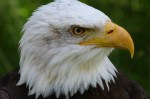
Most of the flowers have turned to seeds, and migrating birds have gone south. All the remaining wildlife is getting ready for winter: Chickadees, nuthatches and flying squirrels empty our bird feeder. Chipmunks and squirrels are eating, digging, and being stalked by a hunting coyote. The adult eagles are paired up and travel as a twosome. The world must look awesome from their favorite pine tree overlooking the big lake, and when they soar above the gold-red landscape.
What we do to our land, we do to our river” John Stein MPCA Commissioner
The Mississippi River, one of the longest rivers in the world begins in Minnesota and flows south into the Gulf of Mexico. The Mississippi River cuts the United States in half, into the east and the west. An investigative report by the Minneapolis Startribune.com. reveals the environmental threats to the Mississippi River caused by agricultural pollution and urban run-off. Many communities use the Mississippi River as their source of drinking water. If we are polluting this great river at the head waters what is the future for all of us, and for the wildlife that also uses this river? What is the future of the Gulf of Mexico as the Mississippi River carries pollution during its journey south? What will be the state of drinking water through the middle of the United States?
We all need to do better.
The storm drains on my street drain into the Mississippi. What we do on the land affects the Mississippi River. As a trained water steward, I am encouraging urban dwellers to manage the run-off from their yards in a smarter way. There is a new paradigm. Instead of getting the water off our land we are looking for ways to use water run-off by redirecting our gutters and down-spouts, and building rain gardens to capture the rainfall.
Not using chemicals, sweeping our sidewalks and streets, re-directing our down-spouts, building rain gardens, picking up trash, and recycling are just a few things the urban dweller can do to help the Mississippi River. Agricultural interests are another thing, and they need to do their part. Part 3 of this series focuses on farmers along the Chippewa River giving hope:
“Raising the amount of land planted in such perennials by just 10 percentage points — from 24 percent to 34 percent of the Chippewa watershed’s 1.3 million acres — would be enough to tip the river from polluted to clean.
Some 25 landowners now participate, and if they can prove its premise — that a farmer can make money without polluting the Chippewa — they could be a model for protecting threatened rivers all across the Midwest.” Read part 3 report here.
“Today, Minnesota set the strongest rules in the nation to protect pollinators from pesticides,” said Lex Horan of Pesticide Action Network. “The plan will help ensure that bee-harming pesticides won’t be used unnecessarily, and it lays the groundwork for reducing the use of neonicotinoid seed coatings. This decision is rooted in the resounding scientific evidence that neonicotinoids are harmful to pollinators. It’s past time for state and federal decisionmakers to take action to restrict the use of bee-harming pesticides, and today Minnesota did just that.” Read the whole story here. Another story from Minnesota Public Radio.
Get in the habit of bringing your own bags shopping.
I do the majority of my grocery shopping at food coops, but when I visit regular grocery stores I am appalled by the number of plastic bags leaving with purchases. I know most them aren’t recycled. My city will put fees on some plastic bags in 2017, and I can’t wait!! It will be a fabulous education tool for many people!!
Below is from Earth911.com, and contains some information I didn’t know, how the below businesses have reduced plastic bags. Please shop retailers that protect our earth. I haven’t shopped at all these retailers so please let me know if this information is accurate???
From Earth911.com: “Did you know that studies have shown that about 12 million metric tons of plastic debris, including plastic bags, has accumulated in our oceans around the world? Due to this pollution, more than 100,000 marine animals die each year due to plastic entanglement! That is a startling number – and one that doesn’t show any signs of slowing its growth.” Read the entire article here.
These are the retailers to patronize!
Adidas
Ikea
COSCO, Sam’s Club, and BJ’s
Whole Foods
Local Coops Earth 911 gives a shout out to New Pioneer in Iowa City. I shopped there while traveling this summer and recommend shopping there if you are in Iowa City or traveling along Interstate 80 through Iowa.
My back yard: Cone flowers, flox, and butterfly weed
This past week my yard was part of a “Pollinator Garden Walk” led by my neighbor, a pollinator expert. We walked, biked, or carpooled to 4 neighborhood yards. All the yards had boulevard plantings, two had no turf grass,, and three yards had rain gardens. We observed lots of bees, hummingbirds, butterflies, and caterpillars. Below are the ideas to attract pollinators suggested by the pollinator expert:
* Choose native and single-flowered plant varieties
* Go organic, eliminate pesticide and herbicides
* Leave areas of bare ground or loose leaf litter
* Plant milkweed
*Install a bee nesting house for mason bees and other stem-nesting bees
Cardinal flowers are happy this year with lots of rain!
I would add: Plant with diversity of flowers, bloom times, and colors.
Never use plants treated with neonicotinoids! Ask before purchase of plants.
No chemicals needed!Plant for the monarch butterfly
Today my yard is teaming with pollinators. The bees are in abundance, house finch and hummingbirds are loving the fresh blooming plants, and I am thrilled. Butterflies have been slow to appear, but today I had a giant swallowtail, several red admirals, a painted lady, and a monarch!
The Giant Swallowtail Butterfly. Photo credit: Brian Gratwicke
An American ladySwamp milkweed ready for monarch butterflies
Bee balm, cone flowers, and milkweed will bring butterflies, bees and butterflies.
Have you looked carefully at a butterfly? They are some of the most beautiful living species on our planet. The past few years I have loved learning about butterflies. Butterflies often sit so we can see them, and many binoculars make it possible to examine them closely.
Be sure to get outside this summer and look around for butterflies and other wildlife in your backyard. If you see a but aren’t sure about the species, you can consult this handy identification guide. This is from http://ecowatch.com
Here are 10 fascinating facts to consider next time you cross a butterfly’s path:
1. There are more than 17,500 recorded butterfly species around the world, 750 of which can be found in the U.S.
2. Butterflies and moths are part of the class of insects in the order Lepidoptera. Butterflies are flying insects with large scaly wings. Like all insects, they have six jointed legs and three body parts: the head, the thorax and the abdomen. The wings are attached to the thorax and they also have a pair of antennae, compound eyes and an exoskeleton.
3. The Cabbage White, is the most common butterfly in the U.S. Although it appears mostly white with black markings on the top of its wings, underneath those wings are yellowish-green. These butterflies have a wing spread of just about two inches. Males have only one spot on each wing, while females have two. As you probably know, you can find Cabbage Whites in most open spaces, including gardens, roadsides, parks and cities.
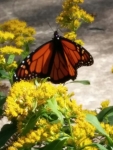
4. Monarch butterflies migrate to get away from the cold. However, they are the only insect that migrates an average of 2,500 miles to find a warmer climate. The iconic North
Monarch Butterfly
American Monarch has been greatly affected by extreme weather events, going through drastic dips and spikes in numbers over the past several decades. The overall pattern continues to point downward, with a 95 percent population decline over the last 20 years, but conservation efforts are helping: There were more monarch butterflies migrating in 2015 than there were in 2014.
5. Monarchs are not the only butterfly that migrate. The Painted Lady, American Lady, Red Admiral, Cloudless Sulphur, Skipper, Sachem, Question Mark, Clouded Skipper, Fiery Skipper and Mourning Cloak are among the other butterflies that also migrate, but not as far as the Monarchs.
6. The Common Buckeye Butterflyis one of the most striking butterflies, with its bold multicolored eyespots and thick upper-wing bars, all designed to frighten away any birds that might be tempted to chomp on them. If you look under its wings, you’ll find a more abstract profusion of brown, orange and beige. These insects are pretty common all over North and Central America, although you won’t find them in the Pacific Northwest or in the far north of Canada.
The Common Buckeye Butterfly. Photo credit: Thinkstock
10. The Giant Swallowtail Butterfly, as its name implies, is one of the biggest butterflies, with a wing spread of four to seven inches. The female is once again bigger than the male. It too is found throughout North America and sometimes as far south as South America. These butterflies are called “swallow” because they have long tails on their hind wings that resemble the long, pointed tails of the birds known as swallows.
The Giant Swallowtail Butterfly. Photo credit: Brian Gratwicke
Butterfly Weed is blooming along some interstate highways.
When I see the mowing down native plants pollinators I get angry. My husband and I have just completed a driving loop from Minneapolis to Chicago and back through Iowa. We have traveled Interstate East 94, West Interstate 80 and Interstate 35 North. The entire road trip I surveyed the status of mowing and blooming plants. The shoulders of most of the interstates are not over-mowed, but they are mowing the center median which doesn’t make sense? The best plants can grow in the median if allowed to survive. Some farmers are mowing along the interstates and they do get a little extreme with their mowers. Educating, educating and educating is what we need to continue to do, and it does make a difference. Below is a sample letter I sent to my rural town road crew. I hope you can modify it and send to your local and state government.
Dear local government road crew,
Pollinators, (bees, butterflies and birds) are in trouble in the United States. They have faced serious habitat loss. Last year and the past few years their numbers seemed smaller compared to the years before. Bees and butterflies need the nectar and pollen from flowers for their survival. The Obama Administration is working to plant pollinator plants along our interstate highways to improve bird, bee and butterfly habitat. The plants along the roadways in our town are a natural habitat for birds, butterflies and bees. Now as the daisies, lupine and other wild plants bloom we have beautiful roadways for residents and food for butterflies and bees.
I am writing to ask you to not mow the entire right-a-way along our town roads until maybe late August or even better would be September. I know you need to mow for safety, and that is important. Could you please not mow every flower down until early fall? Maybe mow just a strip along the roads leaving plant food for our pollinators. The bees, butterflies, birds and humans would thank you for the needed nectar, and fabulous summer beauty.
If I can get a commitment from you to mow a little later, I will spread milkweed seeds along the town roads creating more butterfly and bee habitat.
Thank you,
Your name
Wisconsin energy co-ops to create monarch butterfly habitat
Searching for milkweed along our roads and highways!
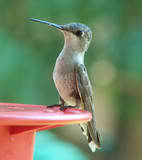
Why are we so fascinated with hummingbirds? Is it their tiny size, incredible energy or maybe it is that we can really observe them close up in comparison to other birds?Hummingbirds love red and bright pink flowers,, and as in this video they will visit absolutely every bloom of a plant they love.
My local newspaper did two stories on hummingbirds this week and I had to share thoughts about these amazing little pollinators. 1. The female raises and feeds the babies all on her own. After June male ruby-throats in the north country, become almost non-existent. 2. Amazing, she builds her nests to expand as her babies grow. Read Val Cunningham’s article and see hummingbird nest pictures here
What can you do to attract hummingbirds to your yard and neighborhood?
1. Put up a feeder, and make your own nectar** 2. Never use chemicals on your plants, and purchase neonicotinoid free plants. 3. Plant colorful flowers like cardinal-flower, and red bee balm.
**From Nature Notes and Jim Gilbert: “Their food consists of nectar and small insects. They will come to sugar-water feeders. I like to use a mixture of one part granulated white sugar dissolved in four parts water to lure them close enough so we can hear the humming sound from their rapid wing beats. Rinse your feeder with water and scrub with a stiff brush to remove any dirt or sticky spots to help halt fermentation and mold growth. Do not add food coloring, some of which is not safe, or honey. Hummers are drawn to colors, so use a feeder made with colorful materials.” Link to the entire article on hummingbirds.










 Health4earth