186 MPH Winds Hit Taiwan

Taiwan
Taiwan
Celebrating migrating butterflies

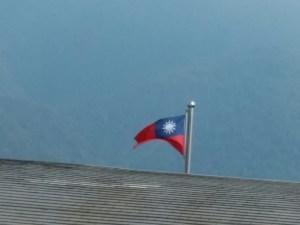
Taiwan has been struck by three typhoons in the past month. A few weeks ago Taiwan was pummeled by Typhoon Meranti with winds of 186 MPH. In July  they were struck by Typhoon Nepartak. As the earth warms, most of this warming is in the oceans causing instability. Global warming is making typhoons worse.

Earlier this year I was able to travel around the island of Taiwan with my husband. The people we met were so gracious and happy, and the food fabulous. This rugged mountainous country is beautiful.

Many Motor Scooters
Many Motor Scooters

Because of storms hitting the east side of the island, the Pacific Ocean side, most of the people live on the west side of the island. Map of Taiwan here. My thoughts and best wishes go out to the charming people and marvelous landscapes of Taiwan. I wish Taiwan a quick recovery, and I recommend Taiwan as an interesting place to travel.

Hello to the United States
Temples on every street
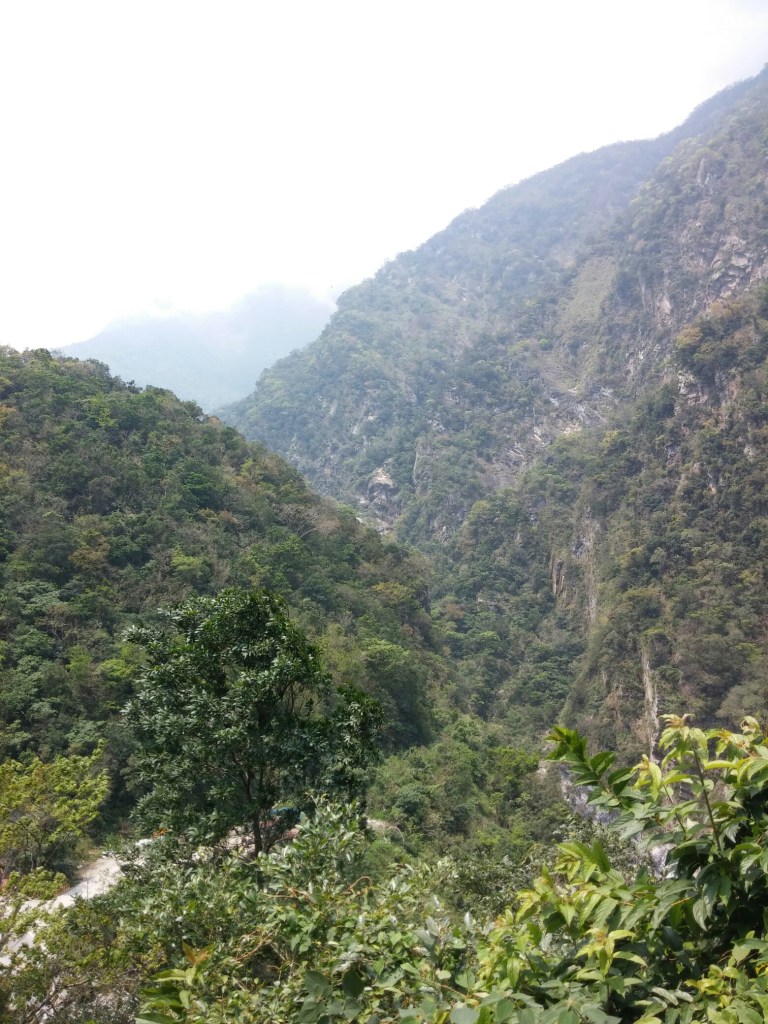
A mountainous island
A mountainous tropical island
These two explained the life-cycle of the purple butterfly in English

Butterflies migrate from the southern part of Taiwan over the mountains to northern Taiwan. This was a butterfly festival celebrating migration.


Plant For Clean Water

I am at the Minnesota State Fair talking to individuals about rain gardens and native deep-rooted plants. Native plants help absorb pollutants, keep rain water in our yards, save on watering, and are loved by bees, butterflies and birds.

Plant deep-rooted plants for pollinators and clean water.

prairie-grasses
Deep rooted plants absorb run-off

Minnesota Takes the Lead for Bees and Butterflies

Hope for pollinators

“Today, Minnesota set the strongest rules in the nation to protect pollinators from pesticides,” said Lex Horan of Pesticide Action Network. “The plan will help ensure that bee-harming pesticides won’t be used unnecessarily, and it lays the groundwork for reducing the use of neonicotinoid seed coatings. This decision is rooted in the resounding scientific evidence that neonicotinoids are harmful to pollinators. It’s past time for state and federal decisionmakers to take action to restrict the use of bee-harming pesticides, and today Minnesota did just that.”  Read the whole story here.  Another story from Minnesota Public Radio.

An American painted lady

Pollinator Garden Walk

My back yard: Cone flowers, butterfly weed
My back yard: Cone flowers, flox, and butterfly weed

This past week my yard was part of a “Pollinator Garden Walk” led by my neighbor, a pollinator expert. We walked, biked, or carpooled to 4 neighborhood yards. All the yards had boulevard plantings, two had no turf grass,, and three yards had rain gardens. We observed lots of bees, hummingbirds, butterflies, and caterpillars.
Below are the ideas to attract pollinators suggested by the pollinator expert:
* Choose native and single-flowered plant varieties
* Go organic, eliminate pesticide and herbicides64px-Eyed_Brown,_dorsal
* Leave areas of bare ground or loose leaf litter
* Plant milkweed
*Install a bee nesting house for mason bees and other stem-nesting bees

Cardinal flowers are happy this year with lots of rain!


I would add: Plant with diversity of flowers, bloom times, and colors.

Never use plants treated with neonicotinoids! Ask before purchase of plants.


https://health4earth.com/add-fun-pollinators-to-your-yard/

Avocados Deforest Monarch Winter Grounds!

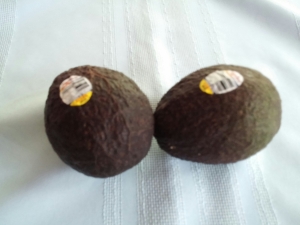
The stickers on avocados say where they are grown. Say "No" to Mexican avocados!
The stickers on avocados say where they are grown. Say “No” to Mexican avocados!

I embarrassed to admit I have Mexican avocados in my refrigerator. NEVER again. According to this article monarch wintering forests are being removed to grow avocados.
Education is a good thing, and new information arrives daily. Please take this new information seriously and purchase avocados from California. Read the little sticker on the avocado to find out where they are grown. Yes, you might have to pay higher prices, but this is important to help save the monarch butterfly!

Also, inform the produce people at your local grocery that you will purchase only avocados from butterfly safe areas, which Mexico is not.

Smart consumerism may help the monarch!

Please comment with any new information you learn on monarch wintering grounds and other products we shouldn’t purchase??

An update to this post.  First, I have been able to purchase avocados raised in California this past week. Second, this link about the monarch winter grounds is more hopeful.  I hope you will choose only California grown avocados until we know the monarch winter grounds are safe! Thank you.

North Land Butterflies/Superior Views

wpid-20150913_135245.jpg

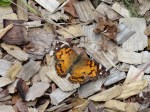
Painted Lady
Painted Lady

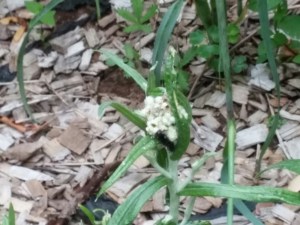
Look carefully and you might see a new butterfly. It has been exciting to have eggs and monarch caterpillars on my swamp milkweed, and painted lady caterpillars on pearly everlasting plants.

Eyed-Brown
Eyed-Brown

In the past month I have been able to identify some new north land caterpillars and butterflies. Enjoy these pictures, but it is better to see the real thing rather than a picture!  Get outside and observe!

Monarch Caterpillars
Painted Lady eggs and caterpillars on the pearly everlasting
Two Atlantis Fritillary on bee balm
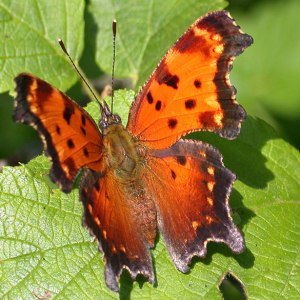
Grey Comma, a dull name for a butterfly  beauty
Grey Comma, a dull name for a butterfly beauty
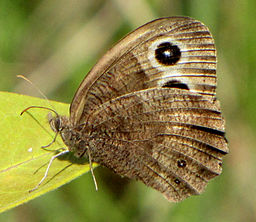
Common Wood-nymph
Common Wood-nymph(wikepedia)


Yikes, a Moth!

Hummingbird moths appear in the daytime.

The luna moth grows to a wingspan of four and a half inches.

Credit: David Moskowitz

What do you know about moths?  They are not the “Ick” insect you might of thought of as a child.  Because most, not all, are nocturnal we might not experience them except caught in a window or spider web. The best ones I have seen are in the bathrooms of campgrounds, and they are magnificent! This is National Moth Week, so what better time to get out and see if you can find and observe a moth.  This information is from  http://www.livescience.com/

Seven facts about moths:

1.There are more than 11,000 species of moths in the U.S. alone.

Moths outnumber butterflies, their nearest relative, by more than 10 to 1, said Matthew Shepherd, communications director and senior conservation associate at the Xerces Society, a nonprofit organization focused on insect conservation in Portland, Ore. There are upward of 11,000 moth species in the United States alone — that’s more than all the bird and mammal species in North America combined.

A moth the size of a pencil tip.

Credit: David Moskowitz

2. Moths make great mimics.

Moths are notorious for their ability to camouflage to keep from being eaten.

3. Moths are important pollinators.

4. Many adult moths don’t eat.

While some moths suck nectar, others don’t eat at all. The adult Luna moth, for instance, doesn’t even have a mouth. After it emerges from its cocoon, it lives for about a week. Its sole mission in life? To mate and lay eggs

The luna moth grows to a wingspan of four and a half inches.

The luna moth grows to a wingspan of four and a half inches.

Credit: David Moskowitz


5. A male moth can smell a female more than 7 miles away.

Though they lack noses, moths are expert sniffers. They detect odor molecules using their antennae instead of through nostrils.  Male giant silkworm moths have elaborate, feather-shaped antennae with hairlike scent receptors that allow them to detect a single molecule of a female moth’s sex hormone from 7 miles (11 kilometers) away.

6. They are important food for many animals.

Because of their abundance, moths are major players at the bottom of the food chain.

7. Moths: The next superfood?

In some places in the world they eat moth caterpillars. They are high in fat and protein.

Read the entire article from livescience

 Explore the world of moths this week and enjoy!  Let us know where you see them?


Butterflies are Vanishing Around The World

“Whatever befalls the earth, befalls the people of the earth.” Chief Seattle

If Everyone Does a Little It Can Add up to A Lot!

Fritillary on bee balm

Have you noticed how few butterflies are flittering around this summer? Researchers find that butterfly species throughout the world are disappearing because of pollution, pesticides, and habitat loss.  A newly released study says many butterflies are vanishing.

The author suggests we remove some of our lawn, and plant more flowers.  Yes, we should plant more flowers, but beside planting more flowers we need to reduce the use of the chemicals we put on our lawns, in our gardens and on our agricultural fields.

Reducing chemicals and planting host plants for butterflies can make a big difference.  Many of us are actively working on planting milkweed for monarchs, but there are many other butterfly species.  Besides milkweed I have pearly everlasting for the American painted lady, turtlehead for the checkerspot butterfly, and golden Alexander for the black swallow-tail. Violets are great for the fritillary butterflies.  This is one of the best charts I have seen on plants for butterflies from Bringing Nature Home   And some ideas from the University of Minnesota for plants that are favored for butterflies an moths. Please let me know what your best plants for butterflies are?

An American painted lady

More information of pollinators: http://www.xerces.org/

My Pollinator Friendly Yard

No chemicals needed!
Plant for the monarch butterfly

Today my yard is teaming with pollinators.  The bees are in abundance, house finch and hummingbirds are loving the fresh blooming plants, and I am thrilled.  Butterflies have been slow to appear, but today I had a giant swallowtail, several red admirals, a painted lady, and a monarch!

The Giant Swallowtail Butterfly. Photo credit: Brian GratwickeThe Giant Swallowtail Butterfly. Photo credit: Brian Gratwicke

An American lady
An American lady
swamp milkweed ready for monarch butterflies
Swamp milkweed ready for monarch butterflies


Bee balm, cone flowers, and milkweed will bring butterflies, bees and butterflies.

Try this link to research and look up butterflies