What is a rain garden?

Rain gardens collect water run-off

A Win-Win for water!

It’s  raining this week where I live. How can we use all this water rushing into the storm drains and at the same time improve the quality of the water runs from our roofs, sidewalks, driveways and streets? This water picks up many pollutants as it races to our lakes and rivers. There are things we can do to lessen this pollution such as sweeping our driveways and sidewalks and not using chemicals on our lawns. A good way to clean this polluted run-off is to direct the water into a garden, a rain garden.  Today as it rains I can see the water rush into my rain gardens where my deep-rooted plants help clean this water as it drains into the earth below.  This past week I have been part of a team that installed two rain gardens. Both gardens captured water that would run into the Mississippi River. We had fun,  and were thrilled we helped to “plant for clean water.”

What is a rain garden?
The water that runs off our houses sidewalks, driveways and streets contains pollutants that run directly into our streams and lakes. A rain garden captures this water and the plants in the garden actually purify the water filtering out the pollutants. Like a friend said, “It’s like magic!”
An aspect of climate change is we can go for months without any precipitation then watch out…. inundation, too much rain. Rain gardens are a valuable tool to use and manage the water that falls on our properties. The plants should not need to be watered so we conserve water

Advantages of rain gardens:
1. They conserve water by managing rainfall

wp-1466029079838.jpeg
This is a narrow ditch for collecting run-off

2. Rain gardens filter out pollutants

3. Blooming plants add beauty to your yard

4. Rain gardens often use native plants that bees, birds and butterflies love.

Simple steps to creating a rain garden:

1. Remove the sod and dig a hole. It must be at least 10 feet from your house and where you can direct a drain-spout, driveway or sidewalk to drain rain water.  Most rain garden holes are about 12 inches deep with wide 3 feet slanted sides surrounding the garden.  The bottom of the garden should be flat.
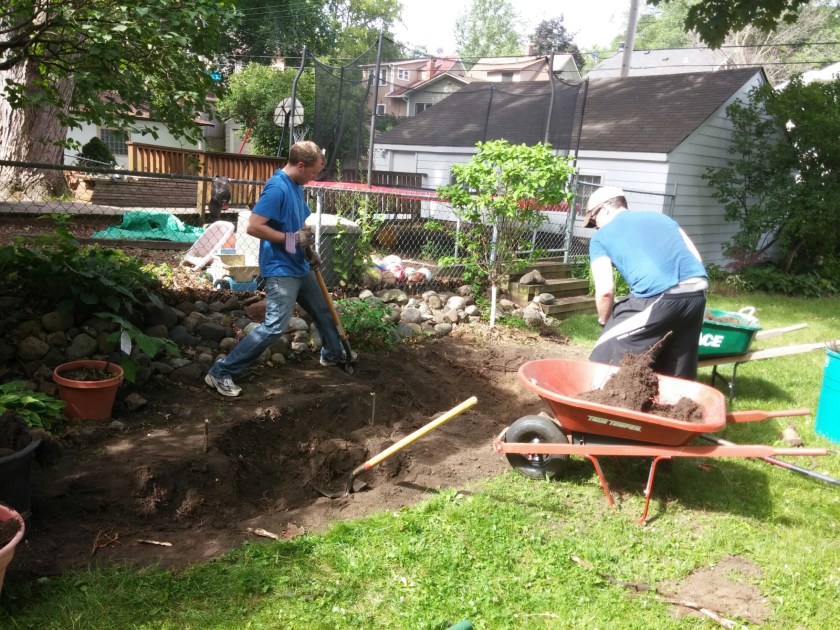
Digging the hole for the garden

2. Mix in about one inch of compost to the bottom and sides of your new garden

3. Cover the garden with a layer of several inches of double or triple shredded mulch.

Spreading the compost, next add the shredded mulch

4. Plant deep-rooted plants. Most of the plants you love will work matching  the degree of sun and shade.  Also, always work to have a variety of plants that bloom at different times for the bees and butterflies.The bottom plants need to be water tolerant.  Some bottom plants I have used are: liatris, swamp milkweed, turtlehead, Culver’s root, blue flag iris, sensitive fern, cardinal-flower, blue lobelia and many kinds of sedges.

5..  Water–If it is dry, you need to water the new plants for the first couple of months.

image

Our shade rain garden is almost finished

And from National Geographic, other ways to conserve water

From the Washington Post on managing water in your yard.

Questions? Leave a comment


If You Love The Lake!

wp-1464212894450.jpeg

Minneapolis is a city of lakes. “Walking the lake” is a big deal for most of us, and the lakes are magnets for people from all over the Twin Cities metro area and state. I am impressed with this educational campaign taking place along the walking paths of the Minneapolis lakes.
image


Is this how lakes should look? We all need to do better.

It looks like a thirsty future for the world. The Pacific Standard Magazine has just publish a map of the world’s troubled waters  and some of the politics around water.  More things you can do to protect our water bodies here.


What Have We Done To Our Water?

20151118_125037.jpg
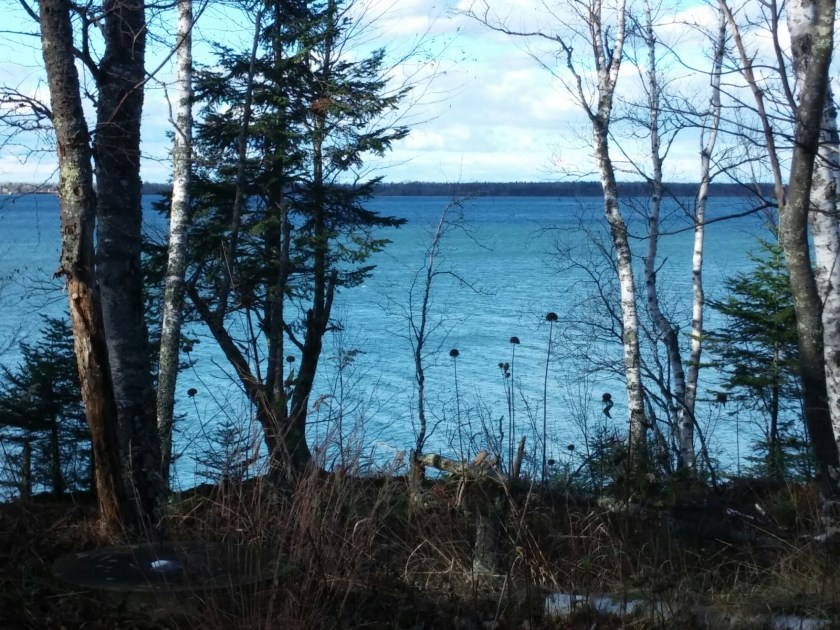
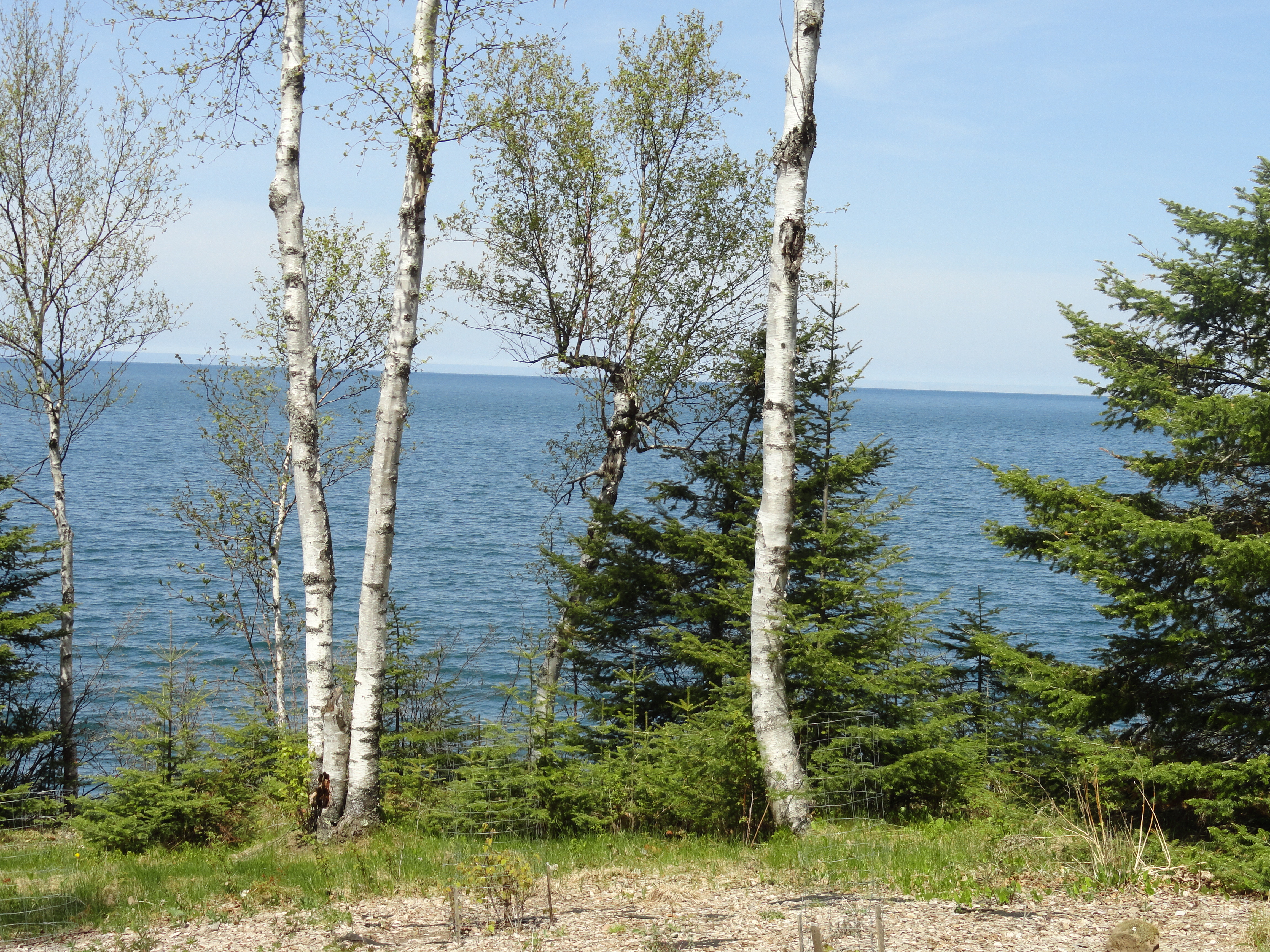
A buffer strip along Lake Superior

This morning I was walking a bridge crossing the Big Blue River in Nebraska.  Never have I seen a river so full of sediment!  The name “Big Blue” was full of irony for me.  I know many of the local water sources in this area of Nebraska are poisoned with nitrates, and children should not be drinking this water. Farming areas of Iowa and Minnesota are having the same water pollution problem. The major source of nitrates are fertilizers on farm fields, and farmers are not regulated by the Clean Water Act. We are all guilty of dirty water and can do much better at protecting our waters.  The run-off from our houses, driveways and roads are major contributors to our polluted lakes rivers and streams.  Farmers need to better, but so do all of us!

10 actions you can take to improve lakes, rivers and streams from Hennepin County.

When it rains, the storm water that runs off driveways, lawns, houses and parking lots can carry pollutants like oil, paint and chemicals down storm sewers and into nearby lakes, streams and rivers. By taking the following easy, no-cost or low-cost steps, you can have a big impact on reducing runoff and protecting our water resources and wildlife habitat. Hennepin County


1. Use your runoff

You can keep water in your yard and reduce runoff by directing downspouts onto your lawn or garden or into a rain barrel. Rainwater is free and naturally “soft,” so it is ideal to use in watering your lawn or garden.

2. Don’t rake grass clippings and leaves into the street

Leave them on your lawn, use them for compost, or bag them up. Grass clippings and leaves left in the street end up in the storm sewer, where they are carried to nearby lakes and streams. Clippings and leaves contain phosphorus and other nutrients that feed algae and other aquatic plants. This can cause excess algae growth that can negatively impact other plants and wildlife and can be unsafe for pets.

3. Scoop the poop

Grab a bag when you grab the leash and pick up after your pets. Pet waste left on the ground can be washed into lakes and rivers with rainwater and runoff. Pet waste contains bacteria that can cause illness in humans and animals.

4. Use chemicals wisely

Read and follow the label instructions when using herbicides and pesticides. Use the minimum amount needed to control the problem. If you can, consider using alternative or natural remedies to control weeds and pests, or remove the problem by hand.

5. Fertilize smart

Sweep up any fertilizer that spills onto hard surfaces. Excess fertilizer washes away into nearby lakes or streams where it can feed algae, causing rapid growth known as algae blooms. Algae blooms stress fish and wildlife and make swimming and fishing unpleasant or impossible.

6. Keep a healthy lawn

A healthy, vigorous lawn needs less watering, fewer chemicals and less maintenance. Aerate your lawn periodically to loosen the soil. Seed bare patches to prevent erosion and soil loss. Mow at a higher setting. Grass mowed to a height of 2 ½ to 3 inches develops deeper, healthier roots and has a competitive advantage over weeds.

7. Plant a rain garden

Rain gardens are depressions planted with a diverse mix of native wildflowers and grasses

Rain gardens collect water run-off

designed to collect rainwater and allow it to soak into the soil. This will reduce the water running off your property into storm sewers.

8. Replace turf with native plants

Swap some of your high-maintenance lawn for low-maintenance native ground cover, plants or grasses. Many native plants develop deeper root structures than turf grass, which reduces runoff by allowing for better water infiltration.

Deep-rooted plants absorb more water than turf grass

9. Reduce your footprint

Replace some pavement – such as a walk, patio or driveway – with pavers or pervious pavement. The porous surface will allow water to seep through.

10. Adopt a storm drain

Keep neighborhood storm drains free of leaves, seeds and grass clippings. Storm drains are directly connected to nearby water bodies. Water running into storm drains can carry with it anything dumped nearby including leaves, grass clippings, soil, oil, paint and chemicals. Keeping storm drains clear will protect the water quality of nearby lakes, streams and rivers.

***If you own property on a lake, pond, river or stream you should install a tree and plant buffer strip to keep pollutants from running into the water.

Minnesota Public Radio is doing a fabulous series on protecting our water. More from MPR here.

Another list of ways to protect our water from the NRDC.

The sun makes the Big Blue look blue. It is thick with sediment.

“I have my own bag, thank you!”

No bag please!

Please recycle plastic bags at grocery stores!

An important thing you could do for the earth this week is recycle those plastic bags and plastic wrap, but DO NOT place them in your regular recycling! They need to be recycled at the stores that issued them.

Landfills are full of plastic bags.  The best thing is not to take a plastic bag at all, but sometimes they are hard to avoid.  Most groceries and big box stores now have places to recycle bags.  Ask if you don’t see plastic bag recycling.

Read about landfills full of plastic here.

“No bag, I have my own!”

wpid-20151101_155242.jpgCan you go plastic bag-free this week?

Get in the habit of bringing your own bags shopping.
Get in the habit of bringing your own shopping bags.


Everyday, Earth Day

The earth is what we all have in common”  Wendell Berry

Yesterday, we saw the first Compton Tortoiseshell of the season

Happy Earth Day, hope you can get outside and enjoy the marvelous spring changes!  Go for a walk.

From http://www.startribune.com

The first Earth Day on April 22, 1970, was a day set aside to think about creating lifestyles to reduce waste and destruction of our environment.

One of the main messages many of us heard that day was that human life can continue on Earth only if people cooperate with nature. Strides have been made over the past 46 years in cleaning up many rivers and lakes, recycling, protecting natural ecosystems, becoming more aware of hazardous materials, and the list goes on. But we have a long way to go if we are to live in a sustainable way in harmony with nature.

There are things to do and things not to do when it comes to being a good steward of our planet, but one of the best may be to take pleasure in the true beauty of the Earth’s ecosystems and its creatures. Too, take time to learn about some of the plants and animals that share the Earth with us. It’s just about impossible to destroy something you understand and love.

Throughout the year, and especially April 22, with the wonders of spring all around us, we should make a point to get out and observe. Every forest, wetland and prairie remnant is full of spring signs — evidence that our Earth is designed as a place for life, no matter what foolish acts people may commit.                                       Jim Gilbert   http://www.startribune.com/appreciating-earth-s-beauty-is-one-way-to-steward/376565231/

http://www.startribune.com/today-s-earth-day-but-people-should-care-about-the-planet-every-day/376648961/  Dennis Anderson

10562721_920150908051554_7226343502310981013_o

A Low Salt Diet Is Best!

Keep our lakes clean and beautiful

Most of us in the north county enjoy a beautiful snowfall, but hate ice.  Even with a mild winter, there is thawing, refreezing and ice!  As I walk through neighborhoods I see salt residue sitting on sidewalks and streets.  Please sweep this up. The salt runs into our lakes and streams and is very harmful to fish and plant life.  Highway departments, businesses and homeowners all need to be conscious of the salt they use.  My local hardware store has a corn-based product they claim works well that is lake-friendly.

It takes only one teaspoon of road salt to permanently pollute 5 gallons of water. Once salt is in the water, there is no way to remove it. Salt harms fish, plant life and the over all quality of the lake or stream.

Suggestions to protect our lakes and waterways:

  1. Always shovel sidewalks and driveways.
  2. Remove ice on days when melting is occurring.
  3. Redirect your drain-spouts so they don’t drain on to the sidewalk. Capture water run-off in a rain-garden.
  4. Be safe, and try to avoid the ice in the first place which I know can be impossible.  A tiny amount of salt can go a long way.
  5. Sweep up any salt after the ice melts!
  6. Check out great winter salt suggestions: https://www.wisaltwise.com/
Rain gardens collect water run-off

Just say, “No straw!”

11035322_842935469106432_8852766584845312987_n

Just say “no” to straws

My series on #31daysoflesswaste continues: How can you use less plastic today, and everyday? Below is an exciting campaign to eliminate the use of straws. It gives you hope!

Keeping plastic out our oceans, lakes and rivers is essential. Below is a video of a “No Straw” campaign being done by high school students in California.  You will like it.

Read more: http://www.mnn.com/lifestyle/responsible-living/photos/16-simple-ways-to-reduce-plastic-waste/just-say-no-to-straws#ixzz3KqhfhwN1


Why are bees dying at an alarming rate?

Add plants bees love to your yard!
Add plants bees and butterflies love to your yard!

Bees have been a worry to me all summer.  They haven’t been feeding on the plants that are usually loaded with bees. Wild geranium,  Culver’s Root, chives and a flowering maple they usually are passionate about have been lacking bees.

Bees love bee balm and anise hysopp, but this year not so many bees.
Bees love bee balm and  hyssop, but this year not so many bees.

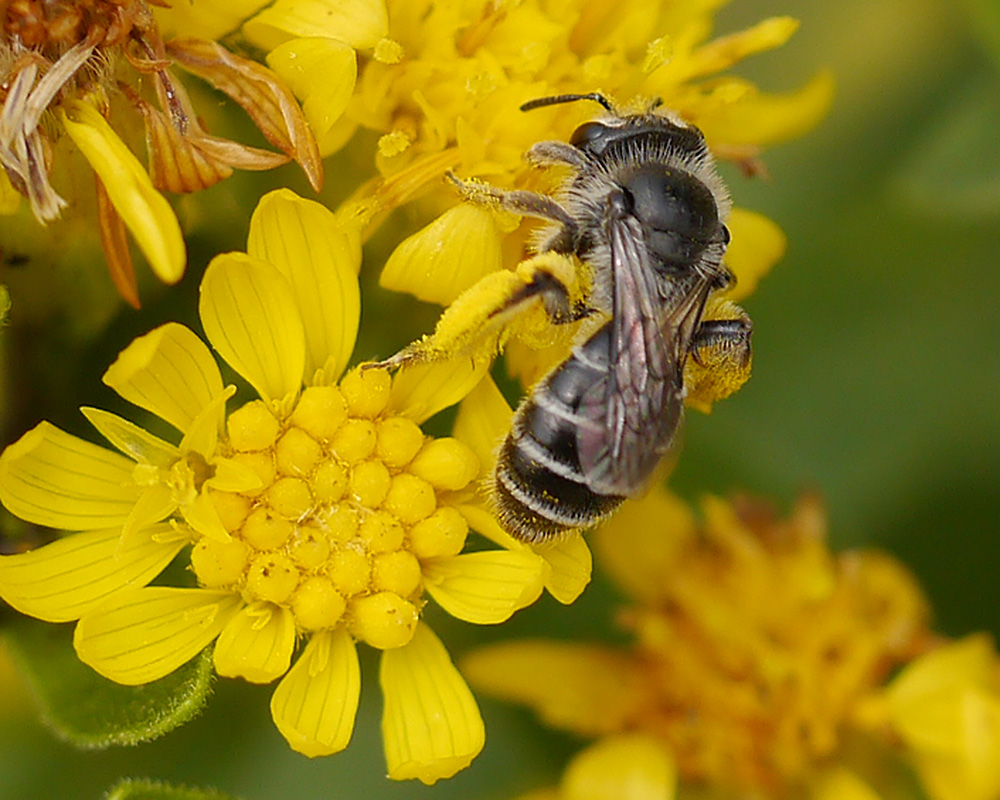
In August with the blooming hyssop, cone flowers and golden rod the bees are here, but not in the typical numbers for this time of year.

We must do better to make sure our yards have flowers pollinators love and avoid all chemicals.  It frightens me that some of the plants we purchase are still laden with heavy chemicals and neonicotinoids. I wonder how all these chemicals are going to affect human health? How is neonicotinoid farm run-off going to affect aquatic life?

A study below by the US Geological Survey finds neonicotinoids in our water ways. Here is the link: http://m.ktvz.com/news/Insecticide-found-in-half-of-sampled-U-S-streams/34779418

MINNEAPOLIS TAKES ACTION TO PROTECT POLLINATORS AS A POLLINATOR-FRIENDLY CITY

The City of Minneapolis urges all Minneapolis property owners, residents, businesses, institutions and neighborhoods to become more pollinator friendly by adopting practices including:

  • Committing to not use pesticides, including insecticides that stay in the plant, on their properties.
  • Avoiding planting flowering plants that are treated with insecticides that stay in the plant.
  • Discontinuing the sale of pesticides and plants that are treated with insecticides that stay in the plant.
  • Planting more pollinator forage on their property and using organic or chemical-free lawn and landscaping practices.

Here is the link: http://www.minneapolismn.gov/news/WCMS1P-147750   Unfortunately, Minnesota has ridiculous preemption laws, and a city can’t make rules stronger than existing state legislation

Morning Earth Healing Images 8.28.2015

Golden rod picture by John Cady
Golden Rod picture by John Cady


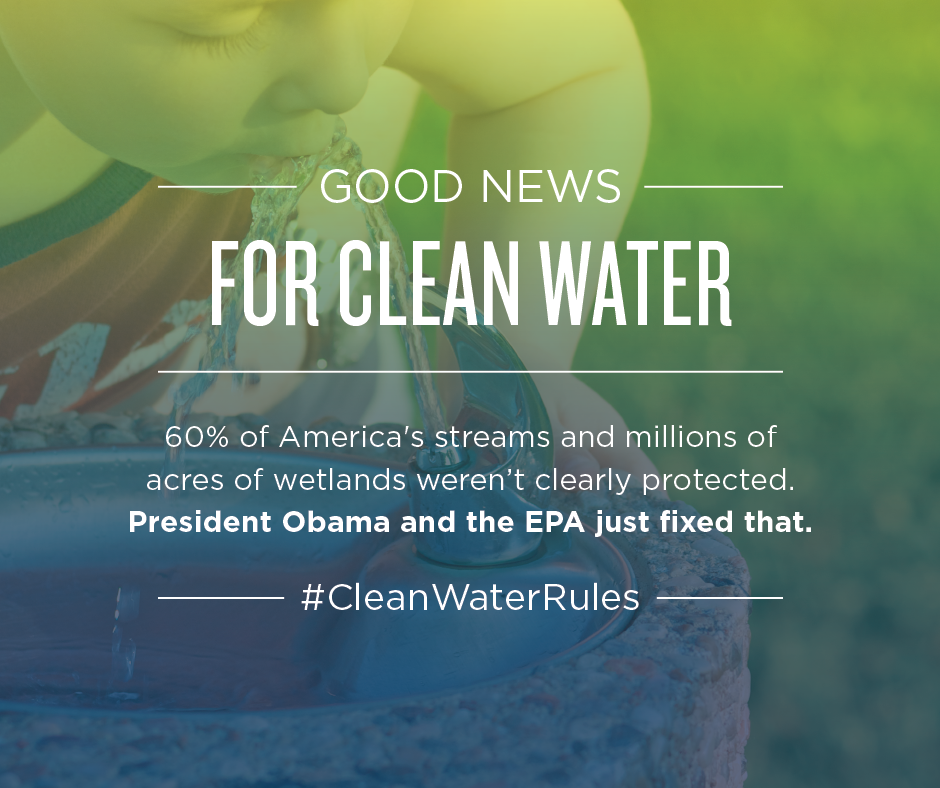
Clean Water Rules!!

1560523_10153124168016749_5453307491490988977_n

If you drink water, this should be important to you.

Clean water is vital to our health. One in three Americans get drinking water from streams that lacked clear protection from pollution without the Clean Water Rule. Finalizing the rule helps protect 117 million Americans’ health.

Our economy depends on clean water. Major economic sectors—from manufacturing and energy production to agriculture, food service, tourism, and recreation—depend on clean water to function and flourish. Without clean water, business grinds to a halt—a reality too many local small business owners faced in Toledo last year when drinking water became contaminated for several days.

http://www2.epa.gov/cleanwaterrule/why-clean-water-rules

http://ecowatch.com/2015/05/28/epa-clean-water-rule/

 http://marylandreporter.com/2015/05/27/environmentalists-praise-new-clean-water-rules-farmers-upset/

 http://www.usnews.com/news/articles/2015/05/27/epa-expands-clean-water-regulations

030In 1972 Congress passed the Clean Water Act.  The Clean Water Rule will be an important addition.  Please call your representatives in Congress and ask them to support clean water!

http://www.house.gov/representatives/find/   http://www.senate.gov/reference/common/faq/How_to_contact_senators.htm

And finally an opinion that the Clean Water Rule doesn’t go far enough:  http://ecowatch.com/2015/05/30/clean-water-rule-fails/