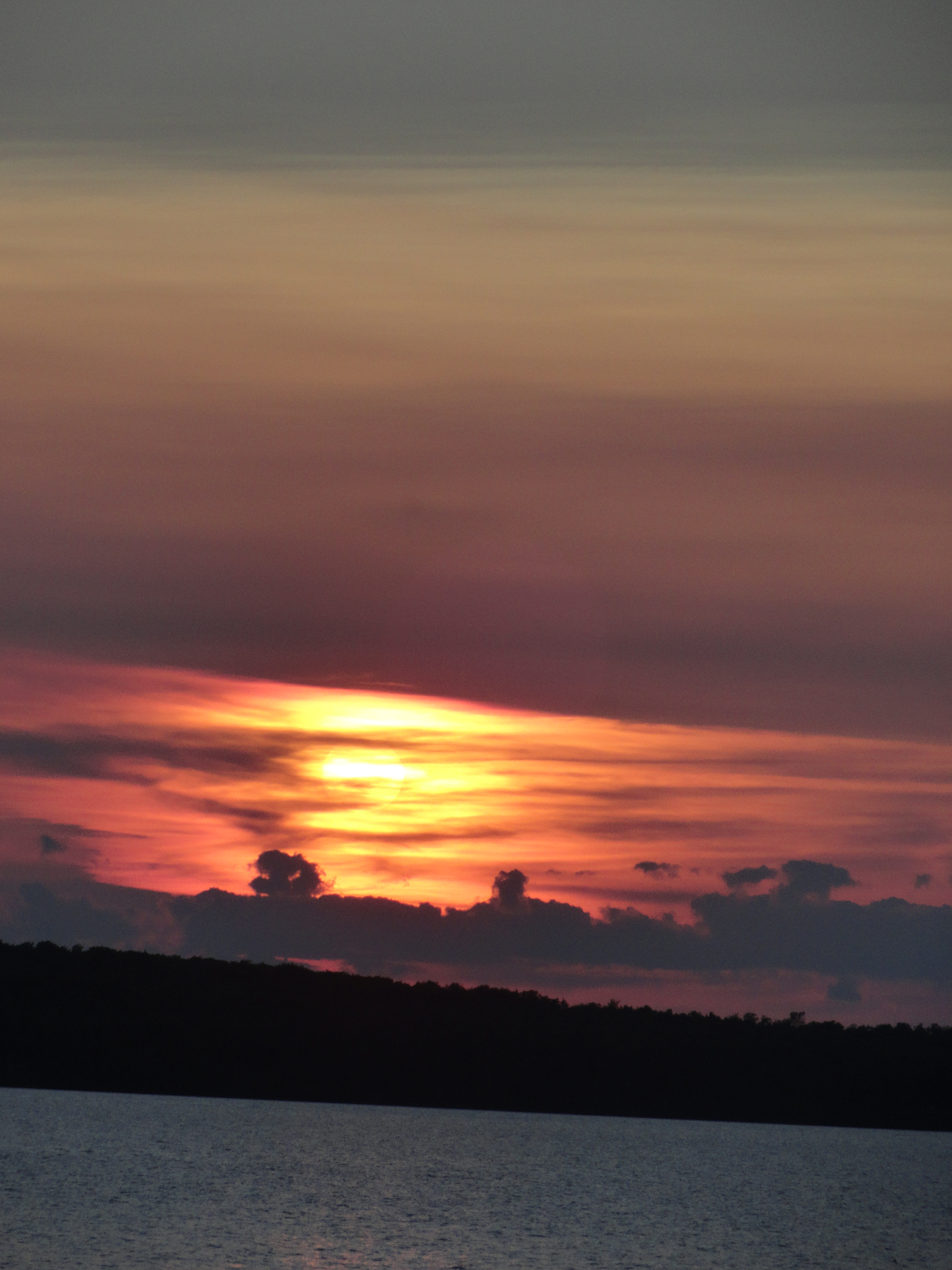
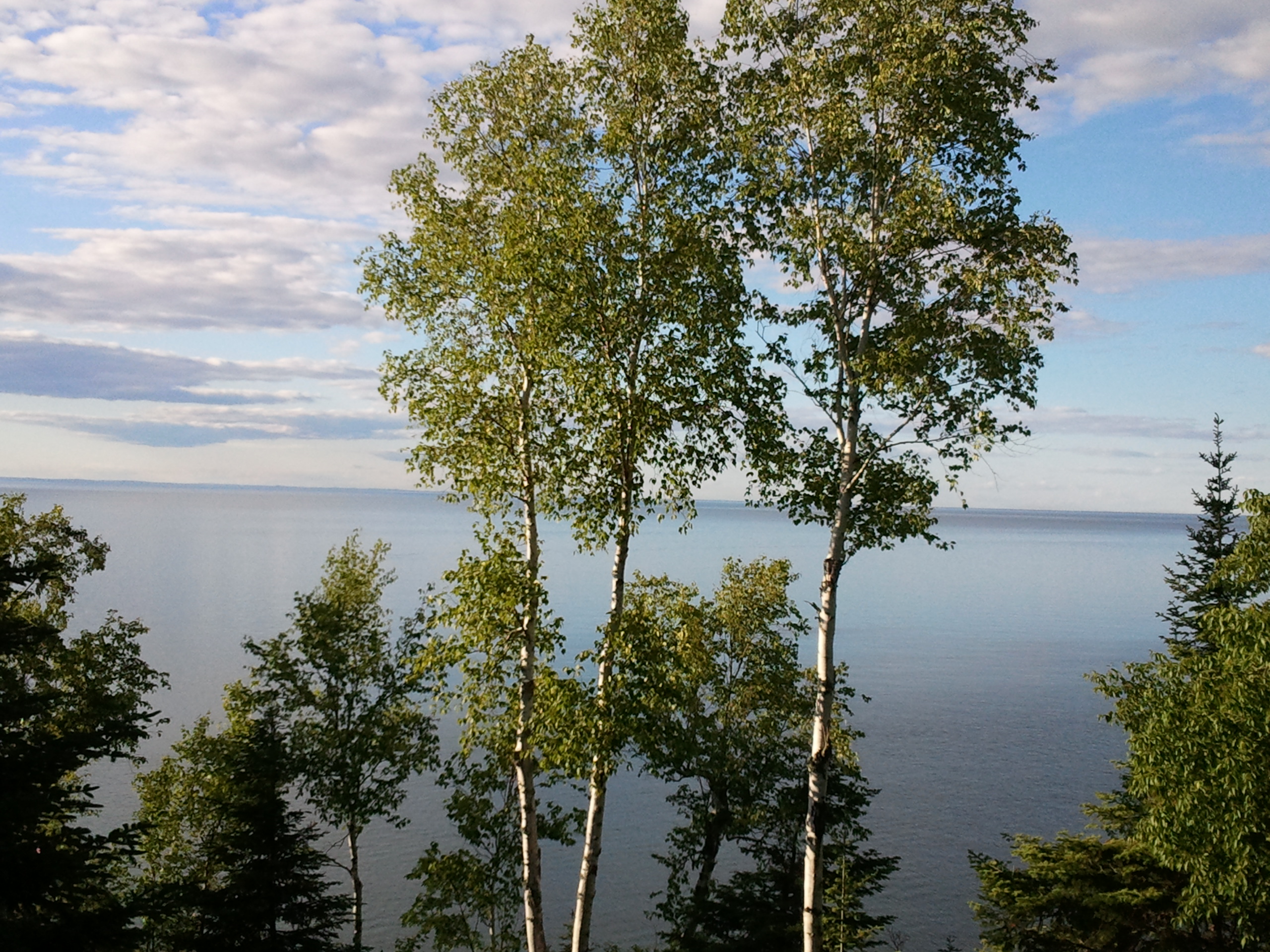
August is the best month of the year on Lake Superior. The weather is perfect, and there is so much to enjoy. The dog days of summer don’t happen here, and it is perfect to be active outside.
Many baby birds are everywhere . The young chickadees, purple finch, and song sparrows are more interested in playing and having fun than their safety. A song sparrows even tries to play with a chipmunk. Grosbeaks and vireos eat berries from the elderberry bushes that are a month late to bloom. Screeching juvenile eagles sit in the white pine overlooking Lake Superior, but the day’s excitement settles down when a fox walks through to check out the days activity.
Temperatures are 70 degree perfect, but the sun is murky and the lake hazy from wild fires in Canada,
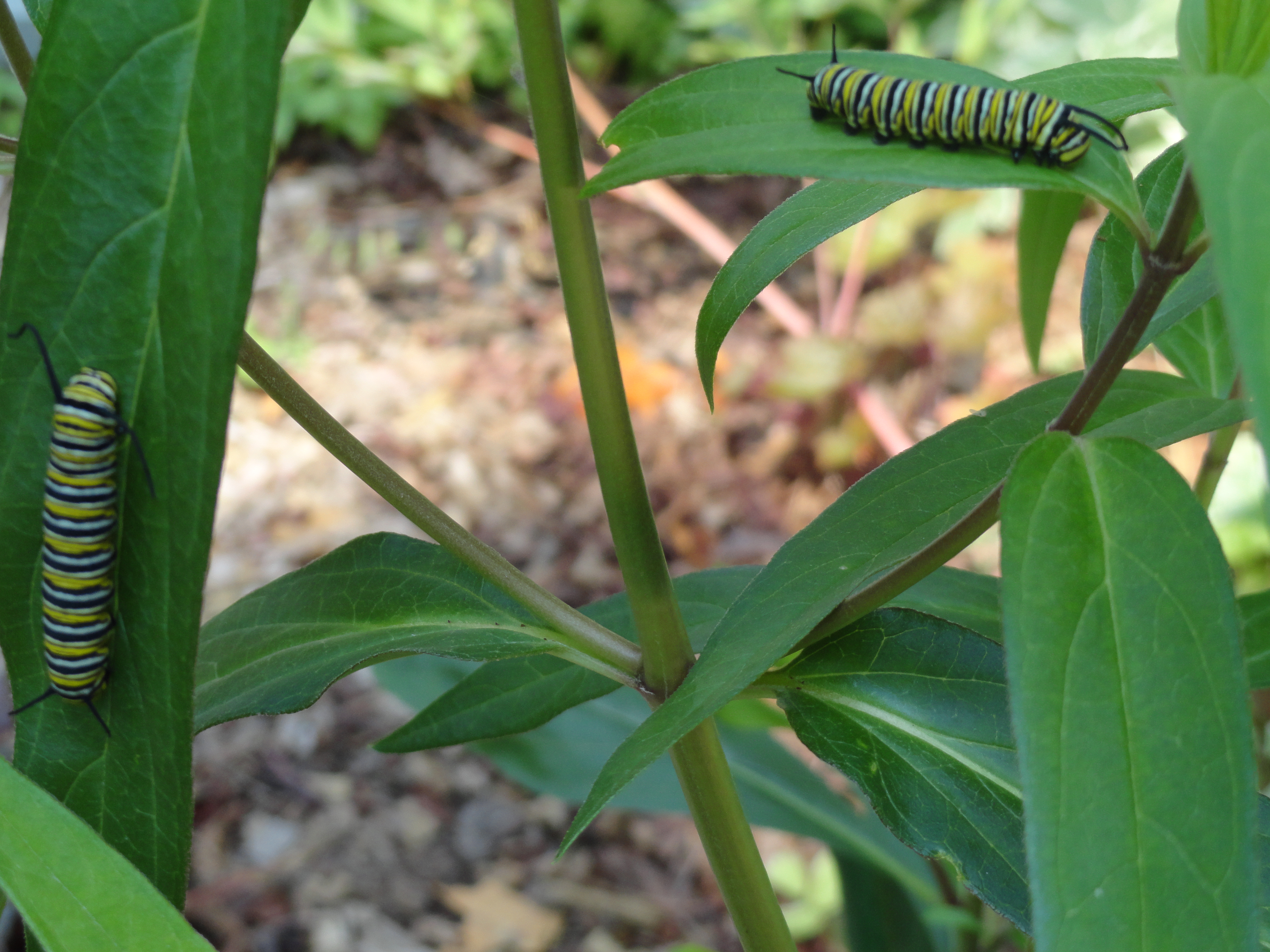
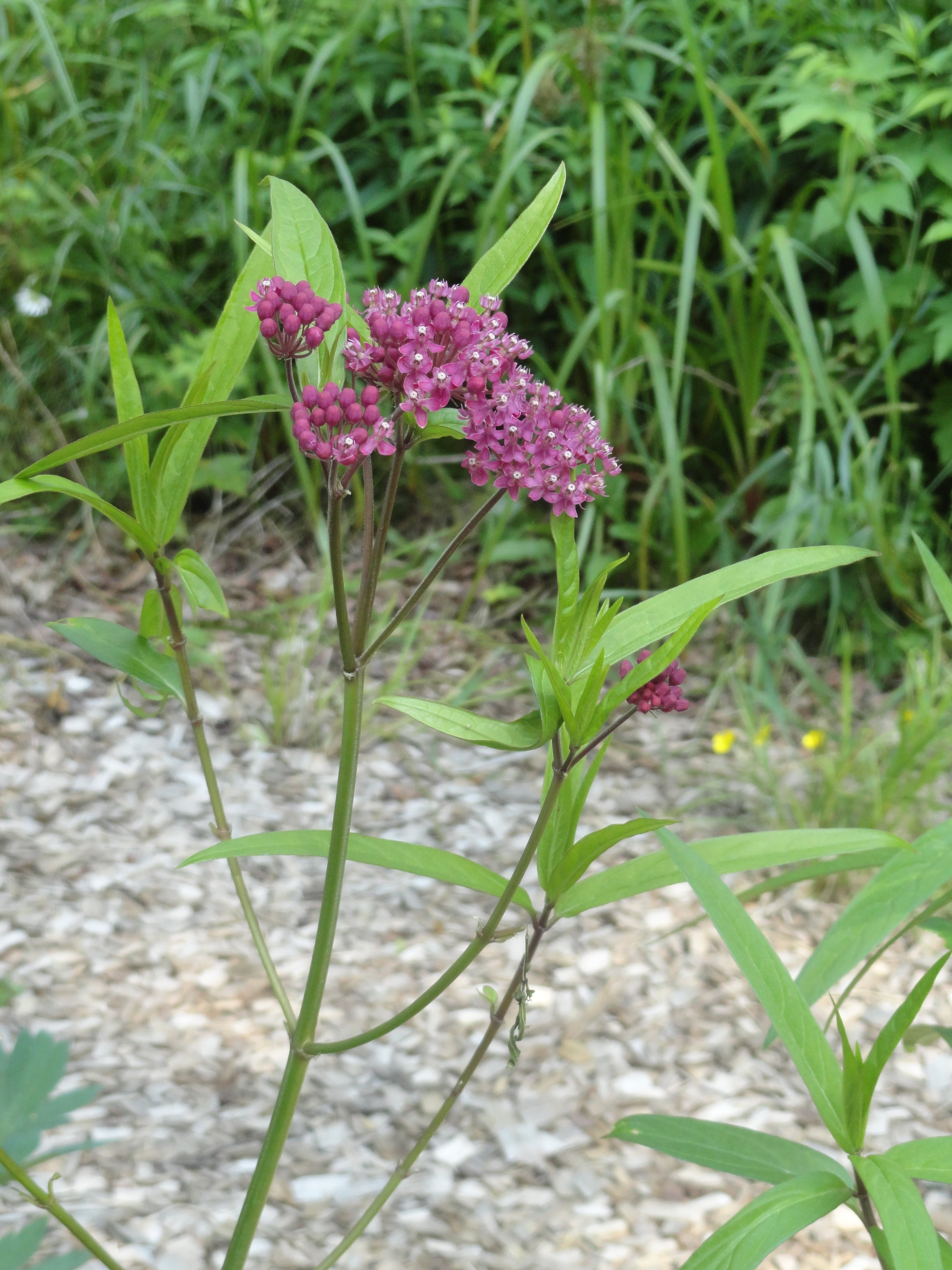
Many pollinator plants are trying to bloom because of the still cold lake, and the bee and butterfly numbers are low as they wait for their favorites to blossom! The very best has been the swamp milkweed with four monarch caterpillars eating their leaves.
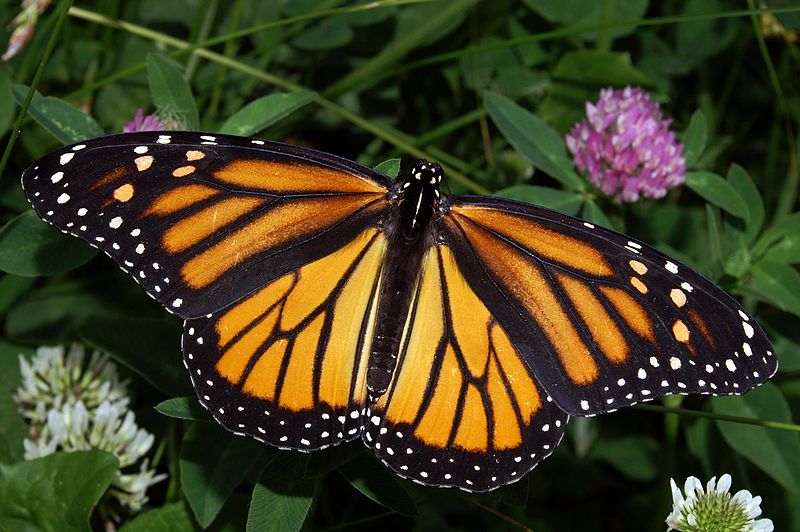
I am excited to become a Move It Monday Ambassador. It is my passion to walk or bike and appreciate the beauty of the outdoors. As you walk notice the birds, butterflies, colors of the day as well as the trees, plants, flowers and whatever is part of your outdoor space. It is a beautiful and fascinating world, get moving and have fun. Today as I was walking in Northern Wisconsin I saw a fox, an eagle, monarchs butterflies, and three other butterfly species. I heard song sparrows and white-throated sparrows sing.
Monday, August 25
Fresh sunny air after a rain storm… Great for a 3 mile walk. I saw 3 monarchs, a comma butterfly and migrating kinglets (little birds).
August 4,
This morning on my walk, August 4, I saw monarch and fritillary butterflies. Also, I heard a veery sing and saw flicker woodpeckers.
Monday, August 17,
Yesterday I walked to the Farmer’s Market, today I walked 2 miles to shopping and the library. A great way to get easy exercise!
I have been writing about the harm of Styrofoam on these pages for the past year. Now there is new evidence:
Styrofoam pulled out of Minneapolis lakes
NEVER take Styrofoam containers or cups
What products have styrene? or Styrofoam
This is from ecowatch.com
Styrene is used to make styrofoam and other plastics. Styrene is all over the place. It lines your refrigerator, it’s in building insulation, in your carpet, it’s in latex and rubber and other products. So okay, maybe you can’t afford to ditch the refrigerator and carpet today. What can you do? Start by avoiding:
Foam cups for holding coffee and hot tea.
Foam plates and bowls that could hold hot foods.
Takeout containers made from foam.
The number 6 on plastic products. They don’t look like foam but do have styrene.
Here’s some advice from Dr. Weil’s well known website:
Styrene isn’t known to leach out of hard plastics, but some evidence suggests that it can leach out of foam food containers and cups when food or drinks are hot–not when they’re cold. Based on what we now know, you’re probably safe using styrene foam cups for cold drinks, but I wouldn’t use them for hot coffee or tea, and I would avoid using plastic containers for hot foods.
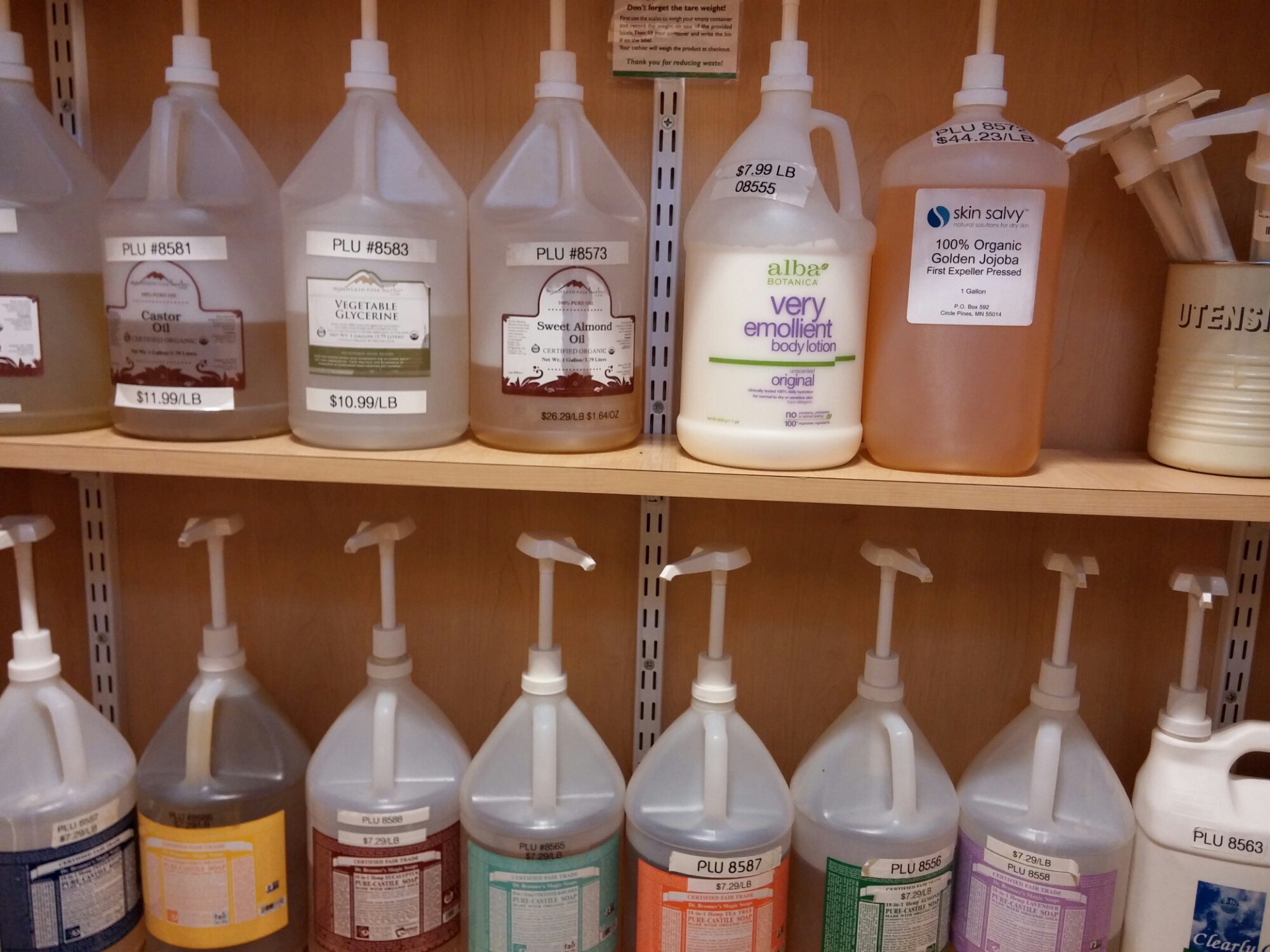
How can you reduce your use of microbeads? By purchasing products at my local food
Some co-ops have fabulous selections of soaps and lotions to refill your bottles
coop and refilling my bottles and containers, I have hoped I wasn’t adding microbeads to our waterways. Below from the Sierra Club is the best information I have seen on microbeads. Read to find out which products NOT to purchase, and how to get rid of them if you have any of the listed items!
Below is from the Sierra Club
HOW TO HANDLE MICROBEADS
BY BOB SHILDGEN
First let’s review. “Microbeads” are tiny beads of plastic less than a millimeter thick that are often added to cosmetics as exfoliants and cleansing agents. Even some toothpastes contain them. It may sound like a strange use of plastic, but cosmetic companies apparently found that microbeads were cheaper than non-synthetic alternatives. The beads themselves (also called “mermaid’s tears”) are made of polyethylene or polystyrene. They are not toxic, but can pass through filters in water treatment plants and enter the water system. There, researchers warn, they can bind to toxic substances such as DDT, polyaromatic hydrocarbons, and polychlorinated biphenyls. Creatures in the water ingest these now poisonous little pellets, endangering themselves and the food chain. Yeah, I know, it’s weird to think that by washing your face or brushing your teeth you might beget a mutant fish—or mermaid—smack in the middle of Lake Erie, but such are the risks of progress through chemistry.
So–the safest way to get rid of the stuff is to leave it in its container, tighten the lid, and send it to the landfill with your regular garbage where it’s quite unlikely to escape into the environment. But NEVER, ever, not ever, pour it down a drain or flush it down the toilet, because that’s exactly how it spreads into the watershed.
By the way, to find out if a product contains these deadly beads, check the label for “polyethylene,” “PE,” “polystyrene,” or PS. The organization, “Beat the Microbead” has a list of products known to contain the beads.
Some good news: The fight against these beady polluters is already having some success. Illinois has banned the manufacture and sale of products containing microbeads, and bans have been proposed in several other states. There is also a growing movement to ban the beads in Europe. The cosmetics industry itself is in damage-control mode as some major companies have agreed to replace the microbeads with safer materials. This is a hopeful sign, because, as we’ve noted before, the last thing we need is still more plastic in our rivers, lakes, and oceans. —Bob Schildgen
Minneapolis will probably set a record cold for this week’s temperatures, and British Columbia and the Arctic might set record heat records.
When I travel, people often say, “Minnesota, it is really cold there!” This week’s cold spell during the All-Star Game is going to reinforce those beliefs. Usually this is the hottest week of the year in Minnesota with average highs in the 80s F.
As someone who loves outdoor activity, I love cooler temperatures, but what is scary is the record heat in British Columbia and the Arctic.
From Minnesota Public Radio:As Minnesota shivers today in record July cold, western Canada is baking, and literally burning up in record heat.
This unprecedented “high amplitude” jet stream pattern is producing record cold and record heat at close range within North America.
Temperatures reached 105 degrees Sunday in parts of British Columbia. At least 20 weather stations across western Canada set high temperature records Sunday.
And from Paul Douglas at the Minneapolis www.Startribune.com
Climate Change for Dummies.Here’s an excerpt of an Op-Ed at theConcord Monitor: “…I distinctly remember my professor Richard Bopp, researcher at Goddard Institute for Space Studies, telling us that the only thing he knew was that you could not overload such a delicately balanced system like our atmosphere and not have something change. The idea that everything in the world would gradually and evenly rise in temperature was unlikely, but he and his colleagues could not offer an alternative at that time. Well, 25 years later, we have a better idea. Thanks to the Intergovernmental Panel on Climate Change, a voluntary 2,000-member group of scientists committed to understanding climate change, we can verify that we are experiencing more severe weather and increases of ocean levels, glacial melting and average temperature…”
“I arise in the morning torn between a desire to improve the world and a desire to enjoy the world. This makes it hard to plan the day.” E. B. White
Superior Views, early July 2014
Finally, beautiful weather! Unfortunately, after rainy June, the gnats and mosquitoes take
White Admiral Butterfly on the shore of Lake Superior
fun away from the enjoyment of the magnificent sunny calm days!
Redstart warblers sing and love all the mosquitoes! Also, song sparrows, Northern parula, and red-eyed vireo sing in constantly until a fox walks down the driveway. Hummingbirds, finch and pine siskin frequent our feeders. Other birds that nest in our neighborhood are: Chestnut sided warbler, common yellow throat, white-throated sparrow, winter wren, and oven birds. They sing a symphony of joy soon to end with July nesting season.
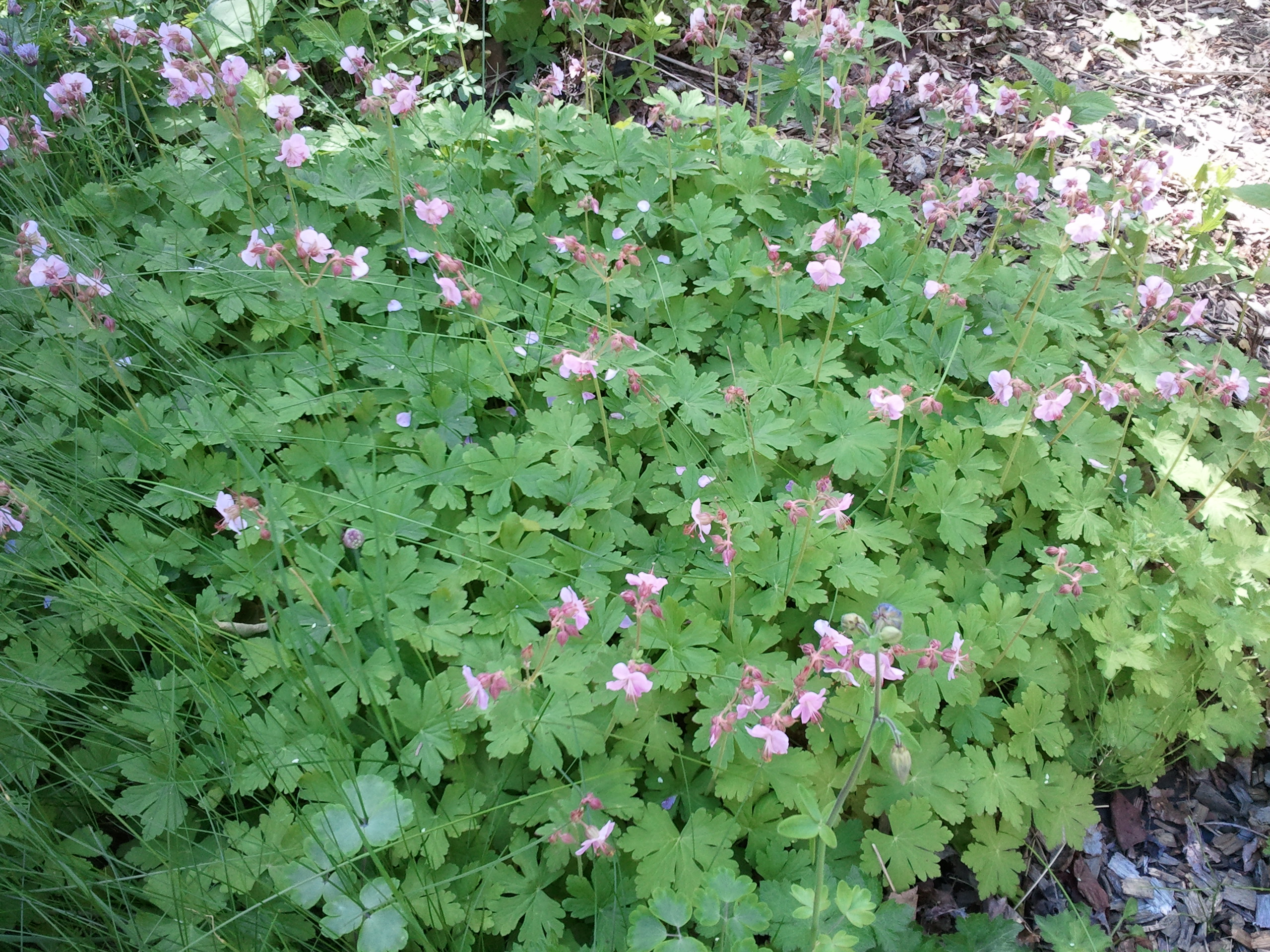
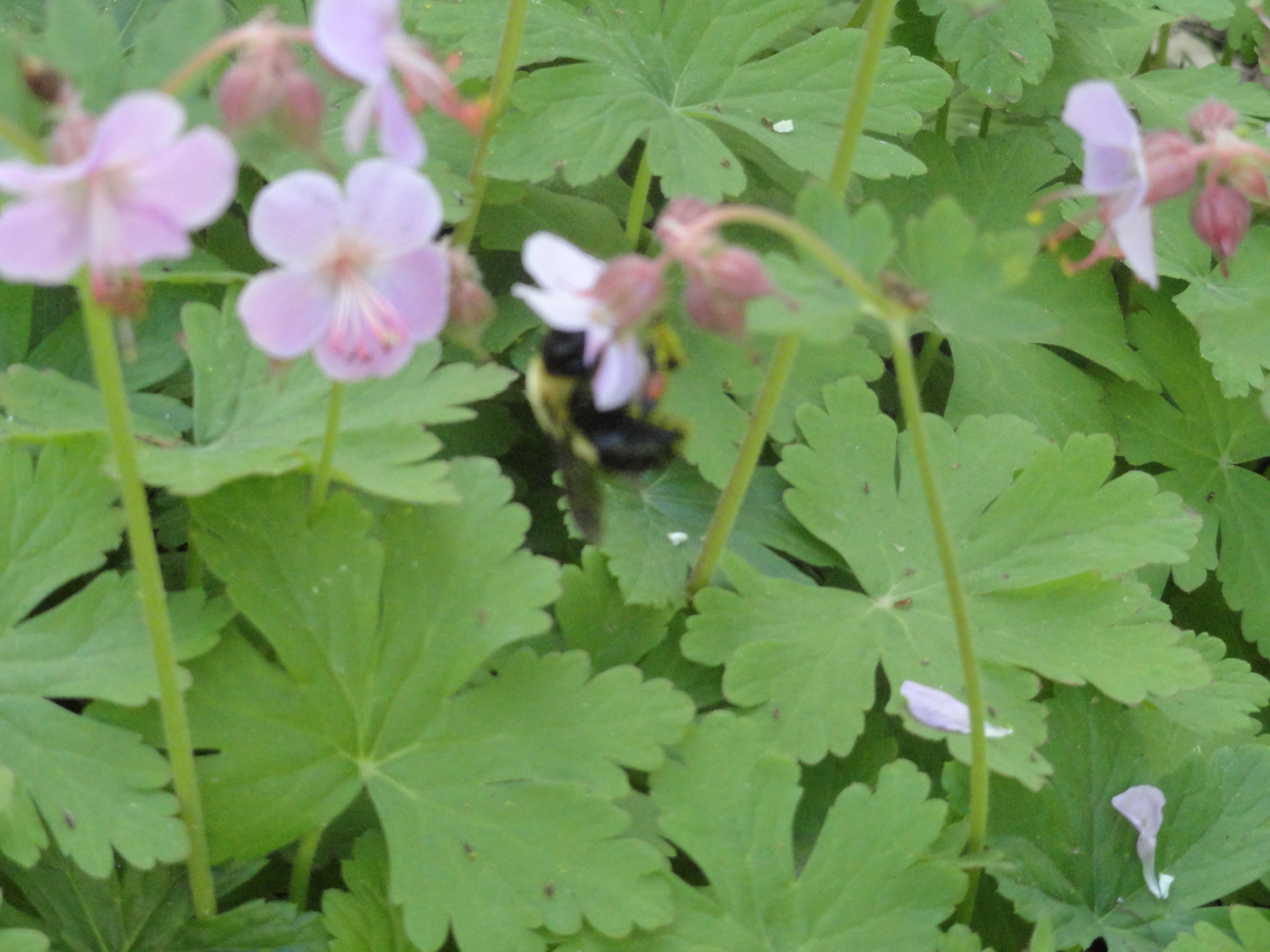
The best plant for pollinators in early July is the wild geranium.
The hummingbirds and bees love wild geraniums
The birds can be heard, but seeing them is difficult. However, the swallow-tail butterflies, a few monarchs, viceroys, painted ladies, white admirals and northern crescent add to the beauty of each day. Eggs from the painted lady butterfly sit on the pearly everlasting plants, and we watch for caterpillars.
In the past two weeks I have spent 5 days in Iowa, and then a week in Northern Wisconsin away from the agricultural belt. As I biked and walked in Iowa the lack of butterflies was disheartening. I even saw and smelled the Iowa DOT spraying along the highway. In contrast northern Wisconsin is more grass/hay country, lower pesticide use, and the butterflies aren’t like what I would like to see, but they are flitting around when you look for them. The bee population up north is still questionable, but better than what I saw in Iowa.
I agree with this excellent letter to the editor in today’s Minneapolis Star Tribune:
Thank you for “Bees at the brink” (June 29). Our rural surroundings have changed since we moved to south-central Minnesota in 1960. Our small farms have mostly disappeared, and our once-vibrant town struggles to stay alive. There was much more variety in the landscape: I remember picking strawberries along Hwy. 169 with my children; we heard and saw meadow larks and pheasants, and clouds of monarch butterflies were a part of every spring and summer. Now what do we have? Corn and soybeans from horizon to horizon; hedgerows with their diversity of plants and animal life gouged out; wetlands drained, and herbicides ensuring that few bee-friendly flowers grow on roadsides and lawns. Our state and federal supports, with their continuing crop insurance programs — even for marginal land — and cutbacks on set-aside acreage such as CRP and CREP help to perpetuate the increasing sterility of our natural environment.
Economic success should not be the only determinant of wealth. We lose too much if it is.
It is worrisome that most plants still contain neonicotinoids!Native plants areNeonicotinoid free
Purchasing plants that are free of neonicotinoids is a challenge. I went to the local nursery that claimed to not use neonics. They don’t use the neonic pesticide, but their suppliers might. The clerk was very helpful, but most of the annuals
Swallowtail on a dianthus
were not neonic free. I had to search through the plants for specific containers, but the large majority of the plants still available could have been treated with neonics.
Report Release from Friends of the Earth: Gardeners Beware 2014
In a study commissioned by Friends of the Earth and conducted by independent scientists at the Pesticide Research Institute, findings show that most “bee-friendly” garden plants sold at major retailers in the US are routinely pre-treated with bee-harming pesticides, with no warnings to consumers.
Bees are dying at alarming rates, and neonic pesticides are a key contributor to recent hive losses. Bees and other pollinators are essential for two-thirds of the food crops humans eat every day, and contribute over $20 billion dollars to the US economy. Our own food security is tied closely to the survival of bees and other pollinators – we must take swift action to protect them.
The power to practicing bee-safe pest control is in your hands. Read the full report here and learn how to get started.
Perhaps you already followed the 10 pointers to help birds in the spring, or you provided nesting material to birds in your garden. But now that it’s officially summer, what can you do to help our feathered friends? http://ecowatch.com/2014/06/25/10-ways-help-birds-summer/?utm_source=EcoWatch+List&utm_campaign=7846102c7e-Top_News_6_28_2014&utm_medium=email&utm_term=0_49c7d43dc9-7846102c7e-85912169
During summertime, billions of birds throughout North America are busy raising their young and already preparing for migration. “The next three months are critical,” says American Bird Conservancy President George Fenwick. “Some studies suggest that perhaps as many as half of all migrating birds do not make it back home, succumbing to various threats along the way. Our birds need all the help they can get.”
While birds have instincts (and smarts—a recent study found crows are as smart as seven-year-olds), it doesn’t mean they can’t use some assistance with their life-sustaining tasks. “Simple instinct is not always enough to keep the birds alive given the enormous tracts of habitat that have become suburban sprawl; the draining of waterways; the loss of biomass to pesticides; air and water contamination; and other threats such as window glass, cats and wind turbines,” continues Fenwick.
Here are American Bird Conservancy’s recommended top 10 ways you can help birds breed successfully and prepare for fall migration.
1.Leave baby birds alone.
If you find a baby bird out of its nest, don’t pick it up or bring it indoors. Although people mean well by “rescuing” the baby birds they find, in almost all cases, the parents are nearby and know best how to care for their young. An exception is injured birds, which can be taken to a local wildlife rehabilitator for treatment.
2. Ensure dogs and cats stay away from young birds.
Free-roaming cats kill billions of birds every year, taking an especially high toll on fledglings. Loose dogs also have an impact on nesting birds; for example, roaming dogs are suspected of recently wiping out a colony of threatened Least Terns in Florida. Keep your pets contained, and be especially cautious near beach-nesting birds.
3. Keep things fresh.
Your birdbath or other water feature should be cleaned regularly and kept filled with fresh water. Hummingbird feeders also need special attention, as hummingbirds will be switching back from an insect-rich diet to nectar in preparation for flights south in the fall. Be sure to thoroughly clean hummingbird feeders and replace the sugar water before it ferments—usually within three to seven days depending on the heat and sun.
4. Maintain your land in a bird-friendly fashion.
Consider letting some of your yard or other property go “wild,” or garden with native plants. Even small wild areas act as sources of food and shelter for birds through the summer. Avoid or minimize tree trimming to prevent disturbance to nesting birds. Where possible, avoid mowing grass in large fields and roadsides until after July to enable ground-nesting grassland birds to safely fledge.
5. Be a good landlord.
If you’re lucky enough to have swallows or phoebes nesting on your porch or carport, keep the nest intact. The birds will be gone soon enough, and in the meantime, they will help you out by eating hundreds of insects each day. If you have active nest boxes, clean them out after the young have fledged. Old nesting material attracts parasites and can be a source of disease.
6. Don’t spray: Stay away from pesticides.
Reconsider using pesticides, since even products labeled as “safe” will likely have negative consequences on birds. For example, many home and garden products includeneonicotinoids, or neonics, which have been found to be deadly to both bees and birds in even minute amounts. See this list of products to avoid from our friends at the Center for Food Safety.
7. Celebrate good times … without balloons.
When weddings, graduations and other parties are on your list of to-do’s, put balloons on your list of don’ts. Birds can become entangled in the long ribbons; individuals have been found hanging from trees or asphyxiated. Birds may also ingest the deflated balloon itself, which can eventually block the digestive tract and cause the animal to starve.
8. Turn the outdoor lights out.
Review your outdoor lighting for unnecessary disturbance to night-flying birds (as well as wasted energy). Bright artificial lights can disorient migrating birds and make collisions with windows, buildings and other structures more likely. Consider putting steady burning lights on motion sensors. Or, if your outdoor lighting needs permit, consider blue and green LED lights as they are less distracting to night-migrating birds.
9. Be a bird-friendly boater.
If you’re boating, avoid disrupting birds. Boats operated in proximity to nesting birds can cause behavioral changes, even leading to nest abandonment and failure in some cases. If you notice congregations of birds, steer clear to enable them to spend their energy on gathering food and raising their young.
10. Gone fishing? Remember the birds.
Discard fishing line properly in trash receptacles, since entanglement in line is a common and preventable source of bird mortality. If you accidentally hook a bird, don’t cut the fishing line. Instead, net the bird, cut the barb off the hook, and push it backward to remove. Just as important, be sure to use only nonlead fishing gear. Scores of birds suffer mortal poisoning from ingesting lead weights in fishing gear.
A sphinx moth caterpillar in Susan Damon’s boulevard, which is filled with native plants, Wednesday, June 11, 2014 in St. Paul. Jennifer Simonson/MPR News
LISTEN Story audio http://www.mprnews.org/story/2014/06/23/minnesota-native-plant-garden
When Susan Damon and her husband bought their St. Paul home a couple decades ago, invasive plants had a stranglehold. Now their yard is home to more than 100 species of native plants and a food source for an array of critters.
It’s proof that even city dwellers can create a welcoming habitat for butterflies, bees and songbirds.
Susan Damon Jennifer Simonson/MPR News
They replanted with prairie grasses, high bush cranberry and hazelnut, among other species. There’s almost no weeding — the natives crowd out the dandelions — and hardly any watering since some of the plants have roots sunk up to 10 feet deep into the soil.
Damon estimates she and her husband have spent maybe $2,000 on native plants but adds that the yard takes care of itself with just a bit of cleanup and some thinning of plants in spring.
She recommends six plants to get started — see the gallery below for more details. And click on the play button above to hear her talk about the joys of ditching the lawn and how to do it.
Milkweed grows three to six feet tall and the stem’s milky sap is toxic, though parts of the plant are edible. Monarch butterflies need milkweed plants to grow – its eggs are laid on its leaves and larvae will feed on them. In this photo, a swamp milkweed beetle sits on a milkweed plant in gardener Susan Damon’s yard. Jennifer Simonson/MPR NewsGolden Alexander, photographed in Susan Damon’s boulevard, will bloom as early as late-April and as late as mid-June. It’s a very attractive plant to butterflies. Jennifer Simonson/MPR NewsConeflowers, like the ones pictured here, grow two to five feet tall. Only the narrow-leaved purple coneflower (Echinacea angustifolia) is native to Minnesota. The coneflowers of the Echinacea genus have a medicinal history and is still used in herbal supplements today. Jennifer Simonson/MPR NewsWild bergamot is beloved by long-tongue bees and butterflies and blooms between late-summer and early-autumn. Courtesy of Karl Foord/University of Minnesota ExtensionGoldenrod can grow from eight to 60 inches tall and blooms in the fall. The plant is very attractive to bees. Courtesy of Karl Foord/University of Minnesota ExtensionNew England aster (aka Michelmas daisy) blooms in the fall and can grow up to six feet tall. The plant is very attractive to monarchs and bees. Courtesy of Minneapolis Park and Recreation BoardA wood chip path winds through gardener Susan Damon’s yard, which is filled with native plants. Jennifer Simonson/MPR NewsSolomon’s Seal, which attracts bumble bees, in native plant enthusiast Susan Damon’s yard. Jennifer Simonson/MPR NewsCanadian white violet in Susan Damon’s yard. Jennifer Simonson/MPR NewsSusan Damon’s St. Paul home is surrounded by native plants that attract and feed a variety of bugs and birds. Jennifer Simonson/MPR NewsBlue wild indigo growing in native plant gardener Susan Damon’s front yard. Jennifer Simonson/MPR









 Dan Olson
 Health4earth
