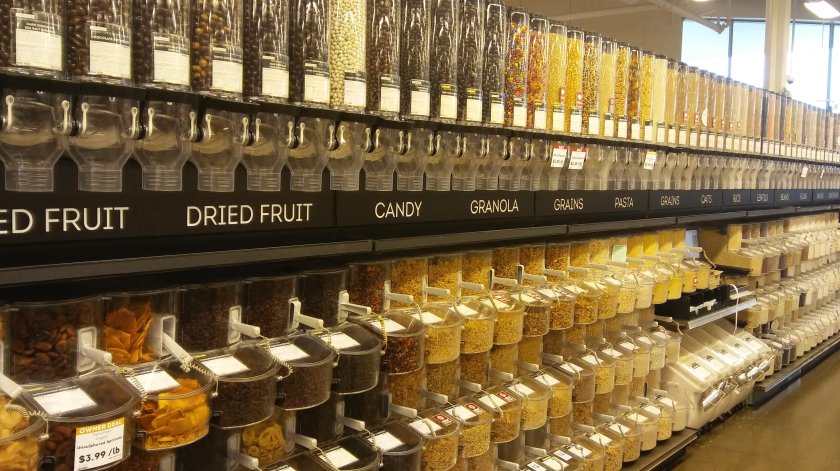
It is World Refill Day! One of the best ways to reduce your plastic footprint is to refill your own containers. Grains, nuts, beans, and spices are so easy to purchase in bulk. From my experience, food coops are the easiest places to bring and use your own containers. Yesterday, my husband and I filled over ten of our own containers at a food coop. That’s a huge reduction in packaging! Don’t start with more than two or three items. Those at the coop will be glad to help you get started. Usually you begin with a tare weight of your container, fill your container with the item you want, label the number of the product on the container with the tare weight. Your coop might have a different process, but it will be similar to this. It sounds confusing, but it is easy when you see the entire process.
As a global movement, we have the power to create a wave of change. By choosing to reuse, we’re saving millions of pieces of plastic and sending a message to the rest of the world that the solutions to plastic pollution and the climate crisis are there – and together we can keep our environment, oceans, cities and communities plastic-free for the future.
Our throwaway culture is polluting our planet and we need to turn off the tap when it comes to single-use plastic. Globally, we use millions of tonnes every year and it’s becoming clear that we can’t recycle our way out of our plastic problem. Plastic is not only polluting our planet, impacting communities around the world, and contributing to the climate crisis, but it’s making its way into our bodies through the air we breathe and the food we eat.
The Mississippi Watershed by Jon Platek This how trash can reach the ocean.
This morning while walking around the lake by my house, I was sad to see plastic bottles bobbing around in the lake. The amazing thing is that those plastic bottles from a lake in land-locked Minnesota could end up in the Gulf of Mexico. 80% of marine litter originates from land. The Minnehaha Creek drains this lake into the Mississippi River, which flows into the Gulf of Mexico. Plastic in a Minneapolis lake, could float the Mississippi River into the Gulf of Mexico, these plastic bottles and bags are a dangerous threat to marine life, and they are unpleasant to water recreation.
I am sure you know most of the ways to avoid plastic, but you might learn something from this list on reducing plastic use. The excellent list below is from the NRDC https://www.nrdc.org/:
“Plastic, of course, is uniquely problematic because it’s nonbiodegradable and therefore sticks around for a lot longer (like up to 1,000 years longer) than other forms of trash. And we’re not just talking about people dumping their garbage overboard. Around 80 percent of marine litter actually originates on land—either swept in from the coastline or carried to rivers from the streets during heavy rain via storm drains and sewer overflows.
So the best thing we can do to protect our waterways is trying to keep as much plastic as possible out of the waste stream in the first place. The good news? There are many small ways you can have a big impact. The NRDC has ten important ways to reduce your plastic footprint:
1. Wean yourself off disposable plastics.
Ninety percent of the plastic items in our daily lives are used once and then chucked: grocery bags, plastic wrap, disposable cutlery, straws, coffee-cup lids. Take note of how often you rely on these products and replace them with reusable versions. It only takes a few times of bringing your own bags to the store, silverware to the office, or travel mug to Starbucks before it becomes habit.
2. Stop buying water.
Each year, close to 20 billion plastic bottles are tossed in the trash. Carry a reusable bottle in your bag, and you’ll never be caught having to resort to a Poland Spring or Evian again. If you’re nervous about the quality of your local tap water, look for a model with a built-in filter.
3. Boycott microbeads.
Those little plastic scrubbers found in so many beauty products—facial scrubs, toothpaste, body washes—might look harmless, but their tiny size allows them to slip through water-treatment plants. Unfortunately, they also look just like food to some marine animals. Opt for products with natural exfoliants, like oatmeal or salt, instead.
4. Cook more.
Not only is it healthier, but making your own meals doesn’t involve takeout containers or doggy bags. For those times when you do order in or eat out, tell the establishment you don’t need any plastic cutlery or, for some serious extra credit, bring your own food-storage containers to restaurants for leftovers.
5. Purchase items secondhand.
New toys and electronic gadgets, especially, come with all kinds of plastic packaging—from those frustrating hard-to-crack shells to twisty ties. Search the shelves of thrift stores, neighborhood garage sales, or online postings for items that are just as good when previously used. You’ll save yourself a few bucks, too.
6. Recycle (duh).
It seems obvious, but we’re not doing a great job of it. For example, less than 14 percent of plastic packaging is recycled. Confused about what can and can’t go in the bin? Check out the number on the bottom of the container. Most beverage and liquid cleaner bottles will be #1 (PET), which is commonly accepted by most curbside recycling companies. Containers marked #2 (HDPE; typically slightly heavier-duty bottles for milk, juice, and laundry detergent) and #5 (PP; plastic cutlery, yogurt and margarine tubs, ketchup bottles) are also recyclable in some areas. For the specifics on your area, check out Earth911.org’s recycling directory.
7. Support a bag tax or ban.
Urge your elected officials to follow the lead of those in San Francisco, Chicago, and close to 150 other cities and counties by introducing or supporting legislation that would make plastic-bag use less desirable.
8. Buy in bulk.
Single-serving yogurts, travel-size toiletries, tiny packages of nuts—consider the product-to-packaging ratio of items you tend to buy often and select the bigger container instead of buying several smaller ones over time.
9. Bring your own garment bag to the dry cleaner.
Invest in a zippered fabric bag and request that your cleaned items be returned in it instead of sheathed in plastic. (And while you’re at it, make sure you’re frequenting a dry cleaner that skips the perc, a toxic chemical found in some cleaning solvents.)
10. Put pressure on manufacturers.
Though we can make a difference through our own habits, corporations obviously have a much bigger footprint. If you believe a company could be smarter about its packaging, make your voice heard. Write a letter, send a tweet, or hit them where it really hurts: Give your money to a more sustainable competitor.” NRDC
I would add one thing to the list. Never use Styrofoam! Some stores package fruits and vegetables on Styrofoam trays! Awful.
Finally, current status of the Mississippi River in the Twin Cities from Friends of the Mississippi.



 Health4earth