When it’s cold, make soup from whatever you have in your refrigerator. This is just a suggestion.
Quinoa Vegetable Soup
3 carrots cleaned and chopped
Quinoa Vegetable Soup
2 celery ribs chopped
1 small zucchini sliced
1 sweet apple diced (I used fireside)
green beans fresh, frozen or canned 1 -2 cups
2 vegan vegetable broth cubes
2 bay leaves
1 T basil
½ cup rinsed fair trade quinoa
2 cloves garlic
1 ½ tsp sea salt
2 pinches of rosemary
About 7 cups of water
Brown onion in a large pot until it just begins to turn brown. Next add apple, garlic and the remainder of vegetables. Stir and fry about 5 minutes. Add salt, broth cubes, basil, bay leaf, quinoa, and water. Simmer for about one hour. Serve hot with bread, crackers and grated cheese.
“Maybe you can’t change the whole world, but you can change your world.” Harvey Mackay
Climate change is real, human activity is causing it, and with all of us taking simple actions we can make a big difference. Below are my suggestions for a new commitment to our earth, our children, and to our own health!
My top TEN suggestions for a happier healthier 2014:
Always turn off lights and unplug electronics when not in use. For me this is a constant effort because I love light during the winter!
Drive less: Walk, bike, ride share, Carpool, combine errands, and take public transport.
Reduce two-cycle engine pollution: Add more garden and pollinator friendly plants to reduce your lawn mowing, shovel snow by hand, and choose silent sports. Polluting our air is not cool!!
Purchase products made from recycled materials. This saves energy, trees, water and natural resources. Recycled paper products are the easiest to find.
Reduce or eliminate your use of pesticides, especially Neonicotinoids. You, your pets, birds and butterflies will be much healthier.
Reduce or eliminate beef from your diet. Producing beef uses lots of energy!
Recycle all plastics, glass and metal cans, and of course paper. According to TerraCycle 84% of household waste can be recycled
Turn down the thermostat and survey your home for ways it can be more efficient. Schedule an energy audit from your local power company.
Read Labels: Never purchase or use hand wash or cleaning products with Triclosan. There is evidence they are hormone disrupters and they concentrate in our lakes and streams. Change your cleaning products to reduce chemicals in your home. Baking soda and vinegar can clean almost anything! This is a link to make your own products: http://www.pca.state.mn.us/index.php/view-document.html?gid=11368
Finally, work to elect leaders that believe in Climate change.
“It’s not shopping in itself that’s so harmful, it’s what we buy,” says information released by Adbusters. “As consumers, we should question the products we buy and the companies who produce them.”
SO, How can we become better consumers? We have incredible power with our consumer dollars. How can we use that power wisely?
Why would you want to reinforce corporate greed with your purchases when we can support local green home grown businesses? This holiday shop where business are trying to do right by our earth and for their employees. Every year I am amazed at the creative businesses I discover…… Imagine all the wonderful small green businesses we could reinforce with our wallets.
Everyone wants to save money, but you are not saving money when you purchase lots of cheap junk that will end up in the land fill next year!. About 8 years ago, I stopped shopping Target, and was surprised by the money saved because I was avoiding lots of cheap products we could live without. One of the best things we can do for our planet is to consume less.
We can use our dollars to support local, green, and homegrown businesses. We can shop for quality and keep dollars in our own communities.
My ten tips for Health4earth holiday shopping:
1. Always shop with your reusable bags, and avoid plastic.
2. Read the labels and ask where products are manufactured. Local craft fairs of handmade items are wonderful for holiday gifts.
3. Shop businesses that pay a living wage and businesses that sell fair trade items.
4. Shop local in your neighborhood, walk or take public transport if possible.
5. Reinforce businesses and restaurants that recycle and do not use styrofoam. I just learned the Mall Of America does NOT recycle bottles and cans.
6. Never buy products for children, including toys, made in China unless you are certain they are chemical free.
7. Avoid purchases from developing countries that lack regulation and enforcement of worker standards such as China, Bangladesh, and India. The closer to home our purchases are manufactured the better handle we have on working conditions and salary. Some countries do not enforce child labor laws! You can be confident “fair-trade” doesn’t have these problems.
8. Purchase for quality and things that will last. A friend’s new apartment refrigerator lasted 3 years, and it was replaced instead of repaired. That must end!!
9. Don’t forget consignment and reuse businesses.
10. Always recycle packaging and purchase products with minimal packaging.
Below are some great sensible businesses that care about our earth and their employees.
This ad from Save-Bees.org is running in newspapers across the United States: http://savebees.org/
“Honey Bees, native bees and other pollinators are responsible for 1 out of every 3 bites of food we eat. Bees pollinate 71 of the 100 crops that make up 90% of the world’s food supply. Many fruits and vegetables, including apples, blueberries, strawberries, carrots and broccoli, as well as almonds and coffee, rely on bees. These beneficial insects are critical to maintaining our diverse food supply.
Honey bee populations have been in alarming decline since 2006 Widespread use of a new class of toxic pesticides, neonicotinoids, is a significant contributing factor…..
This week, 15 countries are imposing a two-year restriction on the use of several of these chemicals. Meanwhile, the United States is stalling. The U.S. Environmental Protection Agency estimates it will be 2018, 5 years from now, before it makes a decision on this deadly class of pesticides
Bees can’t wait 5 more years–they are dying now. The U.S. Environmental Protection Agency has the power and responsibility to protect our pollinators. Our nation’s food system depends on it.”
Adapted from “32 vegan recipes perfect for Thanksgiving” Use organic ingredients for this healthy pie.
Walnut/Date Crust: Process in a food processor: 9 coarsely cut seeded dates (add a few dates at a time) with 2 cups walnuts. Press mixture into a glass pie plate. Freeze until ready to add filling.
Pumpkin Filling:
2 cups cashews soaked over night and then drained
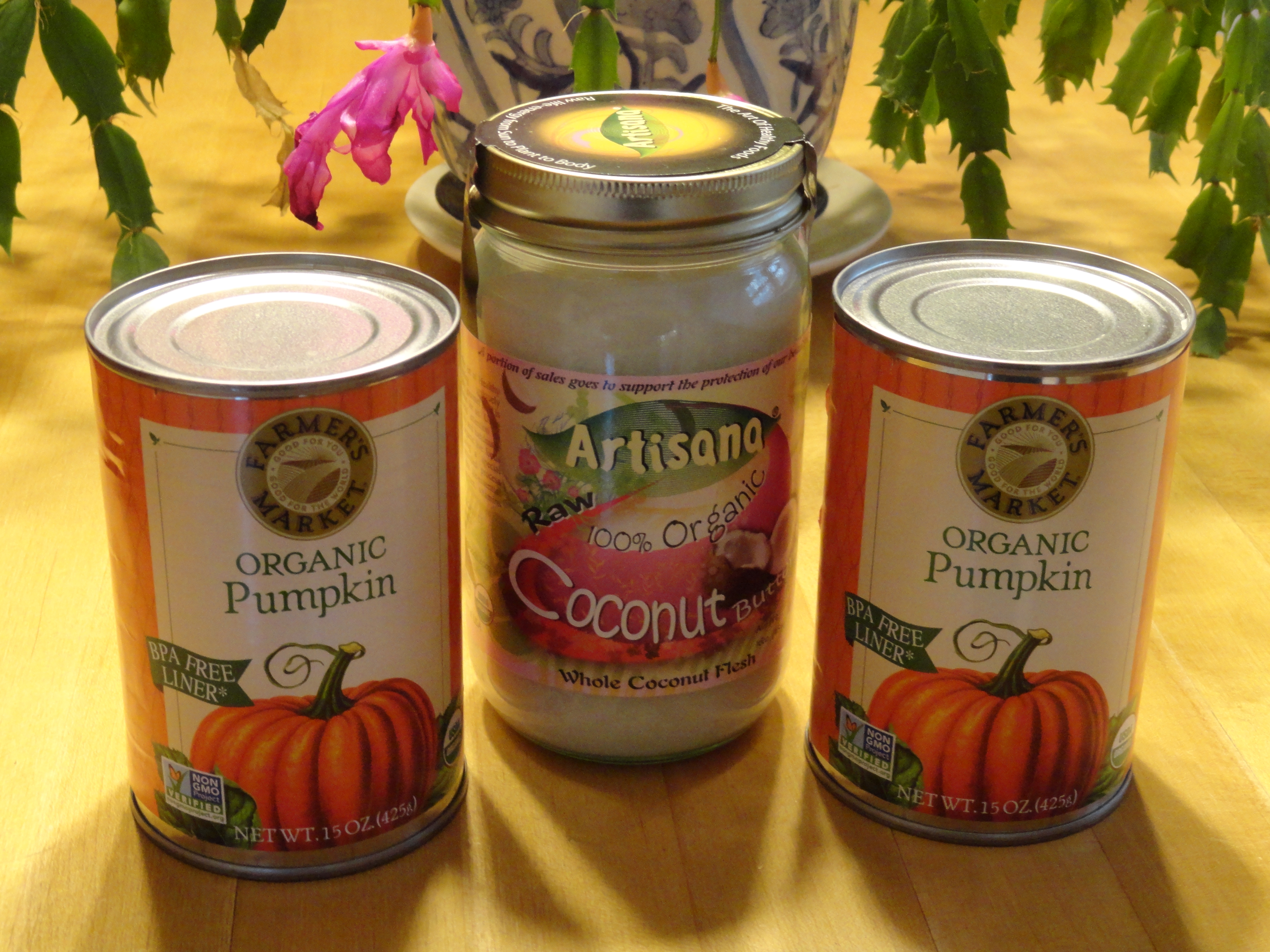
1 can pumpkin
½ cup coconut oil
¼ to ½ cup agave or maple syrup (to taste)
juice of ½ lemon
1 tsp vanilla
½ tsp salt
1 heaping tsp cinnamon
½ tsp allspice
Process all together in a food processor and place on walnut/date crust. Refrigerate several hours before serving. Make a day ahead for the best flavor. Garnish with your favorite fruit. Keep refrigerated.
Yogi Berra on November: “It’s getting late earlier”
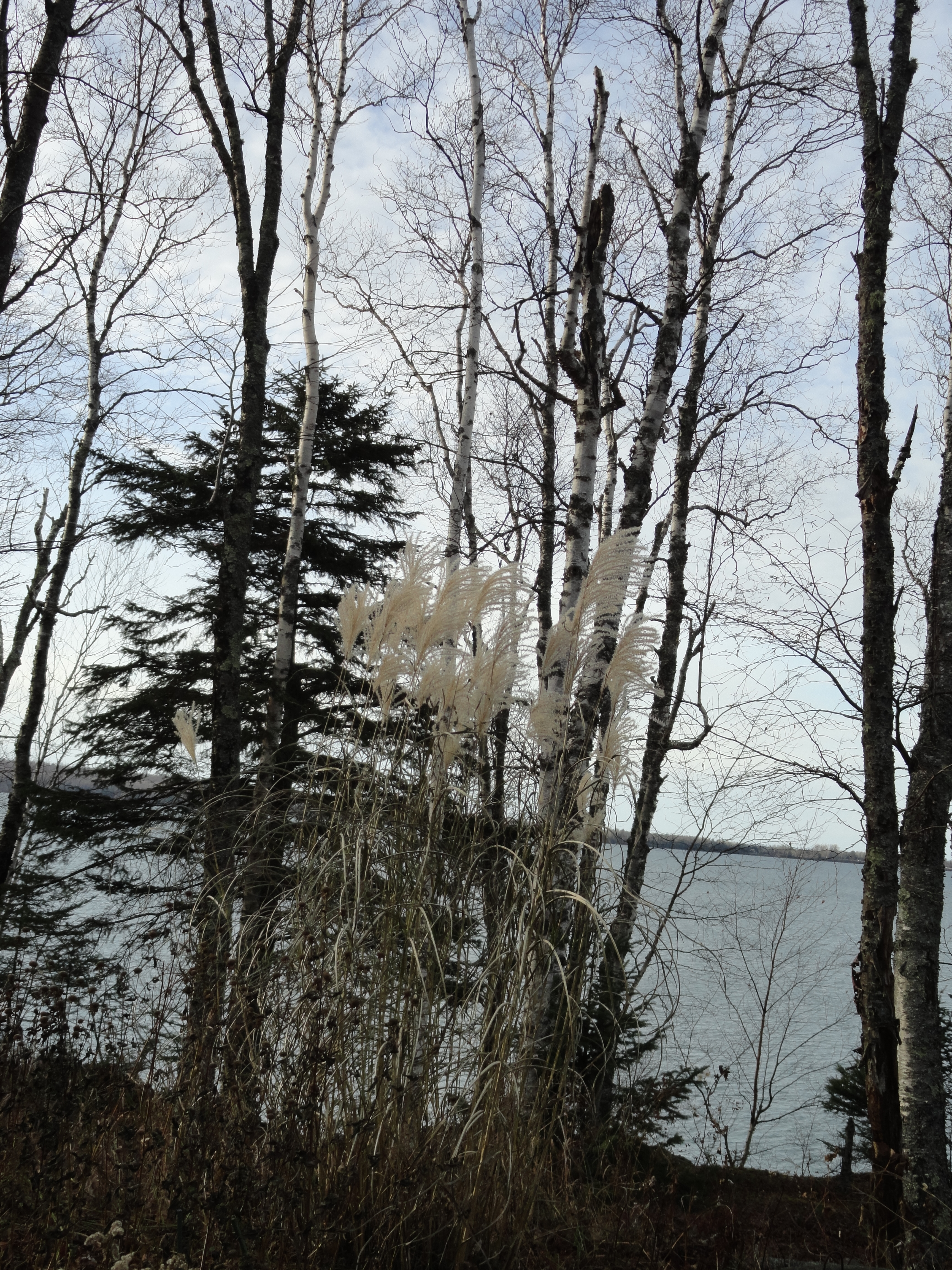
Strong winds dominate, as winds and waves pound the lake’s sandstone cliffs. The sun sets at 4:28pm and sunny days are few.
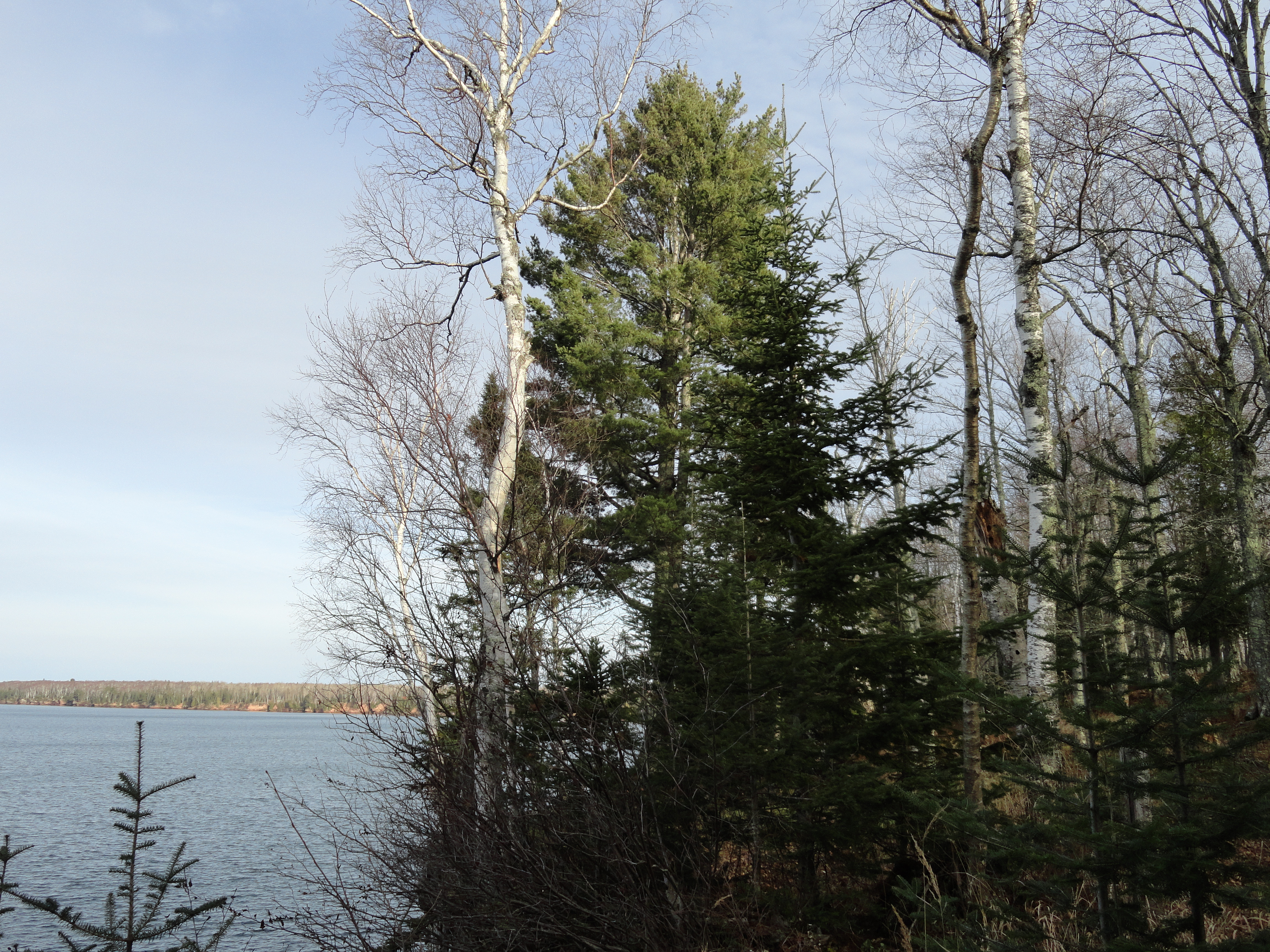
The eagle white pine
2 adult eagle have a favorite pine tree in front of our house where they perch to watch the beautiful lake. The chickadees, nuthatches, gold finch and squirrels are gorging for the months ahead. I scatter milkweed, aster, hyssop, vervain and cone flower seeds as I dream of the pollinators we will see in the summer.
A large young buck walks the road and I tell him to go hide in the woods because it is hunting season. Later, three hunters jump out of their truck and shoot rifles from the road near signs prohibiting firearm shooting. In the direction of their shots live 2 houses of children. They are grouse hunting and the sheriff tells us that grouse hunters can shoot from the middle of gravel roads, but what about those of us who live here and desire safe peaceful outdoor time? Yes, we can live together, but all need to follow the rules, and respect everyone’s outdoor space.
“How much waste are you purchasing” Minnesota Pollution Control
Plastic bottles and plastic bags litter our oceans, lakes, streams, and our countryside. This is a serious worldwide problem. What are some ways we can generate less plastic litter and less landfill trash?
On America Recycle’s Day I am posting my tips to precycle. When you precycle you make wise purchases that lead to less waste.
Below are my suggestions to encourage precycling, and you might be surprised to find you are already be doing the precycle drill.
First, always bring your reusable bags shopping, and resist all plastic bags.
Second, choose products that use minimal packaging, and packaging that can be recycled. Many corporations are making an effort to reduce packaging and offer packaging that can be recycled. Be sure you recycle as much packaging as possible.
Third, carry your own reuseable water bottle. The number of plastic bottles I see in the trash is shameful!
Always choose glass over plastic
Always choose glass products over plastic. Glass products can be reused, they don’t have the harmful chemicals of plastic and they can be made into new glass bottles.
Fifth, Bulk purchases allow you to get just the amount you need, and I fill my reusable containers with bulk items. Nuts, spices, oatmeal, tea, grains, beans and laundry soap are great bulk items. Whole Foods and coops have recyclable/compostable brown paper bags for bulk items. Placing your bulk items in a “one use” plastic bag negates the environmental advantage of bulk purchases.
Sixth, use washable reusable cloth bags for produce purchases instead of plastic bags, and avoid products on styrofoam trays wrapped in plastic film.
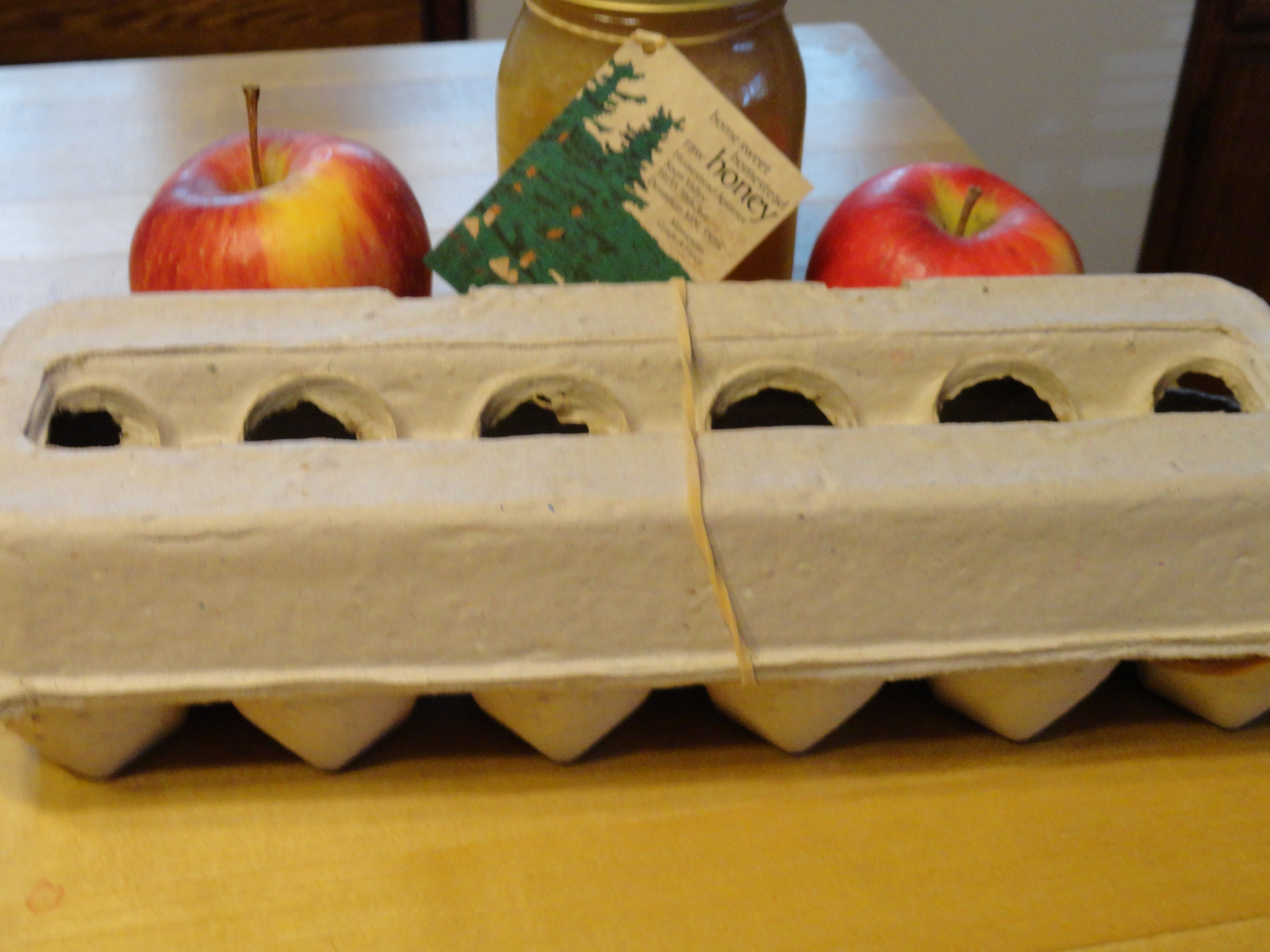
Finally, always use cardboard egg cartons. They can be composed or cut up and used as mulch around plants. They can also be reused/refilled at some stores.
Recycle everything possible, and return all plastic bags to locations that collect and recycle them.
Looking at this above chart, it is not surprising there are super storms on our oceans. Tens of Thousands are paying for the price of carbon with the loss of lives, homes, and destruction of their world.
I am grieving for the people of the Philippines. What a horrific storm for this Pacific island to withstand. As Typhoon Haiyan was destroying the Philippines, individuals in Minnesota were meeting to plan how to adapt to our changed Minnesota climate. Is it possible for the Philippines, Hawaii, Florida or other ocean locations to adapt to super storms like this? It seems impossible to adapt to a winds of 195 miles an hour or mountains of water washing over the land. Without a doubt the warming and rising oceans played into this disaster. Residents reported, “Surges of water as high as the trees.” Can humans continue to inhabit land with the threat of such devastation? Yes, they are paying for the cost of carbon pollution with their health, their lives, and the loss of their world as they know it as they become climate refugees.
I thought the extreme weather event I experienced in 2012 was frightening when thunderstorms kept rolling across Duluth and northern Wisconsin for 2 days and 3 nights. The heavy rain, thunder and lightning just wouldn’t stop! Today I am happy to be land-locked.
While this storm was pounding and destroying life on the islands of the Pacific, Minnesota leaders were meeting to discuss how to adapt to Minnesota’s changed and changing climate. How are we going to adapt and prepare for climate change? The average temperatures on earth continue to rise. 2013 will be the 37th consecutive year with a global temperature above the 20th century average. These rising temperatures allow the air to hold more water, More water in the air creates more of these extreme weather events. In Minnesota we have droughts alternating with floods.
Below is a must read op-ed by Mark Seely of the University of Minnesota about Minnesota’s changed climate.
Everything is interconnected. Pollution in China affects weather and ocean levels everywhere else on earth.
A year ago was the Super Storm Sandy, and climate change just won’t go away! Sandy was the 2nd most expensive storm ever for the United States! Because of the rising oceans, the damage of these storms will just continue to increase. But this was not the only extreme weather event in the past year – floods, drought and many forest fires also added expense to tax payers and the cost of insurance. And most important the loss of human lives. It is a reality that we are all paying for extreme weather. http://www.huffingtonpost.com/2013/10/29/hurricane-sandy-impact-infographic_n_4171243.html
This is from meteorologist, Paul Douglas in the Startribune on 11-3-13 :
It is a fact that the growing season in Minnesota is 2 weeks longer than it was just a few years ago. “It is what we don’t know that makes scientists nervous. The unknown unknowns. The Arctic is warmer than any time in the last 120,000 years – the Pacific Ocean is warming faster than any time in the last 10,000 years. Everything is connected, How will this impact us? Great question. Climate volatility is favoring all-weather now.”
In Alaska, October also has set records for warmth and rain instead of snow:














 Health4earth
