Pollinator Week

The rudbeckia is just starting to bloom.

Pollinator Week has been a rainy week where I live in Minnesota. I was going to list all the pollinators coming to my yard, but it’s hard to see much activity when it rains hard every day! The rain doesn’t bother hummingbirds, and they are entertaining us at our hummingbird feeder.

Spiderwort, a native plant beauty!

The purpose of Pollinator Week is to heighten everyone’s awareness of how important pollinators are to us all. Our bees, butterflies and birds are having a hard time with loss of habitat and our overuse of chemicals. We use too many harmful chemicals to kill insects and fertilize our lawns and farm fields.

My message to you this pollinator week is reduce your dependence on harmful chemicals that kill pollinators. This includes butterflies and birds. Since 1970 North America has lost 3 billion birds. We can’t keep killing the insects and caterpillars the birds need to raise their young.

Birds and butterflies add so much to the quality of our lives Bees and other pollinators touch our lives every day in ways we may not realize. Imagine a world without most of the foods you love. Without bees we wouldn’t have the abundance of apples, pumpkins, strawberries, blueberries, or almonds that we enjoy. Pollinators even help milk production: the alfalfa and clover cows graze is replenished by seed pollinated by bees. A world without pollinators would not only leave us with fewer food choices, but would make it substantially harder to find the nutrition we need to survive.

Thoughts on creating a pollinator Garden:

  • Provide a variety of flower colors and shapes to attract different pollinators.
  • Whenever possible, choose native plants.  Native plants will attract more native pollinators and can serve as larval host plants for some species of pollinators.
  • If monarch butterflies live within your area, consider planting milkweed so their caterpillars have food.
  • Plant in clumps, rather than single plants, to better attract pollinators
  • Choose plants that flower at different times of the year to provide nectar and pollen sources throughout the growing season http://www.fws.gov/pollinators/

“Of 30 commonly used lawn pesticides, 19 are linked with cancer or carcinogenicity, 13 are linked with birth defects, 21 with reproductive effects, 26 with liver or kidney damage, 15 with neurotoxicity and 11 with disruption of the endocrine (hormonal) system. Of these same pesticides, 17 are detected in ground water, 23 have the ability to leach into drinking water sources, 24 are toxic to fish and other organisms vital to our ecosystem, 11 are toxic to bees, and 16 are toxic to birds.”

Read more here: https://www.beyondpesticides.org/…/factsheets/30enviro.pdf

https://www.epa.gov/pollinator-protection/protecting-monarch-butterflies-pesticides

May be a graphic of text

All reactions:

4444
Searching For More Diversity

This is a week to appreciate and celebrate our pollinators. In my yard there are many baby monarch caterpillars eating on milkweed, and eggs of the painted lady butterfly on pearly everlasting and pussy toes. A dragon fly has been following me around as I work, and the hummingbirds stop to check things out.  It is a beautiful exciting time!  Get outside and enjoy.

Monarch Caterpillars

Our insects and pollinators have been in serious decline the past few years. This is a week is to heighten our awareness of pollinators. Make an effort to spot some butterflies, bees, dragon flies, or maybe a hummingbird.

Create a yard pollinators want to visit.

Unfortunately, we have become a mono-culture world of asphalt, concrete, turf grass and hostas. Maybe you live in corn and soy bean country, more mono-cultures. Most of us can make changes to our environment to help pollinators. Maybe just place a pot of flowers on your deck, something that bees and butterflies like, or maybe replace a hosta with a wild geranium or native violets, maybe stop using chemicals on your lawn and turn it into a clover yard, or plant some bee balm, milkweed, coneflowers or sunflowers.

A new extensive UN study says we are on track to loose over a million spieces in the next few decades.  Pesticides are a problem for bees and insects, but the study says the lack of plant diversity is also a big problem. Our farmers plant too much corn and soybeans, and yards have too much turf grass and too many hostas!

Each one of us can make a difference, think diversity in your yard! How can you brighten your yard and make it more attractive to pollinators?

Find ideas from the Xerces Society or native plants from Audubon for your area here.

The urban and rural gardener all have an important part to play in the health of our pollinators. Diversity is important. Keep it simple to start,  native plants are  easy to grow, but don’t forget native trees, especially oaks, are excellent at adding diversity. Last, but most important, purchase plants from serious nurseries, and ask to make sure plants haven’t been treated with neonicotinoids.

“Nature needs to be appreciated for itself and viewed as natures health dictates our human health. Without healthy water, land and soil and wildlife we will not survive as human beings. We must set aside of land, and water bodies and protect them from development. We must be aggressive protecting our land water and wildlife.” Ecowatch,  read more here.

Neonicotinoids and Bees

Plant For Clean Water

I am at the Minnesota State Fair talking to individuals about rain gardens and native deep-rooted plants. Native plants help absorb pollutants, keep rain water in our yards, save on watering, and are loved by bees, butterflies and birds.

Plant deep-rooted plants for pollinators and clean water.

prairie-grasses
Deep rooted plants absorb run-off

Minnesota Takes the Lead for Bees and Butterflies

Hope for pollinators

“Today, Minnesota set the strongest rules in the nation to protect pollinators from pesticides,” said Lex Horan of Pesticide Action Network. “The plan will help ensure that bee-harming pesticides won’t be used unnecessarily, and it lays the groundwork for reducing the use of neonicotinoid seed coatings. This decision is rooted in the resounding scientific evidence that neonicotinoids are harmful to pollinators. It’s past time for state and federal decisionmakers to take action to restrict the use of bee-harming pesticides, and today Minnesota did just that.”  Read the whole story here.  Another story from Minnesota Public Radio.

An American painted lady

My Pollinator Friendly Yard

No chemicals needed!

Plant for the monarch butterfly

Today my yard is teaming with pollinators.  The bees are in abundance, house finch and hummingbirds are loving the fresh blooming plants, and I am thrilled.  Butterflies have been slow to appear, but today I had a giant swallowtail, several red admirals, a painted lady, and a monarch!

The Giant Swallowtail Butterfly. Photo credit: Brian GratwickeThe Giant Swallowtail Butterfly. Photo credit: Brian Gratwicke

An American lady
An American lady

swamp milkweed ready for monarch butterflies
Swamp milkweed ready for monarch butterflies


Bee balm, cone flowers, and milkweed will bring butterflies, bees and butterflies.

Try this link to research and look up butterflies


I am Thankful for California!

Round up kills the plants bees and butterflies love!

A Big Reason to be Thankful for California!

I was shopping for a vegetable peeler the other day.  The label said, “This product is known to cause cancer according to the California EPA. Be sure you wash your hands after use” Yikes, who would buy such a product?  Why would a company manufacture such a product?  Below is more watchdog work by California’s EPA:

Big news! California EPA Moves to Label Monsanto’s Roundup ‘Carcinogenic’ http://ow.ly/RQOdP #BanRoundup

In a first for the country, California’s Environmental Protection Agency (Cal/EPA) has issued plans to list glyphosate—the toxic active ingredient in Monsanto’s Roundup herbicide—as known to cause cancer.  http://ecowatch.com/2015/09/08/california-becomes-first-state-to-label-monsantos-roundup-as-a-carcinogen/?utm_source=EcoWatch+List&utm_campaign=4a984bb080-Top_News_9_9_2015&utm_medium=email&utm_term=0_49c7d43dc9-4a984bb080-85912169


Superior Views, August 2015

Life on Lake Superior

Hummingbirds and bees love this garden on Lake Superior(background lake)
Hummingbirds and bees love this garden on Lake Superior

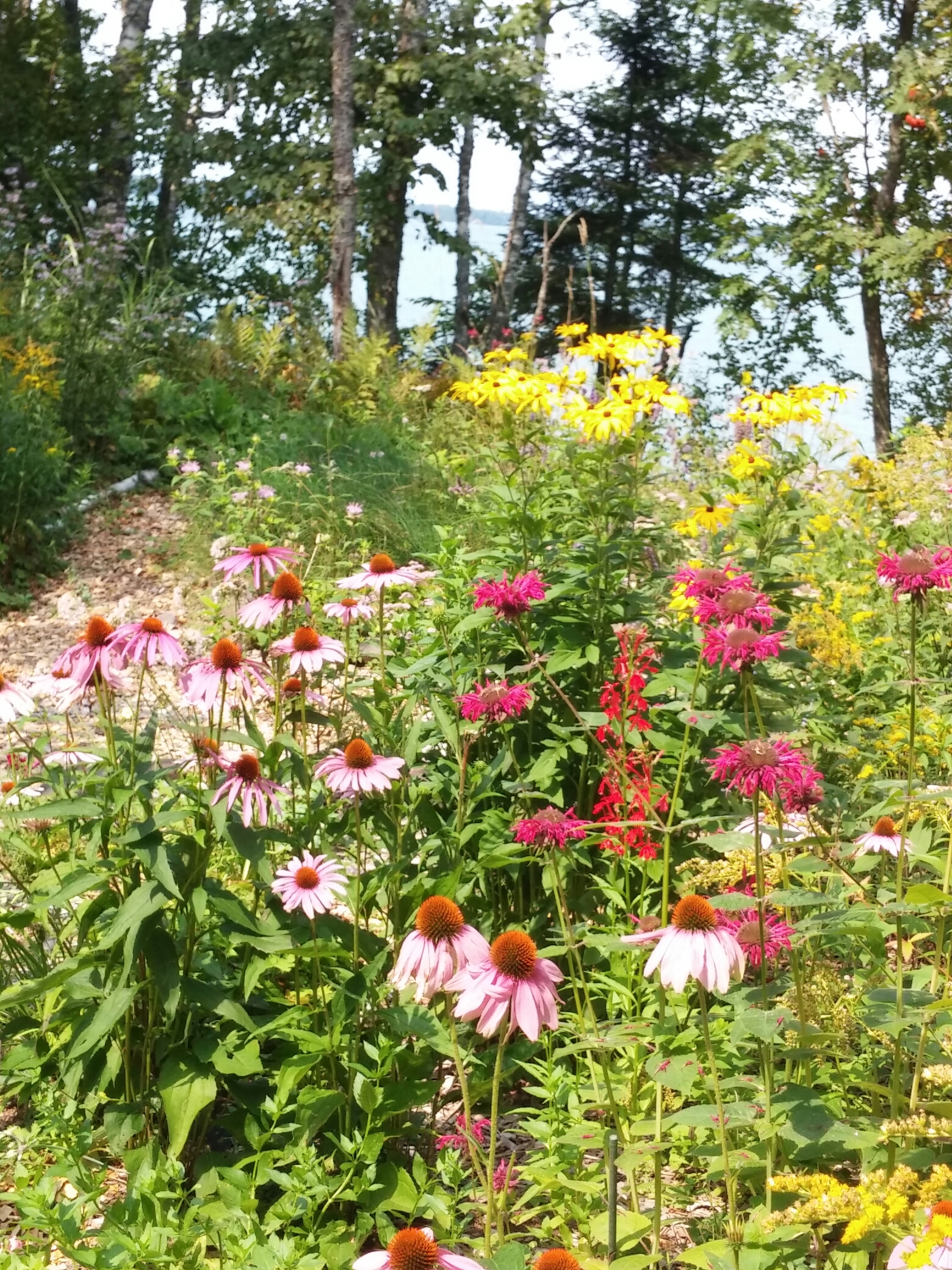
Bee balm, hyssop, golden rod, wide leaf aster, cardinal-flower and purple cone flower bring joy!

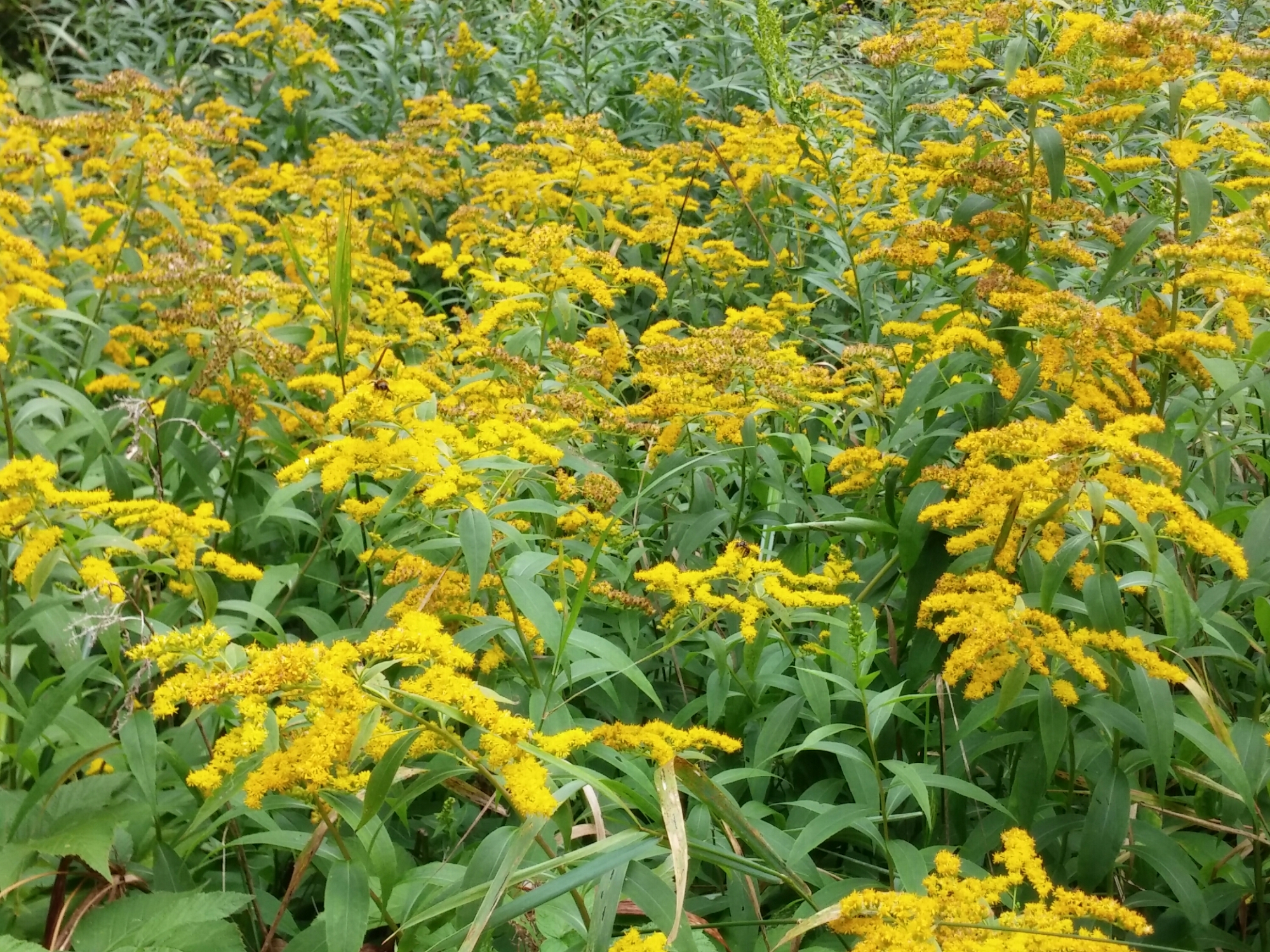
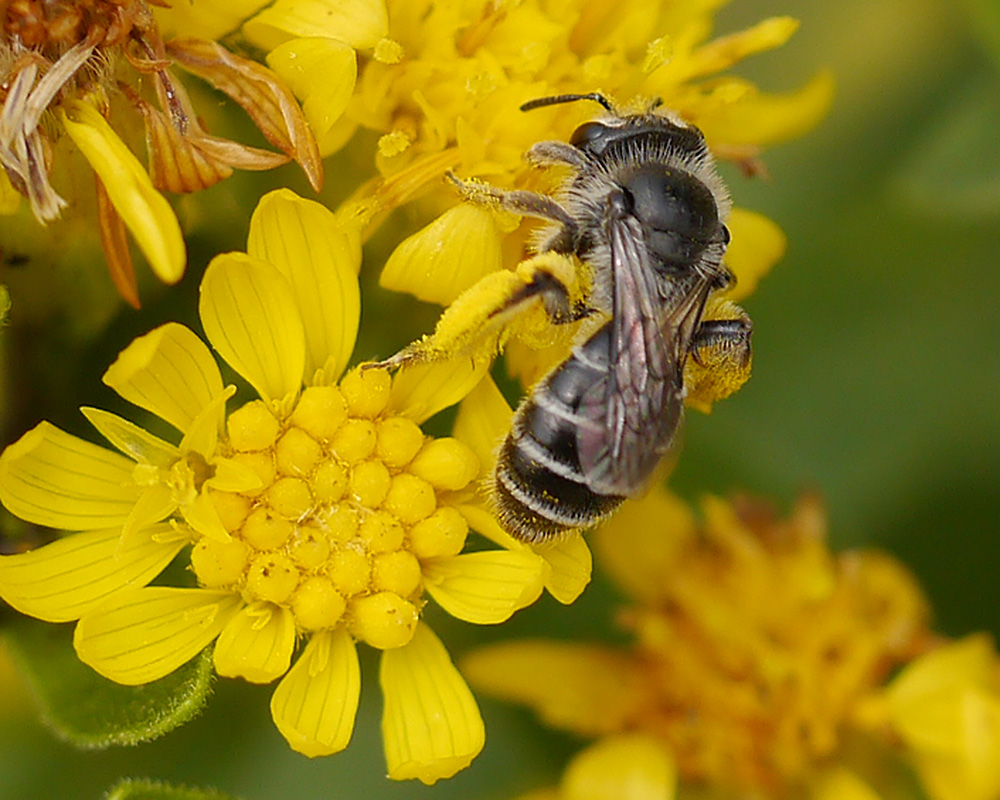
Bees love golden rod and it is everywhere.

The sun sets on August

Eagles screech and talk to me as I work in my yard. Hummingbirds are everywhere, and some of the migrating birds crossing the lake are the Nashville Warbler, thrushes, and white throated sparrow.

Why are bees dying at an alarming rate?

Add plants bees love to your yard!
Add plants bees and butterflies love to your yard!

Bees have been a worry to me all summer.  They haven’t been feeding on the plants that are usually loaded with bees. Wild geranium,  Culver’s Root, chives and a flowering maple they usually are passionate about have been lacking bees.

Bees love bee balm and anise hysopp, but this year not so many bees.
Bees love bee balm and  hyssop, but this year not so many bees.

In August with the blooming hyssop, cone flowers and golden rod the bees are here, but not in the typical numbers for this time of year.

We must do better to make sure our yards have flowers pollinators love and avoid all chemicals.  It frightens me that some of the plants we purchase are still laden with heavy chemicals and neonicotinoids. I wonder how all these chemicals are going to affect human health? How is neonicotinoid farm run-off going to affect aquatic life?

A study below by the US Geological Survey finds neonicotinoids in our water ways. Here is the link: http://m.ktvz.com/news/Insecticide-found-in-half-of-sampled-U-S-streams/34779418

MINNEAPOLIS TAKES ACTION TO PROTECT POLLINATORS AS A POLLINATOR-FRIENDLY CITY

The City of Minneapolis urges all Minneapolis property owners, residents, businesses, institutions and neighborhoods to become more pollinator friendly by adopting practices including:

  • Committing to not use pesticides, including insecticides that stay in the plant, on their properties.
  • Avoiding planting flowering plants that are treated with insecticides that stay in the plant.
  • Discontinuing the sale of pesticides and plants that are treated with insecticides that stay in the plant.
  • Planting more pollinator forage on their property and using organic or chemical-free lawn and landscaping practices.

Here is the link: http://www.minneapolismn.gov/news/WCMS1P-147750   Unfortunately, Minnesota has ridiculous preemption laws, and a city can’t make rules stronger than existing state legislation

Morning Earth Healing Images 8.28.2015

Golden rod picture by John Cady
Golden Rod picture by John Cady


Happy Pollinator Week

pollinators“While insects and other animal pollinators may come in small sizes, they play a large partnership role in the production of the food we eat, in the future of our wildlife, and in the health of nearly all flowering plants. A garden without bees, butterflies, beetles, birds and even bats, is a garden devoid of the life-giving relationships that sustain plant reproduction.”    http://www.fws.gov/pollinators/

Good suggestions below, and please don’t use chemicals:

 Plant a Pollinator Garden. 

An excellent book by Heather Holm
An excellent book by
Heather

Pesticides, bees, butterflies and all of us!

A bumblebee on wild geranium in N. Wisconsin

In the past two weeks I have spent 5 days in Iowa, and then a week in Northern Wisconsin away from the agricultural belt.  As I biked and walked in Iowa the lack of butterflies was disheartening.  I even saw and smelled the Iowa DOT spraying along the highway.  In contrast northern Wisconsin is more grass/hay country, lower pesticide use, and the butterflies aren’t like what I would like to see, but they are flitting around when you look for them.  The bee population up north is still  questionable, but better than what I saw in Iowa.

I agree with this excellent letter to the editor in today’s Minneapolis Star Tribune:

Thank you for “Bees at the brink” (June 29). Our rural surroundings have changed since we moved to south-central Minnesota in 1960. Our small farms have mostly disappeared, and our once-vibrant town struggles to stay alive. There was much more variety in the landscape: I remember picking strawberries along Hwy. 169 with my children; we heard and saw meadow larks and pheasants, and clouds of monarch butterflies were a part of every spring and summer. Now what do we have? Corn and soybeans from horizon to horizon; hedgerows with their diversity of plants and animal life gouged out; wetlands drained, and herbicides ensuring that few bee-friendly flowers grow on roadsides and lawns. Our state and federal supports, with their continuing crop insurance programs — even for marginal land — and cutbacks on set-aside acreage such as CRP and CREP help to perpetuate the increasing sterility of our natural environment.

Economic success should not be the only determinant of wealth. We lose too much if it is.

Maria Lindberg, Blue Earth, Minn.

http://www.startribune.com/local/264929101.html?site=full&c=n&stfeature=    This is the link to the Bee article she is referring to.

http://www.startribune.com/lifestyle/health/265857781.html  Autism Risk is Linked to Pesticides