Pollinator Week

The rudbeckia is just starting to bloom.

Pollinator Week has been a rainy week where I live in Minnesota. I was going to list all the pollinators coming to my yard, but it’s hard to see much activity when it rains hard every day! The rain doesn’t bother hummingbirds, and they are entertaining us at our hummingbird feeder.

Spiderwort, a native plant beauty!

The purpose of Pollinator Week is to heighten everyone’s awareness of how important pollinators are to us all. Our bees, butterflies and birds are having a hard time with loss of habitat and our overuse of chemicals. We use too many harmful chemicals to kill insects and fertilize our lawns and farm fields.

My message to you this pollinator week is reduce your dependence on harmful chemicals that kill pollinators. This includes butterflies and birds. Since 1970 North America has lost 3 billion birds. We can’t keep killing the insects and caterpillars the birds need to raise their young.

Birds and butterflies add so much to the quality of our lives Bees and other pollinators touch our lives every day in ways we may not realize. Imagine a world without most of the foods you love. Without bees we wouldn’t have the abundance of apples, pumpkins, strawberries, blueberries, or almonds that we enjoy. Pollinators even help milk production: the alfalfa and clover cows graze is replenished by seed pollinated by bees. A world without pollinators would not only leave us with fewer food choices, but would make it substantially harder to find the nutrition we need to survive.

Thoughts on creating a pollinator Garden:

  • Provide a variety of flower colors and shapes to attract different pollinators.
  • Whenever possible, choose native plants.  Native plants will attract more native pollinators and can serve as larval host plants for some species of pollinators.
  • If monarch butterflies live within your area, consider planting milkweed so their caterpillars have food.
  • Plant in clumps, rather than single plants, to better attract pollinators
  • Choose plants that flower at different times of the year to provide nectar and pollen sources throughout the growing season http://www.fws.gov/pollinators/

“Of 30 commonly used lawn pesticides, 19 are linked with cancer or carcinogenicity, 13 are linked with birth defects, 21 with reproductive effects, 26 with liver or kidney damage, 15 with neurotoxicity and 11 with disruption of the endocrine (hormonal) system. Of these same pesticides, 17 are detected in ground water, 23 have the ability to leach into drinking water sources, 24 are toxic to fish and other organisms vital to our ecosystem, 11 are toxic to bees, and 16 are toxic to birds.”

Read more here: https://www.beyondpesticides.org/…/factsheets/30enviro.pdf

https://www.epa.gov/pollinator-protection/protecting-monarch-butterflies-pesticides

May be a graphic of text

All reactions:

4444

Butterflies

It’s always exciting when the Monarchs arrive!

Joy, we had our first Monarch butterfly in our yard today!

I was surprised to read this about the Monarch butterflies. See below from Minnesota Public Radio

Everyday concentrate on clean air and never burn wood or put dirty air into the atmosphere. That includes driving less!

This is from Minnesota Public Radio:

People can help by planting both native nectar and host plants, like milkweed, reducing pesticide use and mowing less grass less often.

Monarch butterflies are beginning to return to Minnesota and should start arriving in droves in the next two weeks. But the population returning from Mexico will likely be much smaller than in years past.

This winter, the number of eastern monarch butterflies wintering in Mexico was the smallest researchers had recorded in a decade.

A years-long drought pattern, winter whiplash and warming temperatures are all hurting the vulnerable species and the plants it relies on to survive, according to University of Minnesota Professor Emilie Snell-Rood, who studies monarchs and other pollinators.

A Plastic Lawn?


SYNTHETIC TURF

Real plants for real habitats

I disagree with a bill in the Minnesota Legislature about synthetic turf (HF 3705/SF 3869).

Synthetic turf has been framed as a sustainable solution for dealing with the climate crisis, drought and drainage issues. Unfortunately, many want to believe in this easy but expensive solution and believe without evidence that it is a sustainable practice. This is greenwashing and a false solution for helping our climate crisis. Synthetic turf is made of plastic. It has all the terrible side effects of plastic pollution. It breaks down in the sun and breaks down with use. It leaches toxic chemicals into our water and breaks down into microfibers. Synthetic turf is not healthy for children, pets, wildlife or adults to recreate on. It is not a sensible solution for a green lawn.

If plastic were a country, it would be the fifth-largest emitter of greenhouse gases in the world. We shouldn’t be encouraging the use of more plastic. We should be reducing our plastic use, not increasing it.

Synthetic turf is terrible at managing stormwater runoff. Even if it is permeable, the water will run right under it and cause erosion as it finds a muddy path to the nearest waterway. Deep rooted plants are the master of absorbing runoff and holding the soil. They are a proven solution.

The state of Minnesota is putting lots of money into bee lawns. Let’s pivot to them in times of drought. Bee lawns help pollinators, improve water quality and work for the healthy communities the public wants. Bee lawns are real, not fake. They are a low-maintenance and sustainable solution, and bee lawns can be adjusted and planted for everyone’s needs.

Becky Wardell Gaertner, Minneapolis

I like violets in a bee lawn, they are hearty, can be mowed and bees like them.

Turn Your Banana Peel into Good!


Backyard Compost Collection

How can you amend your soil and garden without chemicals? This is from the Compost Foundation, and see their video below:

Have you ever looked at a banana peel and thought, “Is that it?” Does life go on? Could this humble peel serve a greater purpose?
We’re telling the new story of compost as the regenerating, probiotic solution for restoring land and balancing the climate.
60 billion pounds of food material go to landfill every year, creating methane gas that is poisoning us and destroying our home. Meanwhile, we’re throwing away the building blocks of life. We’re INSANE! JUST STOP IT!! So what’s the solution?”

See the video on composting:  Composting Story
My tips on composting. Read here

Give Your Yard a Dose of Happy

Deep-rooted plants absorb more water than turf grass. Cone flowers, bee balm, and black-eyed Susan

Just making a few adjustments to your yard can make big difference for our climate. If everyone does a little bit, it adds up to a lot! Some amazing statistics on our lawns from “greener lawn” below:

*Grass covers more land in the US than any other crop.

*It’s estimated that there’s up to three times more acres of lawns than corn, according to NASA

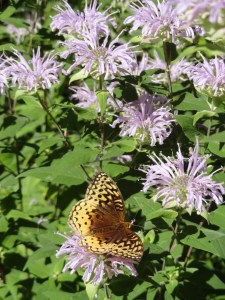
Fritillary butterfly on bee balm.

*Homeowners use up to 10 times more chemical pesticides per acre on their yards compared to what farmers use on their crops, according to the U.S. Fish and Wildlife Service.

Some other ideas to slow climate change and help pollinators:

**plant a rain garden

** Add diversity

** Love pollinators

** More on bees an butterflies

Minnesota Public Radio on a “greener” lawn:

Grass isn’t greener

Adding new pollinator plants is not easy if you are a hosta gardener or a new gardener.

I would start small by adding a few of these: purple cone flowers, black-eyed Susan, bee balm, a few asters, and columbine.  I suggest these because many garden stores sell them, they are easy to grow, add diversity, and are loved by pollinators.

Fall Gardening is for the Birds

Dried up cone flowers are a gift to the birds but not to the human eye. I took this picture in July
Dried up cone flowers are a gift to the birds. I took this picture in July

As I write this the goldfinch are eating seeds from dried up purple cone flowers, and hummingbirds are still flitting around for nectar.  Below is an excellent article on fall gardening by writer Val Cunningham.  My suggestions follow.

“As they fly around your neighborhood, birds won’t be attracted by gardens with flower stalks cut neatly to the ground and plant debris raked up and removed.” V Cunningham .http://www.startribune.com/leaving-your-garden-a-little-untidy-this-winter-helps-birds/327498161/

My additional suggestions for fall gardening are:
*Pull out all the invasive and bad plants
*Plan for next year. What worked and what didn’t work? How can you add more native

Hummingbirds and bees love this red menardia nardia
Hummingbirds and bees love this red
menardia

plants ?  (My favorites are milkweed, Liatris, cone flowers, bee balm  hyssop, wild geranium and asters)
*Plan where you can add a rain garden next year to capture the rain from your house, driveway or yard. http://bluethumb.org/raingardens/

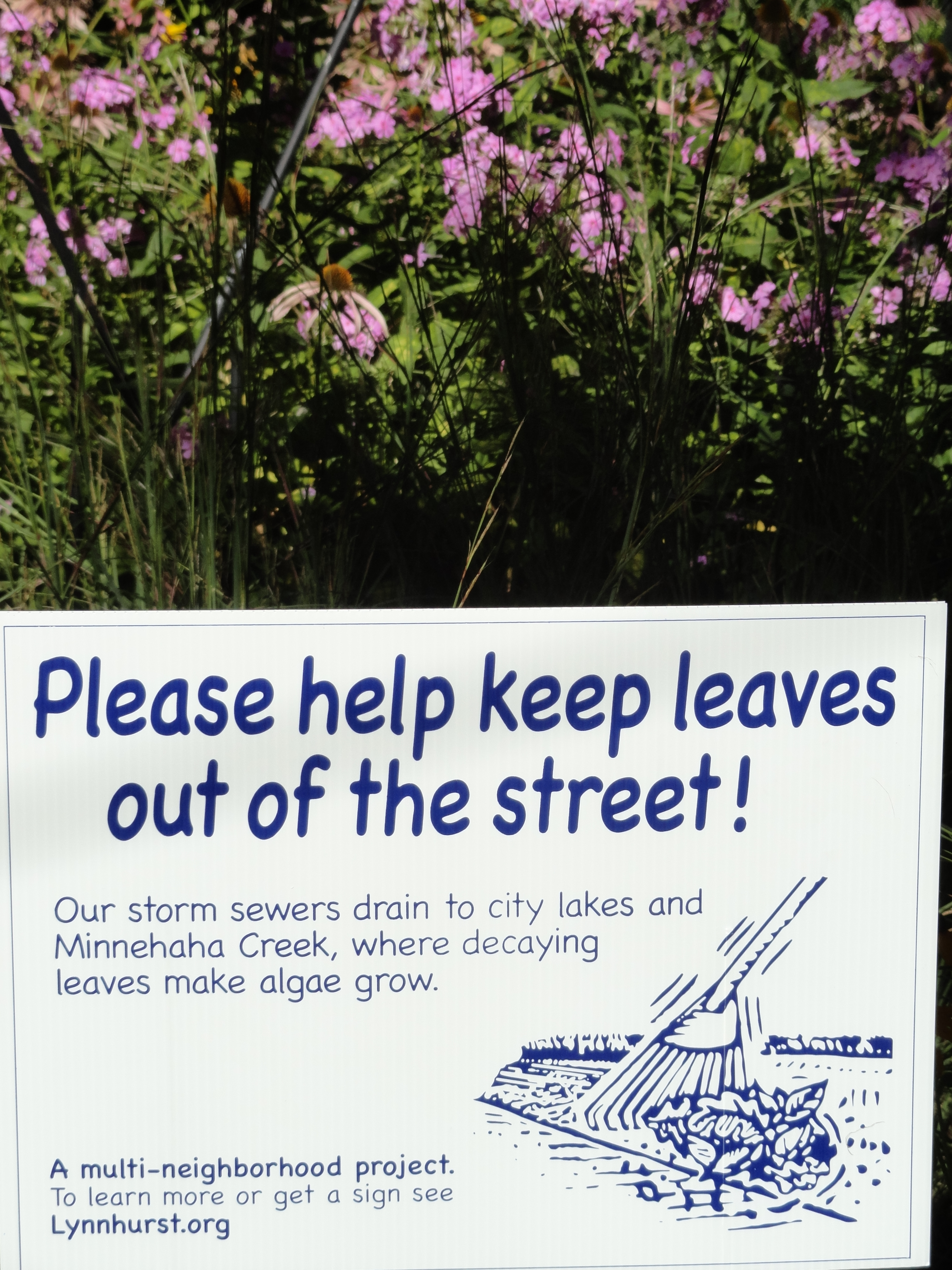
011Birds love driveways with seeds and leaves, but please keep our waterways clean by sweeping sidewalks, driveways and street from leaves and debris.


Gardeners Beware: Neonicotinoids

The native Canada Anemone is blooming now!

It is worrisome that most plants still contain neonicotinoids!  Native plants are Neonicotinoid free

Purchasing plants that are free of neonicotinoids is a challenge.  I went to the local nursery that claimed to not use neonics.  They don’t use the neonic pesticide, but their suppliers might.  The clerk was very helpful, but most of the annuals

Swallowtail on a dianthus

were not neonic free.  I had to search through the plants for specific containers, but the large majority of the plants still available could have been treated with neonics.

Report Release from Friends of the Earth: Gardeners Beware 2014

In a study commissioned by Friends of the Earth and conducted by independent scientists at the Pesticide Research Institute, findings show that most “bee-friendly” garden plants sold at major retailers in the US are routinely pre-treated with bee-harming pesticides, with no warnings to consumers.

Bees are dying at alarming rates, and neonic pesticides are a key contributor to recent hive losses. Bees and other pollinators are essential for two-thirds of the food crops humans eat every day, and contribute over $20 billion dollars to the US economy. Our own food security is tied closely to the survival of bees and other pollinators – we must take swift action to protect them.

The power to practicing bee-safe pest control is in your hands. Read the full report here and learn how to get started.

http://libcloud.s3.amazonaws.com/93/72/9/4735/Gardeners-Beware-Report-2014.p


What You Can Do to Help Bees and Other Pollinators

Bees love St John's Wort and Vervain
Bees love St John’s Wort and Vervain

It seems crazy to be talking about pollinators as another Polar Vortex hits Minnesota, but I really liked the below post on “10 things You Can Do To Help Bees.”  Also, the thought of flowers makes us happy!! I consider myself a pollinator plant gardener and get enormous joy from the birds, bees, butterflies and other wildlife that love my chemical free plants and yard. Bees are important for the survival of many of our foods and flowers, and the drastic decline of our bees and butterflies can be blamed on many things, but habitat loss from droughts and floods; pesticide use; and the mono culture that has been created with our corn and soybean culture are three of the top concerns.  All of us can do better for our bees and butterflies.  See what you can do.

What can you do for pollinators?

1. Plant bee-friendly plants.  A few of my favorites that bees also love are chives, Anise Hyssop, bee balm (Menardia), golden rod, and asters.  Do not purchase plants at Lowes or Home Depot. They may contain hidden pollinator killing chemicals.  Find native plants for your area: http://findnativeplants.com/
 
2. Dandelions and clover are good for pollinators and bring many pollinators into your yard. Both bees and monarch butterflies love dandelions!
 

3. Don’t use chemicals or pesticides on your lawn or garden, and never use the Neonicotinoid pesticide.

4. Purchase organic food and local raw honey

A new book by Heather Holm
A new book by
Heather Holm

See the link below for the remainder of the list:

http://www.queenofthesun.com/get-involved/10-things-you-can-do-to-help-bees/

http://www.ecosystemgardening.com/top-10-herbaceous-plants-to-attract-wildlife-to-your-ecosystem-garden.html