Microplastics, a Problem!

Microplastic particles are found everywhere on the planet. They are in the air, water, and soil, and they are in us, in every organ of our bodies. This cannot be healthy and we need to decrease our exposure to plastic.

A new study on microplastics finds evidence that that micro plastics could be the cause of heart attacks and strokes. Scary stuff!

Scientists have long known that microplastics can infiltrate the human body. But they didn’t know what the presence of these tiny plastic particles might mean for human health. Until now. A new study published in the New England Journal of Medicine finds that people with microplastics in their heart are at higher risk for heart attack, stroke, and death.

Easy ways you can reduce your plastic footprint:

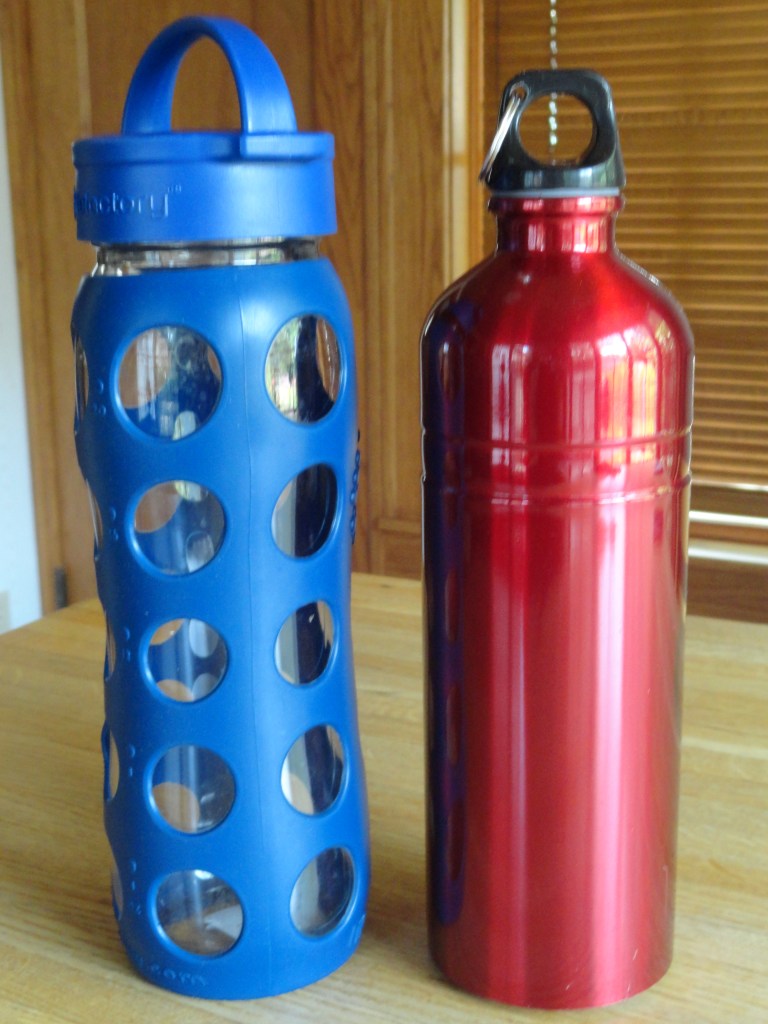
  • Always carry a reusable glass or metal water bottle, and reusable shopping bags with you.
  • Learn to refuse single-use plastics, such as plastic water bottles and coffee cups, straws, plastic bags and plastic utensils. 
  • Purchase fruit and produce in the bulk section, and don’t place items in plastic bags. 
  • Always search out products in glass jars instead of plastic containers. 
  • When you must buy plastic products, choose ones that you can recycle rather than ones you must put in the trash. 
  • Bring your own containers and shop the bulk section of your local food coop.
  • Purchase clothing made from cotton and wool instead of polyester or poly fibers. https://www.npr.org/2023/07/19/1188343293/is-toxic-fashion-making-us-sick-a-look-at-the-chemicals-lurking-in-our-clothes
  • Store food in glass containers instead of plastic.
  • Ditch the baggies!

Plastic in our Food and Water

Many reasons to use a non-plastic reusable water bottle.

New studies on plastic start to emerge.

In a trailblazing new study, researchers have discovered bottled water sold in stores can contain 10 to 100 times more bits of plastic than previously estimated — nanoparticles so infinitesimally tiny they cannot be seen under a microscope.

Disposed plastic water bottles blanket a beach in New Taipei, Taiwan in 2022.

The plastic water bottle industry is booming. Here’s why that’s a huge problem

At 1,000th the average width of a human hair, nanoplastics are so teeny they can migrate through the tissues of the digestive tract or lungs into the bloodstream, distributing potentially harmful synthetic chemicals throughout the body and into cells, experts say.

One liter of water — the equivalent of two standard-size bottled waters — contained an average of 240,000 plastic particles from seven types of plastics, of which 90% were identified as nanoplastics and the rest were microplastics, according to the new study. https://www.cnn.com/2024/01/08/health/bottled-water-nanoplastics-study-wellness/index.html?utm_term=17051508781315d4f59f626ee&utm_source=cnn_Weekly+LBB+Automated&utm_medium=email&bt_ee=uul4Fxg9FZKZA30rzJn08%2BUBxjUR1MOAuPwj1fjq3OFfXysulwJVn0gwksla8rm%2B&bt_ts=1705150878134 Source CNN

And from Consumer Reports:

Another new report finds that 84 out of 85 supermarket foods and fast foods had plastic chemicals in them — including cereal, yogurt and even baby food.1

We shouldn’t be so nonchalant about harmful chemicals in the food we eat, and especially not in the food we serve to babies.

Tell the U.S. Food and Drug Administration: Test for, limit and, wherever possible, eliminate plastic chemical contamination in food.

Among the chemicals found in the food were “plasticizers” like BPA, once found in so many plastic water bottles, and phthalates, a chemical used to make plastic more durable.

Companies have allowed these plasticizers into a dizzying range of food products. But they seem to have forgotten to ask themselves: Should we?

After all, chronic exposure to plasticizers can disrupt the production and regulation of estrogen and other hormones, and potentially increase the risk of birth defects, cancer, diabetes, infertility, neurodevelopmental disorders, obesity and other health problems.2

We can’t keep letting companies get away with this “ask for forgiveness, not permission” approach to harmful substances in our food.

Join PIRG in urging the FDA to help get plastic chemicals out of our food. Add your name

1. Jonathan Stempel, “Consumer Reports finds ‘widespread’ presence of plastics in food,” Reuters, January 4, 2024

Plastic and our Health

Plastic pollutes our environment and bodies every phase of its life, from extraction, to production, to its use, and then disposal. Also, plastic harms our bodies and contributes to climate change every step of its long plastic life.

This is all depressing, but it is information everyone should know.

Plastic particles can cause heart attacks and strokes, cancer and dementia, but absolutely the worst is plastic and children. Please pay attention.

A group heavily harmed by use of plastics are fetuses and newborns, who absorb microplastics through the mother’s body and breast milk, and young children, who are especially sensitive to plastic chemicals that leach into our food and beverages because their bodies and systems are developing so fast. Landrigan, who is co-author of the book “Children and Environmental Toxins. What Everyone Needs to Know,” said, “Toxic chemicals can damage babies and children at the lowest detectable levels.”

“Brain damage caused by plastic chemicals can contribute to autism, ADHD and IQ loss, The only treatment is prevention of exposure.”

Pediatrician Describes Health Risks and Solutions to Country’s Plastics Problem

Posted on August 24, 2023

Microplastics infiltrate all systems of the body, causing behavioral changes.
Neuroscience Pharmacy Professor Jaime Ross’ study finds ‘widespread’ infiltration, potential for serious health consequences, including Alzheimer’s.

“The brain blood barrier is supposed to be very difficult to permeate. It is a protective mechanism against viruses and bacteria, yet these particles were able to get in there. It was actually deep in the brain tissue.”

Another article

How Plastic Created One of the Most Dire Crises Humanity Faces Today  by THOM HARTMANN, AUG 29, 2023

https://hartmannreport.com/p/how-plastic-created-one-of-the-most-598
“The researchers found that the particles had begun to bioaccumulate in every organ, including the brain, as well as in bodily waste.”
 Microplastics and nanoplastics can have a wide variety of negative effects on There are studies showing microplasstics and nanoplastics can contribute to or cause everything from heart attacks and strokes to cancer and dementia. … and breast and colorectal cancer.

https://pubs.acs.org/doi/full/10.1021/acs.est.3c01942 This article deals with storing food in plastic. I think it is very worthwhile. Plastic pouches are the worst!