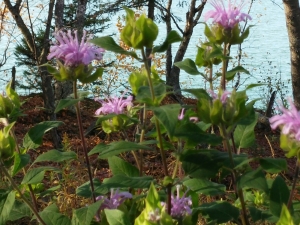
Pollinator Week

The rudbeckia is just starting to bloom.

Pollinator Week has been a rainy week where I live in Minnesota. I was going to list all the pollinators coming to my yard, but it’s hard to see much activity when it rains hard every day! The rain doesn’t bother hummingbirds, and they are entertaining us at our hummingbird feeder.

Spiderwort, a native plant beauty!

The purpose of Pollinator Week is to heighten everyone’s awareness of how important pollinators are to us all. Our bees, butterflies and birds are having a hard time with loss of habitat and our overuse of chemicals. We use too many harmful chemicals to kill insects and fertilize our lawns and farm fields.

My message to you this pollinator week is reduce your dependence on harmful chemicals that kill pollinators. This includes butterflies and birds. Since 1970 North America has lost 3 billion birds. We can’t keep killing the insects and caterpillars the birds need to raise their young.

Birds and butterflies add so much to the quality of our lives Bees and other pollinators touch our lives every day in ways we may not realize. Imagine a world without most of the foods you love. Without bees we wouldn’t have the abundance of apples, pumpkins, strawberries, blueberries, or almonds that we enjoy. Pollinators even help milk production: the alfalfa and clover cows graze is replenished by seed pollinated by bees. A world without pollinators would not only leave us with fewer food choices, but would make it substantially harder to find the nutrition we need to survive.

Thoughts on creating a pollinator Garden:

  • Provide a variety of flower colors and shapes to attract different pollinators.
  • Whenever possible, choose native plants.  Native plants will attract more native pollinators and can serve as larval host plants for some species of pollinators.
  • If monarch butterflies live within your area, consider planting milkweed so their caterpillars have food.
  • Plant in clumps, rather than single plants, to better attract pollinators
  • Choose plants that flower at different times of the year to provide nectar and pollen sources throughout the growing season http://www.fws.gov/pollinators/

“Of 30 commonly used lawn pesticides, 19 are linked with cancer or carcinogenicity, 13 are linked with birth defects, 21 with reproductive effects, 26 with liver or kidney damage, 15 with neurotoxicity and 11 with disruption of the endocrine (hormonal) system. Of these same pesticides, 17 are detected in ground water, 23 have the ability to leach into drinking water sources, 24 are toxic to fish and other organisms vital to our ecosystem, 11 are toxic to bees, and 16 are toxic to birds.”

Read more here: https://www.beyondpesticides.org/…/factsheets/30enviro.pdf

https://www.epa.gov/pollinator-protection/protecting-monarch-butterflies-pesticides

May be a graphic of text

All reactions:

4444

Wow, An Attractive Healthy Lawn

Every person on earth bears responsibility for good earth stewardship” Pope Francis

Northern Pearly Eye

How did we ever get sold on the fact that a green monoculture of a turf lawn was a good thing everyone wanted to copy? I love walking in green spaces, but should a green space have more variety than being just like everyone else trying to be like everyone else. Has our climate crisis brough us to a time we question the feasibility of maintaining something that harms instead of adding a positive to our environment?

What is my problem with a turf grass lawn?

First it takes lots of water to keep it green and needs poisonous chemicals. We have been in a drought, and homeowners are watering the sidewalk and the street trying to keep their lawns green. A weed free lawn requires lots of chemicals which run down the street into the storm drains and then into our lakes and streams where they stimulate the growth of algae. See the evidence on ponds and lakes covered with algae muck which can be fatal to dogs and wildlife. Muck covered lakes is not a natural happening!

A monoculture turf grass lawn has no benefit to pollinators. Pollinators love flowers free of chemicals and plants that are native to the area. They also like color and fragrance. The best is native plants have deep roots and can survive without much water.

Deep rooted native plants

You can create a friendly yard by just not mowing it, but I recommend thinking about a happy bee lawn. Bee lawns composed of various low growing plants don’t require chemicals and are not toxic to humans and pets. Also children can run and play on them just like turf grass. The butterflies and bees love diversity, scent and color. Some of my favorites are native violets and barren wild strawberries, both are very easy to grow and can be mowed a few times a summer. See the link below on bee lawns. Some people like non-native clover and creeping Charlie.

Violets are great for bee lawns.

Start with a small section of your yard, mow it short and work in some seeds (violets, strawberry, clover, creeping thyme, heal all) with a rake or hoe, and keep moist until you get some new sprouts. Find seeds at https://www.prairiemoon.com/

Nature’s Best Hope: https://www.bing.com/videos/search?q=doug+tallamy+videos&view=detail&mid=AB8B87BD969B5366B02BAB8B87BD969B5366B02B&FORM=VIRE by Doug Tallamy

How to save the planet starting with your yard: https://slate.com/podcasts/how-to/2022/08/how-to-save-the-planet-with-native-plants?fbclid=IwAR37nC8uiu9P6EoaXAF1Edm16g3zjKTCdx8zm1vH1JaZQdw0G9kQBqUgvK0

Mowing lawns as the climate warms (startribune.com) 

Endangered migrants come in all shapes and species (startribune.com)

https://www.pennlive.com/life/2022/08/bee-lawns-a-lazy-mower-way-to-help-pollinators.html

Everyday appreciating our beautiful earth, and working for healthy communities through less chemicals, less waste, And more fun!

Searching For More Diversity

This is a week to appreciate and celebrate our pollinators. In my yard there are many baby monarch caterpillars eating on milkweed, and eggs of the painted lady butterfly on pearly everlasting and pussy toes. A dragon fly has been following me around as I work, and the hummingbirds stop to check things out.  It is a beautiful exciting time!  Get outside and enjoy.

Monarch Caterpillars

Our insects and pollinators have been in serious decline the past few years. This is a week is to heighten our awareness of pollinators. Make an effort to spot some butterflies, bees, dragon flies, or maybe a hummingbird.

Create a yard pollinators want to visit.

Unfortunately, we have become a mono-culture world of asphalt, concrete, turf grass and hostas. Maybe you live in corn and soy bean country, more mono-cultures. Most of us can make changes to our environment to help pollinators. Maybe just place a pot of flowers on your deck, something that bees and butterflies like, or maybe replace a hosta with a wild geranium or native violets, maybe stop using chemicals on your lawn and turn it into a clover yard, or plant some bee balm, milkweed, coneflowers or sunflowers.

A new extensive UN study says we are on track to loose over a million spieces in the next few decades.  Pesticides are a problem for bees and insects, but the study says the lack of plant diversity is also a big problem. Our farmers plant too much corn and soybeans, and yards have too much turf grass and too many hostas!

Each one of us can make a difference, think diversity in your yard! How can you brighten your yard and make it more attractive to pollinators?

Find ideas from the Xerces Society or native plants from Audubon for your area here.

The urban and rural gardener all have an important part to play in the health of our pollinators. Diversity is important. Keep it simple to start,  native plants are  easy to grow, but don’t forget native trees, especially oaks, are excellent at adding diversity. Last, but most important, purchase plants from serious nurseries, and ask to make sure plants haven’t been treated with neonicotinoids.

“Nature needs to be appreciated for itself and viewed as natures health dictates our human health. Without healthy water, land and soil and wildlife we will not survive as human beings. We must set aside of land, and water bodies and protect them from development. We must be aggressive protecting our land water and wildlife.” Ecowatch,  read more here.

Neonicotinoids and Bees

Plant For Clean Water

I am at the Minnesota State Fair talking to individuals about rain gardens and native deep-rooted plants. Native plants help absorb pollutants, keep rain water in our yards, save on watering, and are loved by bees, butterflies and birds.

Plant deep-rooted plants for pollinators and clean water.

prairie-grasses
Deep rooted plants absorb run-off

Pollinator Garden Walk

My back yard: Cone flowers, butterfly weed
My back yard: Cone flowers, flox, and butterfly weed

This past week my yard was part of a “Pollinator Garden Walk” led by my neighbor, a pollinator expert. We walked, biked, or carpooled to 4 neighborhood yards. All the yards had boulevard plantings, two had no turf grass,, and three yards had rain gardens. We observed lots of bees, hummingbirds, butterflies, and caterpillars.
Below are the ideas to attract pollinators suggested by the pollinator expert:
* Choose native and single-flowered plant varieties
* Go organic, eliminate pesticide and herbicides64px-Eyed_Brown,_dorsal
* Leave areas of bare ground or loose leaf litter
* Plant milkweed
*Install a bee nesting house for mason bees and other stem-nesting bees

Cardinal flowers are happy this year with lots of rain!


I would add: Plant with diversity of flowers, bloom times, and colors.

Never use plants treated with neonicotinoids! Ask before purchase of plants.


https://health4earth.com/add-fun-pollinators-to-your-yard/

Yikes, a Moth!

Hummingbird moths appear in the daytime.

The luna moth grows to a wingspan of four and a half inches.

Credit: David Moskowitz

What do you know about moths?  They are not the “Ick” insect you might of thought of as a child.  Because most, not all, are nocturnal we might not experience them except caught in a window or spider web. The best ones I have seen are in the bathrooms of campgrounds, and they are magnificent! This is National Moth Week, so what better time to get out and see if you can find and observe a moth.  This information is from  http://www.livescience.com/

Seven facts about moths:

1.There are more than 11,000 species of moths in the U.S. alone.

Moths outnumber butterflies, their nearest relative, by more than 10 to 1, said Matthew Shepherd, communications director and senior conservation associate at the Xerces Society, a nonprofit organization focused on insect conservation in Portland, Ore. There are upward of 11,000 moth species in the United States alone — that’s more than all the bird and mammal species in North America combined.

A moth the size of a pencil tip.

Credit: David Moskowitz

2. Moths make great mimics.

Moths are notorious for their ability to camouflage to keep from being eaten.

3. Moths are important pollinators.

4. Many adult moths don’t eat.

While some moths suck nectar, others don’t eat at all. The adult Luna moth, for instance, doesn’t even have a mouth. After it emerges from its cocoon, it lives for about a week. Its sole mission in life? To mate and lay eggs

The luna moth grows to a wingspan of four and a half inches.

The luna moth grows to a wingspan of four and a half inches.

Credit: David Moskowitz


5. A male moth can smell a female more than 7 miles away.

Though they lack noses, moths are expert sniffers. They detect odor molecules using their antennae instead of through nostrils.  Male giant silkworm moths have elaborate, feather-shaped antennae with hairlike scent receptors that allow them to detect a single molecule of a female moth’s sex hormone from 7 miles (11 kilometers) away.

6. They are important food for many animals.

Because of their abundance, moths are major players at the bottom of the food chain.

7. Moths: The next superfood?

In some places in the world they eat moth caterpillars. They are high in fat and protein.

Read the entire article from livescience

 Explore the world of moths this week and enjoy!  Let us know where you see them?


My Pollinator Friendly Yard

No chemicals needed!

Plant for the monarch butterfly

Today my yard is teaming with pollinators.  The bees are in abundance, house finch and hummingbirds are loving the fresh blooming plants, and I am thrilled.  Butterflies have been slow to appear, but today I had a giant swallowtail, several red admirals, a painted lady, and a monarch!

The Giant Swallowtail Butterfly. Photo credit: Brian GratwickeThe Giant Swallowtail Butterfly. Photo credit: Brian Gratwicke

An American lady
An American lady

swamp milkweed ready for monarch butterflies
Swamp milkweed ready for monarch butterflies


Bee balm, cone flowers, and milkweed will bring butterflies, bees and butterflies.

Try this link to research and look up butterflies


Write a letter to your local officials

Our elegant monarch butterfly needs some help!


Butterfly Weed is blooming along some interstate highways.

When I see the mowing down native plants pollinators I get angry. My husband and I have just completed a driving loop from Minneapolis to Chicago and back through Iowa. We have traveled Interstate East 94, West Interstate 80 and Interstate 35 North. The entire road trip I surveyed the status of mowing and blooming plants. The shoulders of most of the interstates are not over-mowed, but they are mowing the center median which doesn’t make sense? The best plants can grow in the median if allowed to survive. Some farmers are mowing along the interstates and they do get a little extreme with their mowers. Educating, educating and educating is what we need to continue to do, and it does make a difference. Below is a sample letter I sent to my rural town road crew. I hope you can modify it and send to your local and state government.

Dear local government road crew,
Pollinators, (bees, butterflies and birds) are in trouble in the United States. They have faced serious habitat loss. Last year and the past few years their numbers seemed smaller compared to the years before. Bees and butterflies need the nectar and pollen from flowers for their survival. The Obama Administration is working to plant pollinator plants along our interstate highways to improve bird, bee and butterfly habitat. The plants along the roadways in our town are a natural habitat for birds, butterflies and bees. Now as the daisies, lupine and other wild plants bloom we have beautiful roadways for residents and food for butterflies and bees.
I am writing to ask you to not mow the entire right-a-way along our town roads until maybe late August or even better would be September. I know you need to mow for safety, and that is important. Could you please not mow every flower down until early fall? Maybe mow just a strip along the roads leaving plant food for our pollinators. The bees, butterflies, birds and humans would thank you for the needed nectar, and fabulous summer beauty.
If I can get a commitment from you to mow a little later, I will spread milkweed seeds along the town roads creating more butterfly and bee habitat.
Thank you,

Your name

Wisconsin energy co-ops to create monarch butterfly habitat 

Searching for milkweed along our interstate highways!
Searching for milkweed along our roads and highways!

http://minnesota.cbslocal.com/2016/05/26/i-35-bees-butterfly/


What is a rain garden?

Rain gardens collect water run-off

A Win-Win for water!

It’s  raining this week where I live. How can we use all this water rushing into the storm drains and at the same time improve the quality of the water runs from our roofs, sidewalks, driveways and streets? This water picks up many pollutants as it races to our lakes and rivers. There are things we can do to lessen this pollution such as sweeping our driveways and sidewalks and not using chemicals on our lawns. A good way to clean this polluted run-off is to direct the water into a garden, a rain garden.  Today as it rains I can see the water rush into my rain gardens where my deep-rooted plants help clean this water as it drains into the earth below.  This past week I have been part of a team that installed two rain gardens. Both gardens captured water that would run into the Mississippi River. We had fun,  and were thrilled we helped to “plant for clean water.”

What is a rain garden?
The water that runs off our houses sidewalks, driveways and streets contains pollutants that run directly into our streams and lakes. A rain garden captures this water and the plants in the garden actually purify the water filtering out the pollutants. Like a friend said, “It’s like magic!”
An aspect of climate change is we can go for months without any precipitation then watch out…. inundation, too much rain. Rain gardens are a valuable tool to use and manage the water that falls on our properties. The plants should not need to be watered so we conserve water

Advantages of rain gardens:
1. They conserve water by managing rainfall

wp-1466029079838.jpeg
This is a narrow ditch for collecting run-off

2. Rain gardens filter out pollutants

3. Blooming plants add beauty to your yard

4. Rain gardens often use native plants that bees, birds and butterflies love.

Simple steps to creating a rain garden:

1. Remove the sod and dig a hole. It must be at least 10 feet from your house and where you can direct a drain-spout, driveway or sidewalk to drain rain water.  Most rain garden holes are about 12 inches deep with wide 3 feet slanted sides surrounding the garden.  The bottom of the garden should be flat.

Digging the hole for the garden

2. Mix in about one inch of compost to the bottom and sides of your new garden

3. Cover the garden with a layer of several inches of double or triple shredded mulch.

Spreading the compost, next add the shredded mulch

4. Plant deep-rooted plants. Most of the plants you love will work matching  the degree of sun and shade.  Also, always work to have a variety of plants that bloom at different times for the bees and butterflies.The bottom plants need to be water tolerant.  Some bottom plants I have used are: liatris, swamp milkweed, turtlehead, Culver’s root, blue flag iris, sensitive fern, cardinal-flower, blue lobelia and many kinds of sedges.

5..  Water–If it is dry, you need to water the new plants for the first couple of months.

image

Our shade rain garden is almost finished

And from National Geographic, other ways to conserve water

From the Washington Post on managing water in your yard.

Questions? Leave a comment


Where Have All the Pollinators Gone?

Plant your yard with plants the bees, butterflies and birds love

Each of us is so unaware of the damage we are doing to our earth.  This week I was at a seminar on pollinators.  Minnesota has lost two of its native butterflies, the Dakota Skipper and Poweshiek Skippering.  and many more bees and butterflies are declining in numbers. Also, I was surprised so many people don’t know about neonicotinoids.  Neonicotinoids are harmful systemic pesticides that weaken pollinators

Round up kills the plants bees and butterflies love!
Round up kills the plants that bees and butterflies need for food and egg laying !

Why is there is so much buzz about bees during the winter?  The United Nations announced that we are loosing many of our important pollinators that are vital to the pollination of many important food crops.

What is causing this loss? The major reasons we are loosing species of native butterflies, bees and birds is because of mono-crop planting, habitat loss, and our obsession with pesticides.  The combination of these three is making it hard for pollinators to survive.

Even a small yard can make a difference for pollinators.  First, add more native plants to your yard, they don’t need chemicals.  Plant for different bloom times, diverse flowers, and never purchase a plant treated with neonicotinoids ! Be careful and read directions with any chemicals you use on your yard….Try to go without!  Finally, bees and butterflies love blooming dandelions and clover…Let them bloom, then weed them out!

Below is from http://www.wildones.org/ What are native plants?

  • Native plants are needed as host and nectar plants as our native butterflies, bees and birds go about pollinating our food plants as they forage for their own sustenance.
  • Native plants have deep roots which absorb excess rainfall and prevent water from running directly into our rivers and streams helping to provide clean water for everyone.
  • Native plants instead of turf lawns help reduce our carbon footprint.

A Lot more to read:

http://www.theguardian.com/environment/2016/feb/26/decline-of-bees-poses-potential-risks-to-major-crops-says-un

http://www.nola.com/environment/index.ssf/2016/02/wild_bees_path_extinction.html

http://ecowatch.com/2016/02/26/save-the-honeybee/

http://www.xerces.org/providing-wildflowers-for-pollinators/

http://www.npr.org/sections/thetwo-way/2016/02/26/468241649/report-more-pollinators-species-in-jeopardy-threatening-world-food-supply

http://citybugs.tamu.edu/factsheets/ipm/what-is-a-neonicotinoid/