Three Sisters Stew for Meatless Monday

218The Iroquois Indians started practicing companion planting in their organic vegetable gardens almost a thousand years ago. They mixed corn, beans, and squash and thought of them as the “three sisters.” I love this recipe!

Ingredients:

  • 1 cup dried beans or 1 can of beans of your choice
  • 3 cups water
  • 3 cloves garlic
  • 2 tablespoons fresh or 2 teaspoons dry oregano
  • 1 teaspoon cumin
  • 1 teaspoon cinnamon
  • 1 tablespoon extra virgin olive oil
  • 1 large onion
  • 1 1/2 teaspoons sea salt
  • 2-3 cups winter squash, cut in chunks (peel if not organic) I think butternut squash is the easiest to work with.
  • 1 14-ounce can chopped tomatoes
  • 1 tablespoon chili powder
  • 1 1/2 cups fresh or frozen corn

Directions:

  1. I used canned beans but if you have time to cook your own: Soak beans according to package. Drain soaking water off beans. Place beans, water, and garlic in a pot; bring to boil. Cover and simmer until beans are tender (50-60 minutes) or pressure-cook with 2 cups water (45 minutes).
  2. In a separate pan: Add oil, onion, salt, and minced garlic; sauté until onion is soft (5 minutes).
  3. Add squash, tomatoes, chili powder and cook until squash is soft (about 20 minutes). Add a little water if mixture is dry.
  4. Add cooked beans and corn to squash mixture; simmer until corn is tender.
  5. seasoning to your taste. Serve hot with slivered almonds or grated cheese garnish.

Source:

Adapted from: Feeding the Whole Family by Cynthia Lair
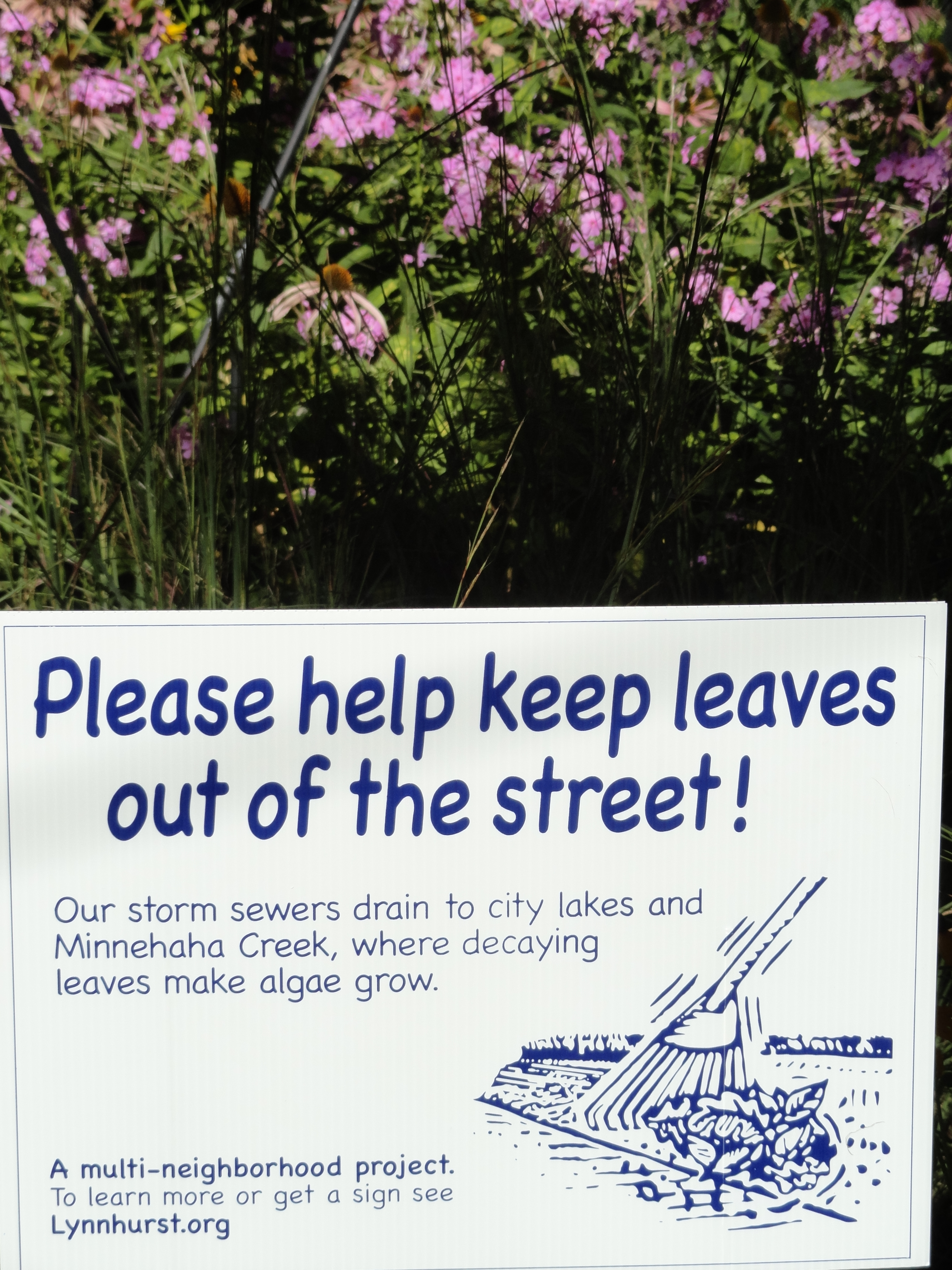
My New Lawn Sign

                                                      011

  • Rain and wind carry leaves and other pollutants into the storm drain.
  • Most of our storm drains empty directly into Minnehaha Creek or Lake Harriet; a few drain directly to the Mississippi River.
  • Leaves and grass clippings contain phosphorus.
  • Phosphorus is the main pollutant stimulating the growth of algae in the lakes and creek.
  • It is a violation of City ordinances to rake leaves into the street.
  • We are all part of the solution to preserving water quality.

Syrian Climate Refugees

Climate Refugees                                           

A picture I took in Jordan(Syria's neighbor) this spring.
A picture I took in Jordan(Syria’s neighbor) this spring.

This is an incredible story about how drought was one of the sparks for the Syrian Civil War.

From 2006 to 2010 Syria had a serious drought.  Farmers lost 80% of their cattle, and 60% of the country became desert.  With farming losses they became Climate Refugees moving to the Syrian cities looking for work. The Syrian government was not happy with the situation.  As their wells dried up they needed to drill new wells.  The permits for new wells were awarded on a sectarian basis so they had to drill illegal wells.  They felt their country was discriminating against them.  Drought creating conflict. Conflict after conflict, and then a civil war!

Listen to the NPR story:

http://www.npr.org/2013/09/08/220438728/how-could-a-drought-spark-a-civil-war?ft=1&f=1001&utm_campaign=nprnews&utm_source=npr&utm_medium=twitter

Labor Day Thoughts

 We value our Employees                           

Map of minimum wage rates in the United States...
Map of minimum wage rates in the United States. See List of U.S. minimum wages. (Photo credit: Wikipedia) Red is the lowest, and green is the highest

The following is written on my yogurt container, ” We value our employees.  We are a family-run company in California with just over 50 employees.   We pay a competitive wage to all our staff members and provide an excellent benefit package, including full health care insurance for all who work here, and their families.”  On Labor Day let’s praise companies that value their employees!!

According to NPR 1 in 4 American workers makes less that $10.00 an hour.  We give these “job creators” so much political power.  Can we please have “Living Wage Job Creators” and job creators that understand we need to take care of our earth for the future generations!!

As consumers we must reward the companies that pay a living wage and offer affordable health care to their employees!!  Happy Labor Day!!

http://www.credomobilize.com/petitions/national-strike-help-us-be-loud-1?akid=8792.2561347.dNDAUw&rd=1&t=3

http://www.greenvalleylactosefree.com/

living wage
living wage (Photo credit: kyle.rw)

http://www.minimum-wage.org/wage-by-state.asp

What American Cities are the Most Vulnerable to Climate Change?

Climate Change is expensive for us all, and big changes lie ahead!970832_10153091136195497_1060532036_n

A few weeks ago while riding the bus in Chicago I struck up a conversation with my seatmate.  She worked for AIG Insurance of New York City, and related how concerned the insurance industry is with the expense of climate change.  AIG Insurance had just paid out 2 billion dollars for Super Storm Sandy, and they were nervous how they were going to manage these mega storms in the future.   Some insurance companies in Florida are pulling out of the state because it is becoming too expensive to insure some homes. Read the link below and you will see why!

This week the Huffington Post named the 14 American cities that could be underwater in this century because of rising sea levels due to our warming climate, warming of the oceans, and the melting of Arctic ice.  What fourteen U.S. cities are the most vulnerable?

http://www.huffingtonpost.com/2013/08/26/global-warming-flooding_n_3799019.html

Can we do something?  Yes we can!!  We can put a tax on carbon emissions, we can each drive less, use less electricity, and support renewable energy initiatives.   Contact your members of Congress and ask them to put a tax on those that our polluting our air with carbon emissions.  The sooner we act the better!

Find contacts for the U.S. Congress:

NOAA Projected Arctic changes.
NOAA Projected Arctic changes. (Photo credit: Wikipedia)

www.house.gov        and    www.senate.gov

The Best Place on Earth in August, Lake Superior!

Perfect Weather and Great Views

Even Cedar Wax Wings Enjoy the View

The air is dry and temperatures are comfortable with a slight breeze.  Most days the sun shines, and the big lake moderates the hot extreme.   Daylight still hangs on until about 8:30PM.  It is perfect kayaking weather and the big lake is a rich blue hue.  Breathing the refreshing air feels healthy, and you wish for these marvelous days to linger forever.

The ripe red elderberry berries bring a family of hairy woodpeckers, red-eyed vireo and some very noisy blue jays to our yard.  The hummingbirds love anything red, pink or purple.  The call of loons, sand hill cranes, and pileated woodpeckers haunt the air.

St John's Wort with vervain
St John’s Wort with vervain

Best pollinator plants blooming now are the common milkweed, thistle, and the St John’s Wort.  The native bee balm hasn’t bloomed yet, and the hyssop and golden rod are a few days away from vying for best pollinator plant!

Fritillary on Thistle

Our friend, the fox, visits daily, stares at us for 2 minutes and then trots off.  Some days he brings a mate. Sightings of does and her babies are unusually rare.

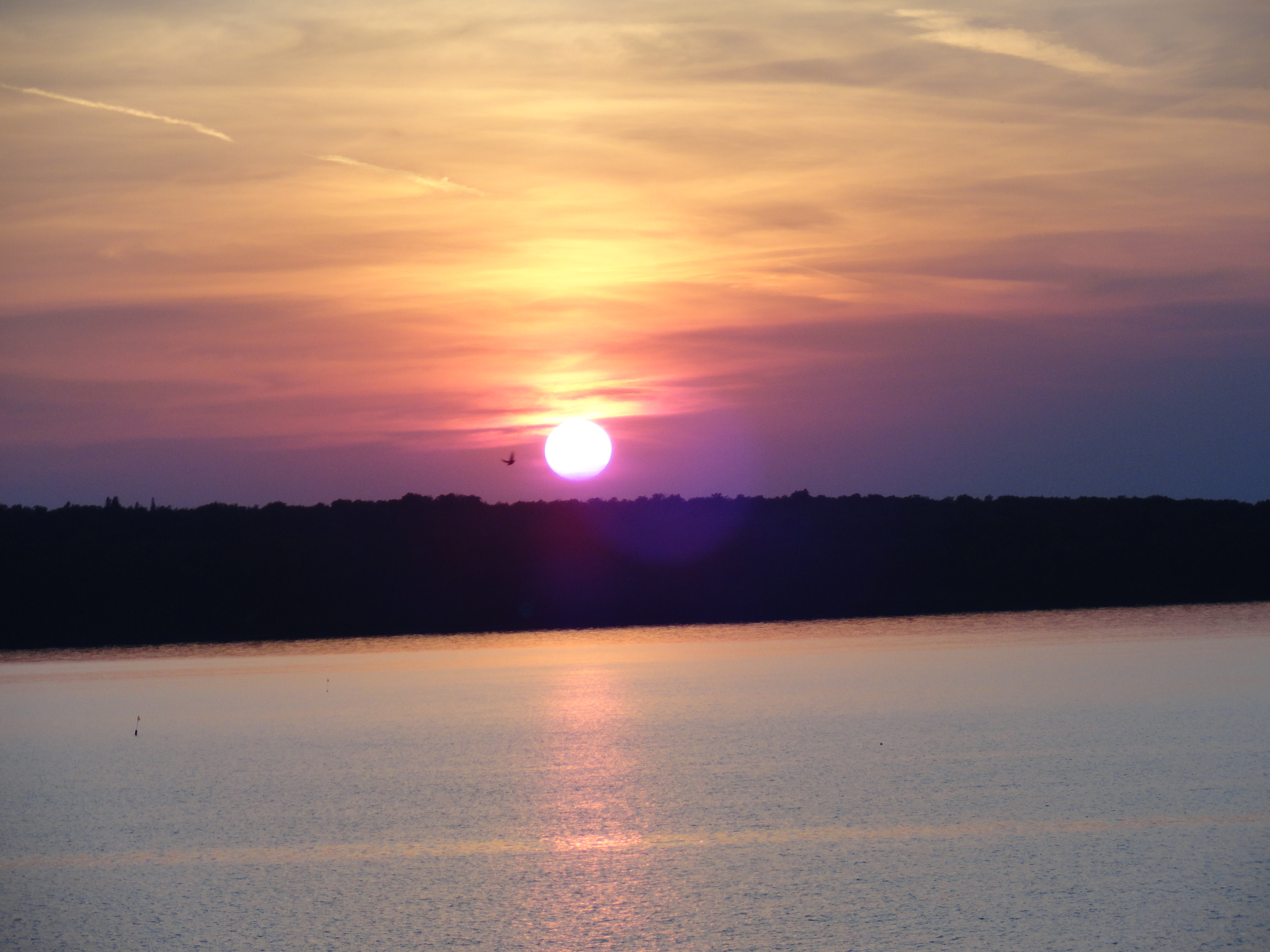
Sunset on Lake Superior

Yikes, Too Many Chemicals in our Lakes

DSC00360

It is August and August is the best month of the summer.  The air is dry, nights are cool, and daylight still dominates. Sunsets are magnificent.

It is disheartening to hear the discussion of all the nitrates that are being deposited in our Minnesota lakes including Lake Superior.  Nitrates poison the lake, and cause thick algae to grow choking out good plants and light for the fish and other aquatic animals. Nitrates in the lakes are caused by fertilizers on our lawns and fertilizers in the production of crops.  What we put on our lawns and fields ends up in our lakes and streams.  Is this why some call August the “Dog Days of summer” because we have spent the summer poisoning our lakes?

Those of us who live in the land of lakes forget how lucky we are to have our beautiful lakes, and we all need to work for good lake quality whether it is being careful not to spread invasives or being aware of the chemicals we use. With climate change Texas and the Southwest USA are dealing with severe water shortage(see articles below).  Let’s take care of our wonderful water resource!

The below ideas for protecting our lakes is from the Superiorforum.org , Sigurd Olson Institute, Northland college, and the EPA, and Great Lakes Restoration Initiative:

  1. Be conservative with your water use.
  2. Recycle as much as you can with the 4 Rs: reduce, reuse, recycle and repair.  And….NEVER burn trash.
  3. Curb Yard Pollution. Put your lawn on a chemical-free diet!!
  4. Stop aquatic invasives by cleaning plants and animals off your boat.
  5. Plant native plants, and reduce turf grass.
  6. Plant native trees  According to Audubon, oak trees are the best for attracting insects and birds.
  7. Install a rain barrel
  8. Create an energy-efficient  home.
  9. Bring hazardous waste to waste collection sites.
  10. Love our lakes!

I would add several more:

  1. Rain gardens are excellent for capturing harmful water runoff.
  2. Keep leaves and trash out of streets and storm drains-Adopt a storm drain!
  3. Never use cleaning products or hand sanitizer with triclosan.
  4. Reduce all plastic use–If you must use plastic bags and bottles, be sure you recycle them.

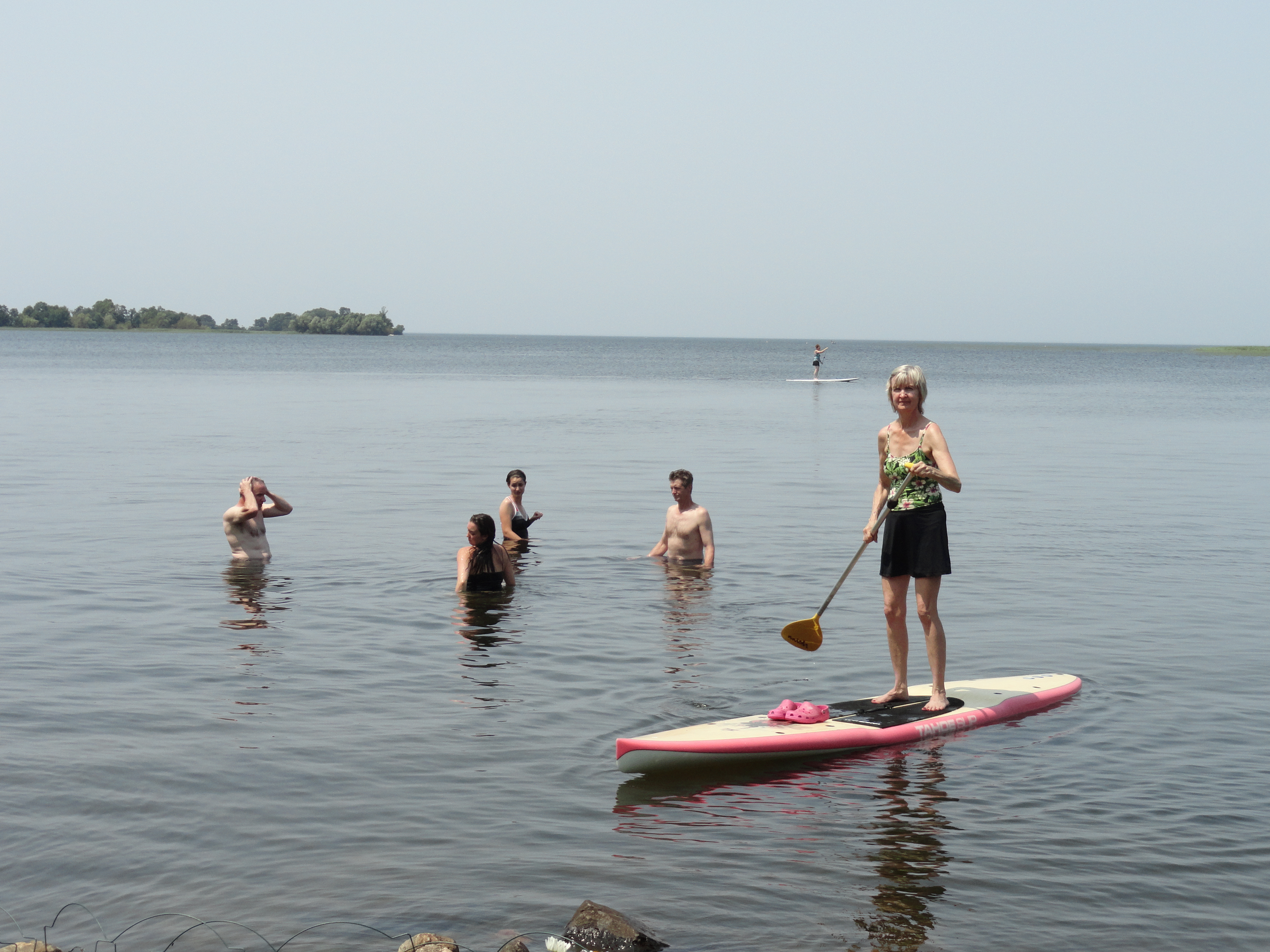
    We love playing in our lakes
    We love playing in our lakes

http://www.pca.state.mn.us/index.php/about-mpca/mpca-news/current-news-releases/mpca-study-confirms-suspicions-high-nitrate-levels-in-southern-minnesota.html

http://www.npr.org/2013/08/11/211130501/the-algae-is-coming-but-its-impact-is-felt-far-from-water?ft=1&f=1001&sc=tw&utm_source=twitterfeed&utm_medium=twitter

http://www.pca.state.mn.us/index.php/about-mpca/mpca-news/current-news-releases/mpca-study-confirms-suspicions-high-nitrate-levels-in-southern-minnesota.html

http://unconsumption.tumblr.com/post/58098198181/plastic-beads-are-the-latest-pollution-threat-to-great#

http://www.theguardian.com/environment/2013/aug/11/texas-tragedy-ample-oil-no-water

http://www.therepublic.com/view/story/35bdf2381af844658d7a5b5943ba38c5/NV–Western-Water-Colorado-River

http://www.startribune.com/opinion/editorials/219989751.html

Climate Change is Frightening

970832_10153091136195497_1060532036_n

Climate Change is Real, and it is Frightening

What changes have you seen the past few years because of our changing climate?  Some of the following have frightened me:

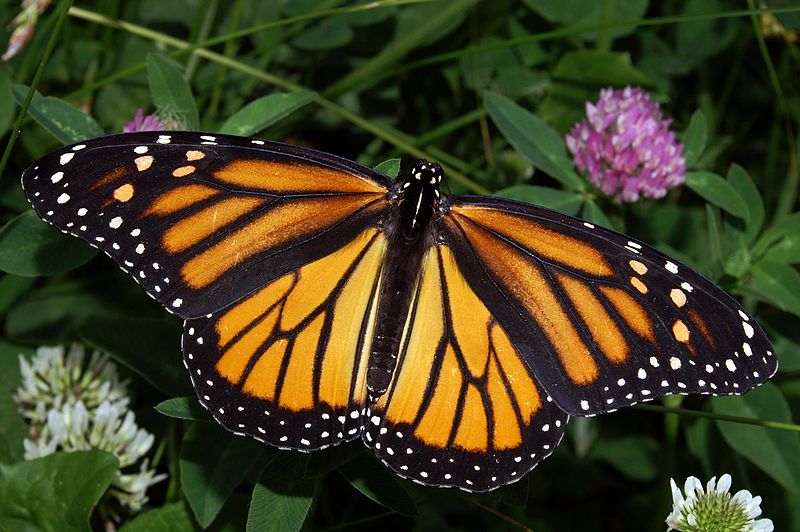
– In one year my pollinator plant yard has gone from many beautiful monarchs watching daily hoping they will appear..  Just last year my neighbors said to me, “We enjoy watching all the monarchs in your yard!”  This year, not one monarch.  The bees have just appeared–In August?

– My rain barrel can’t handle the downpours of rain anymore, and he heavy rains run off instead of soaking the plants that need the moisture.

– In between the rain storms is drought.

– I experienced the big June Duluth storm last year: The thunderstorms just kept rolling through for 36 hours washing out roads, bridges and homes.

– The costs for insurance and rebuilding are more than we can comprehend.

– We are insecure about the next big storm or drought!

– Ticks: Many have struggled with Lyme’s Disease.

– Asthma and health problems are worse in the vulnerable.

-The beautiful Paper Birch trees of Northern Minnesota and Wisconsin are dying.

Climate Change is here, it is real, and 97% of climate scientists say it is caused by human activity. If we act quickly we can slow the terrible effects for the future.

Instead of just talking about it we all need to act.  Just by doing one or two of the following will make a big difference:

  1. Combine your driving trips, walk, bike, car pool and take the bus whenever possible.
  2. Turn off lights and electronics when not in use, and reduce the amount you use your air conditioner.
  3. Look for ways your energy use can become more efficient such as insulation, and energy efficient appliances, cars, windows and doors.
  4. Cut your meat consumption, especially beef!
  5. Purchase organic food, and do not use pesticides!
  6. Punish those that pollute: Call your members of Congress and ask them to pass carbon tax legislation to punish those that are polluting our air and water. Support only candidates that believe in climate change.

http://www.flickr.com/photos/usepagov/sets/72157635037133053/

http://blog.ucsusa.org/rising-seas-and-worsening-storms-require-rethinking-flood-and-wind-insurance-203?utm_source=tw&utm_medium=tw&utm_campaign=tw


My letter in the Star Tribune

My letter published in the Minneapolis, Star Tribune August 7.

CLIMATE CHANGE

Where are our monarch butterflies? The droughts, alternating with heavy rains and pesticide use, have destroyed a lot of their habitat.

In response to the Aug. 6 commentary, “We’re free-market Republicans, but action on climate is urgent,” yes, climate change is real. We can all see it. To expect this Congress to act is hopeless, but luckily with the leadership of former State Sen. Ellen Anderson and Gov. Mark Dayton, Minnesota is on its way to national leadership in renewable energy.

Most important, we can all make a difference by reducing our carbon output by driving less, turning off lights and electronics when not in use, and reducing the chemicals we use. Our monarchs and children are depending on us.

Below is the op-ed to which I was responding:

http://www.startribune.com/opinion/commentaries/218437091.html

Do We Want Clean Air and Clean Water?

 Lake Superior
Lake Superior

I am on my way to Climate Reality  Leadership Training in Chicago, and hope to learn to communicate what we need to do if clean air and clean water are important to us!

Below is from Steve Hogseth of Utah:

When our industrial age began, few could have projected today’s predicament. For decades, the wake-up call has been ringing. We need to utilize fossil fuels in the foreseeable future, as we must maintain our economy.  We need to taper off on fossil fuels and embrace gentler energies. Through man’s innovation, greener energies will gain efficiency, mitigating fossil consumption. We need to stop blindly “believing the words” of self-interest lobbyists, greed mongers, oil/coal advocates, and political pundits. We must personally become scientifically attuned.

A question for naysayers: “Even if you do not believe in global warming, why would you not want to address the source of dirty air and water?”   Steve Hogseth, Utah

http://www.leadertelegram.com/opinions/letters_to_editor/article_5e9ce4cb-878c-512d-927a-34095ef07bb6.html   Steve Hogseth on climate change

https://realitydrop.org/