Every day is a wildflower day for me. I plant for the birds, butterflies, and bees and love when they are in my garden. The spring has been spectacular where I live. Trees and bushes are blooming, birds are singing in concert, warblers are migrating through, many butterflies are present, and its sunny and 70 degrees.
The hummingbirds have arrived!
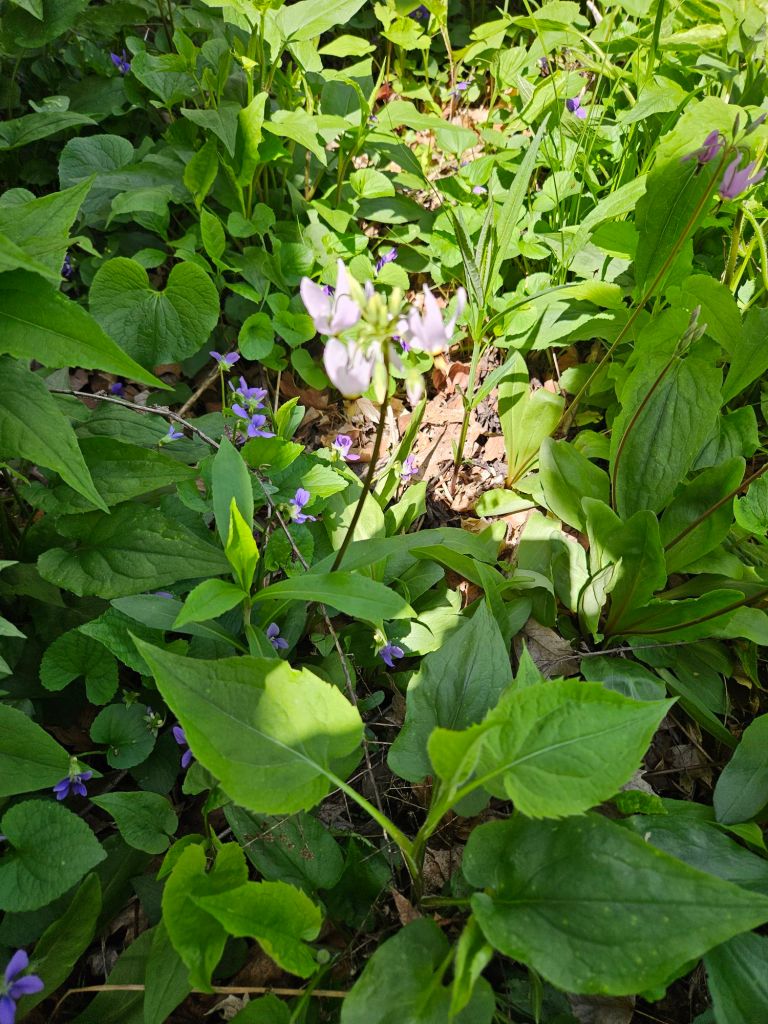
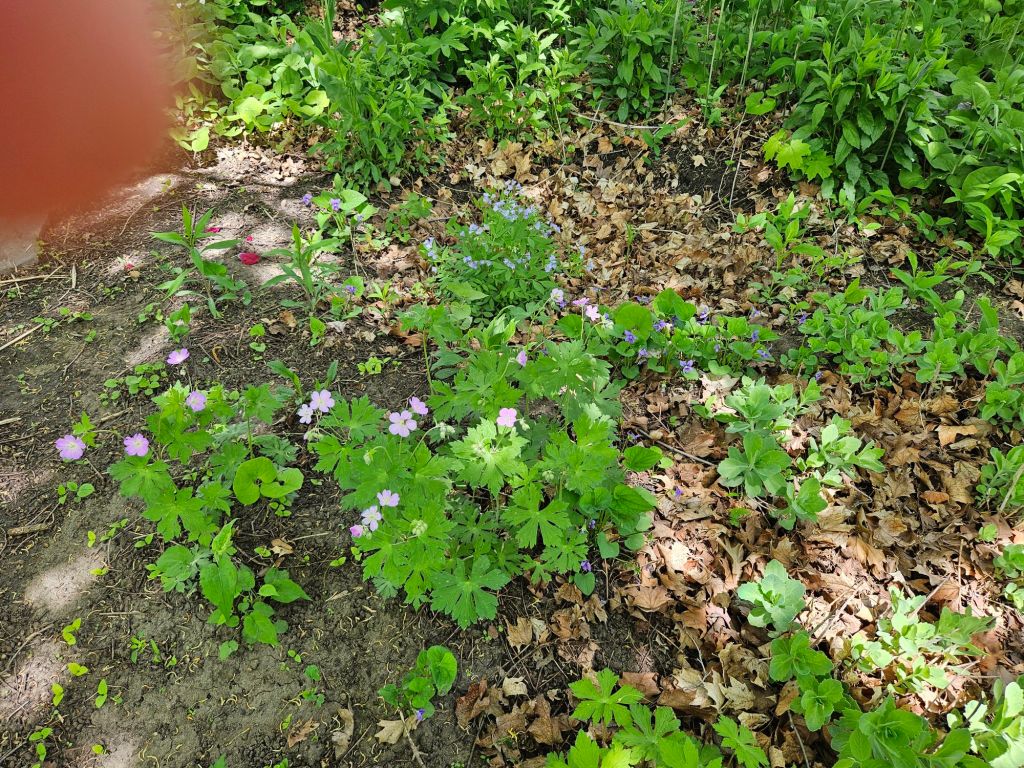
Shooting star , wild geranium, and violets
Marsh Marigolds
Hummingbirds love columbine
It is a perfect time to add some native plants to your garden to draw more birds and butterflies into your yard.
I disagree with a bill in the Minnesota Legislature about synthetic turf (HF 3705/SF 3869).
Synthetic turf has been framed as a sustainable solution for dealing with the climate crisis, drought and drainage issues. Unfortunately, many want to believe in this easy but expensive solution and believe without evidence that it is a sustainable practice. This is greenwashing and a false solution for helping our climate crisis. Synthetic turf is made of plastic. It has all the terrible side effects of plastic pollution. It breaks down in the sun and breaks down with use. It leaches toxic chemicals into our water and breaks down into microfibers. Synthetic turf is not healthy for children, pets, wildlife or adults to recreate on. It is not a sensible solution for a green lawn.
If plastic were a country, it would be the fifth-largest emitter of greenhouse gases in the world. We shouldn’t be encouraging the use of more plastic. We should be reducing our plastic use, not increasing it.
Synthetic turf is terrible at managing stormwater runoff. Even if it is permeable, the water will run right under it and cause erosion as it finds a muddy path to the nearest waterway. Deep rooted plants are the master of absorbing runoff and holding the soil. They are a proven solution.
The state of Minnesota is putting lots of money into bee lawns. Let’s pivot to them in times of drought. Bee lawns help pollinators, improve water quality and work for the healthy communities the public wants. Bee lawns are real, not fake. They are a low-maintenance and sustainable solution, and bee lawns can be adjusted and planted for everyone’s needs.
Becky Wardell Gaertner, Minneapolis
I like violets in a bee lawn, they are hearty, can be mowed and bees like them.
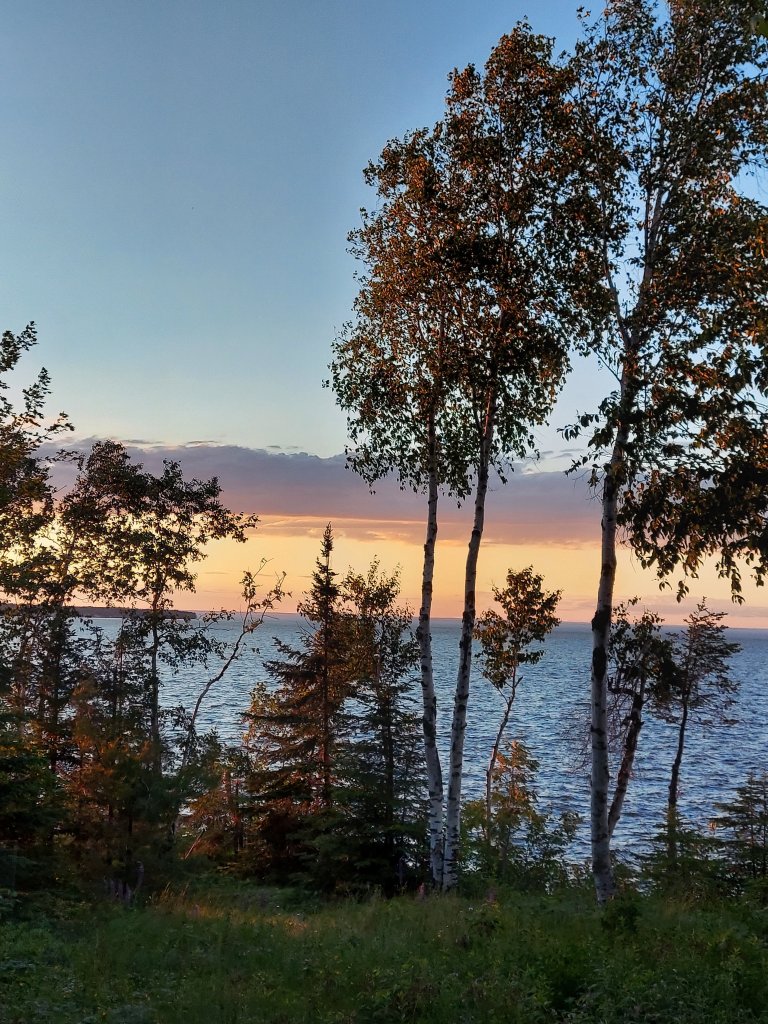
On what should have been a beautiful Lake Superior morning, smokey air was creeping across the big lake from fires burning in Canada. Luckily, most days are filled with brisk clear Lake Superior air.
Amazing butterflies, the Compton tortoiseshell.
Sounds of robust birds singing fill the woods. The chestnut sided warbler, song sparrows, oven bird, indigo buntings, red-eyed vireo and many others sing all day long.
The butterflies are the very best, and the contrast to so few butterflies in urban areas is striking. Every amazing butterfly that lives in June is here. They seem to love the host plants I have planted to get them to begin the next generation of butterflies. There is hope for the future if we could get over our addiction to pesticides and plant pollinator gardens.
Milkweed is a wonderful host plant.
The swallow tail is one of the easiest butterflies to identify.
Seeing the bear, fox and big bucks and deer have been a surprise. After several years of scarcity, they are back, and the squirrels, chipmunks and bunnies are almost non-existent.
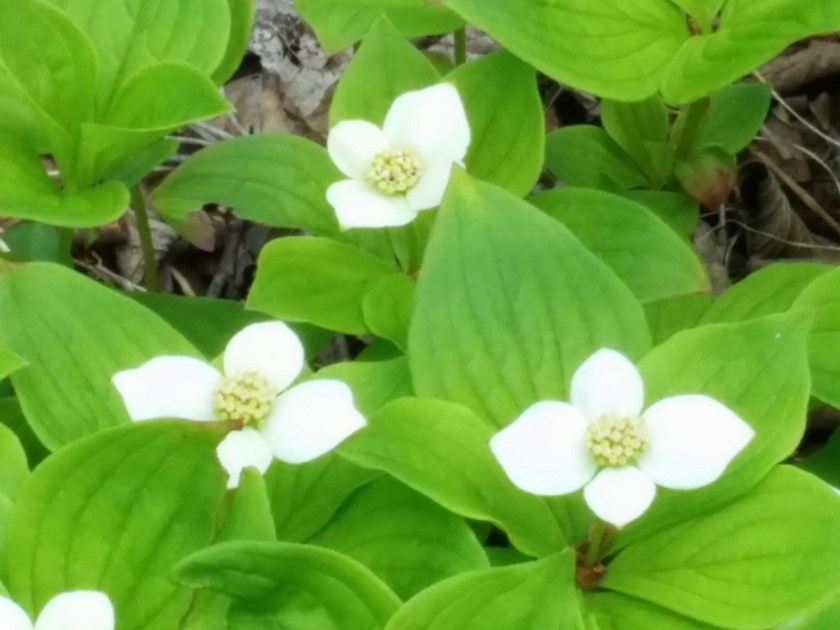
Bunch berries will have red berries later in the summer.
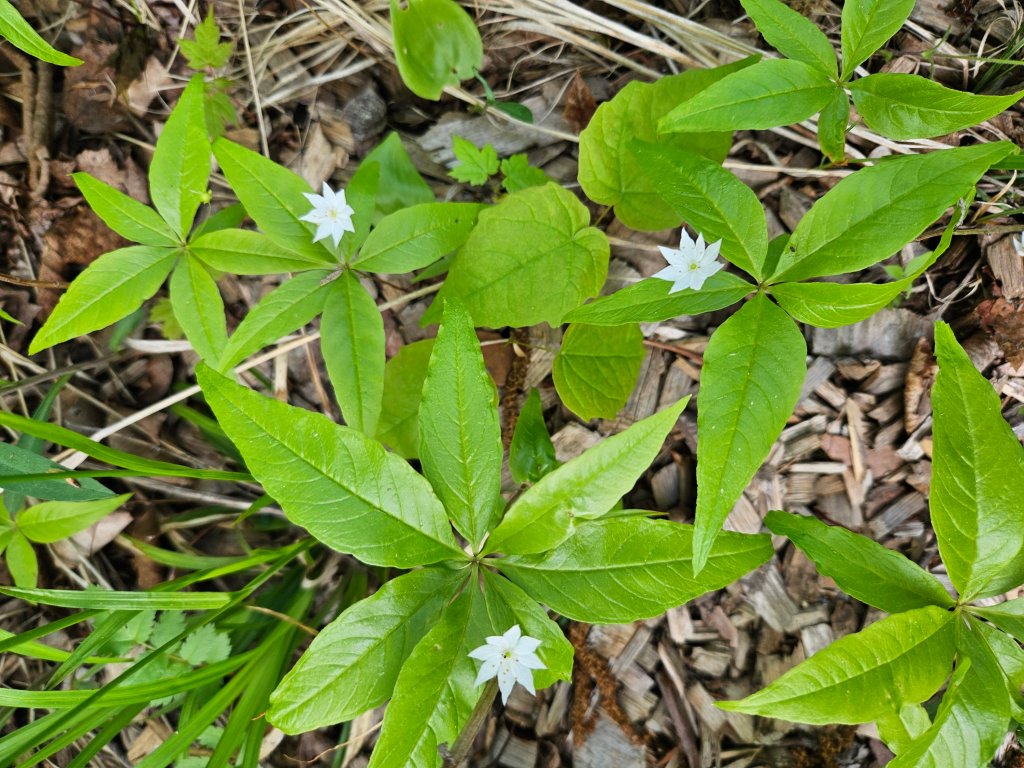
June in the north country of Minnesota and Wisconsin are famous for the beautiful but non-native lupine. They grow in patches everywhere. This year I was struck by all the June white plants blooming. and have enjoyed enormous fields of daisies. I especially love the delicate star flower, the false lily of the valley, the hardy Canada anemone, and classic north woods bunch berries. To experience these beauties, you need to get out of your cars and walk!
Happy Juneteenth**and Happy Pollinator Week! Both important in making the world a better place to live.
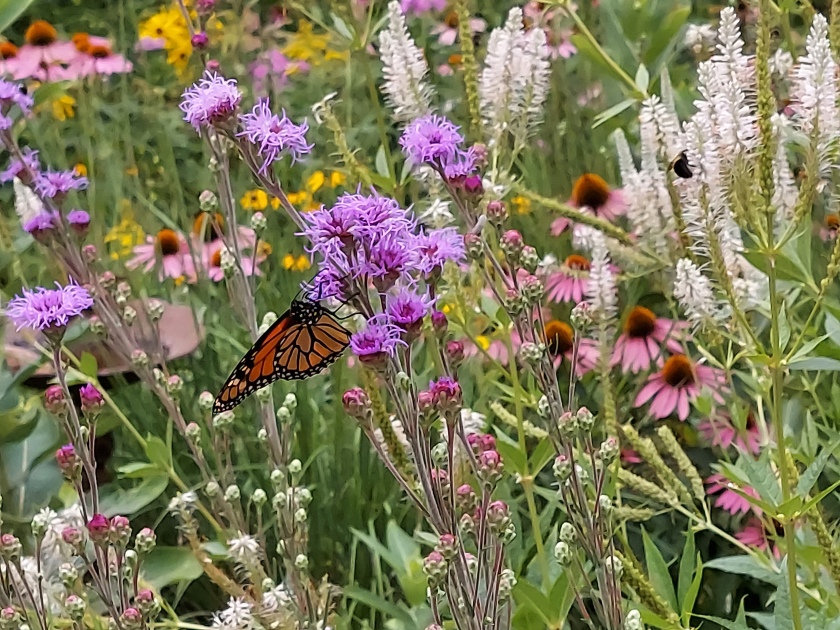
This mix of native plants attracts bees, butterflies, and singing birds.
Bee balm is one of the best plants for pollinators.
Pearly everlasting is a host plant for the painted lady butterfly. Picture of her catterpillar.
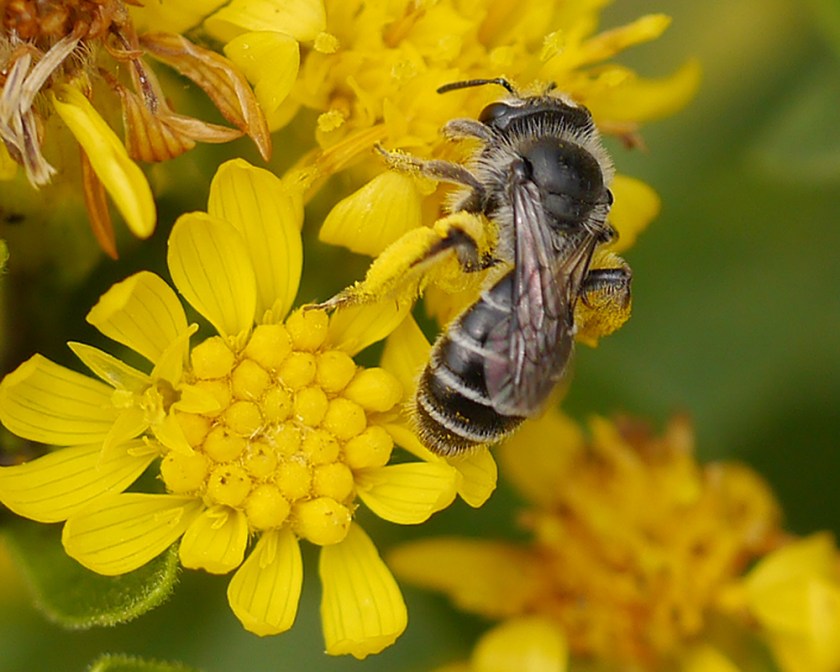
An unsung hero of the pollinator world.
June 19 to June 25, is pollinator week highlighting the importance of pollinators to our world and our survival. Drought, floods, storms, chemicals and loss of habitat are hard on our pollinators, and there are things we can do to ensure their survival.
Pollinators bring me joy and I can’t imagine a world without butterflies, dragonflies, hummingbirds and beautiful singing birds. Take time this week to think about what you can do to help the pollinators of our world. Maybe decide to stop putting chemicals on your yard, plant some native plants, or take out some grass lawn for more garden.
This Pollinator Week is emphasizing the connections between climate and pollinators. Pollinators are dying because their food and homes are disappearing, diseases have increased, and rising temperatures and natural disasters are affecting their ability to survive – all of which are related to climate change. At the same time, the conservation of pollinators and their habitats can help combat climate change by supporting healthy ecosystems, air, soil, water, and plants. Combined, these results make planet earth a safer place for us to live. These are big problems and the efforts that are made around North America and globally during Pollinator Week can help provide real solutions for the pollinators we all love. https://pollinator.org/pollinator-week
**Juneteenth is the “longest-running African-American holiday,” and it recognizes June 19, 1865, as the date that news of slavery’s end reached slaves in Texas and other states in the southwest—formalizing their emancipation after the end of the Civil War a month earlier. It also came two years after President Abraham Lincoln signed the Emancipation Proclamation.
Bees are facing many stressors because of climate change, loss of habitat, too many chemicals and disease.
On World Bee Day plant some seeds bees love like bee balm(menardia) Culver’s Root, hyssop, Joe Pye weed, or asters. Also, consider a bee lawn https://beelab.umn.edu/bee-lawn
There’s just something about being outside that seems to lift your mood and bring on the happy. Happy May!!
I hope you can spend lots of hours outside this May. Clean air is crucial to being outside! What can you do to ensure our air is clean?
Native plants bring birds butterflies and bees into your yard. They also need no chemicals, and create cleaner air!
Hooray for May. It has been a long snowy winter where I live. This May get outside to experience the beauty of nature. Time outside demands fresh air. It’s a big frustration for me when I go outside, and someone is using a smelly lawn mower/leaf blower, or the airplanes overhead are spewing bad air Why people need to idle their engines as they read their phones is a mystery to me? Please turn your engine off. **This May spend time outside and work for clean air! There’s just something about being outside that seems to lift your mood and bring on the happy.
I have just been out walking along a river near my house. It was so quiet, the baby leaves are just popping on the trees. Manny rich colors, and wow, beautiful wildflowers appearing! I saw my first bull snake. Pay attention and nature will award you!
-Work for clean air. Never idle your car engine, don’t use your power lawn mower or leaf blower, and please avoid outdoor fires. All these polluting activities contribute to our climate crisis. Every action matters!
-Two or more days a week leave your car in the garage.
-Take a breath, clean air! Thank you.
-Clean air is an environmental justice issue. Read about it here. Never support the burning of garbage or chemical recycling.***
-Participate in No Mow May https://www.ecowatch.com/no-mow-may-uk.html No Mow May is under way! #NoMowMay encourages people to resist the call of the lawn mower and leave lawns untouched until the end of May for the benefit of: pollinators, biodiversity and clean air!
-Enjoy a peaceful bike ride away from traffic!
**Idling your car wastes fuel, money, and causes air pollution and health problems. It is better to turn off the ignition if waiting more than 10 seconds, as restarting the car does not use more gas than idling.
***What is chemical recycling? The process primarily involves converting plastic into fuel that is then incinerated. Far from actual recycling, it’s really just an expensive and roundabout way of burning fossil fuels. The chemicals industry is lobbying hard to get two types of these plastic-to-fuel incinerators — pyrolysis and gasification — exempt from regulations under the Clean Air Act.
The Actions For Happiness groups has a calendar of activities to help make May meaningful and kinder!
“Every person on earth bears responsibility for good earth stewardship” Pope Francis
Northern Pearly Eye
How did we ever get sold on the fact that a green monoculture of a turf lawn was a good thing everyone wanted to copy? I love walking in green spaces, but should a green space have more variety than being just like everyone else trying to be like everyone else. Has our climate crisis brough us to a time we question the feasibility of maintaining something that harms instead of adding a positive to our environment?
What is my problem with a turf grass lawn?
First it takes lots of water to keep it green and needs poisonous chemicals. We have been in a drought, and homeowners are watering the sidewalk and the street trying to keep their lawns green. A weed free lawn requires lots of chemicals which run down the street into the storm drains and then into our lakes and streams where they stimulate the growth of algae. See the evidence on ponds and lakes covered with algae muck which can be fatal to dogs and wildlife. Muck covered lakes is not a natural happening!
A monoculture turf grass lawn has no benefit to pollinators. Pollinators love flowers free of chemicals and plants that are native to the area. They also like color and fragrance. The best is native plants have deep roots and can survive without much water.
Deep rooted native plants
You can create a friendly yard by just not mowing it, but I recommend thinking about a happy bee lawn. Bee lawns composed of various low growing plants don’t require chemicals and are not toxic to humans and pets. Also children can run and play on them just like turf grass. The butterflies and bees love diversity, scent and color. Some of my favorites are native violets and barren wild strawberries, both are very easy to grow and can be mowed a few times a summer. See the link below on bee lawns. Some people like non-native clover and creeping Charlie.
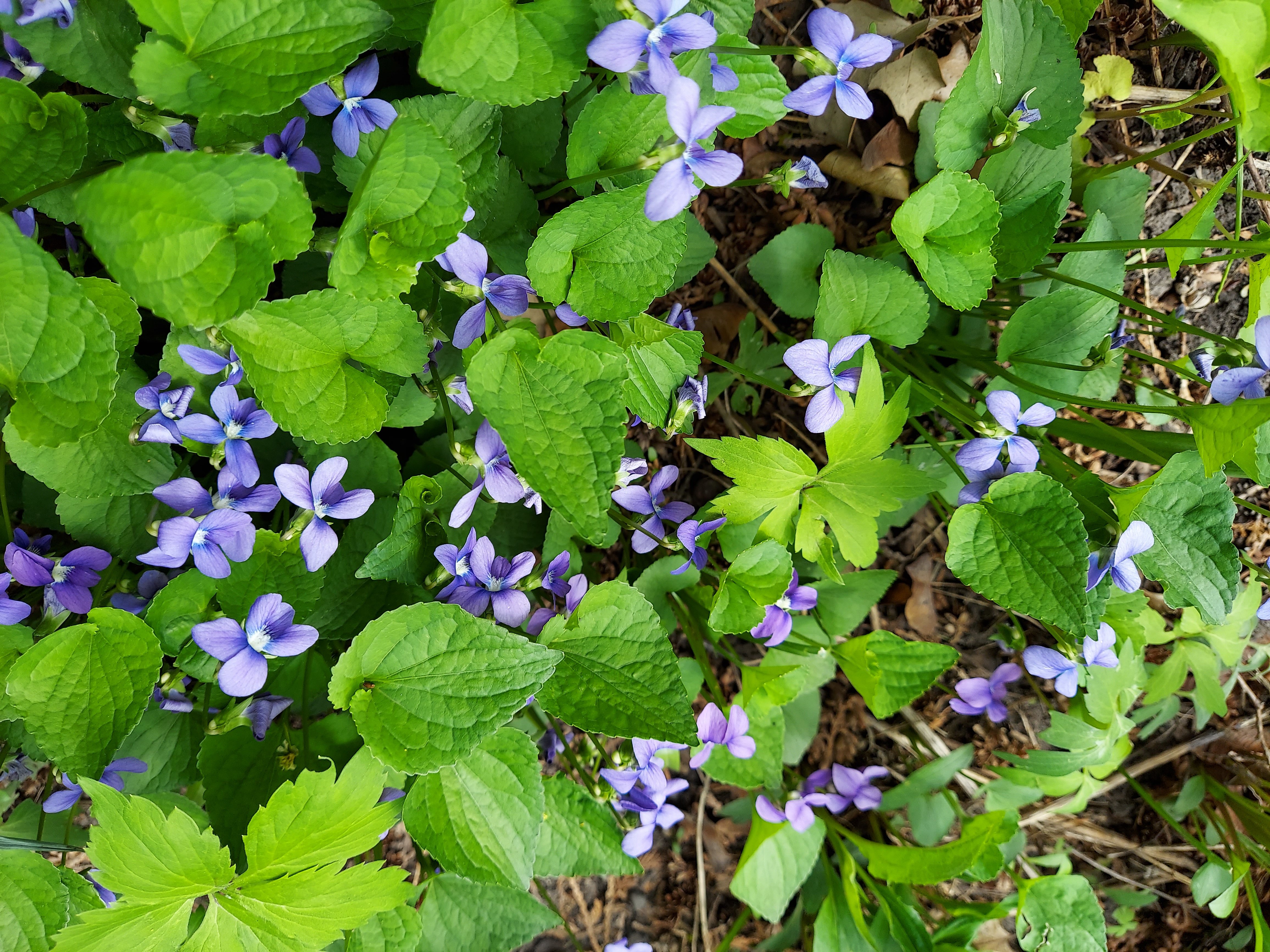
Violets are great for bee lawns.
Start with a small section of your yard, mow it short and work in some seeds (violets, strawberry, clover, creeping thyme, heal all) with a rake or hoe, and keep moist until you get some new sprouts. Find seeds at https://www.prairiemoon.com/
I am sorry to see the month of July come to an end. Lake Superior keeps the hot temperatures to the south, and the temperature has been comfortable, but the lake has been unusually cold.
It has been an incredible summer for birds. The singing has now somewhat subsided, but in early summer we were thrilled to hear many birds singing we hadn’t heard for a few years. Mornings were so pleasant with purple finch, red starts, song sparrows, chestnut sided warblers, Northern parulas, and red-eyed vireos belting out their beautiful songs. Even though the singing has now subsided, we have an active crowd of baby birds trying to fill their hungry stomachs. Red starts and song sparrows were underfoot as I worked in my garden.
Many birds nest here because we have so many insects and caterpillars to feed their babies. This week we had many birds trying to eat the ripe elderberry berries. Today we had flickers, downy woodpeckers, chickadees, and cedar wax wings trying to hover and snatch one of these delicious berries. I’m sure they wish they could hover and fly like the hummingbirds.
The hummingbirds think they are king of the mountain. Life is a game to them as they wiz around. Even though they are the smallest they are the most aggressive and most visible. Their assertive behavior is entertaining as they are protect “their food.” I am sure the baby hummingbirds are learning from mom how to behave and survive.
Monarch butterflies visit daily
The number of butterflies has also subsided since early July, but a monarch makes a daily pilgrimage to our yard visiting the milkweed. Unfortunately, butterfly caterpillars don’t survive long because there are many baby birds to be fed. I hope that some survive as butterflies,
An American Lady caterpillar on pearly everlasting, it probably became bird food!
Beautiful violets are popping up all over our yards, and gardeners either love or hate them. I am a lover of violets. My love affair started when I learned they were the host plant to the fritillary butterfly. How could violets be a fritillary host plant? The timing of these butterflies and the blooming violets were so mismatched. This post is to try to explain how important violets are to the fritillary butterfly.
Violets are the only host plant for the fritillary butterfly.
During the past month millions of blue violets have been pulled out of gardens and lawns. It is unfortunate because the overwintering caterpillar of the fritillary butterfly is just climbing out of its winter leaf letter hiding place looking for violets to sustain their life cycle. The fritillary caterpillar will eat only one thing, its host plant—violets.
The fritillary caterpillars emerge out of the leaf litter where they have wintered, into a few weeks of munching on violets. The caterpillars eat at night so we don’t see them. Next, the caterpillar forms a secretive well-hidden chrysalis, and a few weeks later a beautiful fritillary will evolve from its chrysalis.
Fritillary on thistle
What do these beautiful butterflies’ nectar on? Not violets, but the fritillary’s preferred native nectar plants include milkweeds, Joe Pyes, native thistles, coneflowers, and wild bergamot (bee balm) Plant these native plants to keep the new butterflies in your yard!
After mating, the female fritillary looks for violets to lay her eggs on or near. These eggs grow into caterpillars that will overwinter in the leaf litter surrounding the violet. The caterpillar wakes up around the time the spring violets emerge and the cycle begins again.
I think the best way to create fritillary habitat is to have a dedicated spot in your yard where violets can thrive. Maybe a place where you can allow the leaf litter to stay. Also, creating a bee lawn is a wonderful way to sustain these pleasant violets and the fritillary butterflies too. https://extension.umn.edu/landscape-design/planting-and-maintaining-bee-lawn
Spring arrives and shakes us out of all the darkness in our world! After a violent storm last night, I was worried about migrating birds and butterflies. Somehow, they manage to arrive and today I was treated to my first Painted Lady butterfly, a hummingbird, wrens and a Swainson’s Thrush.
Native plants create healthy food, homes and a resting spot for birds and butterflies.
It’s World Migration Week! On this big week of migration what can you do to create a healthier and friendlier environment? Find the migration happening in your county here: BirdCast – Bird migration forecasts in real-time
Would you like your yard to be a resting spot for nature? My yard is for the birds. First, we never use chemicals as we try to create bee, butterfly and bird habitat. Lawn chemicals aren’t healthy for people and they sure aren’t healthy for wildlife either. Native plants do not need chemicals so they are a win-win. Start small, with easy to grow wild geraniums, bee balm and asters. These three plants will get you blooms in the spring, summer and fall, and they will bring joy to you and wildlife.
Bee balm is a magnet for birds, bees and butterflies!
“We can no longer simply “let nature take its course” and expect the return of productive ecosystems. Humans have meddled in too many ways that prevent nature from healing itself. We have introduced over 3,400 species of invasive plants to which local wildlife is not adapted, and we have eliminated the top predators that used to keep deer, raccoon, skunk, and possum populations in check. If we remove an essential part of an ecological community, we must replace it through active management or the system will collapse.” Doug Tallamy
My third idea for a healthy yard is creating a bee yard, and they are beautiful right now. The flowers of a bee lawn provide food (nectar and pollen) for pollinators. Bee lawns are environmentally friendly because they are managed using low-input methods that generally use less fertilizer and pesticides. Bee lawns can still be used recreationally by your household like a regular lawn. A bee lawn can attract over 50 species of native bees.










 Health4earth