A Special Hundred Years, Celebrate!

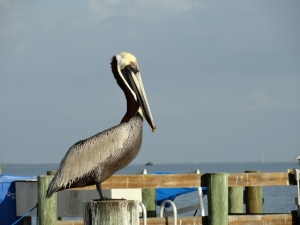
A wise pelican near the Everglades
A wise pelican, the Everglades
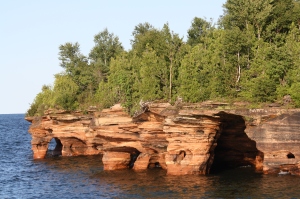
Apostle Islands National Lakeshore
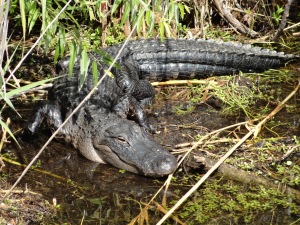
In the Everglades
In the Everglades

Happy 100th Birthday to Our National Parks!  Many of us have vivid memories of visits to our national parks.  Our parks are for the common good of all, and are an important function of government. National parks represent The United States in history, culture, diversity, beauty and lots of fun! As citizens we need to make sure they are funded and cared for.  Always be leery of politicians who are going to cut your taxes. That money is often from programs that are for the good of everyone, like parks. Only Congress can create national parks.  Tell your congressman how important they are and to please fund them.

I love this article by Jillian Mackenzie “Europe has cathedrals. We have national parks,” said Stephen Saunders, neatly capturing the significance of these 59 national treasures, which include important monuments as well as parklands. But as we honor their majesty we must also recognize and address the biggest threats to our natural versions of Notre Dame.  Read the entire article.

So what are you waiting for?  Grab your walking shoes, a reusable water bottle, sun screen and visit a park near you. Happy Birthday, National Parks!

http://time.com/3907099/yellowstone-first-national-park/
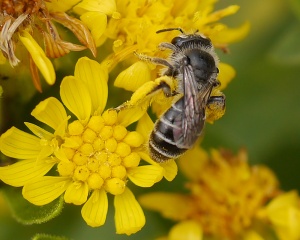
Minnesota Takes the Lead for Bees and Butterflies

Hope for pollinators

“Today, Minnesota set the strongest rules in the nation to protect pollinators from pesticides,” said Lex Horan of Pesticide Action Network. “The plan will help ensure that bee-harming pesticides won’t be used unnecessarily, and it lays the groundwork for reducing the use of neonicotinoid seed coatings. This decision is rooted in the resounding scientific evidence that neonicotinoids are harmful to pollinators. It’s past time for state and federal decisionmakers to take action to restrict the use of bee-harming pesticides, and today Minnesota did just that.”  Read the whole story here.  Another story from Minnesota Public Radio.

An American painted lady

Say “No” to Plastic Bags!

Get in the habit of bringing your own bags shopping.

I do the majority of my grocery shopping at food coops, but when I visit regular grocery stores I am appalled by the number of plastic bags leaving with purchases. I know most them aren’t recycled.  My city will put fees on some plastic bags in 2017, and I can’t wait!!  It will be a fabulous education tool for many people!!

Below is from Earth911.com, and contains some information I didn’t know, how the below businesses have reduced plastic bags. Please shop retailers that protect our earth.  I haven’t shopped at all these retailers so please let me know if this information is accurate???

From Earth911.com: “Did you know that studies have shown that about 12 million metric tons of plastic debris, including plastic bags, has accumulated in our oceans around the world? Due to this pollution, more than 100,000 marine animals die each year due to plastic entanglement! That is a startling number – and one that doesn’t show any signs of slowing its growth.”  Read the entire article here.

These are the retailers to patronize!

  1. Adidas
  2. Ikea
  3. COSCO, Sam’s Club, and BJ’s
  4. Whole Foods
  5. Local Coops Earth 911 gives a shout out to New Pioneer in Iowa City. I shopped there while traveling this summer and recommend shopping there if you are in Iowa City or traveling along Interstate 80 through Iowa.

And more on plastic pollution here.

The plastic bag fee in Britain has reduced plastic bag use by something like 80%!

Pollinator Garden Walk

My back yard: Cone flowers, butterfly weed
My back yard: Cone flowers, flox, and butterfly weed

This past week my yard was part of a “Pollinator Garden Walk” led by my neighbor, a pollinator expert. We walked, biked, or carpooled to 4 neighborhood yards. All the yards had boulevard plantings, two had no turf grass,, and three yards had rain gardens. We observed lots of bees, hummingbirds, butterflies, and caterpillars.
Below are the ideas to attract pollinators suggested by the pollinator expert:
* Choose native and single-flowered plant varieties
* Go organic, eliminate pesticide and herbicides64px-Eyed_Brown,_dorsal
* Leave areas of bare ground or loose leaf litter
* Plant milkweed
*Install a bee nesting house for mason bees and other stem-nesting bees

Cardinal flowers are happy this year with lots of rain!


I would add: Plant with diversity of flowers, bloom times, and colors.

Never use plants treated with neonicotinoids! Ask before purchase of plants.


https://health4earth.com/add-fun-pollinators-to-your-yard/

Avocados Deforest Monarch Winter Grounds!

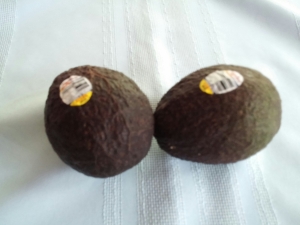
The stickers on avocados say where they are grown. Say "No" to Mexican avocados!
The stickers on avocados say where they are grown. Say “No” to Mexican avocados!

I embarrassed to admit I have Mexican avocados in my refrigerator. NEVER again. According to this article monarch wintering forests are being removed to grow avocados.
Education is a good thing, and new information arrives daily. Please take this new information seriously and purchase avocados from California. Read the little sticker on the avocado to find out where they are grown. Yes, you might have to pay higher prices, but this is important to help save the monarch butterfly!

Also, inform the produce people at your local grocery that you will purchase only avocados from butterfly safe areas, which Mexico is not.

Smart consumerism may help the monarch!

Please comment with any new information you learn on monarch wintering grounds and other products we shouldn’t purchase??

An update to this post.  First, I have been able to purchase avocados raised in California this past week. Second, this link about the monarch winter grounds is more hopeful.  I hope you will choose only California grown avocados until we know the monarch winter grounds are safe! Thank you.

North Land Butterflies/Superior Views

wpid-20150913_135245.jpg

Painted Lady
Painted Lady

Look carefully and you might see a new butterfly. It has been exciting to have eggs and monarch caterpillars on my swamp milkweed, and painted lady caterpillars on pearly everlasting plants.

Eyed-Brown
Eyed-Brown

In the past month I have been able to identify some new north land caterpillars and butterflies. Enjoy these pictures, but it is better to see the real thing rather than a picture!  Get outside and observe!

Monarch Caterpillars
Painted Lady eggs and caterpillars on the pearly everlasting
Two Atlantis Fritillary on bee balm
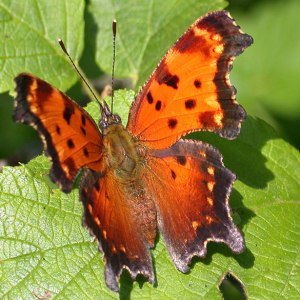
Grey Comma, a dull name for a butterfly  beauty
Grey Comma, a dull name for a butterfly beauty
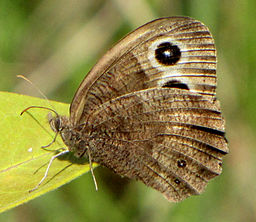
Common Wood-nymph
Common Wood-nymph(wikepedia)


One River Drains Lake Superior

Magnificent Lake Superior has over 300 rivers and streams that drain into it. Last week it was a brown lake because of mega rainfall in northern Minnesota, Wisconsin and Michigan where many rivers dumped sediment from the storms. I am on a road trip from Duluth, Minnesota along the south shore of Lake Superior to Sault Ste Marie and the St. Mary’s River. Canada is on the other side of the lake and across the St. Mary’s River.

An ore boat leaves Lake Superior on the St Mary’s. River headed toward Lake Huron

Even though 300 streams drain into the big lake only one, the St. Mary’s River, carries boats and water away from Lake Superior. The St. Mary’s River carries about 42 billion gallons of water from Lake Superior daily.

Lake Superior, looks browner than this picture below appears.  I think the sun makes it look bluer than it is.

Butterflies are Vanishing Around The World

“Whatever befalls the earth, befalls the people of the earth.” Chief Seattle

If Everyone Does a Little It Can Add up to A Lot!

Fritillary on bee balm

Have you noticed how few butterflies are flittering around this summer? Researchers find that butterfly species throughout the world are disappearing because of pollution, pesticides, and habitat loss.  A newly released study says many butterflies are vanishing.

The author suggests we remove some of our lawn, and plant more flowers.  Yes, we should plant more flowers, but beside planting more flowers we need to reduce the use of the chemicals we put on our lawns, in our gardens and on our agricultural fields.

Reducing chemicals and planting host plants for butterflies can make a big difference.  Many of us are actively working on planting milkweed for monarchs, but there are many other butterfly species.  Besides milkweed I have pearly everlasting for the American painted lady, turtlehead for the checkerspot butterfly, and golden Alexander for the black swallow-tail. Violets are great for the fritillary butterflies.  This is one of the best charts I have seen on plants for butterflies from Bringing Nature Home   And some ideas from the University of Minnesota for plants that are favored for butterflies an moths. Please let me know what your best plants for butterflies are?

An American painted lady

More information of pollinators: http://www.xerces.org/

What happened to our “Sky Blue” waters?

Is this how lakes should look? We all need to do better.

Minnesota, the land of “Sky Blue Waters” is adding more than 300 lakes, rivers and streams to its list of lakes and streams that are impaired. The story from MPR is here.

About two-thirds of Minnesota watersheds have been tested and 40 percent of Minnesota rivers and lakes have been found to be impaired by farm runoff, bacteria, mercury or other pollutants.


The below ideas for protecting our lakes is from the Superiorforum.org , Sigurd Olson Institute, Northland college, and the EPA, and Great Lakes Restoration Initiative:
1 .Be conservative with your water use.
2. Recycle as much as you can with the 4 Rs: reduce, reuse, recycle and repair. And….NEVER burn trash.
3. Curb Yard Pollution. Put your lawn on a chemical-free diet!!
4. Stop aquatic invasives by cleaning plants and animals off your boat.
5. Plant native plants, and reduce turf grass.
6. Plant native trees According to Audubon, oak trees are the best for attracting insects and birds.
7. Install a rain barrel
8. Create an energy-efficient home.
9. Bring hazardous waste to waste collection sites.
10. Love our lakes!

I would add several more:
1. Rain gardens are excellent for capturing harmful water runoff.
2. Keep leaves and trash out of streets and storm drains-Adopt a storm drain!

Love our lakes, rivers and streams. Take care of them!

Love our lakes, rivers and streams. Take care of them!

3. Never use cleaning products or hand sanitizer with triclosan.
4. Reduce all plastic use–If you must use plastic bags and bottles, be sure you recycle them.                                                  5. Pick up all liter.