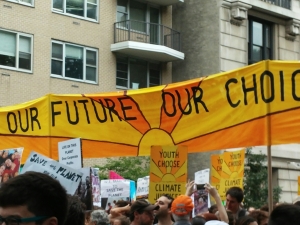
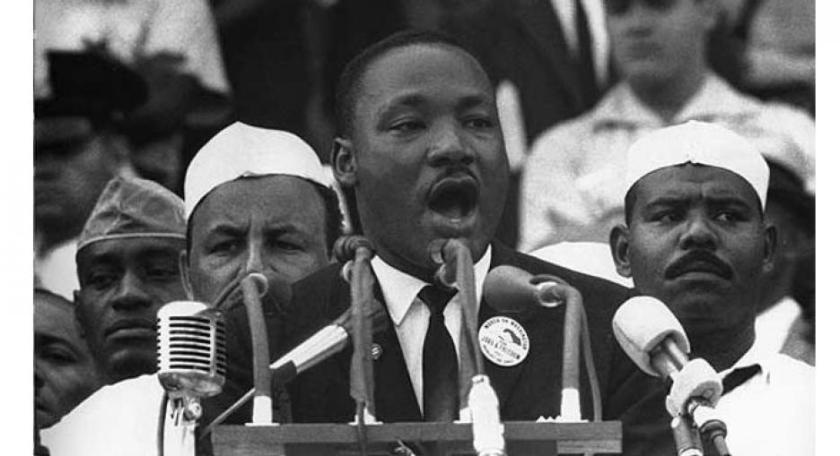
Saturday, January 21: March in solidarity for clean air and water, march for the protection of civil rights, women’s rights, and the health of our children. Imagine the world as we want it to be and work for it.
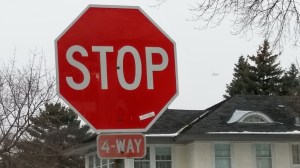
Every pedestrian who loses to a driver is tragic. (http://www.startribune.com/minnesota-pedestrian-death-spike-illustrates-grim-us-trend/409805035/) Last year, I was knocked down by a car as I crossed 50th Street with the walk light in Minneapolis. By contrast, when I’m crossing busy Tower Avenue in Superior, Wis., cars and trucks from every direction stop and wait for me. Why would drivers in Superior have a different standard? Many of us want and expect walkable communities. Law enforcement and everyone must do better.
This is my letter to the editor published in the Startribune.com on January 9, 2016.
To think that people are going to stop eating fish is a heavy lift. Even the vegans I know will eat fish and sushi. Do you purchase fish and shrimp? Some things to consider:
Why would anyone purchase or eat fish caught in Viet Nam or China? I thought this was such an interesting and strange story, and It should be shared to heighten people’s awareness. Most Americans eat fish caught in Asia while fish caught in Massachusetts is exported to Europe. Why would anyone purchase or eat fish caught in Viet Nam or China? Watch the segment on Dog Fish, a sustainable fish, here.
In the United States it is possible to purchase sustainable Gulf caught shrimp and scallops, as well as wild caught cod, salmon and other fish from the Pacific Ocean. Also, fish from the Great Lakes is excellent.
Be a Climatarian, consider the planet when you make all food and fish choices, and buy local and USA products if they are available. And then there is the thought that we shouldn’t be eating fish at all. Read it here from One Green Planet
“Imagine a world where humankind lives in harmony, not only with itself but also with other forms of life, in balance with the planet’s resources. Imagine the world as you would like it to be.” Steve Wilbers
Imagine clean water and clean air
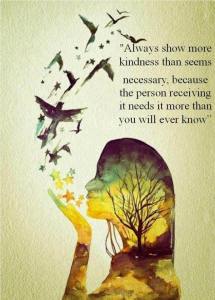
Writing coach, Steve Wilbers is imagining the world as he would like it to be. Can you imagine how powerful it would be if everyone held a vision of kindness, and imagined a world of kindness. Powerful!
His suggestions are timely: Write a thank you note, blog, write a letter to a newspaper. Read his article here. Write about your passions, your images of how the world should be. Speak out, write, and make the world a better place!
“You may say I’m a dreamer
But I’m not the only one I hope someday you’ll join us And the world will be as one”
The year ahead is impossible to predict. As with every year, many unknowns lie ahead. Most of us like being in control, and the unknowns are scary. What can we control in 2017? How we treat other people, and how we treat the earth are things we can control. What kinds of kindness can we spread?
“In the New Year, may your right hand always be stretched out in friendship and never in want.” Celtic
“May peace and plenty be the first to lift the latch on your door, and happiness be guided to your home by the candle of Christmas.” Celtic
Holiday blessings and wishes for all; Celtic and Irish blessings for the holiday season:
Six blocks of Christmas luminaries in my neighborhood
“Nollaig Faoi Shean Is Faoi Mhaise Dhuit” (Gaelic)
(pronounced) Knoll-ig f’wee haan ss f’wee shun-ah g-with
(translation) (A Christmas of Happiness and Joy to you)
(old Irish Saying)
“May you be blessed
With the spirit of the season, which is peace,
The gladness of the season, which is hope,
And the heart of the season, which is love.”
Irish blessing.
New Year Celtic Blessing
Slàinte maith, h-uile latha, na chi ‘snach fhaic!
Gun cuireadh do chupa thairis le slainte agus sonas.
A h-uile là sona dhuibh ‘s gun là idir dona dhuib.
Nollaig Chridheil agus Bliadhna mhath ùr!
Good health, every day, whether I see you or not! May your cup overflow with health and happiness. May all your days be happy ones. Happy New Year!
Last year I did a series on reducing waste over the holidays. Read it here Maybe just do one thing different this year.
Below is from the Minnesota Pollution Control:
Holiday waste
The presents have been opened and the festivities are over. What’s to be done with all the stuff and waste that’s left? Are there eco-friendly ways to keep it out of the trash?
A lot, and you bet!
The EPA reports that garbage increases 25% between Thanksgiving and New Year’s, and it’s not hard to see why. Drive down any street or alley in late December or early January and you’re likely to see trash bins and bags overflowing with holiday waste. Some of these materials have potential value, which can be lost when they hit the waste stream.
Even if your holidays weren’t the “greenest” on the block, there’s still time afterwards to engage the 5 R’s: Reduce, Reuse, Repurpose, Recycle, and Rethink.
“Don’t buy me stuff that will wind up in a landfill. spend some time and make memories with me instead” Weatherman Paul Douglas
The shopping and entertaining season is upon us. How can we be more sustainable in our purchases and lifestyle?
Our choices can help people Thrive!
A Startibune.com letter to editor today:
“The holidays can make us feel trapped by traditions that dictate what we buy, where we travel and who we see. For those looking for more freedom of choice this season, I recommend scrutinizing how you spend money and what cultures and policies those dollars ultimately support. Was this gift made in America? How does that store treat its workers? Is my credit card helping finance the Dakota Access pipeline? While such choices may appear innocuous, their aggregate impact can shutter businesses and victimize people both near and far. Or — if we think critically — our choices can help people thrive.
The election has passed, but we can vote with every dollar for the type of world we endorse and wish to promote.” Robert Beets, Minneapolis