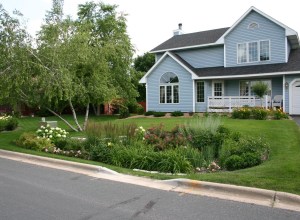
How can you help our pollinators? Our pollinators are struggling to survive. There are things we can do in our yards to help pollinators. The mono-culture of perfect green turf grass lawns does nothing to help our struggling pollinators.
Blue Salvia are loved by bees. (not native)
I have been on a road trip from Minnesota, through Iowa, Missouri, Kansas, Nebraska, and South Dakota, and have been amazed at the manicured thick turf grass that dominates in parks and lawns. Turf grass has no value for pollinators, and when fertilized adds unhealthy chemicals harmful to pollinators, humans, pets, wildlife and our water bodies. Adding a diversity of fresh new plants and removing some lawn can make a big difference for our pollinators.
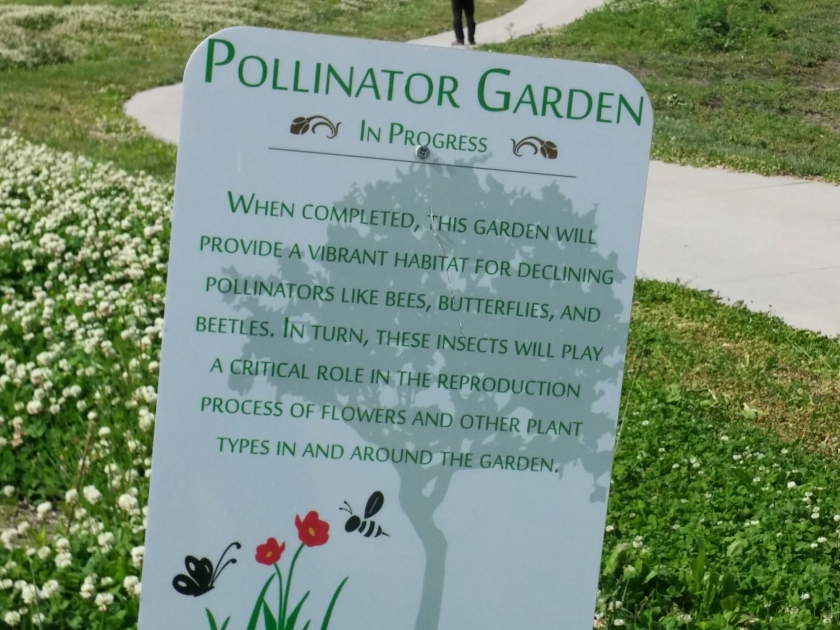
Walking a trail in Lincoln, Nebraska I was thrilled at their efforts to help our pollinators. They are allowing clover and native plants to grow. I even saw a few milkweed popping up.
Just a few changes can make a big difference for pollinators.(bees, butterflies, and birds)
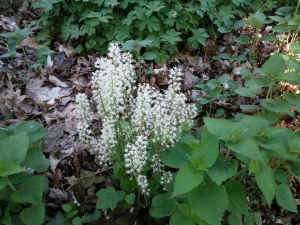
Spring is a fabulous time to add new plants to your yard. A wide diversity of plants helps
Foam flower is an early blooming plant
our pollinators. Native plants don’t need chemicals so they are the healthiest for you, children, pets, and the pollinators. More garden diversity, and less chemicals creates a win-win for our earth and us all!
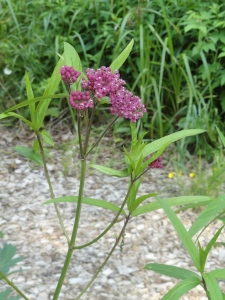
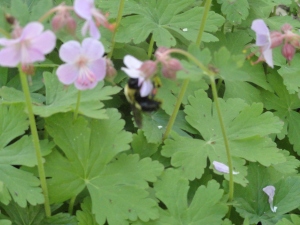
Always consider how to add more milkweed. Swamp milkweed has been the most successful for me.Wild geranium, easy to grow, is loved by bees and butterflies and is early blooming
Plant your yard with plants the bees, butterflies and birds love
Each of us is so unaware of the damage we are doing to our earth. This week I was at a seminar on pollinators. Minnesota has lost two of its native butterflies, the Dakota Skipper and Poweshiek Skippering. and many more bees and butterflies are declining in numbers. Also, I was surprised so many people don’t know about neonicotinoids. Neonicotinoids are harmful systemic pesticides that weaken pollinators
Round up kills the plants that bees and butterflies need for food and egg laying !
Why is there is so much buzz about bees during the winter? The United Nations announced that we are loosing many of our important pollinators that are vital to the pollination of many important food crops.
What is causing this loss? The major reasons we are loosing species of native butterflies, bees and birds is because of mono-crop planting, habitat loss, and our obsession with pesticides. The combination of these three is making it hard for pollinators to survive.
Even a small yard can make a difference for pollinators. First, add more native plants to your yard, they don’t need chemicals. Plant for different bloom times, diverse flowers, and never purchase a plant treated with neonicotinoids ! Be careful and read directions with any chemicals you use on your yard….Try to go without! Finally, bees and butterflies love blooming dandelions and clover…Let them bloom, then weed them out!
Native plants are needed as host and nectar plants as our native butterflies, bees and birds go about pollinating our food plants as they forage for their own sustenance.
Native plants have deep roots which absorb excess rainfall and prevent water from running directly into our rivers and streams helping to provide clean water for everyone.
Native plants instead of turf lawns help reduce our carbon footprint.
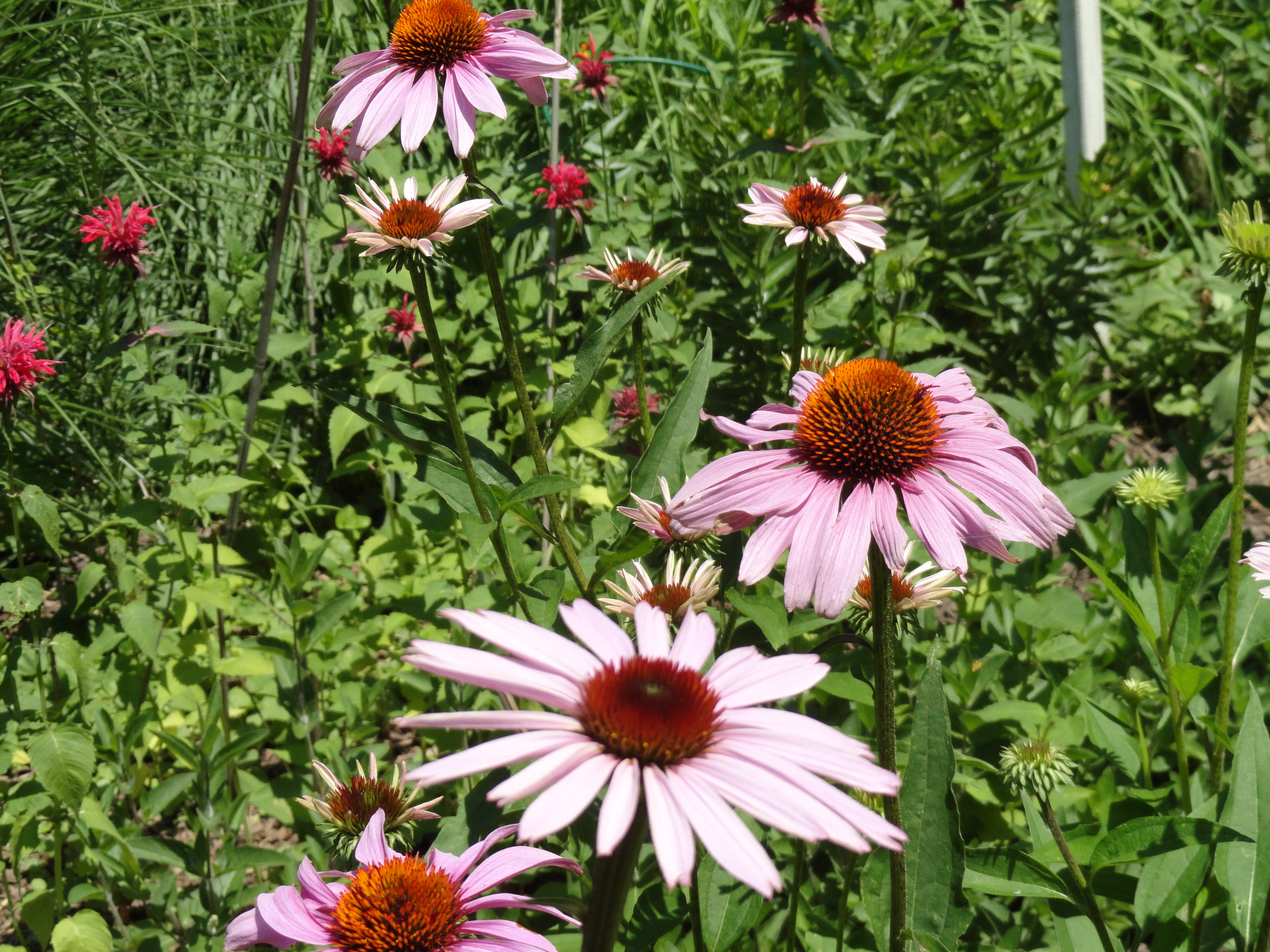
Dried up cone flowers are a gift to the birds. I took this picture in July
As I write this the goldfinch are eating seeds from dried up purple cone flowers, and hummingbirds are still flitting around for nectar. Below is an excellent article on fall gardening by writer Val Cunningham. My suggestions follow.
My additional suggestions for fall gardening are:
*Pull out all the invasive and bad plants
*Plan for next year. What worked and what didn’t work? How can you add more native
Hummingbirds and bees love this red menardia
plants ? (My favorites are milkweed, Liatris, cone flowers, bee balm hyssop, wild geranium and asters)
*Plan where you can add a rain garden next year to capture the rain from your house, driveway or yard. http://bluethumb.org/raingardens/
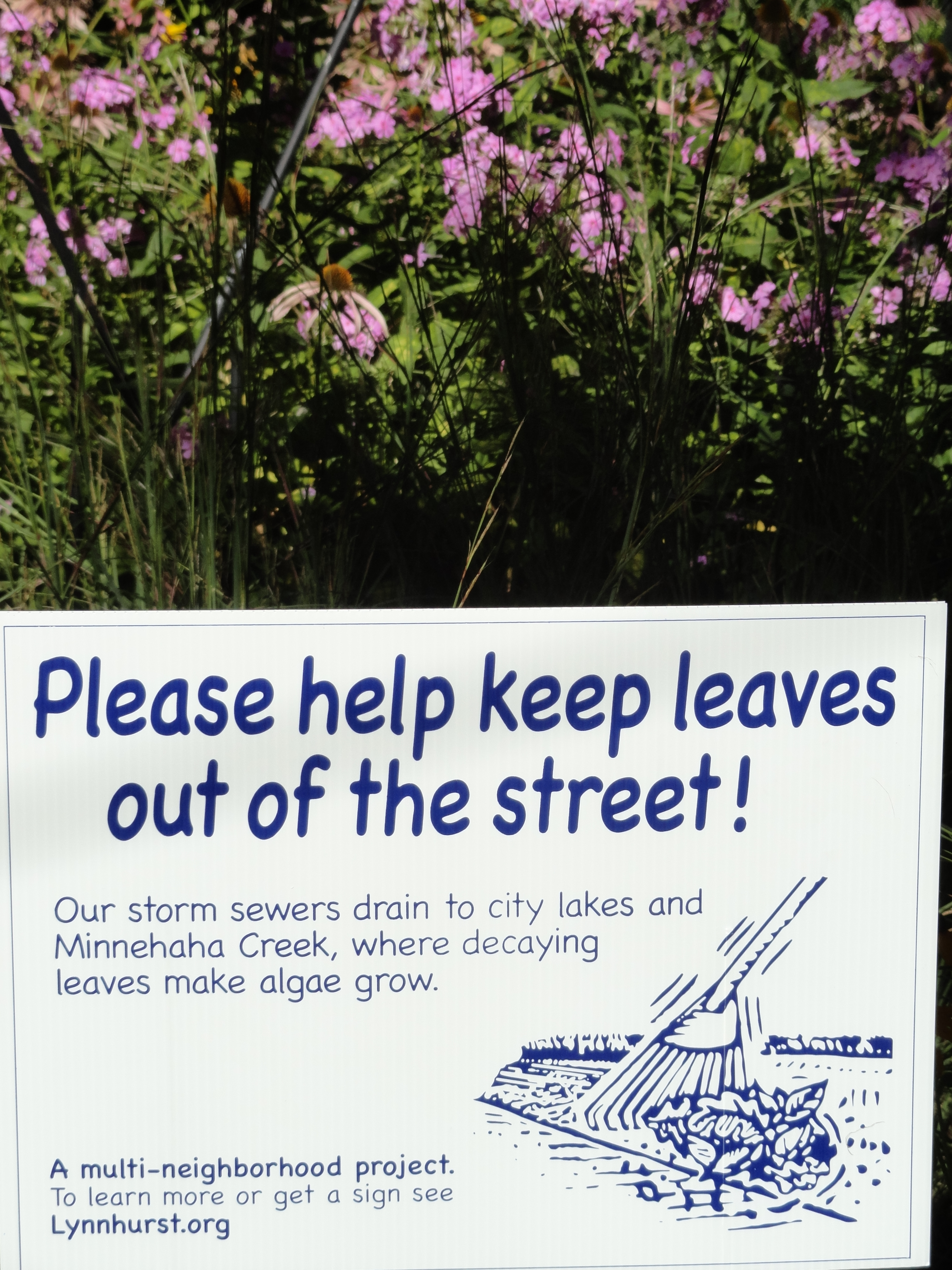
Birds love driveways with seeds and leaves, but please keep our waterways clean by sweeping sidewalks, driveways and street from leaves and debris.
“While insects and other animal pollinators may come in small sizes, they play a large partnership role in the production of the food we eat, in the future of our wildlife, and in the health of nearly all flowering plants. A garden without bees, butterflies, beetles, birds and even bats, is a garden devoid of the life-giving relationships that sustain plant reproduction.” http://www.fws.gov/pollinators/
Good suggestions below, and please don’t use chemicals:
Plant a Pollinator Garden.
An excellent book by Heather
Provide a variety of flower colors and shapes to attract different pollinators.
Whenever possible, choose native plants. Native plants will attract more native pollinators and can serve as larval host plants for some species of pollinators.
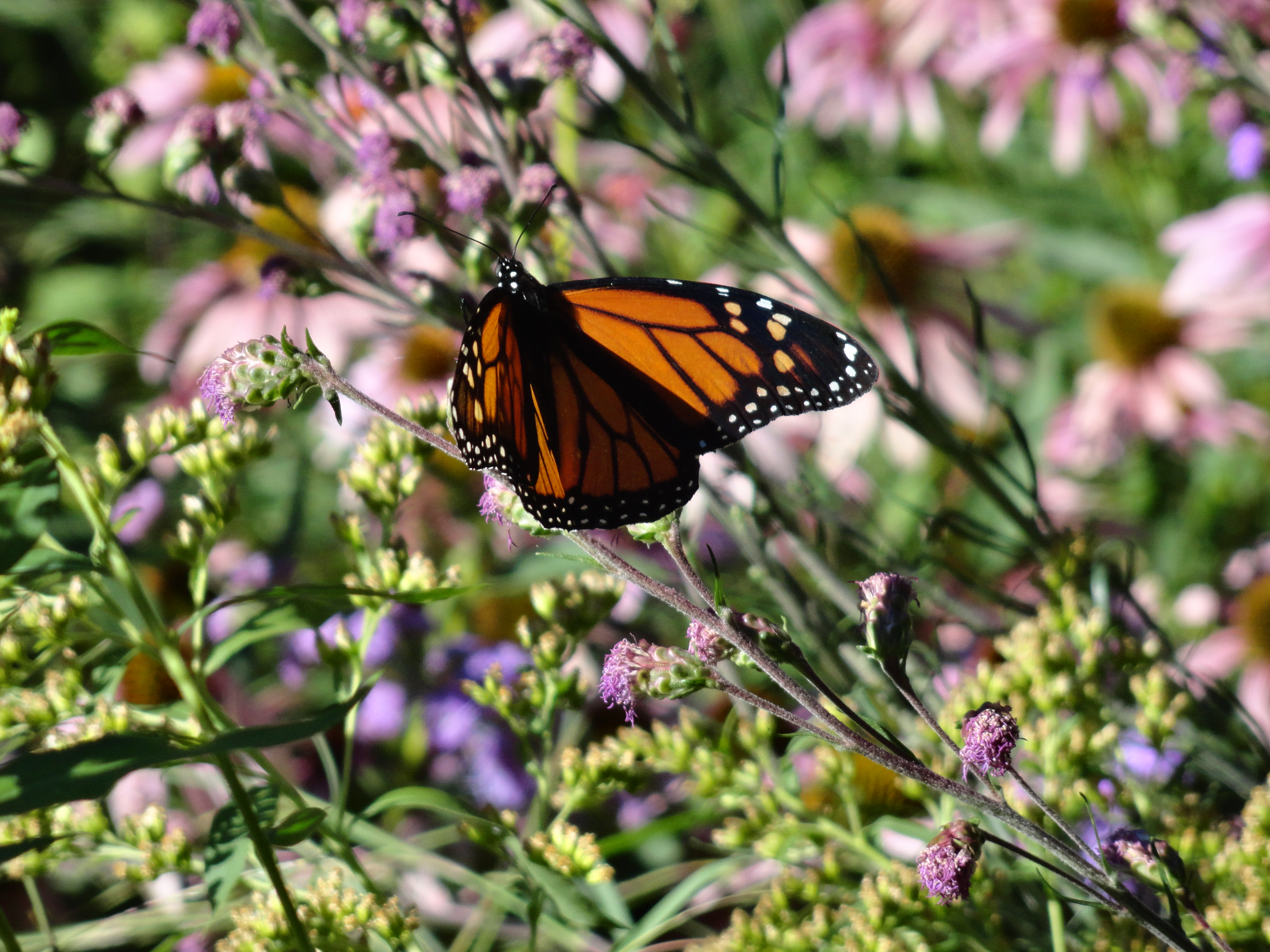
If monarch butterflies live within your area, consider planting milkweed so their caterpillars have food.
Plant in clumps, rather than single plants, to better attract pollinators
Choose plants that flower at different times of the year to provide nectar and pollen sources throughout the growing season http://www.fws.gov/pollinators/
Spring in Minnesota is glorious! The snow piles have melted and icy snowy sidewalks are only a tiny bleep in memory. We have a yard with no turf grass and mostly native plants and grasses. The birds love to stop for plant seeds on their migration. I garden for the birds, bees, and butterflies. So far harbingers of spring have been juncos, robins, and the cardinals singing their morning spring song. The chickadees and the downy woodpecker sit in the lilac bush inches from my window. As you can see, it is time to cut off last year’s plants and grasses.
Call the Vikings and tell them to install bird safety glass. 952-828 6500, or http://www.vikings.com/footer/contact-us.html and call Gov. Dayton 651 201 3400.
Our bees, butterflies and birds are in serious decline. We all should reduce our footprint to protect our wildlife. This also means businesses and the Minnesota Vikings! In Minnesota we are having a debate over whether the Minnesota Vikings should place bird protective glass on the new stadium being built. This stadium is near the Mississippi River, a major migration flyway. And…it is a publicly funded stadium, one-third being paid for by the citizens of Minneapolis. To be a good corporate citizen the Vikings need to follow state laws(safety glass), and positively contribute to the environment where they reside.
The Star Tribune, Minnesota’s largest newspaper editorialized that in the big scheme of things, it was not a big deal to protect these birds…WOW! http://www.startribune.com/opinion/editorials/279625602.html “Keep Bird Deaths in Perspective” I consider the Vikings actions and the editorial board both hitting a new low! In my perspective 1 million for protective glass is minimal when a billion dollars is being spent and large portion is a public hand-out!!
This is the counter argument from Audubon:
As stewards, we are responsible for our impact on the Earth’s well-being, and it is precisely the logic presented in this editorial that is putting our vital ecosystems in trouble. We know that it is not a single deforestation event, a single oil spill or a single storm that leads to significant decline of bird species, but rather the effect of multiple factors over time. The good news is that the same way our cumulative actions can stress and degrade the environment, our individual actions can lead to its protection and recovery. Take the bald eagle, for example, or bluebirds.
Migratory birds are legally protected because they play a pivotal role, pollinating plants and controlling insect populations. One bird can eat 500 pests per day, reducing the need for toxic pesticides. Disarmingly, their populations are not constant; they are decreasing because of human activities, including glass buildings. Research shows that many once-common species have had a 50 percent reduction in just the last 50 years.
Video,”Change the Glass Now” http:youtube.com/watch?v=ngvN7oHhHwY
What can you do?
1. Call the Vikings and tell them to install bird safety glass. 952-828 6500, or http://www.vikings.com/footer/contact-us.html and call Gov. Dayton 651 201 3400.
2. Reduce the chemicals you use in your yard, and plant bird friendly plants like cone flowers, little blue stem grass, cup plant, and Joe Pye Weed. These are just a few ideas that are easy to grow and birds love these plants.
3. Leave your car at home or carpool at least one day a week to reduce pollution.
4. Reduce plastic consumption and recycle all plastic bags.
A sphinx moth caterpillar in Susan Damon’s boulevard, which is filled with native plants, Wednesday, June 11, 2014 in St. Paul. Jennifer Simonson/MPR News
LISTEN Story audio http://www.mprnews.org/story/2014/06/23/minnesota-native-plant-garden
When Susan Damon and her husband bought their St. Paul home a couple decades ago, invasive plants had a stranglehold. Now their yard is home to more than 100 species of native plants and a food source for an array of critters.
It’s proof that even city dwellers can create a welcoming habitat for butterflies, bees and songbirds.
Susan Damon Jennifer Simonson/MPR News
They replanted with prairie grasses, high bush cranberry and hazelnut, among other species. There’s almost no weeding — the natives crowd out the dandelions — and hardly any watering since some of the plants have roots sunk up to 10 feet deep into the soil.
Damon estimates she and her husband have spent maybe $2,000 on native plants but adds that the yard takes care of itself with just a bit of cleanup and some thinning of plants in spring.
She recommends six plants to get started — see the gallery below for more details. And click on the play button above to hear her talk about the joys of ditching the lawn and how to do it.
Milkweed grows three to six feet tall and the stem’s milky sap is toxic, though parts of the plant are edible. Monarch butterflies need milkweed plants to grow – its eggs are laid on its leaves and larvae will feed on them. In this photo, a swamp milkweed beetle sits on a milkweed plant in gardener Susan Damon’s yard. Jennifer Simonson/MPR NewsGolden Alexander, photographed in Susan Damon’s boulevard, will bloom as early as late-April and as late as mid-June. It’s a very attractive plant to butterflies. Jennifer Simonson/MPR NewsConeflowers, like the ones pictured here, grow two to five feet tall. Only the narrow-leaved purple coneflower (Echinacea angustifolia) is native to Minnesota. The coneflowers of the Echinacea genus have a medicinal history and is still used in herbal supplements today. Jennifer Simonson/MPR NewsWild bergamot is beloved by long-tongue bees and butterflies and blooms between late-summer and early-autumn. Courtesy of Karl Foord/University of Minnesota ExtensionGoldenrod can grow from eight to 60 inches tall and blooms in the fall. The plant is very attractive to bees. Courtesy of Karl Foord/University of Minnesota ExtensionNew England aster (aka Michelmas daisy) blooms in the fall and can grow up to six feet tall. The plant is very attractive to monarchs and bees. Courtesy of Minneapolis Park and Recreation BoardA wood chip path winds through gardener Susan Damon’s yard, which is filled with native plants. Jennifer Simonson/MPR NewsSolomon’s Seal, which attracts bumble bees, in native plant enthusiast Susan Damon’s yard. Jennifer Simonson/MPR NewsCanadian white violet in Susan Damon’s yard. Jennifer Simonson/MPR NewsSusan Damon’s St. Paul home is surrounded by native plants that attract and feed a variety of bugs and birds. Jennifer Simonson/MPR NewsBlue wild indigo growing in native plant gardener Susan Damon’s front yard. Jennifer Simonson/MPR
Water, Our most valuable resource! It’s everyone’s responsibility to keep our rivers, lakes and oceans clean! Living in the City of Lakes, Minneapolis, and the first major city draining streams into the Mississippi River, we take our relationship with water quality seriously. I have an easy way for those lucky enough to live along a stream, river or lake to create sustainable pollinator habitat and keep our waters clean.
The Minnehaha Creek, a few blocks from my home is often part of my walks, bird watching and litter pick up. This Creek runs through south Minneapolis, and flows into the Mississippi River. Both Minneapolis and St. Paul sit on the banks of the Mississippi River which divides them into two cities. Last weekend my neighborhood, boy scouts and high school students did a big clean up of the creek. Every piece of litter we picked up was one more piece kept out of the Mississippi River and possibly the Gulf of Mexico.
It is also important to keep pollutants from running into the creek. Cleaning storm drains, installing rain barrels, rain gardens, and redirecting drain spouts are initiatives we promote in trying to do our best for the mighty Mississippi.
What is the problem? I was sad to read that some that farmers and others that live along water ways are not following Minnesota law to keep our rivers clean. Minnesota has a state law that requires farmers and others to create small 50 foot buffers of grasses, trees or shrubs along creeks and rivers to keep pollutants from washing into the rivers and lakes.
What can you do? An easy way to create and maintain these buffers is to plant a 50 foot strip of native plants. Why native plants in these buffer zones? Native plants have deep root structures that keep the soil in place and filter contaminants. Planting buffers of natives would build habitat for our struggling bees and butterflies, and keep our streams and lakes nitrate and phosphorous free. It’s a win-win! Unfortunately, the buffer law isn’t enforced like it should be. Many don’t like government regulation, well then…. Take responsibility to protect of our water from pollutants.
What are some plants to use? I would recommend seeding the buffer area with native perennials that take care of themselves. Some of following natives would be great water filters and create bee and butterfly habitat: Golden Alexander, swamp milkweed, Culver’s root, bee balm, little blue stem, cone flowers, vervain, asters, golden rod and any native sedges. Purchase seeds from http://www.prairiemoon.com/ Native plants are almost maintenance free once they start growing. Mowing in the spring, just once a year, would keep out trees. Good Luck!
The weather is close to perfect, and it is a fabulous time of the year. Get outside and enjoy our magnificent planet.
Our earth’s water, air, birds, bees and butterflies need better care, and extreme weather has become the norm. I wish our earth was healthier, and hopefully on this special day we can make a new commitment to do more to help her.
Six easy things you can do to love our earth:
1. Everyday appreciate our beautiful earth.
2. Recycle, recycle, and recycle some more, and remember to recycle those plastic bags–Many stores collect them. We should recycle 74 % of our trash according to the EPA.
3. Ask when you purchase plants if they have been treated with neonicotinoids (imidacloprid, clothianidin, thiamethoxam, acetamiprid, dinotefuran) and never apply these chemicals to your yard. Some bird seed is also treated with these poisons-ASK and read labels!
5. Purchase quality products, and products that can be reused. Also, look for products made from recycled materials. EcoFact If the entire world lived like the average American, we’d need 5 planets to provide enough resources.
6. Leave your car at home one day a week, and turn off lights when not in use.
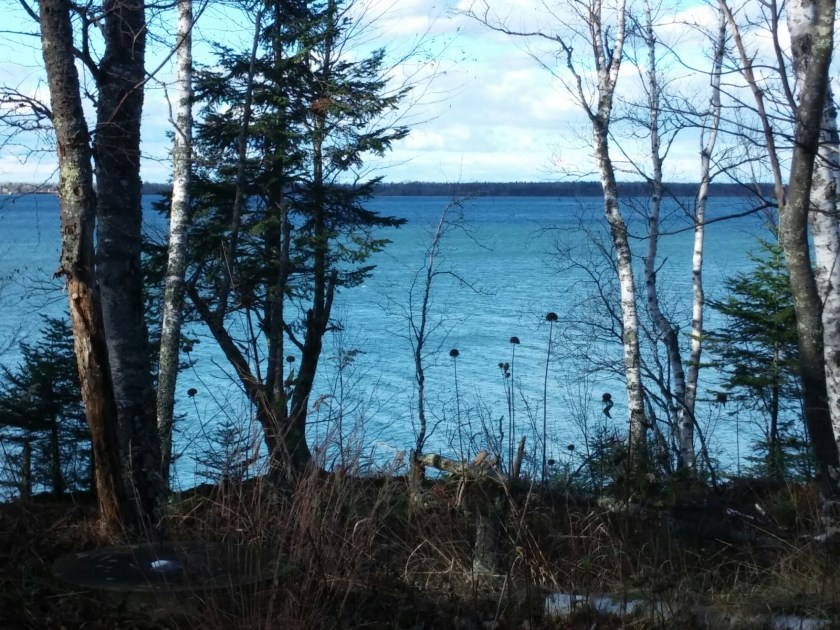
Living in the land of Ten Thousand Lakes and having a love affair with Lake Superior, I know first hand that clean water is important! I think of the West Coast of the United States and their severe drought every time I turn on the faucet. Below are water saving ideas from me and The World Wildlife Federation. This is serious. Water will be the next “most valuable resource,” and our survival as a people depends on adequate sources of clean water.
My list gives you more specific action. Here are ideas to help you protect the earth’s fresh water:
1. Reduce or eliminate all your use of chemicals in cleaning agents, and lawn and garden products. Tough I know, Read on…
2. Baking soda and vinegar will clean almost anything. See my chemical free cleaner on my Reduce Chemicals Page: https://health4earth.com/reduce-chemicals/
3. Use plants in your yard that do not require chemicals(native plants) and reduce the size of your lawn. Native plants also don’t need to be watered! http://findnativeplants.com/
4. Install rain barrels under your drain spouts or put rain gardens in areas where your water drains. Use this water to water your plants.
5. Install a septic holding tank if your sewage does not drain into a public sewage system.
6. Purchase as many products you can afford that are organic or GMO free to reduce the amount of nitrates running into our lakes and streams.
7. Adopt a storm drain, keeping leaves, trash and yard waste from washing into our streams and lakes.
8. Never use cleaning materials that contain Triclosan. http://www.startribune.com/opinion/commentaries/251323351.html
9. Purchase products made from recycled materials. Recycled paper uses 60-70% less energy than virgin pulp and 55% less water.
We love playing in our lakes
And from The World Wildlife Federation:
We all can do something to help fresh water. This World Water Day, March 22, you too can take action. Here’s how:
Crowdsource Scientific Data
Next time you’re near a river, stream or lake, take and pictures of the freshwater fish you encounter and upload them for conservation scientists around the world.
Walk for Water
Join WWF, the State Department and other conservation organizations in a 6k Walk for Water on April 23 to learn more about freshwater issues and how they impact people and nature. While the main event will be held in the District of Columbia, people around the world will take the symbolic walk and share their experience with #6kWaterWalk. Want to learn more? Join freshwater expert Karin Krchnak in a related #WaterTalk on April 2.
Build a Rain Barrel
The average roof collects 600 gallons of water for every inch of rain. Capture some of that stormwater and help protect freshwater resources by building a rain barrel.
Learn about Unseen Water
Water is in almost everything. Take your average cotton t-shirt as an example: it can take 2,700 liters to produce the cotton needed to make a single t-shirt. While it’s important to fix leaky taps and buy efficient washing machines, we need to also be conscious of the unseen or “virtual water” we consume every day.