
Produce does NOT need to come wrapped in plastic!
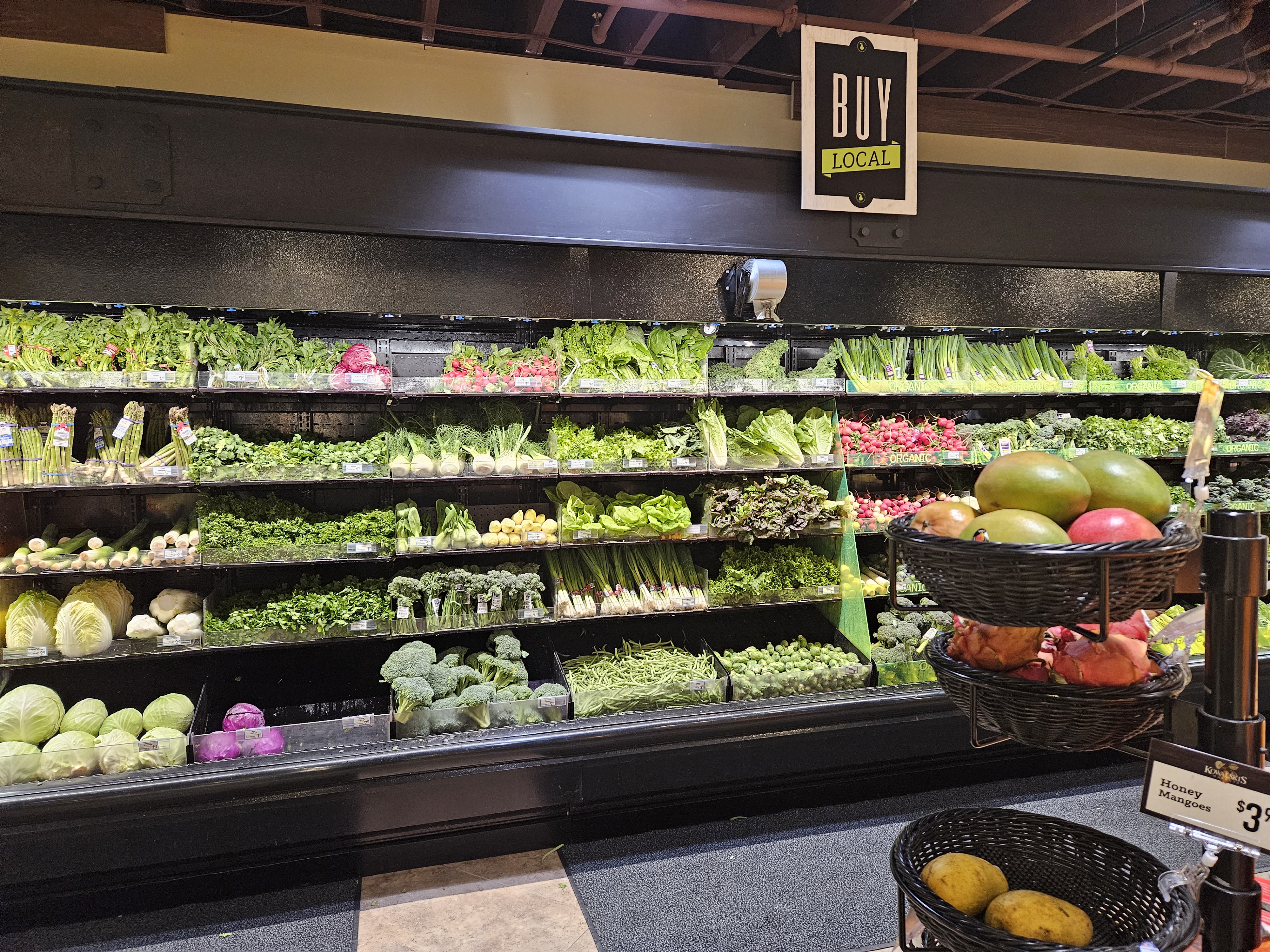
This is bulk produce at Kowalskis in Minneapolis.

Use cotton or paper bags for produce.
Below is an excellent survey of grocery stores and the amount of plastic they use to package their produce. This is a topic I have been interested in for many years. Ten years ago I stopped shopping at Trader Joes because of their plastic packaging. I have found places to shop that are more suitable to my values, and I only shop where I can purchase produce in bulk. I hope you find the study from USPIRG worthwhile. Not all stores have the same plastic footprint. I recommend shopping local food coops, but many stores have bulk produce.
Below is from USPIRG:
The produce aisle has a plastic problem.
We’ve all had that frustrating moment at the grocery store, staring down a lone bell pepper or a bunch of bananas wrapped in completely unnecessary plastic.
But as it turns out, not all supermarkets have the same plastic footprint.
That’s what our researchers here at U.S. PIRG Education Fund found when we surveyed 40 grocery stores across five U.S. cities. We checked the packaging for common fruits and vegetables including broccoli, carrots, lemons, strawberries and more. Let’s take a look at what we found:
Big retailers have big plastic footprints
Our survey found that retailers vary widely in how much — or how little — plastic they use. In fact, the most plastic-intensive grocer in our survey (Amazon/Whole Foods) used nearly double that of the least plastic-intensive grocer (Rainbow Grocery, San Francisco).
We also found that the largest grocers by market share also tend to be the most plastic-intensive. In our survey, Walmart, Kroger, Costco and Amazon all ranked in the top five for the highest use of plastic packaging.
When it comes to taking home less plastic, shopping small and shopping local may be your best bet.
Packaging design choices can have a massive impact.
Rigid plastic clamshell containers use far more plastic per unit of produce volume than any other type of packaging. For example, selling fresh basil in a clamshell might use up to 36 times more plastic than simply using a twist tie.
Be sure to avoid rigid plastic packaging such as clamshells whenever possible. And if an unpackaged product is not available, choose non-plastic packaging such as a paper bag or cardboard.
Plastic isn’t always necessary
Plastic is definitely pervasive…but is it necessary?
In a word, no. Most of us remember a time when grocery stores, especially produce aisles, used a tiny fraction as much plastic as we see today.
Plenty of stores still sell fruits and veggies completely loose, without added packaging. And while plastic film produce bags are the norm across all the supermarkets we surveyed, four stores also offered paper bags.
If sustainability is at the top of your list when deciding where to shop, keep an eye out for supermarkets that let you buy a bunch of bananas or a head of broccoli without plastic. To go the extra mile, bring your own reusable totes and skip those thin plastic film bags in the produce aisle entirely.
Navigating the produce aisle shouldn’t feel like a plastic minefield. While we hope our research will help you make informed decisions at the grocery store, we must also move toward a future with fewer plastic-packaged items in the first place.
1. “Plastics: Material-Specific Data,” U.S. Environmental Protection Agency, last accessed March 27, 2026.
2. Mike Taylor, “Shoppers infuriated by photos of bizarre product on 7-Eleven shelves: ‘They need to stop this immediately’,” The Cool Down, February 19, 2026.
3. Jennifer Earl, “Whole Foods responds to $6 pre-peeled orange Twitterstorm,” CBS News,
March 8, 2016.
4. Jonathan Kaplan and Celeste Meiffren-Swango, “Plastic in the Produce Aisle,” Environment America Research & Policy Center and U.S. PIRG Education Fund, March 2026.
Zoe Wood, “Plastic packaging increases fresh food waste, study finds,” The Guardian, February 23, 2022.

Produce does not need plastic!!

