Plastic is YUCK

This is excellent from USPIRG

When it comes to plastic, what goes around comes around. And not in a good way.We like to think plastic is gone for good after we throw it in the recycling bin or trash can. But plastic doesn’t just disappear. Instead, it finds its way back to us in the food we eat, in the water we drink, and even in the very air we breathe.The more we learn, the more concerned we become about plastic. It’s not only trashing our environment, it’s also getting into our bodies. That’s information you should be aware of and might want to pass on to your friends and neighbors.Let’s take a look at the ways in which the plastic we throw out eventually comes back to haunt us:Plastic is in our food. (Yuck.)Believe it or not, plastic particles called microplastics have been found in countless food items. Marine animals routinely mistake tiny microplastics for food. When we eat fish, shrimp or shellfish, we may eat the plastic these animals once consumed.1Plastic isn’t only in seafood. Microplastics are contaminating soil, and plants may absorb them through their root systems. This means that plastic may be finding its way into carrots, lettuce, potatoes and other common vegetables that we eat.2It's also in our water. (Yuck.)Microplastics are tiny. So tiny, in fact, that they can easily bypass standard water filtration systems. Studies have detected microplastics in tap water samples from cities all over the world.3If you think bottled water is plastic-free, think again. A single liter of bottled water may contain an average of 240,000 detectable plastic fragments, largely shedding from the bottle itself and the capping process.4Plastic is even in the air we breathe. (Yikes.)Because microplastics are lightweight, wind easily sweeps up plastic fibers from car tires, degraded trash and even polyester clothing. These airborne plastics can travel thousands of miles, settling in city streets, parks and everywhere in between. And when they’re airborne, people unknowingly inhale them.5We already have plenty of plastic. But they keep making more and more.If current trends hold, 1.2 billion tons of plastic could be manufactured each year by 2050. To put this number into perspective, the cumulative total would be enough to completely cover the U.S. in a layer of plastic that’s ankle-deep.6At PIRG, we refuse to let this become our future.We’re urging grocers to reduce unnecessary plastic packaging and petitioning the Environmental Protection Agency to enact meaningful limits on microplastics in drinking water. And by raising public awareness of plastic’s problems, we’re working to generate the groundswell of support that’s necessary for meaningful change.But we can’t do it without you. Our work relies on the dedication of members like you who refuse to let the plastics industry dictate the health of our families and the future of our planet.Thank you for standing with us,Faye Park

President

P.S. Problems this big demand all hands on deck. You can help us reduce plastic waste and pollution with a donation today.

1. Lisa Frank, “New study finds microplastics in commonly eaten seafood,” Environment America, January 27, 2025.
2. Kate Peterson, “There is an alarming amount of microplastics in farm soil–and our food supply,” Civil Eats, January 27, 2021.
3. Tao Sun, Yuefa Teng, Chenglong Ji, Fei Li, Xiujuan Shan and Huifeng Wu, “Global prevalence of microplastics in tap water systems: Abundance, characteristics, drivers and knowledge gaps,” Science of the Total Environment, June 15, 2024.
4. Vicki Contie, “Plastic particles in bottled water,” National Institutes of Health, January 23, 2024.
5. Ally Hirschlag and Martha Henriques, “The air throughout our homes is infused with microplastics. But there are things you can do to breathe less of them,” BBC, April 11, 2026.
6. Leslie Kaufman, “The climate impact of our insatiable plastic addiction,” Bloomberg, December 30, 2022.Your donation will power our dedicated staff of organizers, policy experts and attorneys who drive all of our campaigns in the public interest, from banning toxic pesticides and moving us beyond plastic, to saving our antibiotics and being your consumer watchdog, to protecting our environment and our democracy. None of our work would be possible without the support of people just like you.

Join us on Facebook | Follow

World Cup and Plastic Pollution

Tell the World Cup to allow reusable water bottles!

Tell FIFA: Reverse the restriction on reusable water bottles at World Cup stadiums. Tell FIFA: We Want Our Reusable Bottles at the World Cup! | Story of Stuff


But FIFA just decided late last week to no longer allow any reusable water bottles at World Cup stadiums, so sports fans can’t beat the heat without resorting to wasteful disposable plastic bottles.1


Access to water is critical to fans’ comfort and safety — especially in sweltering summer weather. And spectators should be able to stay hydrated without producing plastic waste that will stick around as pollution for centuries.


Tell FIFA: Reverse the restriction on reusable water bottles at World Cup stadiums. Tell FIFA: Allow reusable water bottles at World Cup stadiums


FIFA had originally said that some types of reusable bottles would be allowed, before suddenly reversing course.2


It’s a move that will only create more plastic trash at a time when plastic pollution is already out of control. Every 16 hours, Americans throw out enough plastic to fill a sports stadium up to the brim.3


Every disposable plastic bottle we use and toss has the potential to pollute our environment and even threaten our health.


A lot of the plastic we throw away ends up in landfills, where it can break down into tiny, polluting particles and leach harmful chemicals into our soil and water.4


And some is incinerated — a process that emits toxic chemicals into the air. Air pollution from burning plastic can emit chemicals known to cause cancer, reproductive harm, birth defects and other health problems.5


Why pollute our world and risk our health with disposable plastic bottles, when a reusable solution is right in front of us?


Allowing reusable water bottles in stadiums is the right thing to do. Add your name and ask FIFA to allow reusable bottles.


Some sports stadiums have already demonstrated that allowing fans to bring their own reusable bottles is a safe, simple way to prevent pollution.


Every World Cup spectator should be able to do the same.


Ask FIFA to allow reusable water bottles at World Cup stadiums today. Tell FIFA: Allow reusable water bottles at World Cup stadiums


1. Scott Thompson, “FIFA bans refillable water bottles from World Cup stadiums despite original rules stating otherwise,” Fox News, June 4, 2026.
2. Scott Thompson, “FIFA bans refillable water bottles from World Cup stadiums despite original rules stating otherwise,” Fox News, June 4, 2026.
3. Celeste Meiffren-Swango and James Horrox, “Trash in America,” PIRG, December 9, 2025.
4. “Plastic planet: How tiny plastic particles are polluting our soil,” United Nations Environment Programme, last accessed April 28, 2026.
5. Celeste Meiffren-Swango, James Horrox, Grace Vickers & Carol Li, “”Chemical recycling”: What you need to know,” PIRG, July 14, 2025.

Plastic Pollution

How much garbage do you produce?

Below is from the Plastic Pollution Coalition:
Plastic “recycling” is a false solution to plastic pollution. How do we know this? Since the 1970s, businesses making and selling plastic, governments, and some organizations have overwhelmingly told the public that it is essential to recycle plastic. Recycling messages have been communicated to us across all types of media and in many different ways: in advertising campaignsimprinted recycling symbols on plastic products, and much more. Yet, despite this major push for recycling plastic, plastic pollution and its toxic impacts continue to grow. There is plenty of evidence that plastic recycling is not only failing to live up to its promises, it is also making plastic pollution worse. In contrast, by focusing on plastic-free reuse, we can tap into a solution that ends wastefulness at the source.

Recycled Plastics Are Toxic

How can an activity we’ve been told is right actually be wrong? Turns out, plastics were never designed to be recycled. “The future of plastic is in the trash can,” one packaging industry executive said at a plastic industry meeting in 1956—not in the recycling bin. In other words, plastic was designed to be wasted, despite the heavy toll that its full existence—from the extraction of fossil fuels to plastic’s eventual disposal in landfills, incinerators, or the environment—has on people and the planet.

Plastics are Not “Circular”

Today, the plastic and fossil fuel industries continue to perpetuate the myth that plastics are recyclable by promoting the idea of “plastics circularity”—that plastics can somehow be reused endlessly without creating harmful costs. But this idea is false: Plastic recycling as it is today is harmful and cannot be considered “circular,” because plastic recycling processes continue to drive plastic pollution and its dangerous and toxic impacts—including the climate crisis, environmental injustice, chemical pollution, and more. And while we may need to engage in some kinds of recycling of the less toxic plastics we already have in order to mitigate plastic pollution, recycling on its own cannot be seen as the sole solution to plastic pollution. Instead, recycling must be coupled with a drastic reduction in plastic production in order to be more helpful than harmful. 

“Recycled” Plastics are Actually Downcycled

Additionally, even when plastics are recycled, they are most often “downcycled,” or made into items of lesser value and quality (like turning plastic water bottles into plastic fleece jackets or carpet fiber), and continue to cause considerable pollution. When collected for traditional “mechanical” recycling, plastics must be sorted by color and type, washed, and shredded up. These processes burn large amounts of fossil fuel energy–emitting chemicals and greenhouse gases, waste and contaminate water, and create microplastics and nanoplastics. The small plastic particles are then melted down, and manufacturers must mix in a large amount of newly made (virgin) plastic and/or toxic additives to restore some of its useful properties. Recycling increases the toxicity of plastic; there are hundreds of additional toxic chemicals, including pesticides and pharmaceuticals, in recycled plastic. And that’s in addition to the mix of more than 16,000 chemicals in newly made plastic.

“Recycled” Plastic is Not Suitable for Food and Beverage Packaging

The toxicity of plastic and recycled plastic presents serious dangers to the environment and public health, and drives environmental injustices. Research has indicated that recycled plastic is not suitable for many uses, particularly when it comes to packaging of food and beverages, as it contains a wide range of dangerous chemicals. Drink bottles made of recycled plastic are even more contaminated than drink bottles made of virgin (new) plastic, and these chemicals easily leach into the beverages they contain. 

Plastics Create Environmental Injustice

Today, most plastic that is discarded as “waste” is never recycled. The global waste industry is more likely to landfill, incinerate, or ship plastic—often to the Global South—where plastic is dumped and sometimes open-burned, driving pollution and injustice as waste colonialism. Meanwhile, these industries only continue to increase plastic production, worsening plastic pollution.

Communities near plastic recycling sorting centers, often called materials recovery facilities (MRFs), and recycling plants are often the most underserved, and face increased risks to their health. People who find employment by picking through plastic pollution as part of the informal waste sector, who often live in the Global South, face serious health hazards and poor working conditions. Plastic recycling infrastructure and activities can cause polluted air, soil, and drinking water; bring constant truck, train, or barge traffic as well as scavenger animals who are attracted to eating waste; and there are often fires or intake of radioactive and other hazardous materials.

Shop Less Plastic

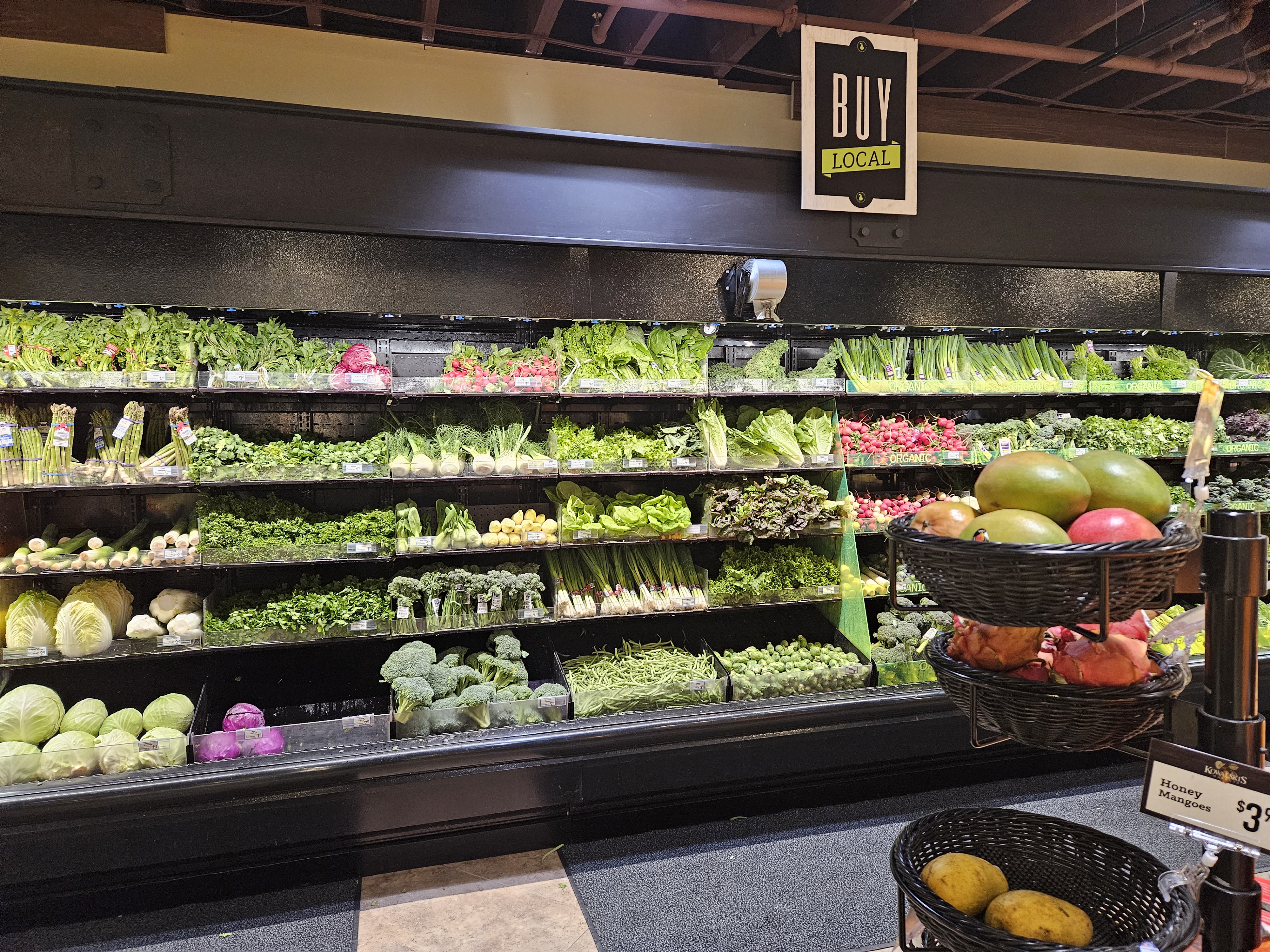
Produce does NOT need to come wrapped in plastic!

This is bulk produce at Kowalskis in Minneapolis.

reuse

Use cotton or paper bags for produce.

Below is an excellent survey of grocery stores and the amount of plastic they use to package their produce. This is a topic I have been interested in for many years. Ten years ago I stopped shopping at Trader Joes because of their plastic packaging. I have found places to shop that are more suitable to my values, and I only shop where I can purchase produce in bulk. I hope you find the study from USPIRG worthwhile. Not all stores have the same plastic footprint. I recommend shopping local food coops, but many stores have bulk produce.

Below is from USPIRG:

The produce aisle has a plastic problem.

We’ve all had that frustrating moment at the grocery store, staring down a lone bell pepper or a bunch of bananas wrapped in completely unnecessary plastic.

But as it turns out, not all supermarkets have the same plastic footprint.

That’s what our researchers here at U.S. PIRG Education Fund found when we surveyed 40 grocery stores across five U.S. cities. We checked the packaging for common fruits and vegetables including broccoli, carrots, lemons, strawberries and more. Let’s take a look at what we found:

Big retailers have big plastic footprints
Our survey found that retailers vary widely in how much — or how little — plastic they use. In fact, the most plastic-intensive grocer in our survey (Amazon/Whole Foods) used nearly double that of the least plastic-intensive grocer (Rainbow Grocery, San Francisco).


We also found that the largest grocers by market share also tend to be the most plastic-intensive. In our survey, Walmart, Kroger, Costco and Amazon all ranked in the top five for the highest use of plastic packaging.


When it comes to taking home less plastic, shopping small and shopping local may be your best bet.

Packaging design choices can have a massive impact.
Rigid plastic clamshell containers use far more plastic per unit of produce volume than any other type of packaging. For example, selling fresh basil in a clamshell might use up to 36 times more plastic than simply using a twist tie.


Be sure to avoid rigid plastic packaging such as clamshells whenever possible. And if an unpackaged product is not available, choose non-plastic packaging such as a paper bag or cardboard.

Plastic isn’t always necessary
Plastic is definitely pervasive…but is it necessary?
In a word, no. Most of us remember a time when grocery stores, especially produce aisles, used a tiny fraction as much plastic as we see today.


Plenty of stores still sell fruits and veggies completely loose, without added packaging. And while plastic film produce bags are the norm across all the supermarkets we surveyed, four stores also offered paper bags.


If sustainability is at the top of your list when deciding where to shop, keep an eye out for supermarkets that let you buy a bunch of bananas or a head of broccoli without plastic. To go the extra mile, bring your own reusable totes and skip those thin plastic film bags in the produce aisle entirely.


Navigating the produce aisle shouldn’t feel like a plastic minefield. While we hope our research will help you make informed decisions at the grocery store, we must also move toward a future with fewer plastic-packaged items in the first place.

1. “Plastics: Material-Specific Data,” U.S. Environmental Protection Agency, last accessed March 27, 2026.
2. Mike Taylor, “Shoppers infuriated by photos of bizarre product on 7-Eleven shelves: ‘They need to stop this immediately’,” The Cool Down, February 19, 2026.
3. Jennifer Earl, “Whole Foods responds to $6 pre-peeled orange Twitterstorm,” CBS News,
March 8, 2016.
4. Jonathan Kaplan and Celeste Meiffren-Swango, “Plastic in the Produce Aisle,” Environment America Research & Policy Center and U.S. PIRG Education Fund, March 2026.
Zoe Wood, “Plastic packaging increases fresh food waste, study finds,” The Guardian, February 23, 2022.

bulk produce

Produce does not need plastic!!

Daily Difference

Let’s all help to hold up our planet in 2026

This is the coolest newsletter. I hope you will subscribe.

The Daily Difference Newsletter

Join the Daily Difference, a newsletter to help everyone around the world in taking action and making a significant positive impact. It’s not too late. The earth needs passionate people like you to spread the word and create meaningful change.

Sign-up right here!

Email Terms & Privacy

December 30, 2025

It doesn’t need to be perfect

Taking action to heal the planet doesn’t need to be overwhelming.  It doesn’t need to be perfect.  It just needs to happen.   Take a moment today and be a difference […]

Read More

December 29, 2025

Doing the work

The International Union for Conservation of Nature’s (IUCN) Red List of Threatened Species is a report on the health of the world’s biodiversity. It is a comprehensive source of information […]

Read More

December 28, 2025

Shining a light on positive climate news

Negative climate stories in the United States often make the headlines – cancelling wind farm construction, accelerating oil and gas drilling, rolling back regulations on greenhouse gas emissions and air […]

Read More

December 27, 2025

Voting for conservation

In Canada, and in many other countries around the world, it is often Indigenous people leading the way in sustainability and stewardship of nature. The Heiltsuk Nation, on British Columbia, […]

Read More

December 26, 2025

Packaging producers now pay in the UK

In the United Kingdom, companies who make packaging are now having to pay as the Extended Producer Responsibility (EPR) has started its enforcement stage.  What is EPR? It is based […]

Read More

December 25, 2025

Helping young people engage in climate actions

Mihir Rao, an 18-year-old from Alberta, Canada, is helping other young people to learn how to influence decision-makers. Rao, who is also a winner of the 2025 I-SEA Youth Climate […]


https://thecarbonalmanac.org/the-daily-difference/?utm_source=feedblitz&utm_medium=email&utm_campaign=DailyDifference&utm_content=It%20doesn%27t%20need%20to%20be%20perfect

What You Should Know

About Plastic

Every year the countries of the world produce more plastic, and there is no end in sight. Production. of plastic keeps growing.

The list below is composed by the Plastic Pollution Coalition. Let’s work every day to reduce our consumption of plastic. Never use plastic utensils, plastic bags or straws

  • Plastic never goes away. It doesn’t break down; it only breaks up into smaller and smaller pieces. These microplastics and nanoplastics are harmful and are everywhere now, including in our bodies. 
  • Plastic pollutes the environment, wildlife, and people.
  • Plastic is not safe. Plastic leaches toxic chemicals and sheds plastic particles at all stages of its existence. 
  • Plastic especially harms communities living near petrochemical and plastic infrastructure. 
  • The more plastic companies make and we use, the more we contribute to pollution and climate change.
  • Plastic was not designed to be recycled, and most plastic does not get recycled in the way we’ve been led by industry to believe.
  • To solve the plastic pollution crisis, industries must stop producing so much plastic. Instead of single-use plastics, we need to use nontoxic reuse and refill systems and regenerative materials.
  • Taking action on an individual level, using less plastic, and demanding policy action to hold producers accountable can help support the systemic changes to shift away from society’s reliance on plastics.

1. Ernie Mundell, “You might inhale 68,000 microplastics per day,” United Press International, July 31, 2025.
2. Sharon Udasin, “Humans may be inhaling 100 times more microplastics than previously assumed, scientists warn,” The Hill, July 30, 2025.
3. Yue Li, Le Tao, Qiong Wang, Fengbang Wang, Gang Li and Maoyong Song, “Potential Health Impact of Microplastics: A Review of Environmental Distribution, Human Exposure, and Toxic Effects,” Environment & Health, August 10, 2023.
4. Julia Shumway, “Oregon’s Bynum, Merkley and Florida Republicans target microplastics with new bill,” Oregon Capital Chronicle, July 17, 2025.

What are the best two thing I can do?

“Act as if what you do makes a difference. It does.” — William James

July is plastic-free month

Refuse to consume so much junk. Avoid Target and The Dollar Store.

What is the single best thing I can do for the planet? Maybe the best two things I can do? The New York Times put this question to some experts. It was actually the most click on article on Earth Day.

They have sone good suggestions, but we all have such different lifestyles and ways we are all harmful to the planet in the way we live. We all need to take inventory of the ways we are harmful to clean air and clean water. Everyone can buy less stuff. Do we really need all the Easter eggs and decorations everywhere the past two months? Do you really need that extra shirt or pair of shoes? What can you purchase second hand or reuse?

Cutting meat consumption and driving less are huge, but so is not wasting so much food, and reducing our single-use plastic

The New York Times asked their experts how to be the best planetary citizens?

I think their ideas are thoughtful and interesting. It is worth a read

First, it’s important to understand that climate change is a symptom of a larger issue: ecological overshoot, or the fact that humans are consuming resources faster than they can regenerate and producing more waste and pollution than nature can absorb, said William Rees, a human and ecological economist and professor emeritus at the University of British Columbia. The most effective solutions, then, address not just greenhouse gas emissions but overall consumption and pollution.

One of the most effective ways to avoid consumption in the first place, Dr. Rees said, is to have a smaller family. But that might not be a realistic option for many people, for all kinds of personal, cultural and other reasons.

As The New York Times’s ethics columnist has pointed out, it might also be realistic to think that children who are raised with a sense of responsibility could — in personal and collective ways — be part of the solution, ensuring human survival on a livable planet by promoting adaptation, resilience and mitigation.

A less complicated recommendation is to cut back on meat. “On all these different metrics, eating a plant-based diet broadly improves sustainability,” said Seth Wynes, a scientist specializing in climate change mitigation at the University of Waterloo in Ontario.

Livestock production accounts for about 14.5 percent of global greenhouse gas emissions. It’s also a major driver of habitat destruction and other environmental harms, including antibiotic resistance, water scarcity, biodiversity loss and pollution.”

Read the entire article below:

Day of Zero Waste

I make zero waste a game to waste as little as I can.

Our landfills are overflowing, and we just keep purchasing junk and many things we can live without. Consumerism contributes to global warming as do our landfills and burning of trash. We must cut back, maybe not to total zero waste, but creating less waste overall.

Zero waste is not easy, but it is possible. Reducing our waste forces a new look to what we buy. Reducing purchases makes us pay attention to what we buy. Do we really need all the junk we purchase?

March 30 is the UN’s International Day of Zero Waste. This year’s focus is on reducing waste in the fashion industry and helping to advance circular solutions. We have a choice how we spend our dollars, and spending our money on good long lasting products should be a priority. Many items are expensive right now and I bet you can monitor and adjust to be happy with what you already have.

Avoid the fashion fads. Do you really want someone else telling you what to buy and wear. Be your own person create your own look! If your truly want to live on a planet with clean air and clean water we need to cut back! “We still have the ability to stop the worst from happening to our planet. The power to do this is in our hands—we just need to use it.” Katherine Hayhoe

We just need to get in the habit of reusing and fixing what we have. Most of us have closets full of clothes we barely use. Shop your closet and create a new outfit with the clothes you have. Be creative

Many say to me, “But it was so cheap!” No, it’s not cheap with the harm it does to our planet! Manufacturing, shipping, and disposal takes lots of time and energy. Most of it not healthy for anyone.

How can you help to reduce your addiction to fast fashion clothing? Some ideas:

  • Shop your own closet, or the closet of a friend or relative.
  • Purchase secondhand. Some secondhand stores even have personal shoppers for you to use.
  • Buy quality over quantity 
  • Mend clothes rather than throwing them away
  • Intentionally select the brands you purchase from and learn about their sustainability practices
  • Make a decision you didn’t need this item after all

Incentive to purchase and waste less: https://health4earth.com/2024/11/22/ghana-becomes-dumping-ground-for-the-worlds-unwanted-used-clothes-pbs-news/

Plastic in Our Brains

Plastic in our brains and in all the organs of our body. This is not healthy for anyone, especially children!

Below is my list of ways to reduce your plastic exposure

  • Always carry a reusable glass or metal water bottle, and reusable shopping bags with you.
  • Never use Styrofoam!
  • Never heat foods in plastic!
  • Learn to refuse single-use plastics, such as plastic water bottles and coffee cups, straws, plastic bags and plastic utensils. 
  • Purchase fruit and produce in the bulk section, and don’t place items in plastic bags. 
  • Always search out products in glass jars instead of plastic containers. 
  • When you must buy plastic products, choose ones that you can recycle rather than ones you must put in the trash. 
  • Bring your own containers and shop the bulk section of your local food coop.
  • Purchase clothing made from cotton and wool instead of polyester or poly fibers. https://www.npr.org/2023/07/19/1188343293/is-toxic-fashion-making-us-sick-a-look-at-the-chemicals-lurking-in-our-clothes
  • Store food in glass containers instead of plastic.
  • Ditch the baggies!

Choose grocery stores that offer produce in bulk (not wrapped in plastic)

Do Something Positive

Everyday people throw away single-use plastic “stuff” without thinking twice — plastic bottles, bags, utensils, cups, containers and more.

But this “stuff” never truly goes away. Instead, it clogs our landfills, threatens our health, trashes our parks, litters our streets and even washes into our rivers and oceans. Nothing we use for a few minutes should threaten our health and pollute our future for hundreds of years.

Join the February Plastic Challenge!

The Plastic-Free Challenge is a month-long effort starting February 1 to reduce how many plastics you use in ways that fit best in your lifestyle and have the most impact on reducing your plastic footprint.

Do something positive for yourself, your family and for the planet in February. With so many plastic items in our lives avoiding them may feel impossible, but there is a lot we can do to reduce our plastic footprint. Please Join with us to learn ways we can reduce our exposure to plastic. There are many activities to choose from, but you can also create your own challenge. Keep it simple, and even choosing one activity will make a difference.  You will learn a lot, and have fun during this February challenge. Sign up here:

The Plastic-Free Challenge is a month-long effort starting February 1 to reduce plastic consumption, in ways that fit best in your needs. You only need to choose one activity that works for you like bringing your reusable shopping bags, or asking not to be given a straw with your drink, or bringing your reusable cup with you for February. Many other ideas will be suggested when you register. Keep it simple. Do a good job on one thing!