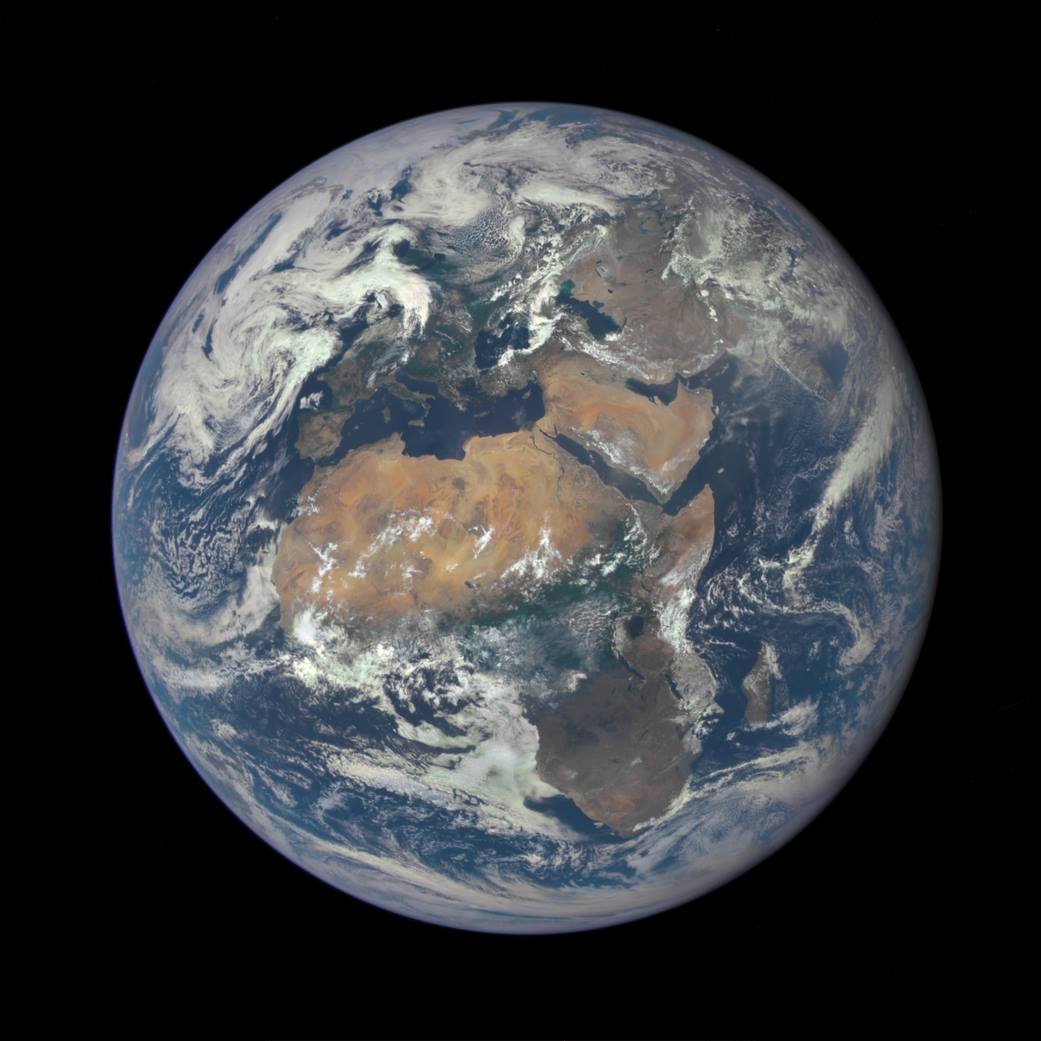
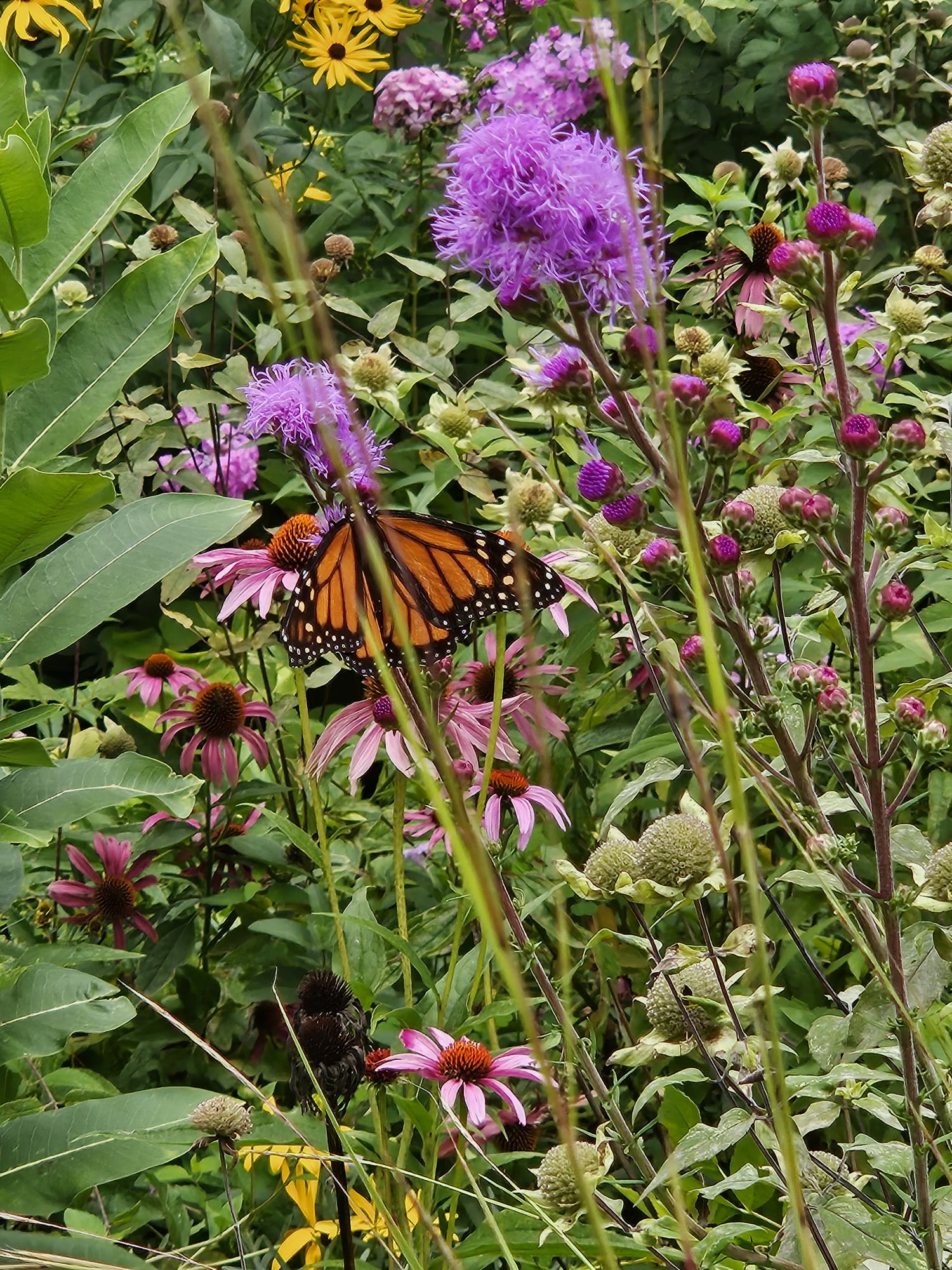
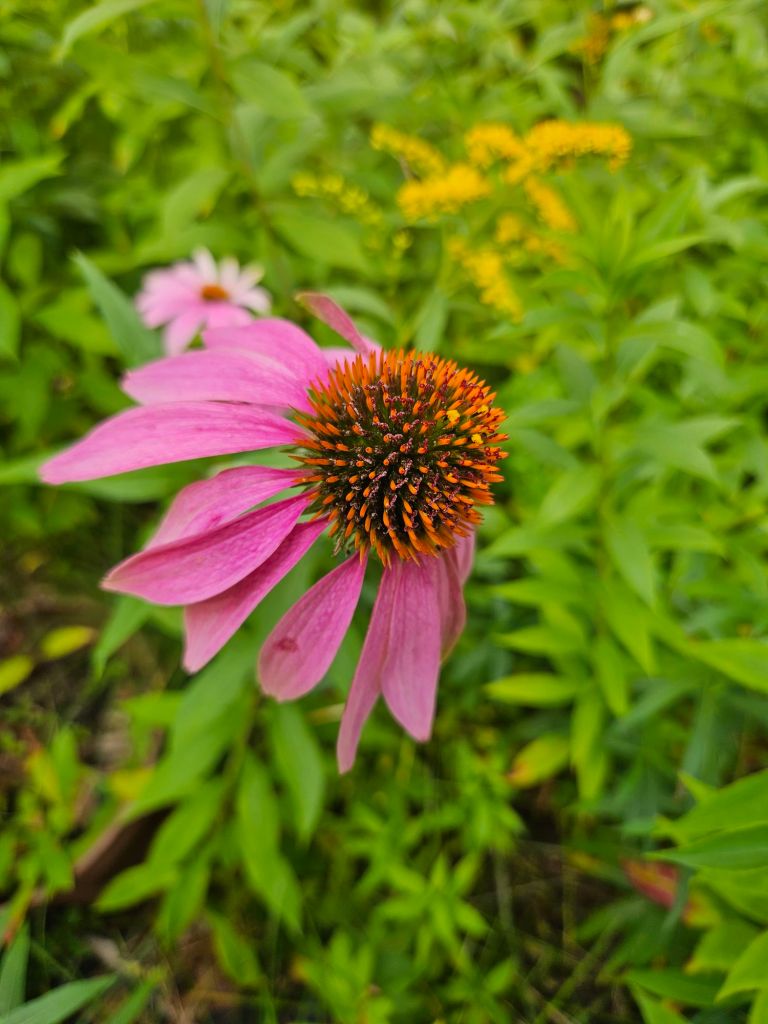
Consider our Earth when you make choices for your day.
Every day is full of choices. You won’t be perfect, but make it a habit to become aware! Our air, water, wildlife, and all living things thank you.
Below is from The Carbon Almanac:
Salvador Dalí once said, “Have no fear of perfection—you’ll never reach it.”
He wasn’t talking about the environment. But he could have been.
Somewhere along the way, the idea that if we’re going to care about the planet, we have to do it right. The right purchase. The right diet. The right commute. And if we can’t be sure we’re doing it right, a strange kind of paralysis sets in where it seems it is better to do nothing than to do something imperfectly and get it “wrong.”
Waiting for the perfect option is a very effective way to never act at all. And the perfect option doesn’t exist as every decision has trade-offs.
So if we can’t make the perfect choice, then we should be looking for the next best choice. The choice that we don’t make on autopilot. When we pause to weigh the planet in a decision, we’re not just making one choice. We’re practicing a habit of attention. And that habit doesn’t stay contained to the one decision in front of us. It grows. The more often we consciously factor in impact, the more naturally it shows up in the next decision, and the one after that. Awareness builds on itself in a way that a single “perfect” decision never could.
The real question isn’t “did I make the perfect choice?” It’s simpler than that: “did I include the impact on the environment in my thinking?”
The more we do that, the better we will become at making the next best choice.
Clean water and clean air depend on every day good choices.
Contrast President Lyndon Johnson with the current administration. Wow! This Heather Cox Richardson essay documents a speech given by Johnson to graduates of the University of Michigan.
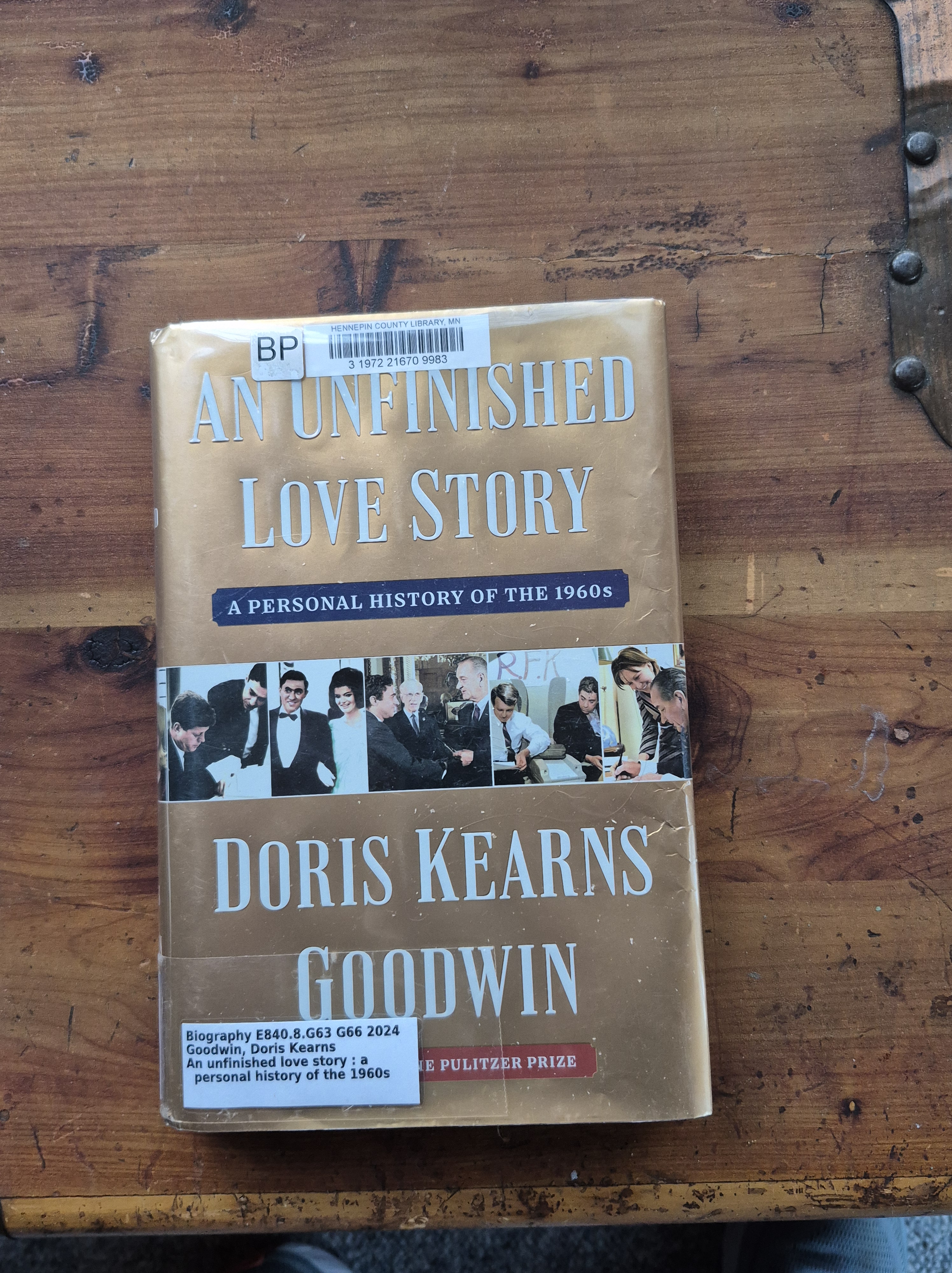
I have just finished reading, An Unfinished Love Story by Doris Kernes Goodwin. Like Richardson, Goodwin is documenting working for President Johnson, and the 1960’s, using the notes and artifacts from her deceased husband’s boxes. You will love this read.
From Heather Cox Richardson
“On May 22, 1964, in a graduation speech at the University of Michigan, President Lyndon Johnson put a name to a new vision for the United States. He called it “the Great Society” and laid out the vision of a country that did not confine itself to making money, but rather used its post–World War II prosperity to “enrich and elevate our national life.” That Great Society would demand an end to poverty and racial injustice.
But it would do more than that, he promised: it would enable every child to learn and grow, and it would create a society where people would use their leisure time to build and reflect, where cities would not just answer physical needs and the demands of commerce, but would also serve “the desire for beauty and the hunger for community.” It would protect the natural world and would be “a place where men are more concerned with the quality of their goals than the quantity of their goods.”
“But most of all,” he said, it would look forward. “[T]he Great Society is not a safe harbor, a resting place, a final objective, a finished work. It is a challenge constantly renewed, beckoning us toward a destiny where the meaning of our lives matches the marvelous products of our labor.”
Johnson proposed rebuilding the cities, protecting the countryside, and investing in education to set “every young mind…free to scan the farthest reaches of thought and imagination.” He admitted that the government did not have the answers to addressing all of the problems in the country. “But I do promise this,” he said. “We are going to assemble the best thought and the broadest knowledge from all over the world to find those answers for America. I intend to establish working groups to prepare a series of White House conferences and meetings—on the cities, on natural beauty, on the quality of education, and on other emerging challenges. And from these meetings and from this inspiration and from these studies we will begin to set our course toward the Great Society.”
Johnson’s vision of a Great Society came from a very different place than the reworking of society launched by his predecessor Franklin D. Roosevelt in the 1930s. Roosevelt’s New Deal had used the federal government to address the greatest economic crisis in U.S. history, leveling the playing field between workers and employers to enable workingmen to support their families. Johnson, in contrast, was operating in a country that was enjoying record growth. Far from simply saving the country, he could afford to direct it toward greater things.
Immediately, the administration turned to addressing issues of civil rights and poverty. Under Johnson’s pressure, Congress passed the Civil Rights Act of 1964, prohibiting voting, employment, or educational discrimination based on race, religion, sex, or national origin. Johnson also won passage of the Economic Opportunity Act of 1964, which created an Office of Economic Opportunity that would oversee a whole series of antipoverty programs, and of the Food Stamp Act, which helped people who didn’t make a lot of money buy food.
When Republicans ran Arizona senator Barry Goldwater for president in 1964, calling for rolling back business regulation and civil rights to the years before the New Deal, voters who quite liked the new system gave Democrats such a strong majority in Congress that Johnson and the Democrats were able to pass 84 new laws to put the Great Society into place.
They cemented civil rights with the 1965 Voting Rights Act protecting minority voting, created jobs in Appalachia, and established job-training and community development programs. The Elementary and Secondary Education Act of 1965 gave federal aid to public schools and established the Head Start program to provide comprehensive early education for low-income children. The Higher Education Act of 1965 increased federal investment in universities and provided scholarships and low-interest loans to students.
The Social Security Act of 1965 created Medicare, which provided health insurance for Americans over 65, and Medicaid, which helped cover healthcare costs for folks with limited incomes. Congress advanced the war on poverty by increasing welfare payments and subsidizing rent for low-income families.
Congress took on the rights of consumers with new protective legislation that required cigarettes and other dangerous products to carry warning labels, required products to carry labels identifying the manufacturer, and required lenders to disclose the full cost of finance charges in loans. Congress also passed legislation protecting the environment, including the Water Quality Act of 1965 that established federal standards for water quality.
But the government did not simply address poverty. Congress also spoke to Johnson’s aspirations for beauty and purpose when it created the National Foundation on the Arts and Humanities. This law created both the National Endowment for the Arts and the National Endowment for the Humanities to make sure the era’s emphasis on science didn’t endanger the humanities. In 1967 it would also establish the Corporation for Public Broadcasting, followed in 1969 by National Public Radio.
“For better or worse,” Johnson told the University of Michigan graduates in 1964, “your generation has been appointed by history to deal with those problems and to lead America toward a new age. You have the chance never before afforded to any people in any age. You can help build a society where the demands of morality, and the needs of the spirit, can be realized in the life of the Nation.
“So, will you join in the battle to give every citizen the full equality which God enjoins and the law requires, whatever his belief, or race, or the color of his skin?” he asked.
“Will you join in the battle to give every citizen an escape from the crushing weight of poverty?…”
“There are those timid souls who say this battle cannot be won; that we are condemned to a soulless wealth. I do not agree. We have the power to shape the civilization that we want. But we need your will, your labor, your hearts, if we are to build that kind of society.”
Everyone needs to work to help our planet. So much leadership is needed!
A chance for other countries to lead. France, Germany, England, Italy, India?
U.S. leaves international climate agencies This week the United States announced it would be leaving 66 international organizations, agencies, and commissions which includes many related to climate change.
Among these is the UN Framework Convention on Climate Change (UNFCCC) which was adopted by all member nations in early 1990s and is considered the treaty which led to 2015’s Paris Agreement. The U.S. also previously announced its withdrawal from the Paris Agreement, which will officially take effect on January 20.
Also included are:
Intergovernmental Panel on Climate Change International Renewable Energy Association International Solar Alliance International Union for Conservation of Nature Intergovernmental Science-Policy Platform on Biodiversity and Ecosystem Services With these actions, the U.S. has further separated itself from other countries in the climate change space. Does its withdrawal give pause to the activities of other nations? Or will it motivate other countries to lead in this evolving space?
Start the day with hope. Spring will come! Collective positive energy can make things better.
All people matter!
Embrace a new year and each new day with hope!
The road is before us! It is a new day, a new beginning, And it is filled with hope.” Walt Whitman
Start each day with hope!
2025 has been a hard year. Wars are raging, too many die from gun violence, democracy is threatened, ICE is threatening communities, climate change brings storms, fires, drought and flooding. But we must move forward toward a new world. Our mental health is so much better if we start each day with hope and positive energy to make things better.
Below is from the NYT today:
While optimism is the belief that the future will be better, hope is the belief “that we have the power to make it so,” said Chan Hellman, the director of The Hope Research Center at the University of Oklahoma. It is “one of the strongest predictors of well-being,” he said. It helps improve the immune system and aids recovery from illness. More hopeful people may actually grow taller than less hopeful people.
To cultivate hope, people need three things. They first need to be able to envision a better future, either personally or collectively. Second, they need the willpower or motivation to move toward that future. And third, they must be able to chart “a path from where they are to where they want to be,” he added.
How to be more hopeful There are a few ways, experts say.
People can set specific goals and then “begin brainstorming the pathways or road maps” to achieve them, ideally by writing them down, Hellman said. That can start small. “It is much better to set and focus on short-term goals rather than long-term, abstract goals,” he added.
That can often mean speaking more positively about other people. People gossip three times as much about the selfish things others do than about the generous things they do. To address that, an expert suggested “positive observation.” Share one story of something positive that you observed or did that day. The research finds that when you know you’re going to have to share something, you pay a lot more attention to it.
Lift every voice and sing Till earth and Heaven ring Ring with the harmonies of Liberty; Let our rejoicing rise, High as The list’ning skies, let it resound loud as the Rolling sea
This is the coolest newsletter. I hope you will subscribe.
The Daily Difference Newsletter
Join the Daily Difference, a newsletter to help everyone around the world in taking action and making a significant positive impact. It’s not too late. The earth needs passionate people like you to spread the word and create meaningful change.
Taking action to heal the planet doesn’t need to be overwhelming. It doesn’t need to be perfect. It just needs to happen. Take a moment today and be a difference […]
The International Union for Conservation of Nature’s (IUCN) Red List of Threatened Species is a report on the health of the world’s biodiversity. It is a comprehensive source of information […]
Negative climate stories in the United States often make the headlines – cancelling wind farm construction, accelerating oil and gas drilling, rolling back regulations on greenhouse gas emissions and air […]
In Canada, and in many other countries around the world, it is often Indigenous people leading the way in sustainability and stewardship of nature. The Heiltsuk Nation, on British Columbia, […]
In the United Kingdom, companies who make packaging are now having to pay as the Extended Producer Responsibility (EPR) has started its enforcement stage. What is EPR? It is based […]
Mihir Rao, an 18-year-old from Alberta, Canada, is helping other young people to learn how to influence decision-makers. Rao, who is also a winner of the 2025 I-SEA Youth Climate […]
Yes, we all can make a difference. Small changes can lead to big changes.
A great thought for the day. How can we have more control? The world can be a discouraging place. Especially when we have elected officials that are taking us in the wrong direction and wasting taxpayer dollars. The only thing we have control of is our own behavior, and instead of being angry we can use that energy to make a positive difference. Below are some ways you can make a positive impact without much effort. Good Luck. Below is from the Carbon Almanac:
When countries and companies lessen their commitment to targets and activities for climate change, it can be disheartening as systemic change is critical for big impact. If you feel powerless to influence systemic change, you can start where you are.
Some ideas of how to start:
Start by having a conversation with friends
Start by taking one less trip in a combustion engine vehicle
Start by shopping at a thrift store
Start by buying produce that is not wrapped in plastic
Start by bringing a reusable mug to your favourite cafe
Start by finding a local environmental group
And my list to get you started:
*Always carry reusable shopping bags
*Never idle the engine of your car
*Write letters to elected officials and newspapers expressing your opinion (positive and negative)
*Plant a native plant or a native tree
*Listen, smile and be kind
The key is to start (or keep) taking action. One action can lead to another and then another. And by sharing what you are doing, you can inspire others to join.
The chickadees cardinals and orioles sing at their hopeful best
My beautiful niece is married
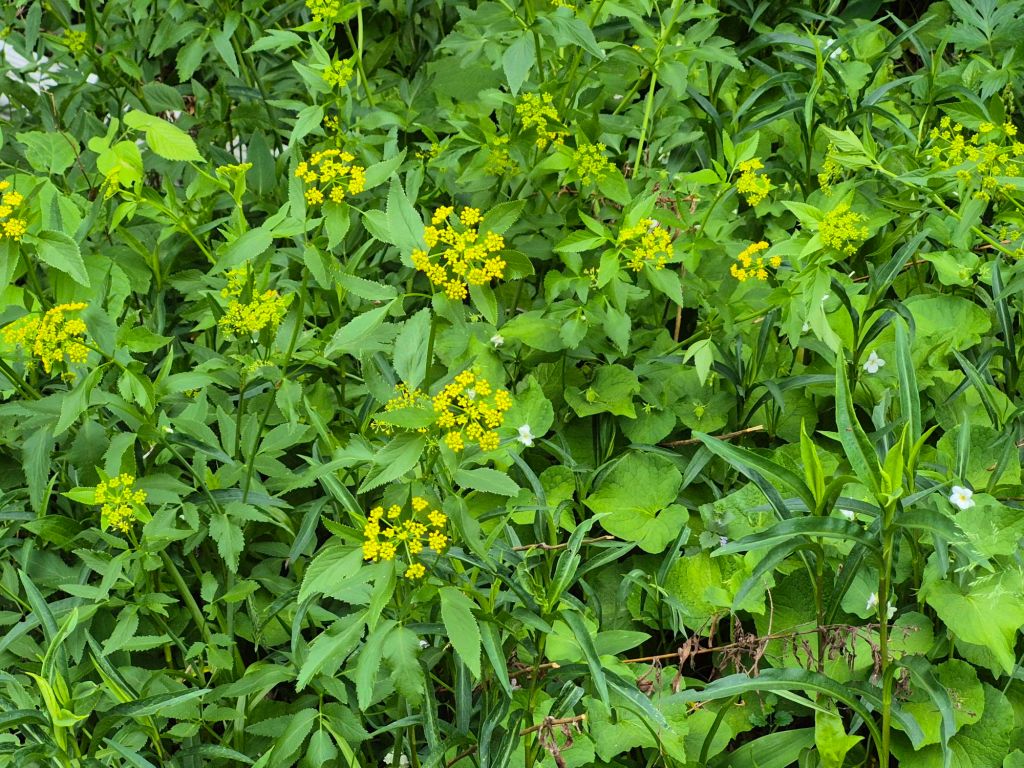
A swallowtail butterfly lays eggs on the blooming golden Alexander.
Golden Alexander is a swallowtail host plant
Every tree shows its own personality,
The first hummingbirds in my yard,
The freedom of biking to events and just for fun.
A season of hope,
Columbine and wild geranium bloom,
The violets are radiant!
Hummingbirds follow the blooming Columbine.
Discussions about what to do with dandelions. And even the first dandelions bring joy!
Be mindful, pay attention, get outside and see our beautiful world!
“Dandelions are one of the earliest flowering plants in spring, dandelions provide food for pollinators such as bees and butterflies, rabbits, birds and deer, just to name a few. The dandelion also helps below the surface by feeding the soil with its deep root structure.” unknown source
It has been a hard week in the United States. The election of Donald Trump has created an exhausted public full of fear and sadness.
Don’t let this president-elect drag us down. Like VP Harris said, “Fill the sky with a billion stars!”
Everyday spend time outside, expend positive energy and kindness, and do something positive for the Earth. Drive less, eat less meat, and use less plastic.
Make telling the truth a priority. Always tell the truth and insist everyone around you tell the truth. Never share ideas that might not be true.
Take a deep breath and take care of yourself. Reduce your social media exposure, smile, be kind and love our earth.
He and SHE seeks!
Try this: When anxiety or overwhelm creeps in, step outside for a 10-minute nature break. Notice the clouds drifting overhead, listen for birdsong, or simply feel the breeze on your face. Even in the heart of the city, a nearby park’s grass and trees can provide this natural reset.
Let nature amplify your joy – whether that’s watching a spectacular sunset, watching a bird or finding a beautiful tree.
We need to go through the stages of grief, and everyone deals with grief at different rates. Give people space. Our values have been rejected and it takes time to come to grips with such a big loss. Read about the stages of grief here.
Please work for peace, harmony and joy for yourself and those around you
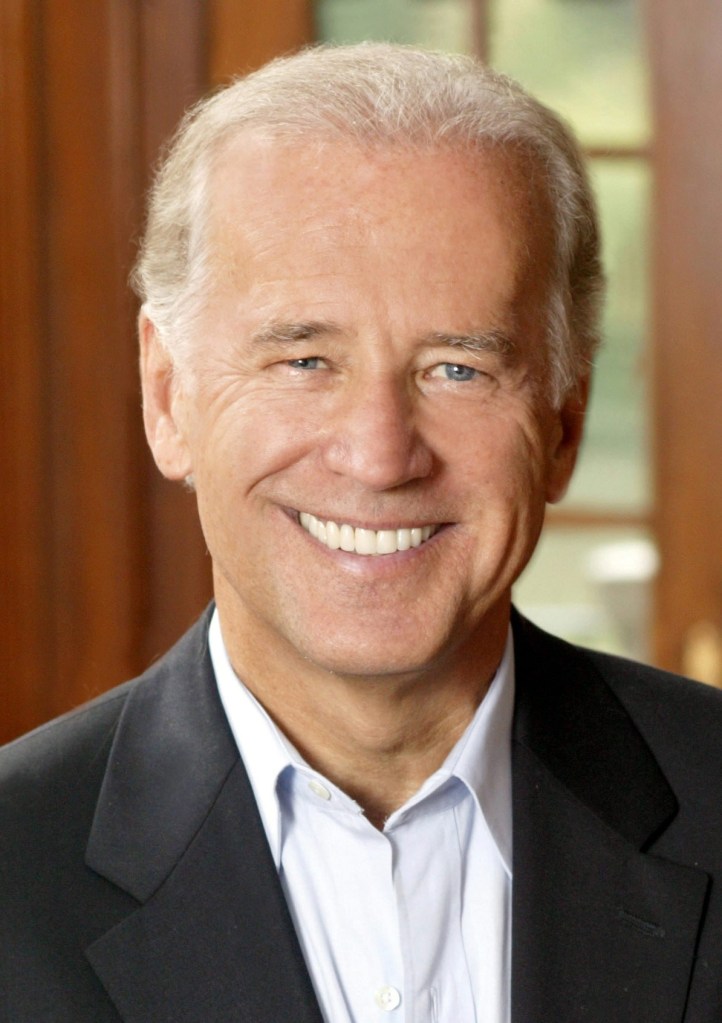
Thank you, President Biden for your leadership and for all the years you have been in congress, vice president and president. You have a fabulous legacy of accomplishments, and I thank you many times over.
The Democrats all want to stay on the same page and be team players, but this is such a serious time they need to speak up. I need to express what my friends, family and the American voter is feeling.
We are in a frightening presidential election. The damage Donald Trump will do for the world and the environment is beyond our ability to imagine, and you know that! Also, the new Supreme Court decisions make it even more imperative that we win this election.
We all deal with age issues. Our backs go out, our knees and shoulders fall apart, and we forget things we don’t want to forget! Unless we are in pain we can deny aging to some extent. We deny that our energy level isn’t what it used to be, and we pretend we haven’t changed. Unfortunately, age issues don’t get younger. Instead, we need to move to the gratitude stage where we are thankful for all that has been and that we still have the chance to move forward.
We have gratitude, but we also have wisdom. Wisdom is our strength as we age! With all that is going on in the world we need individuals with more energy and new vision at the helm. Our wisdom tells us it is time to step aside for new positive leadership.
Thank you for your service. Now decide governing is more important than running for election. Pass the torch to the future and continue your amazing legacy and try to end these awful wars and continue to protect our precious environment. With gratitude.
The presidency is a very hard job. Thank you, President Biden.