Shop Less Plastic

Produce does NOT need to come wrapped in plastic!
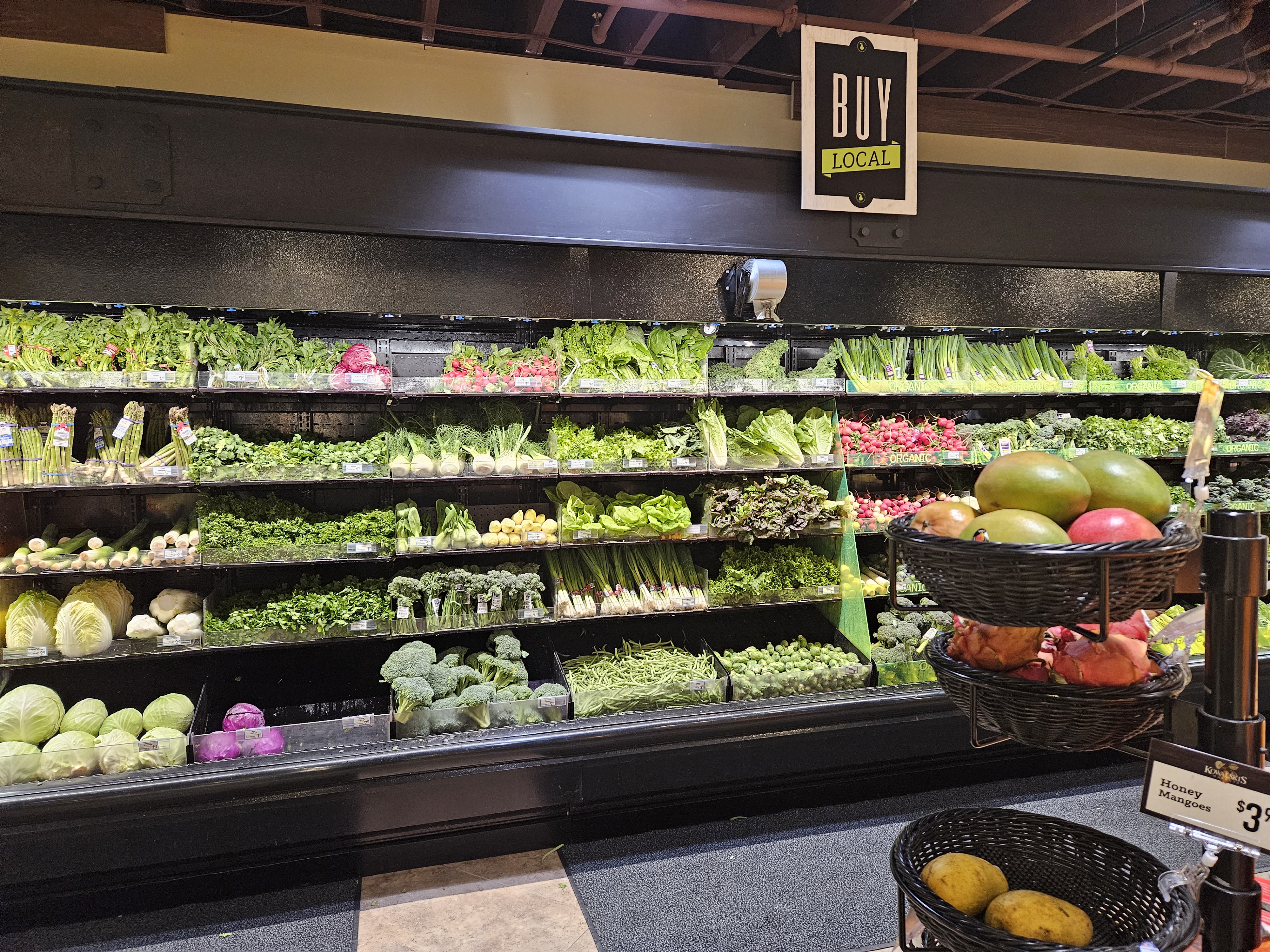
This is bulk produce at Kowalskis in Minneapolis.

reuse

Use cotton or paper bags for produce.

Below is an excellent survey of grocery stores and the amount of plastic they use to package their produce. This is a topic I have been interested in for many years. Ten years ago I stopped shopping at Trader Joes because of their plastic packaging. I have found places to shop that are more suitable to my values, and I only shop where I can purchase produce in bulk. I hope you find the study from USPIRG worthwhile. Not all stores have the same plastic footprint. I recommend shopping local food coops, but many stores have bulk produce.

Below is from USPIRG:

The produce aisle has a plastic problem.

We’ve all had that frustrating moment at the grocery store, staring down a lone bell pepper or a bunch of bananas wrapped in completely unnecessary plastic.

But as it turns out, not all supermarkets have the same plastic footprint.

That’s what our researchers here at U.S. PIRG Education Fund found when we surveyed 40 grocery stores across five U.S. cities. We checked the packaging for common fruits and vegetables including broccoli, carrots, lemons, strawberries and more. Let’s take a look at what we found:

Big retailers have big plastic footprints
Our survey found that retailers vary widely in how much — or how little — plastic they use. In fact, the most plastic-intensive grocer in our survey (Amazon/Whole Foods) used nearly double that of the least plastic-intensive grocer (Rainbow Grocery, San Francisco).


We also found that the largest grocers by market share also tend to be the most plastic-intensive. In our survey, Walmart, Kroger, Costco and Amazon all ranked in the top five for the highest use of plastic packaging.


When it comes to taking home less plastic, shopping small and shopping local may be your best bet.

Packaging design choices can have a massive impact.
Rigid plastic clamshell containers use far more plastic per unit of produce volume than any other type of packaging. For example, selling fresh basil in a clamshell might use up to 36 times more plastic than simply using a twist tie.


Be sure to avoid rigid plastic packaging such as clamshells whenever possible. And if an unpackaged product is not available, choose non-plastic packaging such as a paper bag or cardboard.

Plastic isn’t always necessary
Plastic is definitely pervasive…but is it necessary?
In a word, no. Most of us remember a time when grocery stores, especially produce aisles, used a tiny fraction as much plastic as we see today.


Plenty of stores still sell fruits and veggies completely loose, without added packaging. And while plastic film produce bags are the norm across all the supermarkets we surveyed, four stores also offered paper bags.


If sustainability is at the top of your list when deciding where to shop, keep an eye out for supermarkets that let you buy a bunch of bananas or a head of broccoli without plastic. To go the extra mile, bring your own reusable totes and skip those thin plastic film bags in the produce aisle entirely.


Navigating the produce aisle shouldn’t feel like a plastic minefield. While we hope our research will help you make informed decisions at the grocery store, we must also move toward a future with fewer plastic-packaged items in the first place.

1. “Plastics: Material-Specific Data,” U.S. Environmental Protection Agency, last accessed March 27, 2026.
2. Mike Taylor, “Shoppers infuriated by photos of bizarre product on 7-Eleven shelves: ‘They need to stop this immediately’,” The Cool Down, February 19, 2026.
3. Jennifer Earl, “Whole Foods responds to $6 pre-peeled orange Twitterstorm,” CBS News,
March 8, 2016.
4. Jonathan Kaplan and Celeste Meiffren-Swango, “Plastic in the Produce Aisle,” Environment America Research & Policy Center and U.S. PIRG Education Fund, March 2026.
Zoe Wood, “Plastic packaging increases fresh food waste, study finds,” The Guardian, February 23, 2022.

bulk produce

Produce does not need plastic!!

Halloween Fun

Halloween is a day that is looked forward and cherished by many.

It is also a day that brings lots of extra waste- extra plastic and waste through costumes and decorations. What if we try to reduce so much waste and use what we have?

Instead of buying so much plastic waste maybe make ghosts out of old sheets or make a scarecrow out of old clothes and save money, too

Embrace Halloween as a day to be creative.

Halloween can be a creative time to decorate and create a costume. I look forward to the creative thinking that come to my door. Being creative is more fun!

The hardest part of a plastic-free holiday is finding plastic-free candy, How about apples or tangerines?

Here are some good candy tips tips from Beyond Plastic: Pick plastic-free packages. If you need to stick to packaged candies, there are some options that come wrapped in foil or small thin cardboard boxes. Candies like Dots, Milk Duds, and Junior Mints come in small cardboard boxes, Tootsie Rolls and other fruit chews and Dubble Bubble come wrapped in paper, and there are many small Halloween-themed chocolates that come wrapped in foil that, at least in theory, could be collected and recycled.

Instead of buying a new costume, consider setting up a costume swap party with friends (see some tips here) or creating a homemade costume where face paint replaces a plastic mask. Perhaps there is even the option to rent a costume for the night.

For decorations, look around your home and in nature to see what can be upcycled to help set the scene for Halloween. Cardboard boxes could easily be made into tombstone decorations. String or rope can create thick spider webs. If you are wanting to purchase decor, consider looking for items that will last for several Halloweens.

What about choosing real pumpkins over plastic versions? Not only can you carve how you want, you can roast the seeds. And when done, the pumpkin can be turned into soup or cut into pieces to decompose in a garden or composted.

This year let’s make the Halloween treat a reduction in waste. Here are some good ideas from Beyond Plastic

What are your ideas to reduce waste?

Day of Zero Waste

I make zero waste a game to waste as little as I can.

Our landfills are overflowing, and we just keep purchasing junk and many things we can live without. Consumerism contributes to global warming as do our landfills and burning of trash. We must cut back, maybe not to total zero waste, but creating less waste overall.

Zero waste is not easy, but it is possible. Reducing our waste forces a new look to what we buy. Reducing purchases makes us pay attention to what we buy. Do we really need all the junk we purchase?

March 30 is the UN’s International Day of Zero Waste. This year’s focus is on reducing waste in the fashion industry and helping to advance circular solutions. We have a choice how we spend our dollars, and spending our money on good long lasting products should be a priority. Many items are expensive right now and I bet you can monitor and adjust to be happy with what you already have.

Avoid the fashion fads. Do you really want someone else telling you what to buy and wear. Be your own person create your own look! If your truly want to live on a planet with clean air and clean water we need to cut back! “We still have the ability to stop the worst from happening to our planet. The power to do this is in our hands—we just need to use it.” Katherine Hayhoe

We just need to get in the habit of reusing and fixing what we have. Most of us have closets full of clothes we barely use. Shop your closet and create a new outfit with the clothes you have. Be creative

Many say to me, “But it was so cheap!” No, it’s not cheap with the harm it does to our planet! Manufacturing, shipping, and disposal takes lots of time and energy. Most of it not healthy for anyone.

How can you help to reduce your addiction to fast fashion clothing? Some ideas:

  • Shop your own closet, or the closet of a friend or relative.
  • Purchase secondhand. Some secondhand stores even have personal shoppers for you to use.
  • Buy quality over quantity 
  • Mend clothes rather than throwing them away
  • Intentionally select the brands you purchase from and learn about their sustainability practices
  • Make a decision you didn’t need this item after all

Incentive to purchase and waste less: https://health4earth.com/2024/11/22/ghana-becomes-dumping-ground-for-the-worlds-unwanted-used-clothes-pbs-news/

A Plastic-Free Future

Plastic is everywhere. It is hazardous to our health and our environment. Lets work together every day to end the Age of Plastic

These outstanding ideas are from Eureka Recycling!

Practical Tips for Going Plastic-Free 

The most powerful zero waste action we can take is not creating waste in the first place. So how do we go about reducing consumption. Here are some helpful tips: 

  1. Start with the Basics: Swap out single-use plastic bags for reusable ones. Keep a stash in your car or by the door so they’re always handy.
  2. Choose Reusables & Say NO to Single-Use Plastic: Carry your own refillable stainless-steel water bottle and use glass containers for food storage. Repurposing glass pasta jars for food storage can be a good option 
  3. Shop Mindfully: When grocery shopping, opt for products with minimal or recyclable packaging. Choose loose fruits and vegetables over those wrapped in plastic and items in glass or cardboard containers over plastic whenever possible. When shopping for clothes, try to choose used clothes and clothing made of cotton or hemp, which can help reduce microfiber pollution Many clothing, especially synthetic fibers like polyester, nylon, and acrylic, are made from plastic polymers. When these synthetic fabrics are washed, they release tiny plastic fibers known as microfibers into the wastewater. These microfibers are too small to be caught by wastewater treatment plants and ultimately end up in rivers, lakes, and oceans. 
  4. Evaluate Necessity vs. Want: Before making a purchase, ask yourself if the item is something you truly need or if it’s just a want. Delaying non-essential purchases can often lead to realizing you don’t need them at all.
  5. Borrow or Share: Borrow or share items that you only need temporarily or infrequently, such as tools, books, or recreational equipment, rather than buying them outright. 
  6. Support Plastic-Free Initiatives: Encourage businesses and local governments to adopt plastic reduction initiatives. When possible, support companies that prioritize sustainable packaging and products. 
  7. Make Your Voice Heard: As we work to advance zero waste legislation at the state and federal levels, we know we cannot recycle our way out of the plastic production and pollution crisis. Let’s work together to hold petrochemical companies accountable and change systems to better support reduction and reuse. 

While Plastic Free July lasts for just one month, the habits we cultivate and policies we advocate for can have a lasting impact. By reducing our plastic consumption, we conserve valuable resources, minimize pollution, and protect wildlife. Moreover, we contribute to a shift in societal norms towards more sustainable living practices. 

Join the movement this Plastic-Free July and let’s make every month an opportunity to support a zero waste future. 

And some ways to reduce your exposure to microplastics