Magnificent Lake Superior has over 300 rivers and streams that drain into it. Last week it was a brown lake because of mega rainfall in northern Minnesota, Wisconsin and Michigan where many rivers dumped sediment from the storms. I am on a road trip from Duluth, Minnesota along the south shore of Lake Superior to Sault Ste Marie and the St. Mary’s River. Canada is on the other side of the lake and across the St. Mary’s River.
An ore boat leaves Lake Superior on the St Mary’s. River headed toward Lake Huron
Even though 300 streams drain into the big lake only one, the St. Mary’s River, carries boats and water away from Lake Superior. The St. Mary’s River carries about 42 billion gallons of water from Lake Superior daily.
Lake Superior, looks browner than this picture below appears. I think the sun makes it look bluer than it is.
“Whatever befalls the earth, befalls the people of the earth.” Chief Seattle
If Everyone Does a Little It Can Add up to A Lot!
Fritillary on bee balm
Have you noticed how few butterflies are flittering around this summer? Researchers find that butterfly species throughout the world are disappearing because of pollution, pesticides, and habitat loss. A newly released study says many butterflies are vanishing.
The author suggests we remove some of our lawn, and plant more flowers. Yes, we should plant more flowers, but beside planting more flowers we need to reduce the use of the chemicals we put on our lawns, in our gardens and on our agricultural fields.
Reducing chemicals and planting host plants for butterflies can make a big difference. Many of us are actively working on planting milkweed for monarchs, but there are many other butterfly species. Besides milkweed I have pearly everlasting for the American painted lady, turtlehead for the checkerspot butterfly, and golden Alexander for the black swallow-tail. Violets are great for the fritillary butterflies. This is one of the best charts I have seen on plants for butterflies from Bringing Nature Home And some ideas from the University of Minnesota for plants that are favored for butterflies an moths. Please let me know what your best plants for butterflies are?
Is this how lakes should look? We all need to do better.
Minnesota, the land of “Sky Blue Waters” is adding more than 300 lakes, rivers and streams to its list of lakes and streams that are impaired. The story from MPR is here.
About two-thirds of Minnesota watersheds have been tested and 40 percent of Minnesota rivers and lakes have been found to be impaired by farm runoff, bacteria, mercury or other pollutants.
The below ideas for protecting our lakes is from the Superiorforum.org , Sigurd Olson Institute, Northland college, and the EPA, and Great Lakes Restoration Initiative:
1 .Be conservative with your water use.
2. Recycle as much as you can with the 4 Rs: reduce, reuse, recycle and repair. And….NEVER burn trash.
3. Curb Yard Pollution. Put your lawn on a chemical-free diet!!
4. Stop aquatic invasives by cleaning plants and animals off your boat.
5. Plant native plants, and reduce turf grass.
6. Plant native trees According to Audubon, oak trees are the best for attracting insects and birds.
7. Install a rain barrel
8. Create an energy-efficient home.
9. Bring hazardous waste to waste collection sites.
10. Love our lakes!
I would add several more:
1. Rain gardens are excellent for capturing harmful water runoff.
2. Keep leaves and trash out of streets and storm drains-Adopt a storm drain!
Love our lakes, rivers and streams. Take care of them!
3. Never use cleaning products or hand sanitizer with triclosan.
4. Reduce all plastic use–If you must use plastic bags and bottles, be sure you recycle them. 5. Pick up all liter.
No chemicals needed!Plant for the monarch butterfly
Today my yard is teaming with pollinators. The bees are in abundance, house finch and hummingbirds are loving the fresh blooming plants, and I am thrilled. Butterflies have been slow to appear, but today I had a giant swallowtail, several red admirals, a painted lady, and a monarch!
The Giant Swallowtail Butterfly. Photo credit: Brian Gratwicke
An American ladySwamp milkweed ready for monarch butterflies
Bee balm, cone flowers, and milkweed will bring butterflies, bees and butterflies.
Have you looked carefully at a butterfly? They are some of the most beautiful living species on our planet. The past few years I have loved learning about butterflies. Butterflies often sit so we can see them, and many binoculars make it possible to examine them closely.
Be sure to get outside this summer and look around for butterflies and other wildlife in your backyard. If you see a but aren’t sure about the species, you can consult this handy identification guide. This is from http://ecowatch.com
Here are 10 fascinating facts to consider next time you cross a butterfly’s path:
1. There are more than 17,500 recorded butterfly species around the world, 750 of which can be found in the U.S.
2. Butterflies and moths are part of the class of insects in the order Lepidoptera. Butterflies are flying insects with large scaly wings. Like all insects, they have six jointed legs and three body parts: the head, the thorax and the abdomen. The wings are attached to the thorax and they also have a pair of antennae, compound eyes and an exoskeleton.
3. The Cabbage White, is the most common butterfly in the U.S. Although it appears mostly white with black markings on the top of its wings, underneath those wings are yellowish-green. These butterflies have a wing spread of just about two inches. Males have only one spot on each wing, while females have two. As you probably know, you can find Cabbage Whites in most open spaces, including gardens, roadsides, parks and cities.
4. Monarch butterflies migrate to get away from the cold. However, they are the only insect that migrates an average of 2,500 miles to find a warmer climate. The iconic North
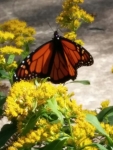
Monarch Butterfly
American Monarch has been greatly affected by extreme weather events, going through drastic dips and spikes in numbers over the past several decades. The overall pattern continues to point downward, with a 95 percent population decline over the last 20 years, but conservation efforts are helping: There were more monarch butterflies migrating in 2015 than there were in 2014.
5. Monarchs are not the only butterfly that migrate. The Painted Lady, American Lady, Red Admiral, Cloudless Sulphur, Skipper, Sachem, Question Mark, Clouded Skipper, Fiery Skipper and Mourning Cloak are among the other butterflies that also migrate, but not as far as the Monarchs.
6. The Common Buckeye Butterflyis one of the most striking butterflies, with its bold multicolored eyespots and thick upper-wing bars, all designed to frighten away any birds that might be tempted to chomp on them. If you look under its wings, you’ll find a more abstract profusion of brown, orange and beige. These insects are pretty common all over North and Central America, although you won’t find them in the Pacific Northwest or in the far north of Canada.
The Common Buckeye Butterfly. Photo credit: Thinkstock
10. The Giant Swallowtail Butterfly, as its name implies, is one of the biggest butterflies, with a wing spread of four to seven inches. The female is once again bigger than the male. It too is found throughout North America and sometimes as far south as South America. These butterflies are called “swallow” because they have long tails on their hind wings that resemble the long, pointed tails of the birds known as swallows.
The Giant Swallowtail Butterfly. Photo credit: Brian Gratwicke
Butterfly Weed is blooming along some interstate highways.
When I see the mowing down native plants pollinators I get angry. My husband and I have just completed a driving loop from Minneapolis to Chicago and back through Iowa. We have traveled Interstate East 94, West Interstate 80 and Interstate 35 North. The entire road trip I surveyed the status of mowing and blooming plants. The shoulders of most of the interstates are not over-mowed, but they are mowing the center median which doesn’t make sense? The best plants can grow in the median if allowed to survive. Some farmers are mowing along the interstates and they do get a little extreme with their mowers. Educating, educating and educating is what we need to continue to do, and it does make a difference. Below is a sample letter I sent to my rural town road crew. I hope you can modify it and send to your local and state government.
Dear local government road crew,
Pollinators, (bees, butterflies and birds) are in trouble in the United States. They have faced serious habitat loss. Last year and the past few years their numbers seemed smaller compared to the years before. Bees and butterflies need the nectar and pollen from flowers for their survival. The Obama Administration is working to plant pollinator plants along our interstate highways to improve bird, bee and butterfly habitat. The plants along the roadways in our town are a natural habitat for birds, butterflies and bees. Now as the daisies, lupine and other wild plants bloom we have beautiful roadways for residents and food for butterflies and bees.
I am writing to ask you to not mow the entire right-a-way along our town roads until maybe late August or even better would be September. I know you need to mow for safety, and that is important. Could you please not mow every flower down until early fall? Maybe mow just a strip along the roads leaving plant food for our pollinators. The bees, butterflies, birds and humans would thank you for the needed nectar, and fabulous summer beauty.
If I can get a commitment from you to mow a little later, I will spread milkweed seeds along the town roads creating more butterfly and bee habitat.
Thank you,
Your name
Wisconsin energy co-ops to create monarch butterfly habitat
Searching for milkweed along our roads and highways!
A Climatarian diet involves choosing what you eat based on the carbon footprint of the food, and using your power as a consumer to drive down the production of beef and lamb which have the biggest impact on our climate. A climatarian is about eating local food to reduce transportation and reducing food waste.
My easy suggestions on being a Climatarian:
Walk or take the bus to purchase groceries.
Participate in Meatless Monday, and go meatless other days, also!
Eliminate beef and reduce cheese consumption.
Work to reduce all food waste and compost any food waste you have.
Choose minimal packaging, and recycle as much as possible.
Use real dishes, and reuse jars and products.
I love “clean out” the refrigerator stir fry and ideas from Tom Colicchio
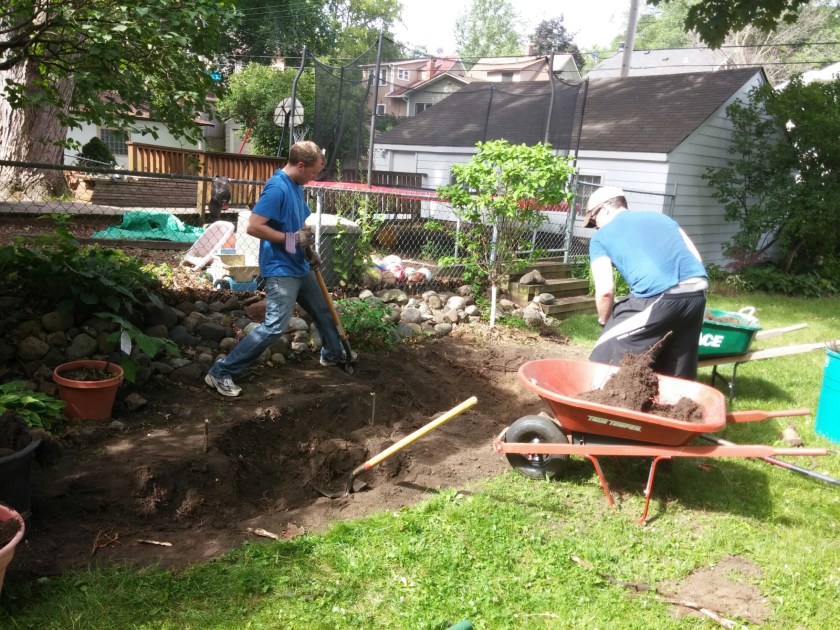
It’s raining this week where I live. How can we use all this water rushing into the storm drains and at the same time improve the quality of the water runs from our roofs, sidewalks, driveways and streets? This water picks up many pollutants as it races to our lakes and rivers. There are things we can do to lessen this pollution such as sweeping our driveways and sidewalks and not using chemicals on our lawns. A good way to clean this polluted run-off is to direct the water into a garden, a rain garden. Today as it rains I can see the water rush into my rain gardens where my deep-rooted plants help clean this water as it drains into the earth below. This past week I have been part of a team that installed two rain gardens. Both gardens captured water that would run into the Mississippi River. We had fun, and were thrilled we helped to “plant for clean water.”
What is a rain garden?
The water that runs off our houses sidewalks, driveways and streets contains pollutants that run directly into our streams and lakes. A rain garden captures this water and the plants in the garden actually purify the water filtering out the pollutants. Like a friend said, “It’s like magic!”
An aspect of climate change is we can go for months without any precipitation then watch out…. inundation, too much rain. Rain gardens are a valuable tool to use and manage the water that falls on our properties. The plants should not need to be watered so we conserve water
Advantages of rain gardens:
1. They conserve water by managing rainfall
This is a narrow ditch for collecting run-off
2. Rain gardens filter out pollutants
3. Blooming plants add beauty to your yard
4. Rain gardens often use native plants that bees, birds and butterflies love.
Simple steps to creating a rain garden:
1. Remove the sod and dig a hole. It must be at least 10 feet from your house and where you can direct a drain-spout, driveway or sidewalk to drain rain water. Most rain garden holes are about 12 inches deep with wide 3 feet slanted sides surrounding the garden. The bottom of the garden should be flat.
Digging the hole for the garden
2. Mix in about one inch of compost to the bottom and sides of your new garden
3. Cover the garden with a layer of several inches of double or triple shredded mulch.
Spreading the compost, next add the shredded mulch
4. Plant deep-rooted plants. Most of the plants you love will work matching the degree of sun and shade. Also, always work to have a variety of plants that bloom at different times for the bees and butterflies.The bottom plants need to be water tolerant. Some bottom plants I have used are: liatris, swamp milkweed, turtlehead, Culver’s root, blue flag iris, sensitive fern, cardinal-flower, blue lobelia and many kinds of sedges.
5.. Water–If it is dry, you need to water the new plants for the first couple of months.
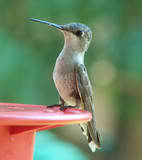
Why are we so fascinated with hummingbirds? Is it their tiny size, incredible energy or maybe it is that we can really observe them close up in comparison to other birds?Hummingbirds love red and bright pink flowers,, and as in this video they will visit absolutely every bloom of a plant they love.
My local newspaper did two stories on hummingbirds this week and I had to share thoughts about these amazing little pollinators. 1. The female raises and feeds the babies all on her own. After June male ruby-throats in the north country, become almost non-existent. 2. Amazing, she builds her nests to expand as her babies grow. Read Val Cunningham’s article and see hummingbird nest pictures here
What can you do to attract hummingbirds to your yard and neighborhood?
1. Put up a feeder, and make your own nectar** 2. Never use chemicals on your plants, and purchase neonicotinoid free plants. 3. Plant colorful flowers like cardinal-flower, and red bee balm.
**From Nature Notes and Jim Gilbert: “Their food consists of nectar and small insects. They will come to sugar-water feeders. I like to use a mixture of one part granulated white sugar dissolved in four parts water to lure them close enough so we can hear the humming sound from their rapid wing beats. Rinse your feeder with water and scrub with a stiff brush to remove any dirt or sticky spots to help halt fermentation and mold growth. Do not add food coloring, some of which is not safe, or honey. Hummers are drawn to colors, so use a feeder made with colorful materials.” Link to the entire article on hummingbirds.

 An ore boat leaves Lake Superior on the St Mary’s. River headed toward Lake Huron








 Health4earth