The World Laughs in Flowers

I hope they are native!

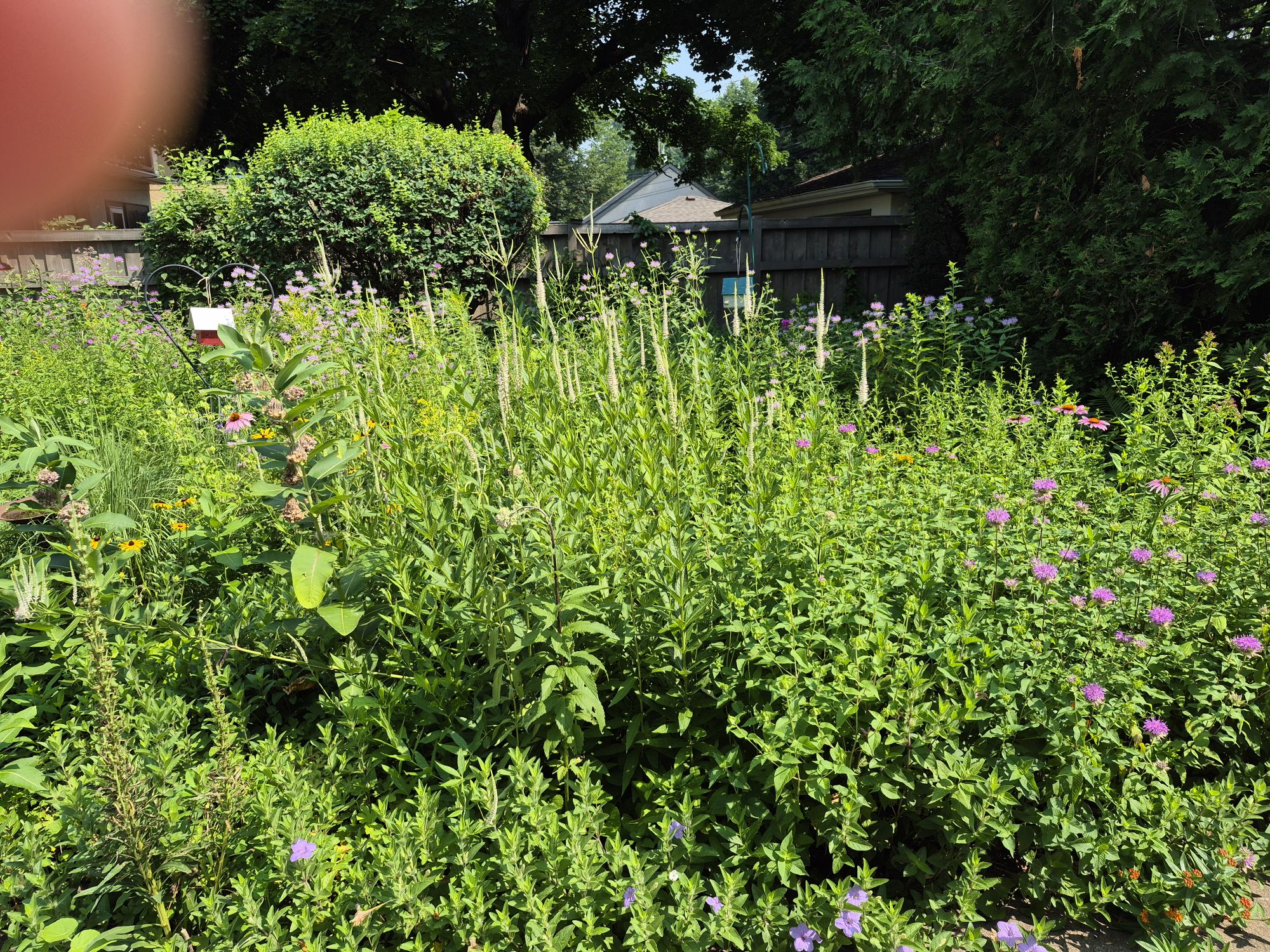
My yard is at peak. Unfortunately, it is also in a drought. Some places are challenged with flooding, but it is dry in my neighborhood. Native plants don’t need chemicals, and they adapt to wet and dry weather extremes

I don’t water, and hope for rain.

Native plants attract the bees’ birds and butterflies. The monarch butterflies and the hummingbirds are thrilled with these native flowers in my yard

Ideas for adding native plants https://wildones.org/

Bee balm (menardia) and purple cone flowers

Above are Culver’s root, milkweed, and lots of menardia. The bees, hummingbirds, and butterflies are thrilled.

Happy Summer!

What a crazy start to summer. First a scary high windstorm came through, knocking out power and downing lots of trees. The winds shifted from the north to the south and it became extremely hot and humid. There were warnings to stay inside it was so hot. Even worse the United States bombed Iran.

A cold wind coming across the big lake

The power is back on, the birds are back singing and the butterflies seem to have survived the storm, and we will never know the harm the United States did to the people of Iran.

I hope your summer is special, that you are able to spend time outside, and enjoy the long days. Everyday work for peace and justice and speak out!

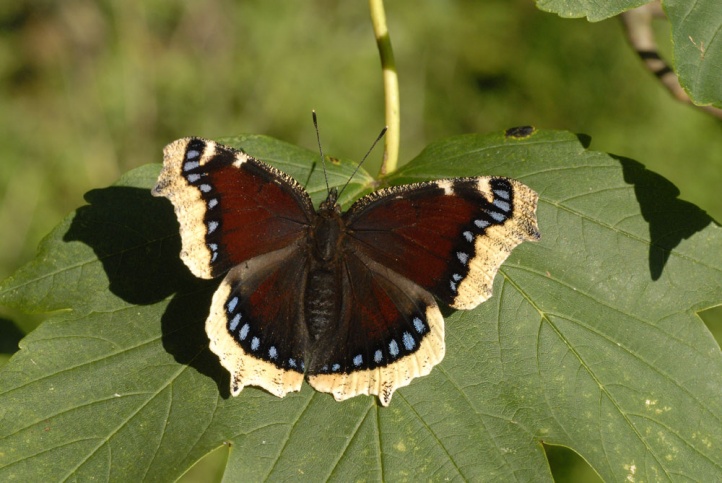
Many mourning cloak butterflies

Work for peace and justice

Bee Inspired by Nature

It’s World Bee Day

Plant your yard for pollinators, and please DO NOT use chemicals!

From The Carbon Almanac:

As you savor the taste of honey, remember that the production of one pound of honey needs 2,000,000 flowers and on average, a bee visits 50-100 flowers on each flight. The average bee makes just one twelfth of a teaspoon of honey in its lifetime.

Did you know that there are over 20,000 species of bees who, along with other pollinators such as butterflies and hummingbirds, support the production of 75% of our food crops? Not only is their contribution to food security essential, the bees also play an important role in preserving biodiversity.

Bee populations are becoming increasingly at risk due to habitat loss, temperature changes due to climate change, pollution and agricultural practices.

The United Nations has designated today, May 20th, as World Bee Day

What can we do to help protect the bees?

All of us can share information about bees to help raise awareness on their important role. It’s as easy as forwarding this email.

If you have a garden, you can avoid the use of pesticides and herbicides. You can also plant diverse native plants that flower at different times of the year.

Chemicals are harmful to everyone, not just our bees:

1. “This pesticide is linked to learning disabilities – and it’s sprayed on fruit,” PIRG, February 18, 2025.
2. Danica Jefferies, “A potentially cancer-causing chemical is sprayed on much of America’s farmland. Here’s where it is used the most,” NBC News, October 10, 2022.
3. Danielle Melgar, “This toxic pesticide dicamba is a threat to crops and human health. It’s time to ban it.,” PIRG, November 11, 2022.
4. Tom Perkins, “Exposure to combination of pesticides increases childhood cancer risk — study,” March 5, 2025.
5. Tom Perkins, “Exposure to combination of pesticides increases childhood cancer risk — study,” March 5, 2025.
6. Tom Perkins, “Exposure to combination of pesticides increases childhood cancer risk — study,” March 5, 2025.
7. Danielle Melgar, “The weed killer Roundup has been linked to cancer. It’s time to ban it.,” PIRG, April 16, 2024.

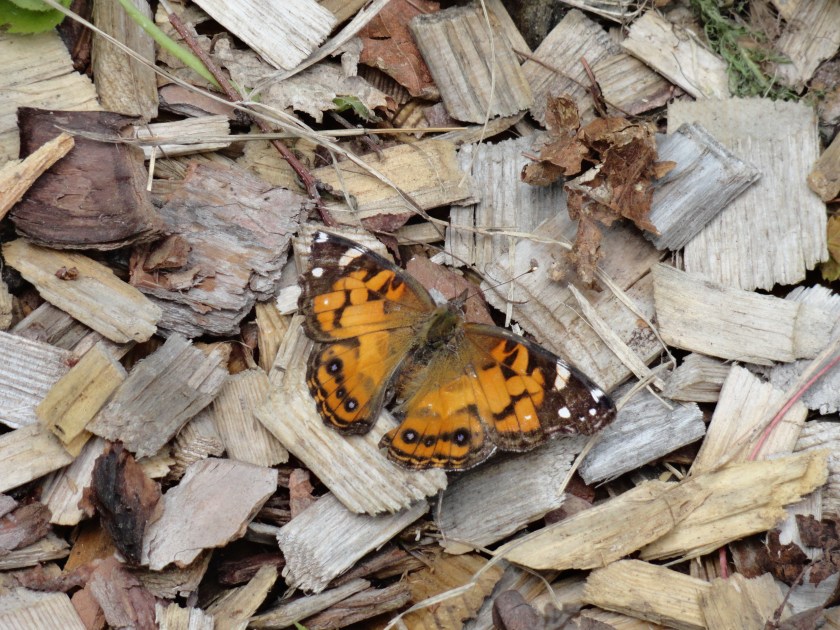
The Painted Lady

earth day

Each one of us needs to work to create the world we want to live in. I want a world of clean air, and clean water. I want a world of healthy birds, healthy butterflies and healthy people.

The sighting of the first butterfly is always exciting. Have you seen one yet?

Below is a beautiful essay on the Painted Lady butterfly. Like all birds butterflies and bees these butterflies are stressed by climate change, loss of habitat, and harmful chemicals. The theme of the essay is that these are very resilient butterflies that have been able to adapt for their survival. Unlike the Monarch butterfly Painted Ladies don’t need just a few flower species to lay their eggs, they adapt!

I have planted habitat in my yard for Painted Lady caterpillars.

Painted Lady

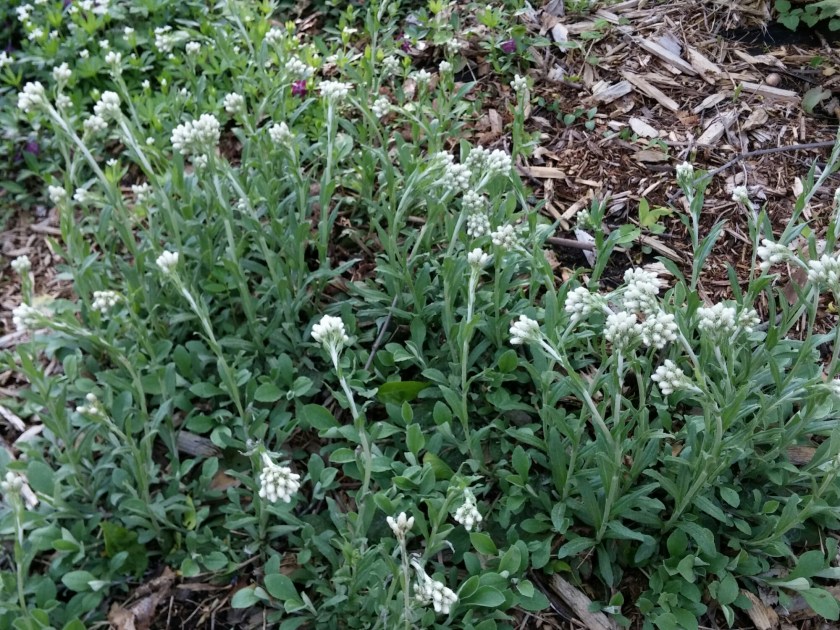
Painted Lady love pussy toes.

These pearly everlasting plants have eggs from the painted lady.

On this Earth Day, do everything you can to help these beautiful butterflies survive. Plant native plants in your yard, never use chemicals on your plants, avoid single-use plastic, and everyday work for clean air!

August Anxiety

Or September Scaries on Lake Superior

I love summer and the long rich days, and the summer days get even longer as you go north! Holding onto summer daylight and comfortable temperatures fades as the calendar turns to fall. Already the nesting birds have migrated south, and I miss their joy. I also miss the magnificent butterflies, and there was a summer shortage this year that concerns and scares me.

.

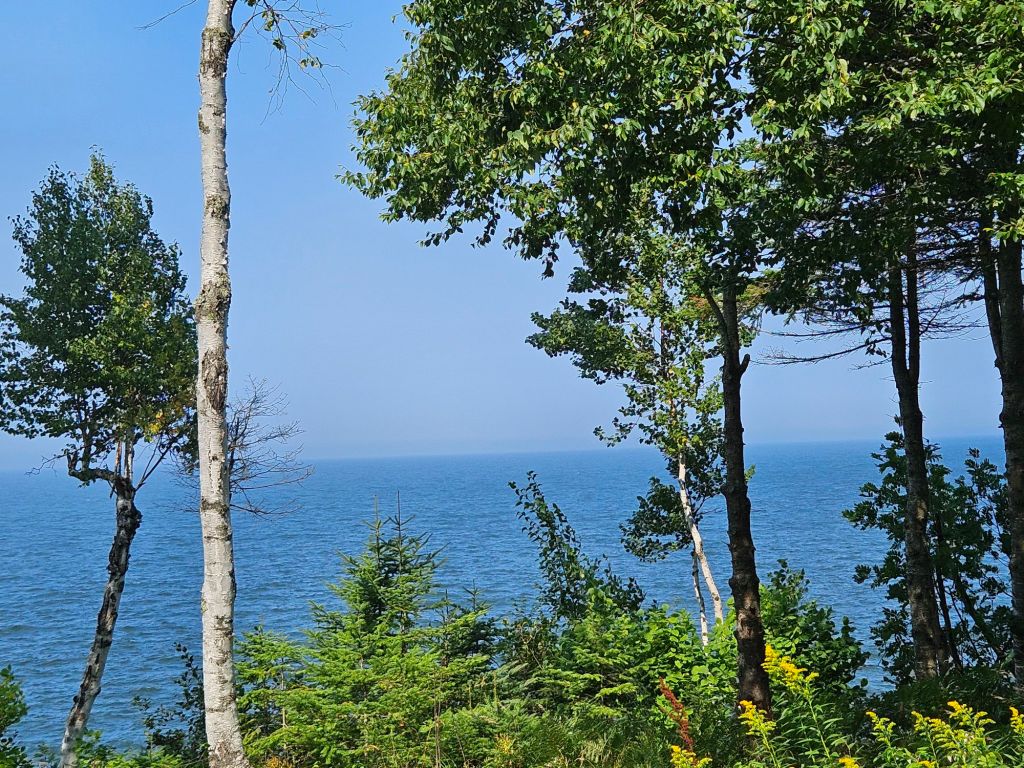
A foggy wet horizon on Lake Superior

Summer brings joy, and the nature of that joy diminishes with the fading daylight. Below are some of the last plants standing:

I love the red stemmed asters!
A carpet of big leaf asters
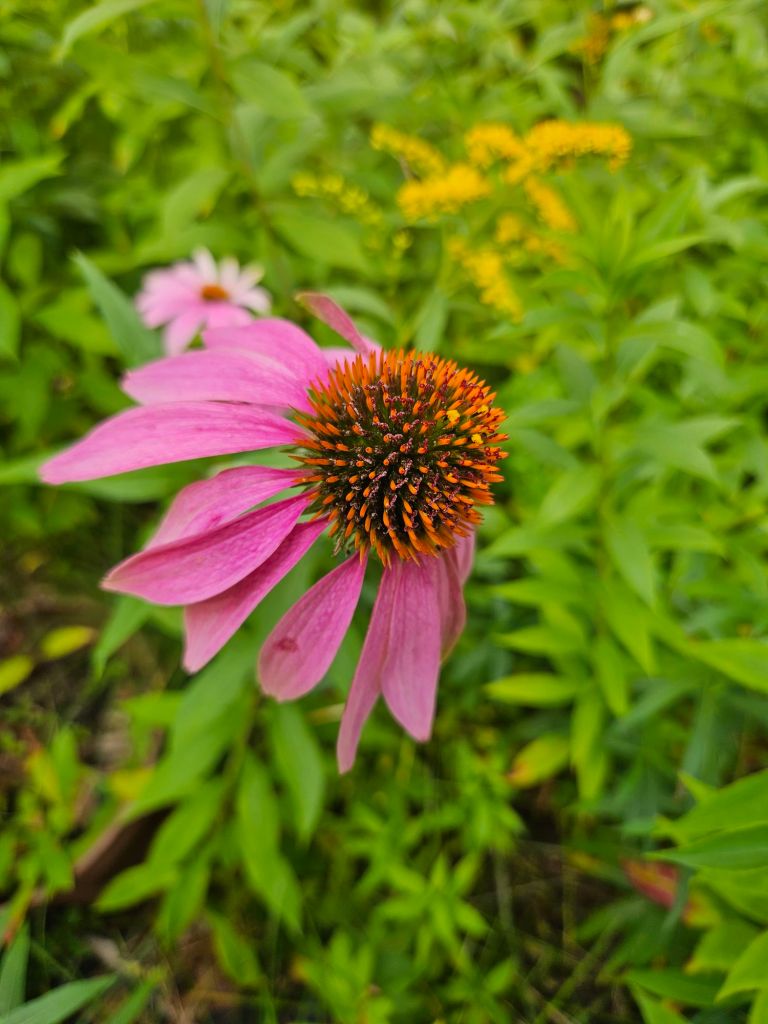
Purple cone flower

Summer could be defined by comfortable days, and Lake Superior wind pattern dominance which shifts from hot and humid to breezy and cool. This [ast summer was weird how much moisture was in the air. Many mornings it was hazy looking across the big lake. Warmer air holds more moisture, and it was a humid summer. We have just lived through the most humid summer on record. Read about it here.

August Joy

“The environment is where we all meet; where we all have a mutual interest; it is the one thing all of us share.”
— Lady Bird Johnson

The Monarch butterflies charm me as they play tag, the hummingbirds zip from one flower to the next, and the goldfinch quietly sit on the monarda and eat the seeds. Enormous bees gorge themselves with a bounty of pollinator plants they love. The consistent rains of this summer have created a healthy blooming habitat. All this pollinator activity creates joy!

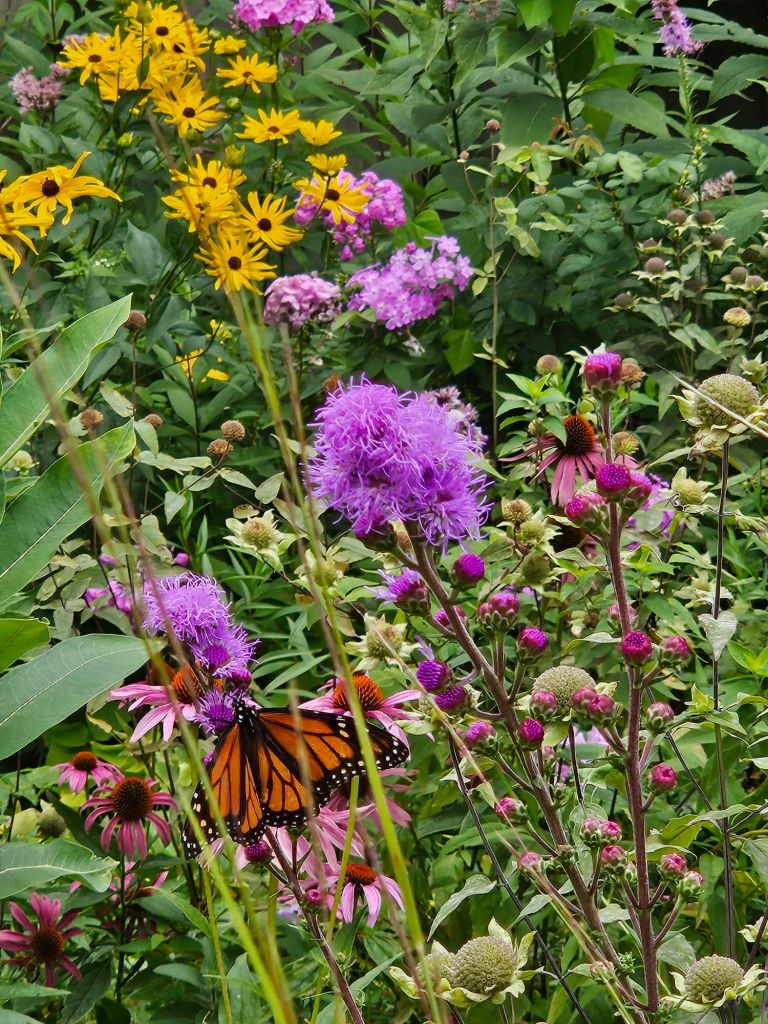
A Monarch on liatris Hummingbirds love cardinal flowers, and Joe Pye Weed.

Native deep-rooted plants fix many things that are wrong with our world. They do not need fertilizers or chemicals, they don’t need to be watered, and their deep roots absorb water run-off. They help to keep our waterways clean, keep our air clean, and they are beautiful,

Native plants are healthy for wildlife. Birds, bees and butterflies love them and they create vital habitat which has gone missing in recent years.

Pollinator Week

The rudbeckia is just starting to bloom.

Pollinator Week has been a rainy week where I live in Minnesota. I was going to list all the pollinators coming to my yard, but it’s hard to see much activity when it rains hard every day! The rain doesn’t bother hummingbirds, and they are entertaining us at our hummingbird feeder.

Spiderwort, a native plant beauty!

The purpose of Pollinator Week is to heighten everyone’s awareness of how important pollinators are to us all. Our bees, butterflies and birds are having a hard time with loss of habitat and our overuse of chemicals. We use too many harmful chemicals to kill insects and fertilize our lawns and farm fields.

My message to you this pollinator week is reduce your dependence on harmful chemicals that kill pollinators. This includes butterflies and birds. Since 1970 North America has lost 3 billion birds. We can’t keep killing the insects and caterpillars the birds need to raise their young.

Birds and butterflies add so much to the quality of our lives Bees and other pollinators touch our lives every day in ways we may not realize. Imagine a world without most of the foods you love. Without bees we wouldn’t have the abundance of apples, pumpkins, strawberries, blueberries, or almonds that we enjoy. Pollinators even help milk production: the alfalfa and clover cows graze is replenished by seed pollinated by bees. A world without pollinators would not only leave us with fewer food choices, but would make it substantially harder to find the nutrition we need to survive.

Thoughts on creating a pollinator Garden:

  • Provide a variety of flower colors and shapes to attract different pollinators.
  • Whenever possible, choose native plants.  Native plants will attract more native pollinators and can serve as larval host plants for some species of pollinators.
  • If monarch butterflies live within your area, consider planting milkweed so their caterpillars have food.
  • Plant in clumps, rather than single plants, to better attract pollinators
  • Choose plants that flower at different times of the year to provide nectar and pollen sources throughout the growing season http://www.fws.gov/pollinators/

“Of 30 commonly used lawn pesticides, 19 are linked with cancer or carcinogenicity, 13 are linked with birth defects, 21 with reproductive effects, 26 with liver or kidney damage, 15 with neurotoxicity and 11 with disruption of the endocrine (hormonal) system. Of these same pesticides, 17 are detected in ground water, 23 have the ability to leach into drinking water sources, 24 are toxic to fish and other organisms vital to our ecosystem, 11 are toxic to bees, and 16 are toxic to birds.”

Read more here: https://www.beyondpesticides.org/…/factsheets/30enviro.pdf

https://www.epa.gov/pollinator-protection/protecting-monarch-butterflies-pesticides

May be a graphic of text

All reactions:

4444

Butterflies

It’s always exciting when the Monarchs arrive!

Joy, we had our first Monarch butterfly in our yard today!

I was surprised to read this about the Monarch butterflies. See below from Minnesota Public Radio

Everyday concentrate on clean air and never burn wood or put dirty air into the atmosphere. That includes driving less!

This is from Minnesota Public Radio:

People can help by planting both native nectar and host plants, like milkweed, reducing pesticide use and mowing less grass less often.

Monarch butterflies are beginning to return to Minnesota and should start arriving in droves in the next two weeks. But the population returning from Mexico will likely be much smaller than in years past.

This winter, the number of eastern monarch butterflies wintering in Mexico was the smallest researchers had recorded in a decade.

A years-long drought pattern, winter whiplash and warming temperatures are all hurting the vulnerable species and the plants it relies on to survive, according to University of Minnesota Professor Emilie Snell-Rood, who studies monarchs and other pollinators.

Wildflower Week

Every day is a wildflower day for me. I plant for the birds, butterflies, and bees and love when they are in my garden. The spring has been spectacular where I live. Trees and bushes are blooming, birds are singing in concert, warblers are migrating through, many butterflies are present, and its sunny and 70 degrees.

The hummingbirds have arrived!

Shooting star , wild geranium, and violets

Marsh Marigolds

Hummingbirds love columbine

It is a perfect time to add some native plants to your garden to draw more birds and butterflies into your yard.

National Wildflower Week was started by Lady Bird Johnson Wildflower Center in Austin, Texas. Find out what wildflowers attract butterflies: http://butterfly-lady.com/plant-native-wildflowers-to…/

Why native plants are important:

  • They are the ecological basis upon which life depends, including birds and people.
  • They provide habitats, food, and shelter for specific insects, birds, mammals, and other animals.
  • They support significantly more wildlife than non-native species.
  • They conserve water, protect soil from erosion, and create habitat for various animals.
  • They offer reduced water use, less maintenance, natural pest control, and environmental sustainability.

Plant Native Wildflowers to Attract Butterflies!