Reduce Carbon Emissions, Day 5

960133_616554661744515_1305522394_nThis is Day 5, of a series of blogs on #31daysofreducingwaste. Today I am posting ideas from the New York Times on ways to reduce carbon waste.

To me these ideas seem easy, and I hope you can find something new you can do to reduce carbon waste and pollution.

Below is from the New York Times

What You Can Do About Climate Change

By JOSH KATZ and JENNIFER DANIEL DEC. 2, 2015

 Simple Guidelines for Thinking About Carbon Emissions

Global climate: it’s complicated. Any long-term solution will require profound changes in how we generate energy. At the same time, there are everyday things that you can do to reduce your personal contribution to a warming planet. Here are some simple guidelines on how your choices today affect the climate tomorrow, and reduce carbon waste

1.You’re better off eating vegetables from Argentina than red meat from a local farm.
 

Eating local is lovely, but most carbon emissions involving food don’t come from transportation — they come from production, and the production of red meat and dairy is incredibly carbon-intensive.

Emissions from red-meat production come from methane, a potent greenhouse gas. Experts disagree about how methane emissions should be counted in the planet’s emissions tally, but nearly everyone agrees that raising cattle and sheep causes warming that is an order of magnitude more than that from raising alternate protein sources like fish and chicken (the latter of which have the added benefit of creating eggs).

According to researchers at Carnegie Mellon, a typical household that replaces 30 percent of its calories from red meat and dairy with a combination of chicken, fish and eggs will save more carbon than a household that ate entirely local food for a full year.

Yes, eating nothing but locally grown fruits and vegetables would reduce your carbon footprint the most. But for people not ready to make that leap, reducing how much meat you eat matters more than going local.

2.Take the bus.
 

To give ourselves a good shot at avoiding severe effects such as widespread flooding of coastal cities or collapse of the food supply, scientists have determined there’s only so much carbon dioxide we can safely emit. Divvying up this global carbon fund among the world’s population (and making some assumptions about future emissions) gives you the average amount each person can burn per year over a lifetime — an annual “carbon budget.”

The current per capita emissions for Americans is about 10 times this limit, and given the relative affluence of this country, our emissions will not get down to the average anytime soon. But they can still fall from where they are. Consider this: If you drive to work alone every day, your commuting alone eats up more than your entire carbon budget for the year. Taking the bus — or biking! — would sharply reduce your output.

3.Eat everything in your refrigerator.
Scientists have estimated that up to 40 percent of American food is wasted — which amounts to almost 1,400 calories per person every day. Food waste occupies a significant chunk of our landfills, adding methane to the atmosphere as it decomposes. Even more important, wasted food adds to the amount of food that needs to be produced, which is already a big part of our carbon load.

How can you waste less? For food shopping, plan out meals ahead of time, use a shopping list and avoid impulse buys. At home, freeze food before it spoils. If you find yourself routinely throwing prepared food away, reduce portion sizes.

4.Flying is bad, but driving can be worse.
 

Remember that annual carbon budget we talked about? One round-trip flight between New York and Los Angeles, and it’s all gone. Fliers can reduce their footprint somewhat by traveling in economy class. First-class seats take up more room, which means more flights for the same number of people. On average, a first-class seat is two and a half times more detrimental to the environment than coach.

But as bad as flying can be, driving can be even worse. A cross-country road trip creates more carbon emissions than a plane seat. And while a hybrid or electric car will save on gas mileage, most electricity in the United States still comes from fossil fuels.

If you really want to mind your carbon emissions, taking a train or a bus is best, especially for shorter trips. Or try that Internet thing: A Skype call or Google Hangout produces very little carbon dioxide.

5.Replace your gas guzzler if you want, but don’t buy a second car.
 

Before you even start driving that new car to add to your first one, you’ve already burned up three and a half times your annual carbon budget. How? By encouraging the manufacturing of all of those raw materials and metals.

Yet there’s a break-even point at which the carbon savings from driving a new, more efficient car exceeds the carbon cost required to produce it. For example, on average, trading in a 15-mile-per-gallon S.U.V. for a 35-m.p.g. sedan offsets the extra manufacturing costs within two years.

Anything you do to improve mileage will reduce your carbon output. Keeping to the speed limit and driving defensively can improve your mileage by more than 30 percent, according to the Department of Energy. Even something as simple as keeping your tires inflated and having your engine tuned up can give you up to a 7 percent bump in m.p.g. — and an average carbon savings of about what you’d save from eating only local foods all year.

6.Buy less stuff, waste less stuff.
It’s not just car manufacturing that adds to carbon emissions. Other consumer goods can have a huge impact: Making that new MacBook Pro burns the same amount of carbon as driving 1,300 miles from Denver to Cupertino, Calif., to pick it up in person.

At the other end of the product life cycle, reducing waste helps. Each thing you recycle is one fewer thing that has to be produced, and reduces the amount of material that ends up in landfills. But the recycling process consumes energy as well, so — depending on the material — it may not be as helpful as you might think. Recycling a magazine every day for an entire year saves less carbon than is emitted from four days of running your refrigerator.

It’s better not to consume the raw materials in the first place, so you may want to think carefully about whether you’re really going to use something before you buy it.

NYTimes.com     http://www.nytimes.com/interactive/2015/12/03/upshot/what-you-can-do-about-climate-change.html?_r=0

Below is my post on reducing carbon

https://health4earth.com/easy-things-you-can-do-to-help-stop-climate-change/

Purchasing recycled products saves raw materials


A Good Reason to Be Conservative

11703236_908335322566446_6098173936904503204_oIf everyone did just a bit, it could add up to a “whole lot!” Health4earth

My series, 31 Days of Less Waste continues:

Day 3 of 31 days of less waste. and another day of solidarity with the Paris Climate Summit.  Change and saving our planet starts with all of us! Today’s post is on driving conservatively.  Don’t waste gas, become an ECO driver!

What can we all do to reduce the emissions we put in the air we breathe?

  1. Drive less: I am fortunate to have good bus service, and can walk to shopping and many of my activities.  Our car often stays in the garage for weeks at a time. We even hauled our Thanksgiving turkey home on the bus!

2.  Car pool: Most cars have only one person. Not only is this boring, but it is   wasteful! You can change this. Make travel fun, offer rides to co-workers, classmates, and  others going to your events. Even one-day a week would make a difference!

3. Become an ECO driver:  Drive the speed limit and accelerate gently.

4. Maintain your car: Keep tires inflated, filters replaced, and make sure your automobile/truck aren’t emitting excess pollution.

http://www.earth911.com/living-well-being/new-drivers-adopt-eco-friendly-habits/

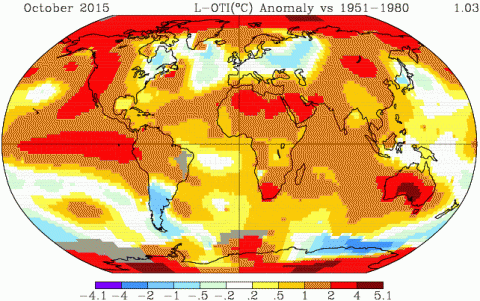
October 2015, Warmest on Record

Worriesome, the North and South Poles!
Worrisome, the North and South Poles!


From the Washington Post:

It was Earth’s warmest October ever recorded and it wasn’t even close. The record-shattering month was right in step with most of the preceding months in 2015 — which is positioned to easily rank as the warmest year on record.

New data from the Japan Meteorological Agency and NASA show that the planet obliterated October records established just last year.  October 2015 out-baked October 2014 by 0.34 degrees (0.19 Celsius) and 0.32 degrees (0.18 Celsius) in JMA and NASA’s analyses, respectively

https://www.washingtonpost.com/news/capital-weather-gang/wp/2015/11/17/record-crushing-october-keeps-earth-on-track-for-hottest-year-in-2015/

And the warming continues. The first half of November 2015, temperatures were 11 to 12 degrees above normal in Minnesota and Wisconsin!

Amazing Footage of Tar Sands

Canadian tar sands, this was forest land

If you have any doubt whether President Obama should have rejected the Keystone pipeline, watch the video below showing what has happened in Canada in the area of the tar sands.  Bill Nye takes us on a helicopter ride to see the tar sands.  It follows Bill Nye’s segment on rising water in Florida.

http://dotearth.blogs.nytimes.com/2015/10/31/now-its-bill-nye-with-climate-change-denial-and-arnold-schwarzenegger-to-the-rescue/?_r=1

“Ultimately, if we’re gonna prevent large parts of this Earth from becoming not only inhospitable but uninhabitable in our lifetimes, we’re gonna have to keep some fossil fuels in the ground rather than burn them and release more dangerous pollution into the sky.”  President Obama

http://ecowatch.com/2015/11/06/obama-reject-kxl/?utm_source=EcoWatch+List&utm_campaign=bafb16d845-Top_News_11_7_2015&utm_medium=email&utm_term=0_49c7d43dc9-bafb16d845-85912169

So far, 2015 smashes 2014 records

11884677_932210916845553_2067363172620990147_o

January 2015 through June 2015 have been the warmest first 6 months on record. 2014 was the warmest year on record.  What is scary to me is that over 90% of this heat ends up in the oceans!

This video explains it all: https://www.youtube.com/watch?v=Mhhtvm1pcio

Where are you on this map? What have you observed this year?

Doing The Best I Can!

 970832_10153091136195497_1060532036_n

May was the hottest month on record, with Alaska and India struggling with unheard of heat.  http://ecowatch.com/2015/06/23/heat-waves-hit-planet/2/ May was also the wettest month ever in the United States, but California is in severe drought.

Even Pope Francis is concerned about our warming planet. The pope says for the common good of the planet we should consume less, and reduce our use of paper, plastic, and water. Also, he advocates for less use of our cars and air conditioners. http://www.startribune.com/pope-s-message-on-earth-s-fate-is-a-call-to-action-regardless-of-faith/308943131/  http://www.nytimes.com/2015/06/19/opinion/the-pope-and-climate-change.html?_r=0

I love  that the pope gives people specific ways to help our earth. A cute story follows:

1655102_897481996985112_4241054922774132646_o

Environmental activist Wangari Maathai, of Climate Reality shares a story about a hummingbird:

“A raging fire is burning in the jungle.

It’s such an overwhelming disaster that all of the animals are watching the conflagration in shock.

A hummingbird says, “I’m going to do something about the fire.”

The hero of this story

It flies to the nearest stream and takes a drop of water.

It races back to the fire, where it drops the water on the flames. Back and forth it goes, over and over, while the larger animals — like the elephant whose trunk could deliver so much more water — stand watching.

Eventually they ask the hummingbird, “What do you think you can do? You’re too little!”

Without pausing, the hummingbird answers: “I am doing the best I can!””

The story has a simple point.

 “I may feel insignificant, but I certainly don’t want to be like the animals watching the planet goes down the drain. I will be a hummingbird. I will do the best I can.” — Wangari Maathai

http://www.upworthy.com/in-this-charming-short-story-a-hummingbird-explains-why-we-have-to-at-least-try?c=cr1  (The complete version of this story)

Don’t stand by and watch, do the best you can. What is one thing you are doing to reduce your carbon foot print? Every little bit can add up to a whole lot!

I am doing the best I can!

Hottest March Ever Recorded

999922_619252368141411_1083645899_n (1)According to NOAA, the National Oceanic and Atmospheric Administration, the earth set two unfortunate records for March 2015

Information below is from:  www.ecowatch.org and  http://climaterealityproject.org/  http://www.noaa.gov/

Marking yet another grim milestone for our warming planet NOAA reported that, for the first time in recorded history, global levels of carbon dioxide in the atmosphere averaged more than 400 parts per million (ppm) for an entire month—in March 2015.

This image shows how carbon dioxide moves around the planet.

“This marks the fact that humans burning fossil fuels have caused global carbon dioxide (CO2) concentrations to rise more than 120 parts per million since pre-industrial times,” said Pieter Tans, lead scientist of NOAA

This is not the first time the benchmark of 400 ppm has been reached. “We first reported 400 ppm when all of our Arctic sites reached that value in the spring of 2012,” explained Tans. “In 2013 the record at NOAA’s Mauna Loa Observatory first crossed the 400 ppm threshold.”

However, Tans said that reaching 400 ppm across the planet for an entire month is a “significant milestone.”The month of March brought “record warmth spread around the world,” with an average temperature of 1.53 degrees Fahrenheit above the 20th-century average—making it the hottest March ever recorded.  www.ecowatch.com
These new figures, released by the National Oceanic and Atmospheric Administration, mean 2015 is on track to become the hottest year on record—a title held by 2014.

If the warming pattern holds true, 2015 will end up as one more piece of evidence showing the effect carbon emissions and greenhouse gases are having on climate change. Nine out of the 10 hottest years on record have come after 2000.

How have you made changes to protect our warming earth?

https://health4earth.com/easy-things-you-can-do-to-help-stop-climate-change/

http://www.ncdc.noaa.gov/sotc/summary-info/national/201504 Global summary for April

http://www.ncdc.noaa.gov/sotc/summary-info/global/201503  Global summary for March

http://www.noaa.gov/

http://climaterealityproject.org/

http://ecowatch.org

Take a Trip To The Everglades

DSC00196

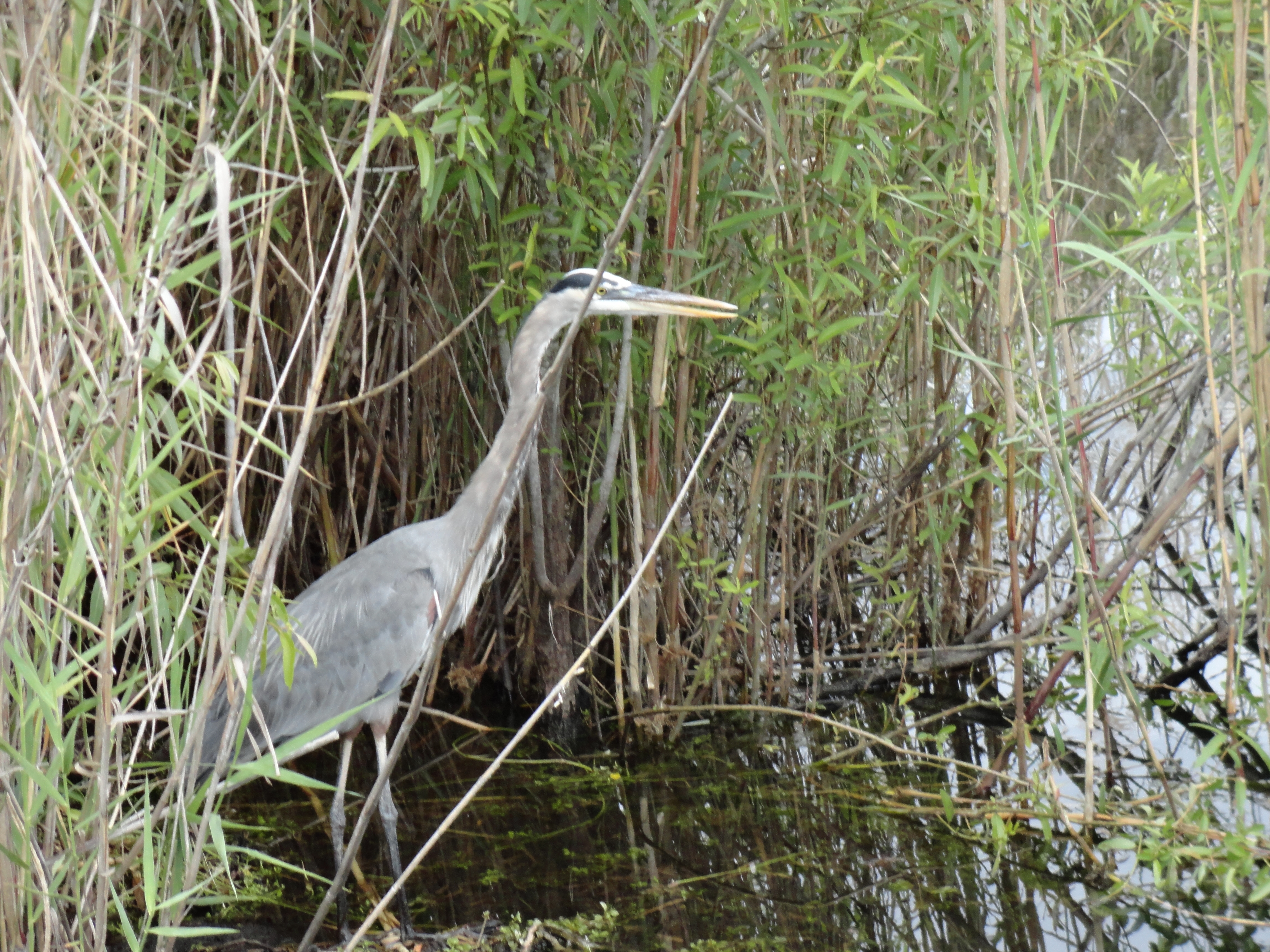
My first trip to the Everglades was in 2012. I was excited to see this marvelous and uniqueDSC00206 place.  President Obama was there for Earth Day to discuss the hazards the Everglades face with our fast changing climate. See video below:

https://www.facebook.com/billnye

DSC00197
http://www.cnn.com/2015/04/22/politics/obama-everglades-florida-climate-change/index.html

DSC00200

Happy Earth Day!

“Those who contemplate the beauty of the earth find resources of strength that will endure as long as life lasts”  Rachel Carson 

This land is your land, this land is my land: In honor of Earth Day this Wednesday, April wpid-wp-1423799335727.jpeg22, make a resolution to do one thing new for our earth. Pledge to use your reusable water bottle, use reusable shopping bags, turn off lights and electronics, plant native plants and milkweed, or walk more and drive less. It makes a big difference if everyone does just a small part!

http://parade.com/390692/walterscott/celebrity-earth-day-warriors/

http://upliftconnect.com/declaration-restore-mother-earth/

http://www.takepart.com/article/2015/04/16/climate-change-funny-or-die
http://upliftconnect.com/declaration-restore-mother-earth/

Slow Climate Change

618482main_earth1600_800-600