Each one of us needs to work to create the world we want to live in. I want a world of clean air, and clean water. I want a world of healthy birds, healthy butterflies and healthy people.
The sighting of the first butterfly is always exciting. Have you seen one yet?
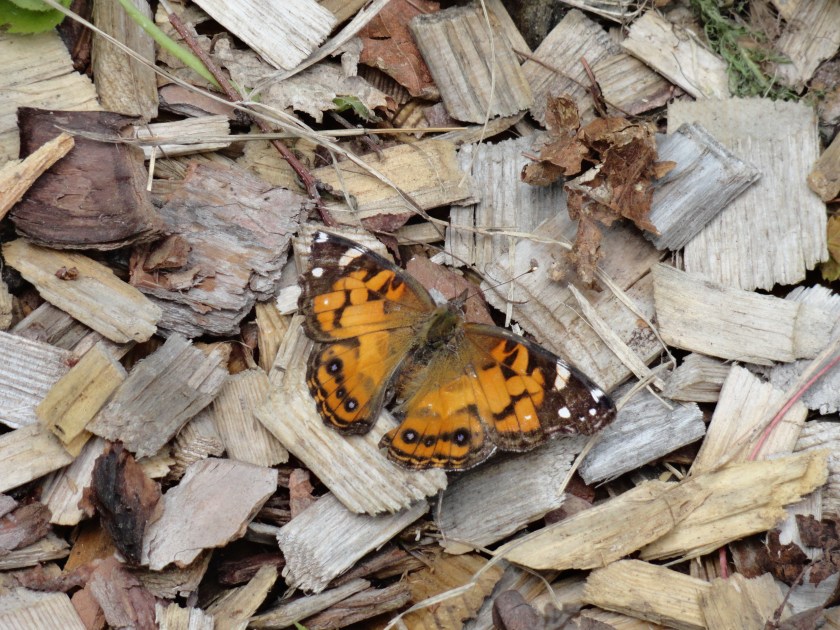
Below is a beautiful essay on the Painted Lady butterfly. Like all birds butterflies and bees these butterflies are stressed by climate change, loss of habitat, and harmful chemicals. The theme of the essay is that these are very resilient butterflies that have been able to adapt for their survival. Unlike the Monarch butterfly Painted Ladies don’t need just a few flower species to lay their eggs, they adapt!
I have planted habitat in my yard for Painted Lady caterpillars.
Painted Lady
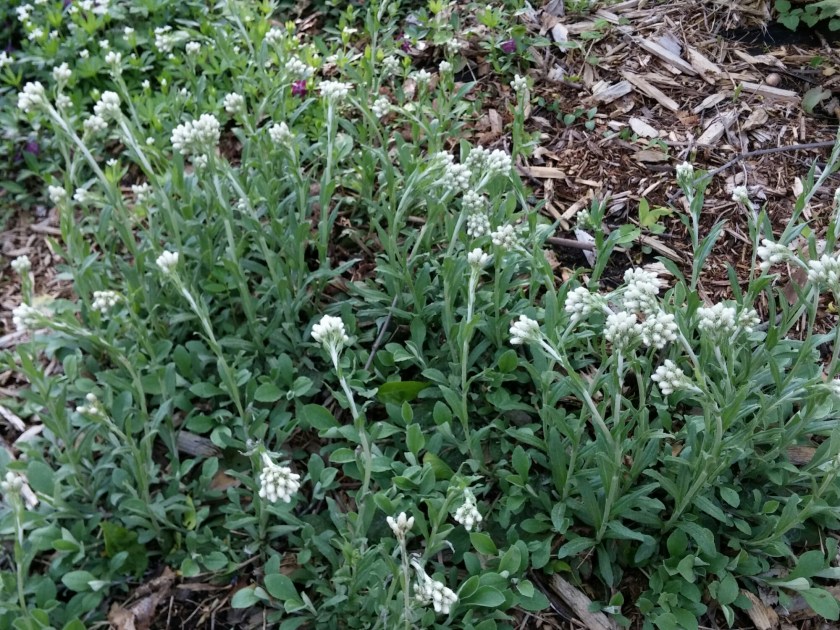
Painted Lady love pussy toes.
These pearly everlasting plants have eggs from the painted lady.
On this Earth Day, do everything you can to help these beautiful butterflies survive. Plant native plants in your yard, never use chemicals on your plants, avoid single-use plastic, and everyday work for clean air!
I am sad about all the bad air warnings. One week it is wildfire smoke, the next week it is ozone pollution. Our precious summers go too fast to have to stay inside to avoid unhealthy air. Every action matters, and we all can make a difference! Let’s all work harder for clean air.
If everyone does a little, it makes a big difference! Please don’t use your leaf blower or lawn mower if they pollute, and please don’t idle your car/truck.
What can you do to help ozone pollution?
Don’t use lawn mowers or leaf blowers
Use public transportation or carpool. Minimize the use of cars and trucks.
Do not idle your car engine!
Take a long break from your outdoor heaters and fires!
Reduce your plastic use. Plastic pollutes our air and bodies at every stage of its life. Plastic is made from fossil fuels.
Do not use cleaning products that are harmful to the environment and to us.
Buy local products.
Maintain air conditioners, as their malfunctions cause CFC to escape into the atmosphere.
Spend more time indoors, where ozone levels are usually lower.
Choose easier outdoor activities (like walking instead of running) so you don’t breathe as hard.
Plan outdoor activities at times when ozone levels are lower (usually in the morning and evening).
Much of the state is experiencing its third straight day of unhealthy air quality. The culprit this time isn’t wildfire smoke, but rather ozone – a colorless, odorless gas that forms when certain chemicals in the atmosphere interact under intense sunlight.
In practical terms, ozone can cause similar breathing problems as wildfire smoke, and it’s linked to many of the same long-term health ailments, including premature death. But there are enough differences between these two flavors of air pollution that I wrote an explainer on them yesterday, in part to help me fully understand the situation.
One interesting takeaway: when it’s smoky out, experts recommend wearing a mask outdoors or running an air purifier with a HEPA filter inside, which removes smoke and other fine particles from the air. But ozone isn’t a particle, it’s a gas – meaning masks and air filters don’t work against it.
And here’s an especially wild fact to ponder: many companies market “air purifiers” that actually add ozone to indoor spaces. Generally speaking you should steer away from products claiming to use “ionization” or “energized oxygen” to clear the air. The electric processes they rely on produce ozone and actually make the air dirtier.
Other products take this a step further – there’s an entire category of “ozone generators” that deliberately add ozone to the air, under the mistaken belief that ozone molecules remove other pollutants. It’s kind of like pumping car exhaust directly into your house to hide the smell of cigarettes. MN Reformer
And from the American Lung Association: It may be hard to imagine that pollution could be invisible, but ozone begins that way. As ozone concentrates and mixes with other pollutants, we often call it by its older, more common name—smog. It is currently one of the least well-controlled pollutants in the United States. And it is also one of the most dangerous.
Scientists have studied the effects of ozone on health for decades. Hundreds of studies have confirmed that ozone harms people at levels currently found in the United States. In the last decade, we have learned that it can also be deadly.
This has been an unusual summer in an unusual world. Wild fires, pandemic. drought and excess heat dominate the conversation and the media. Many now check the morning air quality just like they check the weather. A local weather expert says there is no normal anymore. In Minnesota and Wisconsin we are used to fresh Canadian air, but more and more we are getting dirty wildfire smoke!
Many of us have no idea how we should change our behavior when the air quality is poor. Lawn mowers, leaf blowers, fire pits, and car trips continue to pollute the already dirty air. Hennepin County has some suggestions below.
Dirty air can make cases of Covid-19 and other respiratory diseases much worse. Be careful, and wear a mask!
I am a firm believer in community health and working together for healthy communities. We can all take more personal responsibility for clean air and clean water. Many minority communities deal with polluted air on a daily basis, and have lived with bad air for many years. Wildfires don’t discriminate like chemical plants, hazard waste dumps, and garbage burners. We all experience the smoky air, and see what breathing is like in other polluted places. Clean air is necessary for everyone, do your part!
Our actions count, make them positive!
The largest county(Hennepin) in Minnesota posted ideas to manage bad air days.. I think it is worthwhile.
Below is from Hennepin County:
Stay healthy during air quality alerts
In July, the Twin Cities area experienced air quality alerts due to an increase in fine particles from Canadian wildfire smoke. This made the air unhealthy for sensitive groups, which includes those with asthma, heart or lung disease, older adults, children, and people doing extended physical activity outside.
Stay healthy
Everyone should take precautions when the air quality is unhealthy:
Take it easy, listen to your body, and limit, change, or postpone your physical activity. Stay away from local sources of air pollution, like busy roads and wood fires, if possible. If you have asthma, follow your asthma action plan and keep quick relief medicine handy.
Reduce pollution
There are also steps people can take to reduce pollution to avoid contributing more to unhealthy air quality. These include:
Reduce driving by combining trips, avoiding unnecessary idling, carpooling, and walking, biking, or taking public transit. Postpone backyard fires. Postpone the use of gasoline powered lawn and garden equipment. If possible, invest in electric lawn equipment. Learn more about air quality and how to stay healthy during poor air quality days on the Hennepin County Climate Action website.
It is hopeful that some states and countries have made important laws on the regulation of single-use plastic in the past six months. Where I live the corporations and lobbyists have so much power over the decisions and law making that plastic pollution continues. The first committee where I worked on plastic bag legislation was over 25 years ago!! But I am thrilled with the legislation of other places.
We are living in a time when people don’t want regulation, OK then, take personal responsibility, and reduce your plastic footprint by reusing washable containers, bags and water bottles.
As I write this I am traveling in Ontario, Canada. I was at the grocery store and everyone had their reusable bags. At a restaurant I said, “No straw please!” the waiter response was, “Our straws are made of paper!” WOW! Also, Canada has passed legislation to ban single-use plastic in a few years.
Other places have recently passed single use plastic bans. Read about it at: Maine and Vermont, and California works to regulate all types of plastic packaging. Oregon has bans on plastic bags, and New Zealand has began their bag ban. The European Union is working on single-use plastic bans, and even Thailand is trying to make a positive difference. Maine has passed a Styrofoam container ban that I think is huge!
Bring your own reusable bags.
We can all take personal responsibility and reduce our plastic footprint. Always bring your shopping bags and eliminate those take-out containers unless they are compostable. Everyone making a small effort adds up to an enormous difference!
We can all do something about this tremendous influx of trash and I will be posting ideas for 31 days on how to reduce trash and waste:
Plastic, what an amazing and awful product at the same time.! It is cheap and it is light. Unfortunately, it has become an enormous environmental problem. Many lack the personal responsibility to get single-use plastic bottles and bags to the recycle bin. Many developing nations I visit seem oblivious to it, except in tourist areas! Days 6 through 11 of #31daysofreducingwaste are going to focus on how we can have less plastic pollution.
So what is the problem with plastic? Many say the materials in plastic cause cancer. Plastic will never dissolve, but will break into thousands of pieces of litter. The plastic in the oceans will be here on earth for hundreds of years and it will be found in the intestines of many fish, turtles and birds. Plastic creates a terrible waste and litter problem. According to the http://blog.oceanconservancy.org/tag/plastic/ If left unchecked, there could be 250 million tons of plastic in the ocean by 2025 — about one pound of plastic for every three pounds of fish. We can’t let this happen.
Avoid plastic, fill your glass or metal bottles with liquid
** The best way to reduce plastic trash is NOT to drink bottled water. Bring a reusable water bottle to work, school, and for all your adventures.
**Avoid plastic bags. Always bring your reusable shopping bags.
Shop with reusable bags
** How can you avoid baggies? I love these compostable wax paper bags
** Reuse and recycle all plastic bags.
Please recycle plastic bags at grocery stores!
* Reduce packaging: Try to purchase items with no packaging or packaging that can be recycled.
From Thanksgiving to New Year’s Day, household waste increases by more than 25%. Added food waste, shopping bags, packaging, wrapping paper, bows and ribbons all adds up to an additional 1 million tons a week to our landfills. (Source: EPA)
Minnesota is home to over 10,000 lakes. We love our lakes. Unfortunately, we don’t take personal responsibility for protecting the beauty and health of our precious lakes. One of the most popular lakes is covered with trash, and it has become impossible to educate anglers (Are they listening?) of the invasive species their boats carry from lake to lake.
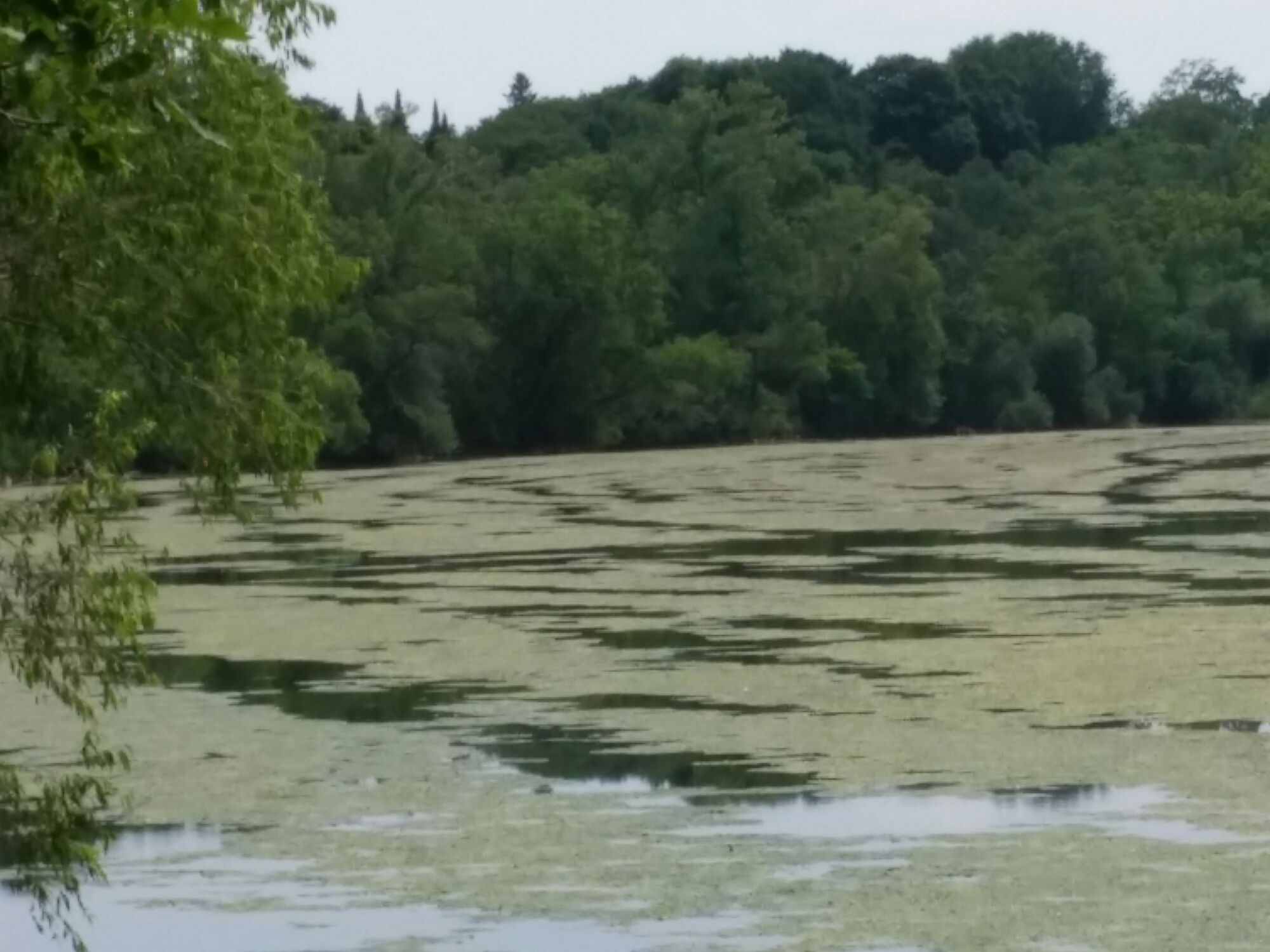
In late June, I was biking through southern Minnesota and was appalled to see algae and milfoil covered lakes. Sometimes they look weedy in August, but this was June?
The largest Minnesota newspaper published an opinion piece about what is happening to our lakes. The authors think the lakes of southern Minnesota are a lost cause, but they think more should be done to keep northern lakes clean. I think with tougher rules and strict enforcement all lakes can be kept healthy and usable. It is a matter of political will and setting priorities. With tougher rules and strict enforcement all lakes can be kept healthy and usable. At the bottom of this post there is a list of things I do on my lake property to protect water quality.
Unfortunately, agriculture was given a pass on the Clean Water Act and they should be better regulated. Agricultural run off is a real problem, but everyone needs to do better. This is the only water we will ever have and we should respect and value every water body.
Brian Peterson • Star Tribune If 75 percent of lakeshore remains mainly forested, the chance of maintaining lake quality is good, said Peter Jacobson of the state’s Department of Natural Resources. But when natural cover falls below 60 percent, lakes begin to deteriorate.








 Health4earth