On what should have been a beautiful Lake Superior morning, smokey air was creeping across the big lake from fires burning in Canada. Luckily, most days are filled with brisk clear Lake Superior air.
Amazing butterflies, the Compton tortoiseshell.
Sounds of robust birds singing fill the woods. The chestnut sided warbler, song sparrows, oven bird, indigo buntings, red-eyed vireo and many others sing all day long.
The butterflies are the very best, and the contrast to so few butterflies in urban areas is striking. Every amazing butterfly that lives in June is here. They seem to love the host plants I have planted to get them to begin the next generation of butterflies. There is hope for the future if we could get over our addiction to pesticides and plant pollinator gardens.
Milkweed is a wonderful host plant.
The swallow tail is one of the easiest butterflies to identify.
Seeing the bear, fox and big bucks and deer have been a surprise. After several years of scarcity, they are back, and the squirrels, chipmunks and bunnies are almost non-existent.
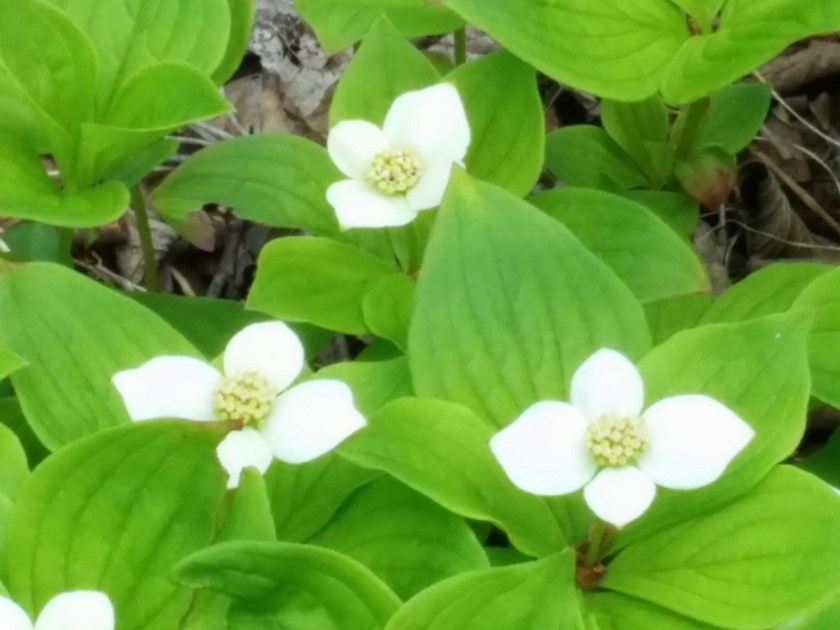
Bunch berries will have red berries later in the summer.
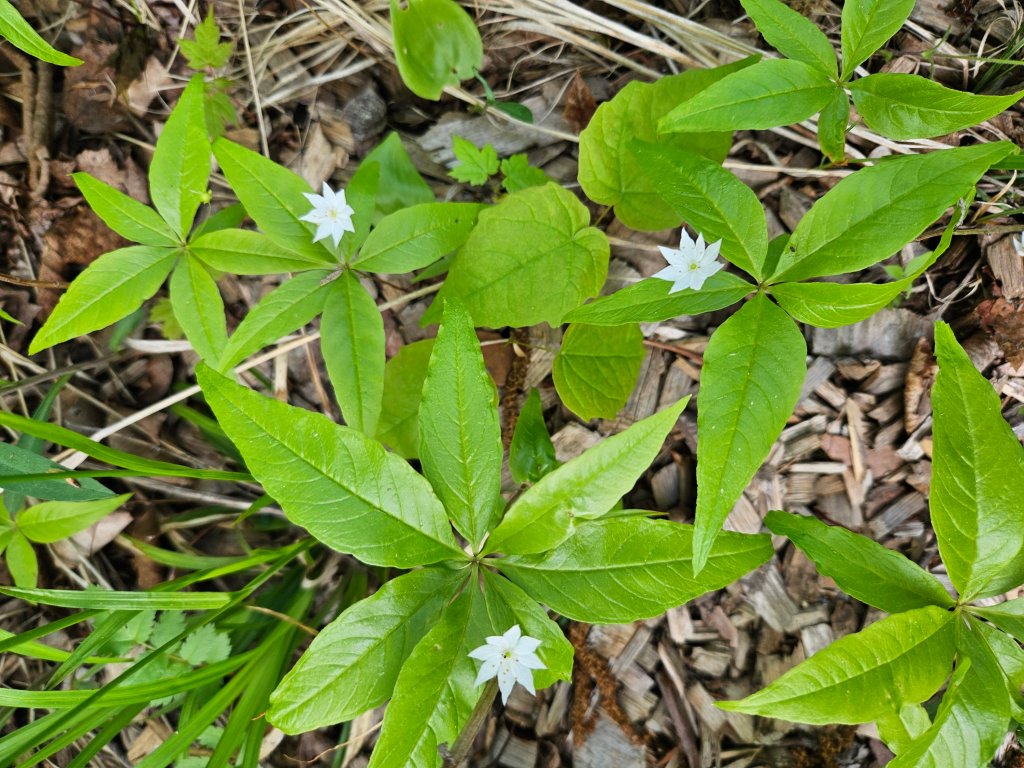
June in the north country of Minnesota and Wisconsin are famous for the beautiful but non-native lupine. They grow in patches everywhere. This year I was struck by all the June white plants blooming. and have enjoyed enormous fields of daisies. I especially love the delicate star flower, the false lily of the valley, the hardy Canada anemone, and classic north woods bunch berries. To experience these beauties, you need to get out of your cars and walk!
Happy Juneteenth**and Happy Pollinator Week! Both important in making the world a better place to live.
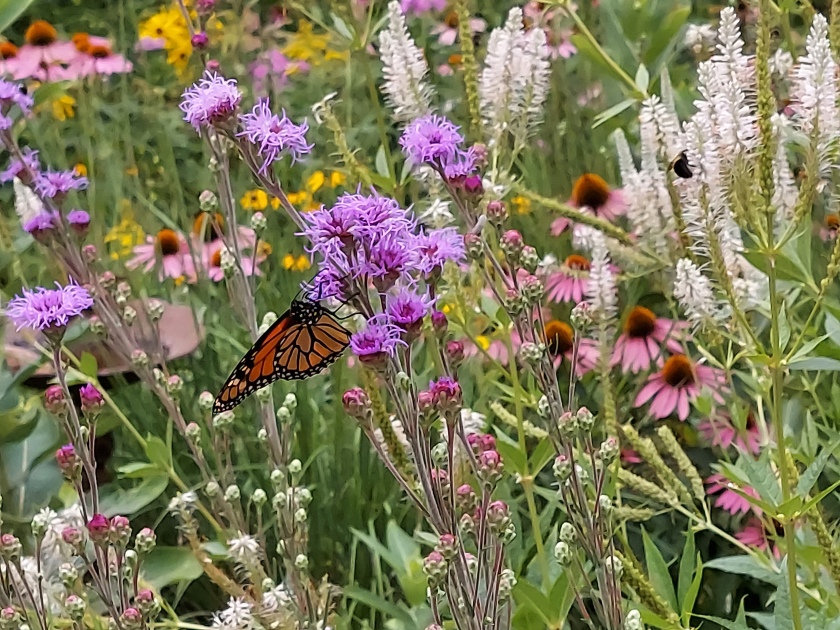
This mix of native plants attracts bees, butterflies, and singing birds.
Bee balm is one of the best plants for pollinators.
Pearly everlasting is a host plant for the painted lady butterfly. Picture of her catterpillar.
An unsung hero of the pollinator world.
June 19 to June 25, is pollinator week highlighting the importance of pollinators to our world and our survival. Drought, floods, storms, chemicals and loss of habitat are hard on our pollinators, and there are things we can do to ensure their survival.
Pollinators bring me joy and I can’t imagine a world without butterflies, dragonflies, hummingbirds and beautiful singing birds. Take time this week to think about what you can do to help the pollinators of our world. Maybe decide to stop putting chemicals on your yard, plant some native plants, or take out some grass lawn for more garden.
This Pollinator Week is emphasizing the connections between climate and pollinators. Pollinators are dying because their food and homes are disappearing, diseases have increased, and rising temperatures and natural disasters are affecting their ability to survive – all of which are related to climate change. At the same time, the conservation of pollinators and their habitats can help combat climate change by supporting healthy ecosystems, air, soil, water, and plants. Combined, these results make planet earth a safer place for us to live. These are big problems and the efforts that are made around North America and globally during Pollinator Week can help provide real solutions for the pollinators we all love. https://pollinator.org/pollinator-week
**Juneteenth is the “longest-running African-American holiday,” and it recognizes June 19, 1865, as the date that news of slavery’s end reached slaves in Texas and other states in the southwest—formalizing their emancipation after the end of the Civil War a month earlier. It also came two years after President Abraham Lincoln signed the Emancipation Proclamation.
There’s just something about being outside that seems to lift your mood and bring on the happy. Happy May!!
I hope you can spend lots of hours outside this May. Clean air is crucial to being outside! What can you do to ensure our air is clean?
Native plants bring birds butterflies and bees into your yard. They also need no chemicals, and create cleaner air!
Hooray for May. It has been a long snowy winter where I live. This May get outside to experience the beauty of nature. Time outside demands fresh air. It’s a big frustration for me when I go outside, and someone is using a smelly lawn mower/leaf blower, or the airplanes overhead are spewing bad air Why people need to idle their engines as they read their phones is a mystery to me? Please turn your engine off. **This May spend time outside and work for clean air! There’s just something about being outside that seems to lift your mood and bring on the happy.
I have just been out walking along a river near my house. It was so quiet, the baby leaves are just popping on the trees. Manny rich colors, and wow, beautiful wildflowers appearing! I saw my first bull snake. Pay attention and nature will award you!
-Work for clean air. Never idle your car engine, don’t use your power lawn mower or leaf blower, and please avoid outdoor fires. All these polluting activities contribute to our climate crisis. Every action matters!
-Two or more days a week leave your car in the garage.
-Take a breath, clean air! Thank you.
-Clean air is an environmental justice issue. Read about it here. Never support the burning of garbage or chemical recycling.***
-Participate in No Mow May https://www.ecowatch.com/no-mow-may-uk.html No Mow May is under way! #NoMowMay encourages people to resist the call of the lawn mower and leave lawns untouched until the end of May for the benefit of: pollinators, biodiversity and clean air!
-Enjoy a peaceful bike ride away from traffic!
**Idling your car wastes fuel, money, and causes air pollution and health problems. It is better to turn off the ignition if waiting more than 10 seconds, as restarting the car does not use more gas than idling.
***What is chemical recycling? The process primarily involves converting plastic into fuel that is then incinerated. Far from actual recycling, it’s really just an expensive and roundabout way of burning fossil fuels. The chemicals industry is lobbying hard to get two types of these plastic-to-fuel incinerators — pyrolysis and gasification — exempt from regulations under the Clean Air Act.
The Actions For Happiness groups has a calendar of activities to help make May meaningful and kinder!
This week, please become conscious of buying less and using less plastic. Get outside and notice the beauty of spring. I saw my first butterflies, and the migrating birds are on their way! Happy Earth Day!
Mourning Cloak, often the first butterfly to appear
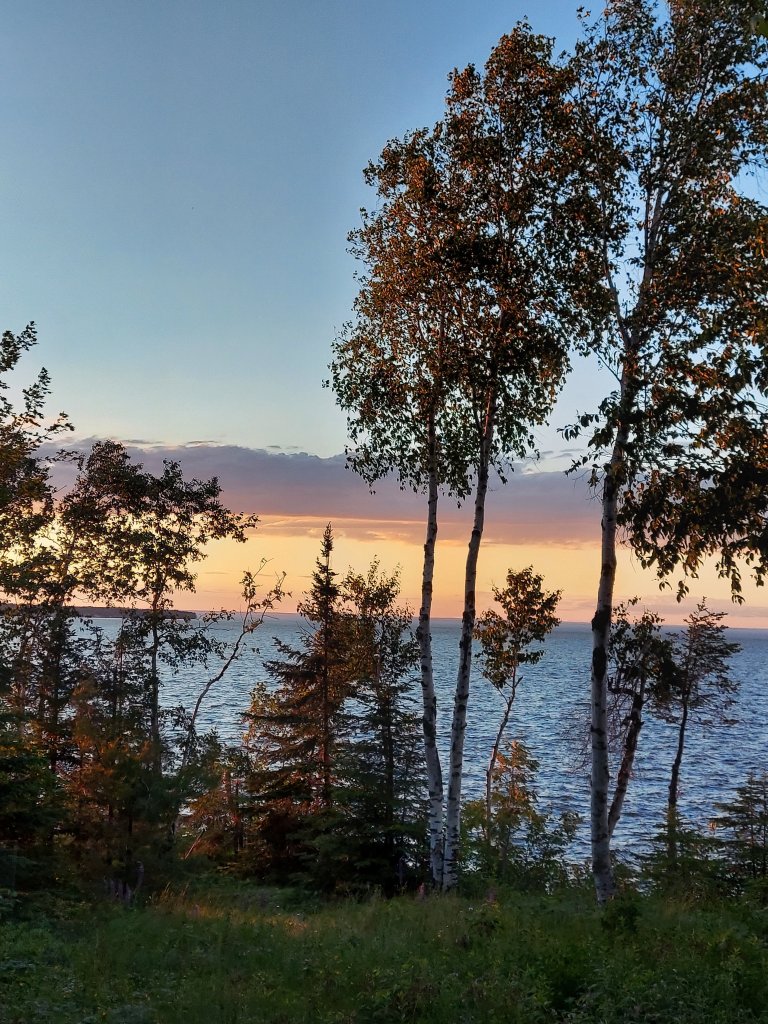
I am sorry to see the month of July come to an end. Lake Superior keeps the hot temperatures to the south, and the temperature has been comfortable, but the lake has been unusually cold.
It has been an incredible summer for birds. The singing has now somewhat subsided, but in early summer we were thrilled to hear many birds singing we hadn’t heard for a few years. Mornings were so pleasant with purple finch, red starts, song sparrows, chestnut sided warblers, Northern parulas, and red-eyed vireos belting out their beautiful songs. Even though the singing has now subsided, we have an active crowd of baby birds trying to fill their hungry stomachs. Red starts and song sparrows were underfoot as I worked in my garden.
Many birds nest here because we have so many insects and caterpillars to feed their babies. This week we had many birds trying to eat the ripe elderberry berries. Today we had flickers, downy woodpeckers, chickadees, and cedar wax wings trying to hover and snatch one of these delicious berries. I’m sure they wish they could hover and fly like the hummingbirds.
The hummingbirds think they are king of the mountain. Life is a game to them as they wiz around. Even though they are the smallest they are the most aggressive and most visible. Their assertive behavior is entertaining as they are protect “their food.” I am sure the baby hummingbirds are learning from mom how to behave and survive.
Monarch butterflies visit daily
The number of butterflies has also subsided since early July, but a monarch makes a daily pilgrimage to our yard visiting the milkweed. Unfortunately, butterfly caterpillars don’t survive long because there are many baby birds to be fed. I hope that some survive as butterflies,
An American Lady caterpillar on pearly everlasting, it probably became bird food!
Spring arrives and shakes us out of all the darkness in our world! After a violent storm last night, I was worried about migrating birds and butterflies. Somehow, they manage to arrive and today I was treated to my first Painted Lady butterfly, a hummingbird, wrens and a Swainson’s Thrush.
Native plants create healthy food, homes and a resting spot for birds and butterflies.
It’s World Migration Week! On this big week of migration what can you do to create a healthier and friendlier environment? Find the migration happening in your county here: BirdCast – Bird migration forecasts in real-time
Would you like your yard to be a resting spot for nature? My yard is for the birds. First, we never use chemicals as we try to create bee, butterfly and bird habitat. Lawn chemicals aren’t healthy for people and they sure aren’t healthy for wildlife either. Native plants do not need chemicals so they are a win-win. Start small, with easy to grow wild geraniums, bee balm and asters. These three plants will get you blooms in the spring, summer and fall, and they will bring joy to you and wildlife.
Bee balm is a magnet for birds, bees and butterflies!
“We can no longer simply “let nature take its course” and expect the return of productive ecosystems. Humans have meddled in too many ways that prevent nature from healing itself. We have introduced over 3,400 species of invasive plants to which local wildlife is not adapted, and we have eliminated the top predators that used to keep deer, raccoon, skunk, and possum populations in check. If we remove an essential part of an ecological community, we must replace it through active management or the system will collapse.” Doug Tallamy
My third idea for a healthy yard is creating a bee yard, and they are beautiful right now. The flowers of a bee lawn provide food (nectar and pollen) for pollinators. Bee lawns are environmentally friendly because they are managed using low-input methods that generally use less fertilizer and pesticides. Bee lawns can still be used recreationally by your household like a regular lawn. A bee lawn can attract over 50 species of native bees.
Oak trees are the best for wildlife. Many species of animals, birds, butterflies and insects use oak trees for food and shelter. Entomologist Doug Tallamy says native oaks are the most powerful of all for our environment. oaks: the most powerful plant of all, with doug tallamy – A Way To Garden
Trees do a lot for us. The invigorating feel we get when out in nature improves our health. Trees help clean the air, capture carbon, create homes, shelter and food for wildlife. Trees stop erosion, help manage flooding, and their shade can help cool our homes and our bodies!
Trees remove carbon dioxide from the atmosphere through photosynthesis and store carbon in their wood. The older the tree, the more climate benefits it provides. The shade from trees also lessens the need for cooling in buildings, which reduces carbon dioxide and other pollutants from power plants.
For example, an oak tree with a 20-inch diameter – big enough that an adult could barely wrap their arms around – reduces carbon in the atmosphere by about 1,000 pounds annually. The energy that tree saves is enough to charge your smartphone about 55,000 times!
Trees provide many additional benefits. That same tree near a single-family home provides overall benefits of about $200 per year by increasing the property value, conserving electricity, intercepting and filtering stormwater, and improving air quality. Imagine the benefits multiplying for each tree in your neighborhood! Hennepin County
Learn more about the climate fighting power of trees and find a list of trees that can thrive into the future on Hennepin County’s Climate Action website.
How does climate change threaten birds, and how does planting natives help?
“Our warming world poses profound challenges to conservation. Audubon’s report “Survival By Degrees: 389 Bird Species on the Brink,” published in October 2019, found that as many as 389 out of 604 bird species in North America could be at risk of extinction due to rising temperatures. Learn more at climate.audubon.org. The report showed that in order to protect birds, we need to reduce the emissions that cause the warming and protect the places on the ground that birds need now and in the future. Planting native grasses, trees, and shrubs does both. First, replacing lawns with native plants lowers the carbon produced and water required to maintain them. And native gardens also help birds be as strong as possible in the face of the climate threat—by providing food, shelter and protection. Native plant patches—no matter how small—can help bird populations be more resilient to the impacts of a warming world.” Audubon.org
Celebrate April by spending time outside, pick up litter, and use less plastic. See if you can spot a butterfly or hear birds singing. Plants are sprouting, enjoy! Actions for Happiness has an Active April calendar. Happy April!
Native plants and trees create their own living ecosystem. The plants, wildlife, birds and 🦋 butterflies all work together to support a thriving environment.
The fall and winter seasons are no different . Birds eat the seeds off my native plants all fall and winter. Leaf litter contains habit and hiding for moths, butterflies and other wildlife. So what do we do with all this leaf litter?
These are my leaf litter suggestions:
— keep your sidewalks, driveways, and streets free from leaves. Lakes and rivers are polluted by too many leaves flowing into storm drains which drain into Lakes and streams.
–Leave you plants standing until spring, they also add food and habitat.
–Never use a leaf blower, they are too hard on everything your ecosystem is creating.
–Gently rake leaves into your gardens. This is wonderful mulch and plant protection. Leaves nurture the soil.
–Winter and spring garden surprises will create joy. Watch for birds, wildlife, and early insects.
–Cut plants off in the spring and work the leaves into your soil.
Ruffed grouse scare me as they fly up as I walk into my yard. A flock of juncos fly into our yard, robins are devouring the Mt. Ash berries, yellow-rumped warblers are diving to eat flies off our house. The nuthatch and blue jays are emptying the feeder, the goldfinch are munching on something in a dead white pine, and woodpeckers are busy making their marks on trees. Yes, it is October on the big lake and we are all getting ready for the winter months ahead. All the energy and activity makes us happy.
For many days thick Fog hung thick over the lake signaling the drought has subsided and rain is again common. After many dark days the sun is welcome
Beautiful October
It has been an unusual Superior Views summer with a sun that seemed more intense than usual, and winds off the lake that were calmer than most summers. Sadly, wild fires from Canada and Northern Minnesota polluted the air quality for weeks at a time.
The warmer than normal summer changed the pattern of the plants and trees. The leaves turned earlier than normal and the flowers bloomed weeks earlier than usual. Actually, I think the native plants and flowers enjoyed the warm temperatures and milder winds, but the trees suffered with the heat and drought.
Lake Superior is not for sale! A local resident is trying to sell ground water for profit.









 Health4earth