How Can We Embrace Water?

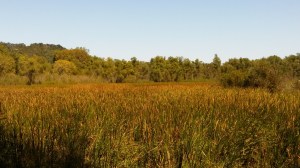
Wetlands along the Mississippi River

The earth has a natural balance. The prairies, lakes, wetlands, deserts, mountains and oceans and rivers all work together to provide food and habitat for living things. Unfortunately, some places have gotten out of balance. Some areas are suffering terrible drought, and others have more rain and water than they can manage.

Building cities, driveways, parking lots, and roads changes the earth’s balance. What had been surfaces that were pervious, water drained through, are changed into impervious surfaces, that do not drain.  Wetlands have gotten the shaft the past 200 years taking away the natural healing for our earth. Farmers have drained the wetlands to be used for agriculture and cities have drained and paved over these valuable places that naturally clean our water and provide homes for so much wildlife. When you build a city on a wetland you take away the natural ability to drain the area. You also destroy the dynamic life that lives there.

Houston sits on a wetland. Without any regulation parts of Houston were built on a wetlands. The concrete and asphalt took away the earth’s drainage capacity. The original wetland wants to flood, that’s what it is supposed to do, but all the hard paved surface has left only small patches of ground to drain the water and guess what? You have a flooded area.

How can Houston embrace their water? I hope that as Houston rebuilds from Hurricane Harvey they will work to maximize pervious areas, areas that drain, and limit the concrete and asphalt. It is impossible to plan for a 50 inch rain, but with some good science and skilled planning, some houses and many lives can be saved.  Regulation and good minds are needed instead of a “Do what you want” attitude.  I hope the people of Houston will try!   It is so wasteful and expensive not to try to change the way they do things.

Areas need to be created that capture the water so it drains into the earth not into the rivers and streams. Run-off creates polluted water.  The earth naturally cleans the water as it is absorbed by the earth.  I hope Houston is willing to replace some concrete with renewed wetlands and rain gardens that will keep such destruction from happening again! Homeowners could be required to install pervious or permeable driveways or gardens that absorb water, or some area on their property that absorbs a percentage of water. See permeable driveways for ideas.

I heard one Houston homeowner on the radio, his house had flooded 3 times in the past 5 years.  It is insane to keep doing the same thing over and over and expect a different result!  Maybe we can all learn something from New Orleans. See below.

After fighting water New Orleans is starting to embrace their water problem with a new paradigm. I hope Houston can learn from them. Read about it at New Orleans.

Also, Mayors along the Mississippi River are embracing wetlands to improve water quality and this will help New Orleans and the Gulf of Mexico, also! Read about at wetlands.

Houston, it’s your turn!  Wetlands can soak up lots of flood water. Can you do things differently this time around? Start listening to the scientists, engineers and environmentalists.

Houston helped put a man on the moon. Houston is the leader in the medical field. It could also begin to be a smart, resilient city if it puts its mind to it. That’s all it’s got to do. Read more at Houston.


Scientists, other experts and federal officials say Houston’s explosive growth is largely to blame. As millions have flocked to the metropolitan area in recent decades, local officials have largely snubbed stricter building regulations, allowing developers to pave over crucial acres of prairie land that once absorbed huge amounts of rainwater. That has led to an excess of

Filling the Swamp with Plastic

Plastic breaks into tiny pieces, wildlife thinks it’s food, and it might last forever!

Humans have created 9 billion tons of plastic since 1950 and most of this plastic still exists on earth. Only 9 percent has been recycled, and 11 percent incinerated. That leaves 80 percent of the plastic ever produced floating around in our waterways, poisoning fish, or releasing chemicals in landfills. As citizens of this planet we should be doing everything we can to reduce the amount of plastic we use.

There were two sad set-backs for plastic in our environment this past week, and both were pandering to big business and lobbyists, or “filling the swamp”.

First, our national parks had made an effort to begin banning plastic water bottles, but the new deputy secretary of the interior, with ties to the plastic bottle industry, changed the policy. Read about it here.

Second, on what should have been an easy issue, the Minneapolis City Council tabled a five-cent fee to be placed on plastic bags. The lobbyists and the plastic industry wins over our lakes and streams.

Never should plastic have been allowed to be produced without a plan to dispose of it. Sixty-seven years later plastic manufacturers and lobbyists are thriving, and elected officials continue to “fill the swamp” taking campaign money from them.  If our parks and cities don’t lead by example our environment lacks places it can turn for leadership!

Please do what you can to reduce your plastic foot-print!

Simple ways to reduce your plastic pollution:

Bring you own bag
Bring your own bag
  1. Start simple and add one idea at a time
  2. Bring your own shopping bags
  3. Buy bulk and refill your own containers
  4. Don’t purchase bottled water
  5. Say “No” to straws, plastic spoons, forks, and knives
  6. Always choose glass containers over plastic!
  7. Never purchase products packaged in Styrofoam (Be aware of meat and produce trays)
  8. Recycle, recycle, recycle and reuse.


The Ugly Face of Plastic

Bring your own shopping bag

Plastic came into being about 1950. It is lightweight and easy to make into many things. Unfortunately, plastic is awful for our wildlife and waterways. Both are choking on this ubiquitous plastic pollution.
What are microplastics? They are tiny pieces of plastic that come from our clothes, plastic litter, and synthetic fibers. Read or listen to the entire story at MPR.
At the present these plastic particles are too small to be strained out of our water treatment plants so they end up polluting our waterways, lakes and oceans. There is a new laundry bag you can purchase (see below) that will filter the microfiber when you wash your clothes.

I love this list from MPR:

5 things you can do to reduce microplastic pollution

  1. Cut back on consuming single-use plastic products such as shopping bags, Starbucks cups and plastic utensils. Replace them with reusable items like travel mugs, silverware
    Microplastic in fleece is causing water pollution!

    and cloth bags.

  2. Buy only facial scrubs, toothpaste and other personal care products made with natural exfoliants, such as oatmeal and salt.
  3. Buy clothing made of organic or natural materials rather than synthetic fibers. Buy only what you need, and invest in higher-quality items so you don’t need to replace them as often.
  4. Don’t wash your clothes as often, especially items made from synthetic fabrics like fleece jackets.
  5. Invest in a mesh laundry bag, guppy friend, designed to capture shedding fibers during the washing cycle. Read about guppy friend here.


What Unites Us?

“I see it as a hopeful sign that this eclipse captured the nation’s attention. For all that divides us, we are passengers on a global journey – together.” Dan Rather

As I attend reunions and talk with people who I see every few years, I think about what we have in common? What do we have to talk about in this politically charged climate? This morning I was struck by a moderate journalist, a meteorologist, talking about what we can all agree on? His thought was that clean energy, less pollution, cleaner water, and good paying jobs were things we could unite behind.  These are some of the top issues on this blog and things I am passionate about.  It would be a dream come true if we could agree on solutions for water and air pollution.

Front CoverDan Rather has written a new book on the same topic, “What Unites Us?”  He focuses more on our patriotism. Read about it here.

What do you think? What are issues we can rally around and find some common ground solutions?  Are clean water and clean air something for which we can find sustainable solutions?  What do you think can unite us?

Lake Superior Day

Keep Lake Superior Beautiful!

Lake Superior is an amazing beautiful lake. It is the largest and coldest of the Great Lakes.

Today is a typical sunny summer Lake Superior Day with cool winds blowing across the lake from the Northeast.   I am celebrating Lake Superior Day by picking up trash along the roadside, not driving and loving the birds, plants and butterflies that are part of the big lake’s habitat. The eagles, sand-hill cranes, humming birds, red-starts, and white-throated sparrows are a total joy. This morning we saw lots of skippers, common wood-nymphs and white admirals.

The below ideas for protecting our lakes is from the Superiorforum.org , Sigurd Olson Institute, Northland college, and the EPA, and Great Lakes Restoration Initiative:
1 .Be conservative with your water use.
2. Recycle as much as you can with the 4 Rs: reduce, reuse, recycle and repair. And….NEVER burn trash.
3. Curb Yard Pollution. Put your lawn on a chemical-free diet!!
4. Stop aquatic invasives by cleaning plants and animals off your boat.
5. Plant native plants, and reduce turf grass.
6. Plant native trees According to Audubon, oak trees are the best for attracting insects and birds.
7. Install a rain barrel
8. Create an energy-efficient home.
9. Bring hazardous waste to waste collection sites.
10. Love our lakes!

I would add a few more:

  1. Plastics have become a big problem for our waterways.  Reduce plastic use and be sure any plastic-use is recycled. Also remember to say, “No straw please!”
  2. Micro-fibers in our clothes also are polluting our waterways. As of yet there isn’t a good solution. Read about micro-fibers here.
  3. Always pick up litter, and recycle it if possible.
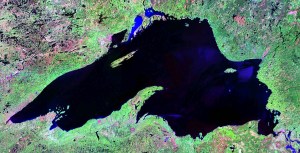
NASA picture of Lake Superior

What causes all that algae?

The substances that turn our lakes and rivers green each summer come from our lawns and yards. We think of leaves as waste, but to a lake they are food. The algae in lakes love leaves and fertilizers, and when we feed lakes too many chemicals and leaves, algal blooms turn our lakes and rivers green and smelly. Protecting water is everyone’s job What can you do? Simple–remember the land/water connection! What we do to the land we do to the water. Reduce chemicals, clean your streets when the leaves fall from the trees, and when you mow the grass clean your streets and sidewalks. Keep our lakes and rivers clean.

Chemical Weapons

We have an administration in this country that has shown it doesn’t care about the health of the American people.  It is working hard to take away health care from our nation’s most vulnerable, allows industry to pollute our precious air and water, and has left the Paris Agreement which is a teamwork agreement with 175 other countries to work on climate change.  But when this administration  speaks out, it speaks out about the Syrian people which they have banned from entering The United States?  All this is impossible to make sense of, but the below letter to the editor had a lot to say:

CHEMICAL WEAPONS from Startribune.com

There are two kinds: Syria’s, and those sprayed on food

The hypocritical attitudes of the current administration in Washington were clearly depicted on Page A4 of Wednesday’s Star Tribune with the juxtaposition of two news stories.

One article notes the White House’s warning that the Syrian regime would “pay a heavy price” if it used chemical weapons against its own people. The next article describes the EPA’s reversal of the ban on spraying chlorpyrifos on food in our country.

The EPA’s own studies have proved that chlorpyrifos harms children’s brains and that pregnant mothers “ingesting even minuscule amounts” can interfere with babies’ brain development. Is there a connection between this chemical and the 78 percent rise in autism in the last decade?

Why would EPA Administrator Scott Pruitt side with Dow Chemical rather than the American Academy of Pediatrics, whose 66,000 members are deeply alarmed with the decision? Could it be that the $13.6 million Dow spent lobbying last year or the $1 million donated to President Donald Trump’s inaugural influenced Pruitt’s decision?

The big question to be answered: Why is the White House outraged by the Syrian children being sprayed with chemicals while allowing chemicals to harm American children? Just whom is the Environmental Protection Agency protecting?

Kathleen Ziegler, Lino Lakes

Information from Earth Justice on chlorpyrifos

A Simple Idea to Improve Water

How can you keep rainwater in your yard?

It’s raining where I live. Do you ever wonder where all that rainwater goes? Our earth naturally manages rainwater, drainage, and wetlands, and it is able to naturally purify and clean our water. Unfortunately, we created an impossible situation with our concrete urbanization and all the chemicals we use. Instead of allowing the rain to fall and soak into the ground we get it away from our houses and buildings as fast as we can sending water rushing down our storm drains into our lakes and rivers. As this water cascades over concrete and asphalt it picks up chemicals, pollutants, trash, lawn clippings and leaves which wash into our lakes, rivers, and oceans.

This is a classic example if everyone were to do just a bit to give some of this natural cleaning back to the earth, it would make a big difference in our water quality.

No one wants a wet basement, so always keep water 10 feet from your house or apartment, but beyond the 10 feet you can do many water managements things with a few flexible downspout extensions which you can purchase at hardware stores.

Below is an excellent blog from the Mississippi Watershed Management Organization on a very simple way to use some of the water running off your home, and making a big difference for water quality.


From the Mississippi Watershed Management Organization : “Your goal, as an eco-friendly house-dweller, is to soak as much of that water into the ground as possible. The soil will filter out the pollutants and the water will move downward until it reaches the water table. As a bonus, any plants, trees or other vegetation in the area will soak up a portion of the water to use as fuel.”  Read the entire blog here.

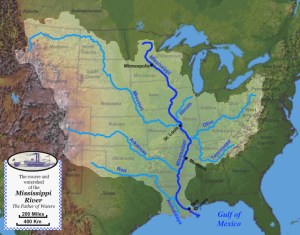
The Mississippi River Shed drains much of the United States

The same thing can be accomplished on agricultural land that uses buffer strips of trees and deep-rooted plants along ponds and streams.   These buffer strips absorb the chemicals!  The Gulf of Mexico thanks you! Read at Gulf

Everything Is Connected

The Mississippi Watershed by Jon Platek This how trash can reach the ocean.

This morning while walking around the lake by my house, I was sad to see plastic bottles bobbing around in the lake. The amazing thing is that those plastic bottles from a lake in land-locked Minnesota could end up in the Gulf of Mexico. 80% of marine litter originates from land. The Minnehaha Creek drains this lake into the Mississippi River, which flows into the Gulf of Mexico. Plastic in a Minneapolis lake, could float the Mississippi River into the Gulf of Mexico, these plastic bottles and bags are a dangerous threat to marine life, and they are unpleasant to water recreation.

I am sure you know most of the ways to avoid plastic, but you might learn something from this list on reducing plastic use. The excellent list below is from the NRDC https://www.nrdc.org/:

“Plastic, of course, is uniquely problematic because it’s nonbiodegradable and therefore sticks around for a lot longer (like up to 1,000 years longer) than other forms of trash. And we’re not just talking about people dumping their garbage overboard. Around 80 percent of marine litter actually originates on land—either swept in from the coastline or carried to rivers from the streets during heavy rain via storm drains and sewer overflows.

So the best thing we can do to protect our waterways is trying to keep as much plastic as possible out of the waste stream in the first place. The good news? There are many small ways you can have a big impact. The NRDC has ten important ways to reduce your plastic footprint:

1. Wean yourself off disposable plastics.

Ninety percent of the plastic items in our daily lives are used once and then chucked: grocery bags, plastic wrap, disposable cutlery, straws, coffee-cup lids. Take note of how often you rely on these products and replace them with reusable versions. It only takes a few times of bringing your own bags to the store, silverware to the office, or travel mug to Starbucks before it becomes habit.

2. Stop buying water.

Each year, close to 20 billion plastic bottles are tossed in the trash. Carry a reusable bottle in your bag, and you’ll never be caught having to resort to a Poland Spring or Evian again. If you’re nervous about the quality of your local tap water, look for a model with a built-in filter.

3. Boycott microbeads.

Those little plastic scrubbers found in so many beauty products—facial scrubs, toothpaste, body washes—might look harmless, but their tiny size allows them to slip through water-treatment plants. Unfortunately, they also look just like food to some marine animals. Opt for products with natural exfoliants, like oatmeal or salt, instead.

4. Cook more.

Not only is it healthier, but making your own meals doesn’t involve takeout containers or doggy bags. For those times when you do order in or eat out, tell the establishment you don’t need any plastic cutlery or, for some serious extra credit, bring your own food-storage containers to restaurants for leftovers.

5. Purchase items secondhand.

New toys and electronic gadgets, especially, come with all kinds of plastic packaging—from those frustrating hard-to-crack shells to twisty ties. Search the shelves of thrift stores, neighborhood garage sales, or online postings for items that are just as good when previously used. You’ll save yourself a few bucks, too.

6. Recycle (duh).

It seems obvious, but we’re not doing a great job of it. For example, less than 14 percent of plastic packaging is recycled. Confused about what can and can’t go in the bin? Check out the number on the bottom of the container. Most beverage and liquid cleaner bottles will be #1 (PET), which is commonly accepted by most curbside recycling companies. Containers marked #2 (HDPE; typically slightly heavier-duty bottles for milk, juice, and laundry detergent) and #5 (PP; plastic cutlery, yogurt and margarine tubs, ketchup bottles) are also recyclable in some areas. For the specifics on your area, check out Earth911.org’s recycling directory.

7. Support a bag tax or ban.

Urge your elected officials to follow the lead of those in San Francisco, Chicago, and close to 150 other cities and counties by introducing or supporting legislation that would make plastic-bag use less desirable.

8. Buy in bulk.

Single-serving yogurts, travel-size toiletries, tiny packages of nuts—consider the product-to-packaging ratio of items you tend to buy often and select the bigger container instead of buying several smaller ones over time.

9. Bring your own garment bag to the dry cleaner.

Invest in a zippered fabric bag and request that your cleaned items be returned in it instead of sheathed in plastic. (And while you’re at it, make sure you’re frequenting a dry cleaner that skips the perc, a toxic chemical found in some cleaning solvents.)

10. Put pressure on manufacturers.

Though we can make a difference through our own habits, corporations obviously have a much bigger footprint. If you believe a company could be smarter about its packaging, make your voice heard. Write a letter, send a tweet, or hit them where it really hurts: Give your money to a more sustainable competitor.” NRDC

I would add one thing to the list. Never use Styrofoam! Some stores package fruits and vegetables on Styrofoam trays! Awful.

Finally, current status of the Mississippi River in the Twin Cities from Friends of the Mississippi.