A month ago I spent a couple of weeks in Germany, and was I impressed! Other Americans I talked to shared my thoughts of awe with Germany. First they take care of their infrastructure. They maintain their roads, trains, bike lanes, public transport, even restrooms reach a high standard. As I enjoyed riding trains through the countryside, I saw many solar farms and some wind farms. Renewable energy has overtaken coal consumption in Germany.
Dresden Bohnhof
There is no litter in Germany. A twenty-five cent deposit is charged on plastic bottles. Germany leads the world in recycling. It’s just natural for Germans to be good to the Earth, and it is hopeful that when you do things right it does lead to success. Yahoo, awesome Germany!
Twenty-five cents for returned plastic bottles
More good news stories:
** Oklahoma has changed their mowing along highways to help the monarch butterflies.
** Starbucks and Seattle are ending their consumption of plastic straws, and Penzance, Great Britain has become a plastic-free town.
** California has already made their green energy goals for 2020.
The interviews and stories make for an interesting read.
The Great Lakes are the largest body of fresh water in the world. This is a review of the award-winning book, Death and Life of the Great Lakes, by Dan Egan.
The pristine Great Lakes had always been isolated from other bodies of water, but all this changed with the building of canals in the 1800s. Then in 1959 the Saint Lawrence Seaway opened. This is a riveting account of what has happened to the Great Lakes and other lakes in the United States and Canada since the Great Lakes became an avenue of world commerce and transportation.
Death and Life is a must read for individuals that care about the quality of our water, fishermen and women, and every environmental decision maker. I was thrilled my local book club picked it to read, and excited when the New York Times/PBS Book Club chose it as well.
Lake Superior, Lake Michigan, Lake Huron, Lake Erie, and Lake Ontario make up the Great Lakes on the border of the United States and Canada. Photo: National Weather Service, Buffalo
The author, Dan Eagan, a reporter for the Milwaukee Journal Sentinel, has thoroughly researched and interviewed many of the decision makers and citizens involved. Why did they make the decisions they did? I was surprised how many of them were still living to tell their stories and defend their decisions. He has put their stories together to tell an interesting narrative.
Why would species from the Black Sea and Caspian Sea thrive in Lake Michigan? We have learned so much during the past thirty to fifty years about invasive species. I remember how surprised I was when I first learned about invasives. A new world opened! The learning curve has been steep for us, and even if you don’t read this book I encourage you to read about invasive species to learn the harm they do. Eagan delves into the sea lamprey, alewives, zebra mussels, coho salmon, Asian carp, and others that have thrived in this new environment, the Great Lakes, without any predators to control their numbers. Then there are the native lake trout that are native to the lakes, but they are too boring??
Fascinating was the Great Black Swamp that filtered run-off and helped keep Lake Erie clean. Like so many of the wetlands and swamps of the past, our ignorance couldn’t understand their purpose, so drainage began and we have new fertile farmland. Today the farm run-off creates the perfect conditions for toxic algae blooms threatening the drinking water taken from Lake Erie. Interesting stories continue as Egan interviews farmers, and those working to mitigate the effects of farm run-off.
The summer of 2017, a very rainy summer on Lake Superior, I was surprised by reports that for the first time Lake Michigan had better water quality than Lake Superior. The high water level of Lake Superior and the run off from the streams had caused a rusty-brown lake. You will have to read Dan Eagan’s book to discover why Lake Michigan now has cleaner water, and if this is a good thing?
Dan Egan leaves me hopeful. I think he believes, as do I, the earth is capable of healing itself to some extent if left alone to find its ecological balance. It is hopeful that Lake Huron has begun to heal, and that the white fish are adapting to eat zebra mussels. I hope a 10 year sequel is on the writing-table soon.
And finally a quote from the book, “A thing is right when it tends to promote the integrity, beauty and stability of the biotic community.” Aldo Leopold
A link to Dan Egan’s appearance on the PBS NewsHour:
“Huge news out of the UK today that major supermarket chains and companies are committing to a five-year plan to eliminate plastic pollution, especially in packaging. The video in this article also contains some great tips for personally moving beyond plastics.” Earth911
The Minnesota Legislature is debating preemption laws to keep cities from banning plastic bags and Styrofoam containers. Other legislatures throughout the country are prohibiting cities from banning plastic. In the United States we can’t depend on lawmakers to do what is best for our earth, so we must responsibly choose to do the right thing ourselves. See poster below. I would add to this Bristle poster, Never purchase products in Styrofoam.
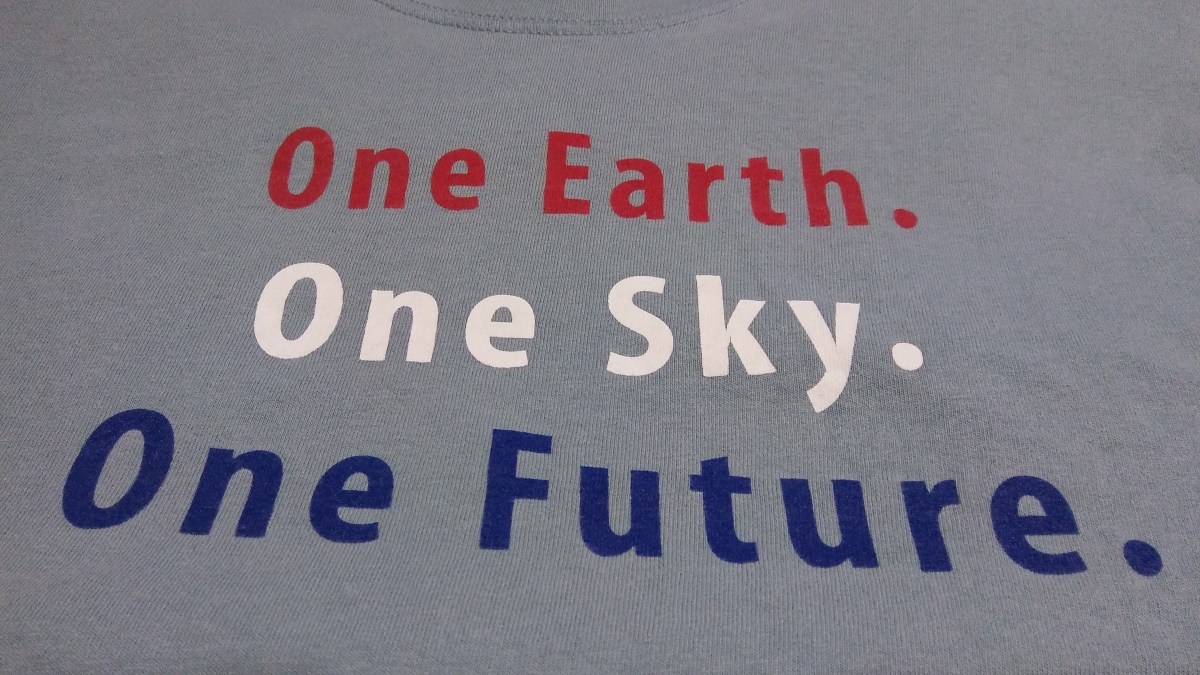
My message for you on this Earth Day is, “Young people want a livable future!” All of us can make a difference for that future. Not just on Earth Day, but everyday!
If we continue the path we are on with plastic pollution, we will have more plastic in the ocean than fish by 2050. Business lobbyists are working hard to make sure we use plastic products. Laws are being passed to stop cities and counties from banning plastic bags and plastic/Styrofoam containers. We are in a sad place when the lobbyists have more power than the common good of everyone. These lobbyists make me more determined than ever to boycott their awful plastic products.
Nice screw-top glass bottles that I can reuse forever! #reusable
What are some ideas to reduce your plastic use? Here is an excellent article from Minnesota Public Radio(MPR) on what you can do about plastic pollution. When a plastic product comes your way, ask yourself: Do I really need this, or can I use something else? Chances are you can say no, and yes.
Each one of us can make a huge difference. On Earth Day 2018 set a simple goal for yourself, something that is easy to do. Maybe just keeping your reusable bags in the trunk of your car, or refilling olive oil and balsamic vinegar bottles at your local grocery. Maybe refusing to purchase anything in Styrofoam or never again using a plastic straw. You know your situation, what works for you?
Make sure your environmental goal is easy to accomplish, and something you have a passion or interest to accomplish. Remember, our youth want a livable future.
There are always new things you can purchase in bulk, instead of plastic. My newest way to avoid plastic using bulk hemp seeds to make hemp milk . Trying to reduce one plastic container at a time!
Everyday 500 million straws are used and thrown away in the United States. Many end up in the ocean where they do lots of harm. Watch Gutsy Grackles video
Everyday there is a new report about the world’s terrible problem with plastic pollution. How did we ever get to this point where plastic pollution is everywhere and so harmful? A world summit is needed to manage this problem. The plastic bottle manufacturers need to be held responsible, but all of us are to blame for the amount of plastic we purchase.
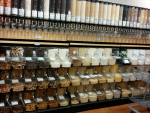
Some co-ops and grocery stores have fabulous selections of soaps and oils to refill your bottles
Everyone uses plastic and we are all to blame! Plastic is used and thrown away by the wealthiest and poorest people on our planet. It is almost impossible to avoid. I have been working on reducing my plastic for years and become better every week at eliminating and evaluating what I purchase. Twice a week I take by reusable bottles to food coops and refill with bulk items. I reuse plastic produce bags over and over and think “zero waste” as I shop.
Plastic manufacturers should never been allowed to make a plastic product that might last 500, maybe forever. Elected officials should have put some regulations on them. From Greenpeace: “So what needs to happen is that these changes must come from the top — multinational corporations like Coca-Cola and Nestle need to be held responsible and switch their single-use packaging to more sustainable options, but we also need to acknowledge our responsibility when we choose those products.” Tamara Adame
Say “No” to plastic bags!
The Great Pacific Garbage Patch (GPGP) floating off the coast of California now measures 1.6 million square kilometers (about 1 million square miles), according to a startling new study. It is 16 times larger than previously thought, and growing! To put that into perspective, the clump of trash is about the size of three Frances, or twice the size of Texas.
What are you doing to reduce your plastic pollution??
April is always, “Pick up litter” month. Can you get outside everyday and pick up at least one piece of trash for the 30 days of April? I challenge you to join me. On my daily walks I pick up litter.
Also, Action for Kindness has a new calendar for Active April. Have fun, be happy, be active, and help our earth. http://www.actionforhappiness.org
A dry river bed in the heart of Tehran. Water is more valuable in Iran than oil.
How much water do you use? We expect clean water when we turn on the faucet and forget that not everyone has lots of water. Not only Cape Town but three American cities could face severe water shortages soon.
Water is a valuable resource and the purpose of this post is for us to become aware of the amount of water we use. We are unaware where our water comes from and the chemicals with which we pollute it. Every time we turn on the tap we should think about the amount of water we use, and be thankful for clean drinkable water.
I am on a road trip through the southern part of the United States. Arkansas and Louisiana are dripping with water puddles overflowing streams, trees standing in water, wetness and mud everywhere. Oklahoma and Kansas are overcome with drought and wild fires. I realize some of this is normal for these areas, but not these extremes.
Budget cuts keep a running faucet from being fixed. Is there a volunteer to help?
Whether we live where it is wet or dry we should heighten our awareness of the amount of water we use. It is ridiculous to stay in a hotel where the water drips all night, and when informed they will usually write-up an order to try to get it fixed.
I was at Louisiana State University, and it was impossible to turn off the faucet in the restroom. When I reported the faucet to officials they said it had been like that for a while, “Budget cuts keep it from being fixed!” they told me. Could a volunteer near Alexandria, Louisiana fix that faucet? Constant running and wasting of water makes no sense!
With climate change many believe the wars of the future will be about water. Think about it, everyone making small changes and reducing the water they use can make a big difference! Earth911 has good ideas to reduce water use, but should also add, fix those leaky faucets and toilets. Read here ways to reduce water use. https://earth911.com/home-garden/conserving-water-at-home/
Everyone making small changes, can make a big difference!
Styrofoam/polystyrene. It is breaking into small pieces and could last forever!
Imagine eating or drinking your coffee/tea or dinner out of a Styrofoam container. ICK! I can’t imagine, but many people do??? Styrofoam makes food taste terrible, and it is made from cancer causing material. Why would you eat/drink from it?
I am on a road trip through the southern part of the United States. Styrofoam is just the normal at many food establishments. Places I refuse to patronize.
Not only is Styrofoam unhealthy to eat on,
How can we do better than this? We need a sustainable alternative
it is awful for the environment. It breaks down into tiny pieces harmful to oceans/lakes, water animals and fish that think it is food.
Unfortunately, Styrofoam has powerful lobbying interests behind it, people who don’t care about your health or the health of our waterways.
Beth Terry, author of My Plastic-Free Life, wrote this terrific guide explaining how producing and using plastic pollutes the air. When it comes to the foamy Styrofoam in particular, here are some other objections to using it:
It does not biodegrade. It may break into small pieces, even minuscule pieces. But the smaller EPS gets, the harder it is to clean up.
It is made of fossil fuels and synthetic chemicals. Those chemicals may leach if they come in contact with hot, greasy or acidic food. Yes, they keep your coffee hot – but they may also add an unwanted dose of toxins to your drink.
Animals sometimes eat it. Turtles and fish seem to mistake EPS for food, and that can kill them. Not only can they not digest it, but the foam could be full of poisons that it has absorbed from contaminants floating in the water.
It can’t be recycled. Some commercial mailing houses may accept packing peanuts, but for the most part community recycling centers do not accept throwaway foam food containers.
Evidence regarding the sustainability and toxicity of expanded Styrofoam/polystyrene (EPS) single-use containers supports replacing them with a more sustainable and safe material. EPS food and beverage containers are single-use, yet persistent and not economically feasible to recycle. Thus, millions of single-use EPS items are sent to a landfill each day, where they will remain for hundreds to thousands of years. Moreover, its lightweight makes it difficult to manage which is one reason EPS is one of the top litter items found on beaches and in the environment. Lastly, EPS containers may pose a hazard. Some studies have found they can leach chemicals into our food and others have demonstrated that their leachate is toxic to laboratory animals. Replacing EPS with a more sustainable material supports a healthy environment for both wildlife and people.
So what can you do?
I boycott places that use Styrofoam, but that might not be possible for you. 1.Bring your own container, or ask for a real plate, many places can provide that for you! 2. Tell establishments how awful their packaging is. 3. Work to get Styrofoam bans in your community 4. Pick up Styrofoam litter so it doesn’t end up in our waterways.
If everyone does a small part, it can add up to a lot! Speak out.