I Love Parks and Monuments!

Battle of Gettysburg, 1963

Earlier this month I took a road trip from Minnesota to Washington, D.C. We traveled the back roads through Indiana, Ohio, and Pennsylvania. Everyday we would stop and hike in a park we came across. It was an amazing experience. Everyday we saw different trees and plants, different landscapes and birds, and a divergent mix of people. It was a lesson in diversity and beauty.
We stopped at monuments, state parks, county parks and national parks. The day we were at Gettysburg, I sat outside and ate lunch at the entrance to Gettysburg, and watched the people as they entered the park headquarters. I was struck by the diversity of people entering. It was a diverse group, of mixed ethnicity, and a range of militia t-shirts to “War is not the answer” shirts. The diversity was so interesting!

Parks and monuments are places we can all come together. They are places the wildlife can thrive, and where we all should feel welcome! In these politically divided times they are a place where everyone can meet, learn and enjoy. Parks and monuments of all kinds are what really show the strength of America! They take you to a history, gratitude and beauty of what our county truly represents.  You leave feeling intense patriotism in your heart! Please support and love these amazing treasures.

To learn more about the battle of Gettysburg click here.

Monument to President Lincoln

And read the Gettysburg Address

Give Your Yard a Dose of Happy

Deep-rooted plants absorb more water than turf grass. Cone flowers, bee balm, and black-eyed Susan

Just making a few adjustments to your yard can make big difference for our climate. If everyone does a little bit, it adds up to a lot! Some amazing statistics on our lawns from “greener lawn” below:

*Grass covers more land in the US than any other crop.

*It’s estimated that there’s up to three times more acres of lawns than corn, according to NASA

Fritillary butterfly on bee balm.

*Homeowners use up to 10 times more chemical pesticides per acre on their yards compared to what farmers use on their crops, according to the U.S. Fish and Wildlife Service.

Some other ideas to slow climate change and help pollinators:

**plant a rain garden

** Add diversity

** Love pollinators

** More on bees an butterflies

Minnesota Public Radio on a “greener” lawn:

Grass isn’t greener

Adding new pollinator plants is not easy if you are a hosta gardener or a new gardener.

I would start small by adding a few of these: purple cone flowers, black-eyed Susan, bee balm, a few asters, and columbine.  I suggest these because many garden stores sell them, they are easy to grow, add diversity, and are loved by pollinators.

We Love Science!

Science is real, it is not opinion. Science can be proven, it isn’t an alternative fact. Business profits rule in this administration, and without help from science, business won’t thrive either.

Can you think of anything in our lives that does not deal with science?   Scientists have gotten us to where we are in civilization, and we still have a long way to go to cure cancer, Alzheimer’s, MS, ALS, heart disease….and the list goes on. Science research must be funded to keep us safe and healthy.

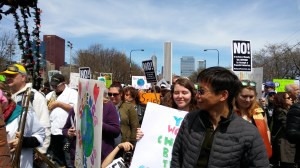
Saturday I marched with 40,000 other people in Chicago saying to this administration , “Science Is Important!” “Business profits don’t keep us healthy” “Fund science research”

Read more about the marches here.


Celebrate Our Earth

Happy Earth Day, I hope you can get outside and enjoy the marvelous spring changes! Go for a walk.

The first Earth Day on April 22, 1970, was a day set aside to think about creating lifestyles to reduce waste and destruction of our environment.

One of the main messages many of us heard that day was that human life can continue on Earth only if people cooperate with nature. Strides have been made over the past 47 years in cleaning up many rivers and lakes, recycling, protecting natural ecosystems, becoming more aware of hazardous materials, and the list goes on. But we have a long way to go if we are to live in a sustainable way in harmony with nature.

There are things to do and things not to do when it comes to being a good steward of our planet, but one of the best may be to take pleasure in the true beauty of the Earth’s ecosystems and its creatures. Too, take time to learn about some of the plants and animals that share the Earth with us. It’s just about impossible to destroy something you understand and love.

Throughout the year, and especially April 22, with the wonders of spring all around us, we should make a point to get out and observe. Every forest, wetland and prairie remnant is full of spring signs — evidence that our Earth is designed as a place for life, no matter what foolish acts people may commit.” Jim Gilbert, Startribune

Five Signs the Climate is Changing

Where I live the climate is clearly changing and impossible to deny.  See the video from Climate Reality on five indicators the climate is changing. View    here. 

Five Changes from Climate Reality:

  1. Air temperatures over land are rising.

It’s clear that weather stations on land show average air temperatures are rising, and as a result, the frequency and severity of droughts and heat waves are increasing. Intense droughts can lead to destructive wildfires, failed crops, and low water supplies, many of which are deeply affecting southern areas of the United States and other parts of the world.

  1. Air temperatures over oceans are rising.

Roughly 70 percent of the world is covered by oceans. So you can understand how hotter air over our oceans could make a big difference in the climate system.

It’s simple, as the air near the surface of the oceans gets warmer, more water evaporates. The result?  Potentially stronger tropical storms, more extreme precipitation events, and more flooding.

  1. Glaciers are melting.

The disappearance of glaciers is one of the clearest signs of climate change. People who rely on melting glaciers for water are facing shortages, and in many regions, the situation is only getting worse.

In a world unaffected by climate change, glacier mass stays balanced, meaning the ice that evaporates in the summer is fully replaced by snowfall in the winter. However, when more ice melts than is replaced, the glacier loses mass. And the people who depend on melting ice for water to support their farming and living needs are deeply affected.

>> Related: The Climate Crisis Deserves Our Attention Right Now <<

4. Arctic sea ice is shrinking.

Satellite images from space show that the area covered by sea ice in the Arctic is shrinking, continuing a downward trend for the past 30 years. As with glaciers, Satellite images from space show that the area covered by sea ice in the Arctic is shrinking, continuing a downward trend for the past 30 years. As with glaciers, there’s a seasonal rhythm (or supposed to be) at work. The Arctic ice cap grows each winter when there’s less sunlight, and shrinks each summer when days are longer and warmer, reaching its lowest point of the year in September.

Previously, this cycle of melting and freezing has more or less balanced out. But with temperatures rising, we’re seeing more ice melt in the summer than forms in the winter. The result is that some research suggests that the Arctic could lose almost all of its summer ice cover by later in the century.

5. Sea levels are rising.

Sea levels have been rising for the past century. And the pace has only increased in recent years, as glaciers melt faster and water temperatures increase (causing oceans to expand). You can imagine how this would affect the almost 40 percent of the US population that lives in a highly populated coastal area. Let’s not forget that eight of the 10 largest cities in the world are near a coast.

Consider how many millions of people are at risk as sea levels rise, storms intensify, and more extreme flooding occurs. Additionally, as sea levels rise, salt water begins intruding into freshwater aquifers, many of which support human communities and natural ecosystems.  From Climate Reality

Even in just the past ten years I have observed enormous changes.  First, it is scary that in ten years we have experience more than five hundred year storms. Second, it just doesn’t get really cold at night anymore. Ticks and other invasive bugs(emerald Ash Bore and others) survive the winters.  Third, we are constantly going from drought to inundation. Fourth, the trees and plants are moving north. Fifth, sadly the wildlife is disappearing. We have fewer song birds, the moose and deer are struggling with disease.

What changes do you see as the climate warms?

Happy Day!

March 20, the first day of spring, and International Day of Happiness !

The latest happiness report is here. Norway is the happiest country with Denmark, Iceland, Switzerland and Iceland in the top five. The United States is 14th on the happiness scale.

What works in the Nordic countries is a sense of community and understanding in the common good,”


Stories to give you Positive Energy

To make the world a better and safer place we must generate positive energy. This is another round of amazing news stories that tell us in what direction the future is moving. I congratulate these countries and communities for their sustainable goals and effort. This is my occasional series on great news stories.  Renewable energy, managing trash and gender equality are some of the positive energy stories of the past week!

1. In September Kenya is going to ban plastic bags. Read about Kenya here.  

2. Georgetown, Texas, a conservative town in oil country is fueled by wind. Wind power saves them money over oil energy.  Read about it at Georgetown

3 Iceland will be the first country in the world to make employers prove they offer equal pay regardless of gender, ethnicity, sexuality or nationality, the Nordic nation’s government said on International Women’s Day. Read about it at Iceland

4. The United States installed a record-smashing 14,762 Megawatts (MW) of solar power in 2016 — a 97 percent jump over 2015, according to data just released. For the first time ever, solar was the number one source of new generating capacity, beating out wind and gas. Read about it at solar power.

5. A water wheel is cleaning up Baltimore’s harbor picking up plastic and other trash. Read at Baltimore

6. Sweden is on target to be powered entirely by renewable energy by 2040. An amazing goal for this dark northern country. Read about at Sweden.

What sustainable exciting things are happening in your community?


Corporate Greed and Our Health

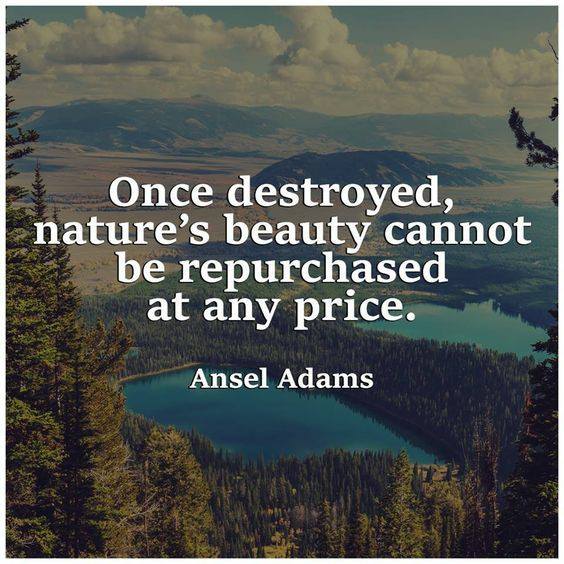
It is horrifying we have to fight our own government to save the

My yard without chemicals

environment” Ansel Adams

We now have a government that is dismantling all protections the American people have from corporate America.  Corporate profits now take priority over the health of people, wildlife and the entire planet earth. The United Nations released a report this week stating how harmful pesticides are to people and the planet.

“The chronic overuse of pesticides across the world has caused “catastrophic” harms to human health, human rights and global biodiversity, according to a report presented to the United Nations human rights council Wednesday.

The UN-solicited study on toxic chemical impacts to global food sources criticizes pesticide manufacturers’ “systematic denial” of the broad harms caused by their products and calls for a transition to healthier farming methods that move away from the current dependence on pesticides.” Read about it here. And more about it from Ecowatch.

And read about the state of our bees from pesticide use and habitat loss.

In his book, Poison Spring: The Secret History of Pollution and the EPA, published in 2014, E. G. Vallianatos, who worked for the EPA for 25 years, wrote:

“It is simply not possible to understand why the EPA behaves the way it does without appreciating the enormous power of American’s industrial farmers and their allies in the chemical pesticide industries, which currently do about $40 billion per in year business. For decades, industry lobbyists have preached the gospel of unregulated capitalism and Americans have bought it. Today, it seems the entire government is at the service of the private interests of America’s corporate class.”

We can only control our corner of the world.  I hope you will think twice before putting pesticides on your yard, and speak out against the use of chemicals in agriculture and in our parks!

Jane Goodall: How Can We Believe It Is a Good Idea to Grow Our Food With Poisons?