A Climatarian diet involves choosing what you eat based on the carbon footprint of the food, and using your power as a consumer to drive down the production of beef and lamb which have the biggest impact on our climate. A climatarian is about eating local food to reduce transportation and reducing food waste.
My easy suggestions on being a Climatarian:
Walk or take the bus to purchase groceries.
Participate in Meatless Monday, and go meatless other days, also!
Eliminate beef and reduce cheese consumption.
Work to reduce all food waste and compost any food waste you have.
Choose minimal packaging, and recycle as much as possible.
Use real dishes, and reuse jars and products.
I love “clean out” the refrigerator stir fry and ideas from Tom Colicchio
The below ideas for protecting our lakes is from the Superiorforum.org , Sigurd Olson Institute, Northland college, and the EPA, and Great Lakes Restoration Initiative:
1 .Be conservative with your water use.
2. Recycle as much as you can with the 4 Rs: reduce, reuse, recycle and repair. And….NEVER burn trash.
3. Curb Yard Pollution. Put your lawn on a chemical-free diet!!
4. Stop aquatic invasives by cleaning plants and animals off your boat.
5. Plant native plants, and reduce turf grass.
6. Plant native trees According to Audubon, oak trees are the best for attracting insects and birds.
7. Install a rain barrel
8. Create an energy-efficient home.
9. Bring hazardous waste to waste collection sites.
10. Love our lakes!
I would add several more:
1. Rain gardens are excellent for capturing harmful water runoff.
2. Keep leaves and trash out of streets and storm drains-Adopt a storm drain!
Love our lakes, rivers and streams. Take care of them!
3. Never use cleaning products or hand sanitizer with triclosan.
4. Reduce all plastic use–If you must use plastic bags and bottles, be sure you recycle them. 5. Pick up all liter.
Minneapolis is a city of lakes. “Walking the lake” is a big deal for most of us, and the lakes are magnets for people from all over the Twin Cities metro area and state. I am impressed with this educational campaign taking place along the walking paths of the Minneapolis lakes.
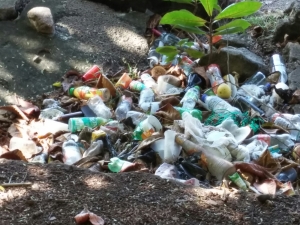
Is this how lakes should look? We all need to do better.
It looks like a thirsty future for the world. The Pacific Standard Magazine has just publish a map of the world’s troubled waters and some of the politics around water. More things you can do to protect our water bodies here.
This morning I was walking a bridge crossing the Big Blue River in Nebraska. Never have I seen a river so full of sediment! The name “Big Blue” was full of irony for me. I know many of the local water sources in this area of Nebraska are poisoned with nitrates, and children should not be drinking this water. Farming areas of Iowa and Minnesota are having the same water pollution problem. The major source of nitrates are fertilizers on farm fields, and farmers are not regulated by the Clean Water Act. We are all guilty of dirty water and can do much better at protecting our waters. The run-off from our houses, driveways and roads are major contributors to our polluted lakes rivers and streams. Farmers need to better, but so do all of us!
10 actions you can take to improve lakes, rivers and streams from Hennepin County.
When it rains, the storm water that runs off driveways, lawns, houses and parking lots can carry pollutants like oil, paint and chemicals down storm sewers and into nearby lakes, streams and rivers. By taking the following easy, no-cost or low-cost steps, you can have a big impact on reducing runoff and protecting our water resources and wildlife habitat. Hennepin County
1. Use your runoff
You can keep water in your yard and reduce runoff by directing downspouts onto your lawn or garden or into a rain barrel. Rainwater is free and naturally “soft,” so it is ideal to use in watering your lawn or garden.
2. Don’t rake grass clippings and leaves into the street
Leave them on your lawn, use them for compost, or bag them up. Grass clippings and leaves left in the street end up in the storm sewer, where they are carried to nearby lakes and streams. Clippings and leaves contain phosphorus and other nutrients that feed algae and other aquatic plants. This can cause excess algae growth that can negatively impact other plants and wildlife and can be unsafe for pets.
3. Scoop the poop
Grab a bag when you grab the leash and pick up after your pets. Pet waste left on the ground can be washed into lakes and rivers with rainwater and runoff. Pet waste contains bacteria that can cause illness in humans and animals.
4. Use chemicals wisely
Read and follow the label instructions when using herbicides and pesticides. Use the minimum amount needed to control the problem. If you can, consider using alternative or natural remedies to control weeds and pests, or remove the problem by hand.
5. Fertilize smart
Sweep up any fertilizer that spills onto hard surfaces. Excess fertilizer washes away into nearby lakes or streams where it can feed algae, causing rapid growth known as algae blooms. Algae blooms stress fish and wildlife and make swimming and fishing unpleasant or impossible.
6. Keep a healthy lawn
A healthy, vigorous lawn needs less watering, fewer chemicals and less maintenance. Aerate your lawn periodically to loosen the soil. Seed bare patches to prevent erosion and soil loss. Mow at a higher setting. Grass mowed to a height of 2 ½ to 3 inches develops deeper, healthier roots and has a competitive advantage over weeds.
7. Plant a rain garden
Rain gardens are depressions planted with a diverse mix of native wildflowers and grasses
Rain gardens collect water run-off
designed to collect rainwater and allow it to soak into the soil. This will reduce the water running off your property into storm sewers.
8. Replace turf with native plants
Swap some of your high-maintenance lawn for low-maintenance native ground cover, plants or grasses. Many native plants develop deeper root structures than turf grass, which reduces runoff by allowing for better water infiltration.
Deep-rooted plants absorb more water than turf grass
9. Reduce your footprint
Replace some pavement – such as a walk, patio or driveway – with pavers or pervious pavement. The porous surface will allow water to seep through.
10. Adopt a storm drain
Keep neighborhood storm drains free of leaves, seeds and grass clippings. Storm drains are directly connected to nearby water bodies. Water running into storm drains can carry with it anything dumped nearby including leaves, grass clippings, soil, oil, paint and chemicals. Keeping storm drains clear will protect the water quality of nearby lakes, streams and rivers.
***If you own property on a lake, pond, river or stream you should install a tree and plant buffer strip to keep pollutants from running into the water.
This is an argument against Jeff Bridges video. Fish, birds, other wildlife, our oceans and all of us are being harmed by plastic. The below argument is very weak:
“We need to work collectively together and stop procrastinating. We need to support leaders around the world who do not speak for the big polluters or the big corporations but who speak for all of humanity, for the indigenous people of the world, for the billions and billions of underprivileged people who will be most affected by this, for our children’s children, and for those people out there whose voices have been drowned out by politics and greed.”
The MPCA study says recycling pumps billions of dollars into the Minnesota economy. The 60,000 jobs and the new products created from recycling are worth billions to Minnesotans. Products created from recycled materials are the most exciting! When you purchase products from recycled materials, you are closing the recycling loop.
What happens when you close the recycling loop? The first arrow
represents the first step of recycling, Collection of materials for recycling. Arrow two represents the manufacture of new products from the recyclables. Arrow three is the purchase of the products made from recycled items. This is “Closing the loop” or a circular economy. A win- win!
Why do we recycle? It saves valuable resources, keeps material from the landfills, reduces polluted landfills and as this report (below) shows produces economic opportunity and jobs!
As you drive into Michigan you are greeted with an advertising campaign,”Welcome to Pure Michigan” with images of clean pure water. Could the millions spent on this campaign have been put into actually keeping their water clean? Even when Governor Rick Snyder’s administration knew the water in Flint was bad, they told residents it was safe.
Why has telling lies become OK? Why do officials entrusted with our safety make stupid uninformed decisions? Why don”t they get the big picture? Do they become blinded by power and campaign donations? Do they understand the word trust? What needs to change?
No one should be allowed to mess with water or food safety. As a public, we trust that the best decisions are made for our safety. However, holding elected officials accountable is tough. They know most of us aren’t paying attention and think they can do almost anything without being penalized. Saving money in Flint, Michigan became more important than using good sense . Officials, including Governor Rick Snyder, should all be forced to resign and be banned from government jobs in the future. The fact that lead polluted water flowed into the homes in Michigan in the year 2015-2016 is astonishing.
I would always be wary of candidates that claim they will “cut your taxes”. Yes, they cut taxes on the backs of the most vulnerable. In Flint, Michigan officials were more interested in saving money than the health of their constituents. The only good thing about this situation is that they have been caught. Unfortunately, caught after harming of the health and future of Flint’s children and residents. Below is an excellent segment from the PBS Newshour about what happened in Flint:
Pediatrician Dr. Mona Hanna-Attisha, who called attention to the elevated lead levels in Flint’s children, explained to NPR how the city’s water came to be contaminated:
“The city of Flint under state-appointed emergency management, almost bankrupt … switched their water source from Detroit, which was fresh Great Lakes water source, which we’ve been using for over 50 years, to the local Flint River to save money.
“And that local Flint River was innately more corrosive than the Great Lakes water source. And the critical corrosion inhibitor, which is mandatory for all drinking water systems to use … was not added to that water.
“So you had a more corrosive water source without the corrosion control added to it, going into an aging infrastructure with a lot of lead plumbing. That was a perfect storm for that lead to leach out of the pipes into the drinking water and into the bodies of children.”
1. Read the paper and pay attention to what policymakers are doing.
2. Call officials, attend city meetings. Let them know you are not happy.
3. Always vote, and not for the tax cutter!
4. Trust: What can we do to make officials want to earn our trust? If they want leadership positions, shouldn’t they be role models for the greater good? How do we ever get to that point?
5. Support rules and policy that call for strict clean and water and air standards.

 food, and using your power as a consumer to drive down the production of beef and lamb which have the biggest impact on our climate. A climatarian is about eating local food to reduce transportation and reducing food waste.







 Health4earth