Yea, It’s Spring

Happy spring, the sun has returned

peace on earth

It’s a beautiful world. Spring is a gift.
The world is always turning to the morning!

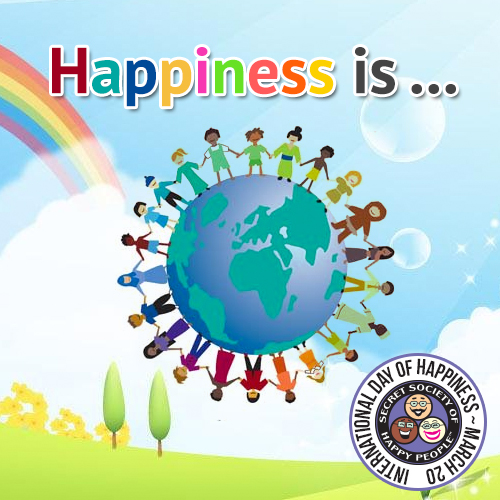
March 20 is the first day of spring, International Day of Happiness and Nowruz. Nature has given us the beauty of spring. Be sure you spend time outside every day to appreciate our beautiful Earth. Ancient people celebrated the first day of spring thousands of years ago!

For the Northern Hemisphere, March 20 is the first day of spring. But for 300 million people around the world, it’s the beginning of a new year, too. Nowruz—which means “new day”—is a holiday marking the arrival of spring and the first day of the year in Iran, whose solar calendar begins with the vernal equinox. Nowruz has been celebrated in Iran and the Persian diaspora for more than 3,000 years. Its roots are as a feast day in Zoroastrianism, a religion practiced in ancient Persia that viewed the arrival of spring as a victory over darkness. The holiday survived the Islamic conquest of Persia in the seventh century and the decline of Zoroastrianism’s popularity, and it spread across the globe through the diaspora of Persian people throughout history. (Here’s how Persia became the world’s first true empire.

It is hard to celebrate much happiness with such chaos in the world. Try to spring clean your brain and think about mental health for yourself and those you love. Be good to yourself and be good to the entire world.

How can you spring clean your brain?

5 Ways to Calm Your Anxious Brain – The New York Times (nytimes.com)

If you are spring cleaning your brain you need to reduce it’s exposure to plastic https://health4earth.com/2025/02/08/plastic-in-our-brains/

This year’s theme is caring and sharing. Make your own happiness special! Go for quiet walks and watch for changes around you as we transition into spring. The birds are returning and the lake near my home is almost losing its winter ice! Soon new buds will be on the trees.

Today also sees the launch of the new World Happiness Report 2025, which explores the variations in happiness around the world. The United States falls to a record low in happiness.. https://www.msn.com/en-us/news/world/us-drops-to-record-low-in-2025-world-happiness-report-see-global-rankings/ar-AA1BgYsy?ocid=BingNewsSerp

Peace

Work for peace. Peace for Ukraine, the Middle East and conflicts in Africa.

Iranian People, “We are friends!”

Percepolis
Ancient Persepolis, a woman approached me telling me she loved me because I was so kind.

Two years ago I was lucky to be one of the few Americans allowed to visit Iran. We were there for 8 days visiting cultural and historical places as well as meeting many Iranian people. After 40 years of hearing what an awful country Iran is, we were thrilled to find a friendly engaging people.  They are interested in, and like the American people. Everywhere we went we were approached by the charming people. The wanted to talk to us and find out how we liked their country and how we liked their food. Many times a day they would approach us offering us candy, asking to take pictures of us, wanting to engage with us. They seemed to find pleasure that we also had unpleasant leaders, and we often heard, “We both have bad governments, but we the people, we are friends!” Our guide said the Iranian people never chose this government, the Ayatollah was able to take over during the Iranian Revolution.

Soldiers in Iran
These soldiers wanted me to take their picture.

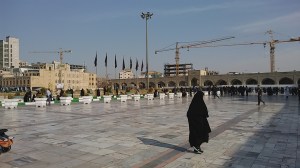
Outside a mosque
A holy day in Iran


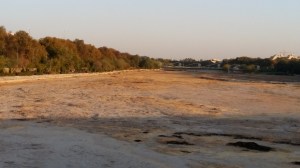
Tehran river bed
A dry river bed in the heart of Tehran. Water is more valuable in Iran than oil.


These friendly beautiful people do not deserve harmful sanctions or a war between silly reckless men!  Read more at, The Iranian people are not the enemy

https://health4earth.com/2018/01/31/iranian-women-and-the-hijab/

Iranian Women and the Hijab

Mashhad, Iran

“We the women and girls are fed up with this compulsory hijab. We want to manage our clothes and what to wear” Women in Iran protesting the hijab

In November I was a tourist in Iran wearing a scarf covering my hair. No, I was not thrilled at the idea, but the chance to spend 8 days in Iran over-ruled my freedom. Wearing a head covering created a solidarity with Iranian girls and women. We were all following the rules of the Iranian Shiite government that were implemented in 1979 after the Iranian revolution. Maybe in the winter it would be comfortable to wear a hijab, but even in November, some days were too hot to keep my head, arms and legs covered,. There was no doubt that a woman’s identity and personality are lost wearing a head scarf and long loose-fitting clothes

Male dominated governments can be unfair to women. They need scapegoats for their problems and women can become their target!

A holy day in Iran, November, 2017

The people of Iran are very friendly, the friendliest place I have ever traveled.  They practice citizen diplomacy to welcome their visitors. Many wanted to know what we liked about their country, and they felt a strong connection to Americans. Their message was clear, ,”We both have bad governments, but we the people, we are friends!”

Read the whole story about the hijab protests here.

https://health4earth.com/2018/01/23/citizen-diplomacy-and-iran/


Citizen Diplomacy and Iran

We are friends!

Ancient Persepolis

In November I was fortunate to become one of the few Americans  to travel to Iran this past year. We were there for 8 days. After hearing what an awful country Iran is for the past 40 years, I was thrilled to find a vibrant, friendly people. Their friendliness was amazing  It was difficult to go for a walk or get anywhere because they stopped us to give us candy, find out where we were from, and they would ask: “Where are you from?” “How do you like the food” How do you like our country?” I think some of it was they are so isolated and we were a window to the world, but they are genuinely a friendly people.  One couple came up to me at the historic site Persepolis and told me they loved me because I was so kind.  We heard over and over,”We both have bad governments, but we the people, we are friends!”

These soldiers wanted me to take their picture.

An interesting article from the Washington Post, five myths people believe about Iran. myths of Iran

A dry river bed in the heart of Tehran

This article blames the recent protests on water issues, and they do have a serious drought problem. Read about climate change  and a lack of water in Iran at Climate  

Simple things You can Do

Find a place to recycle your bottles, cans and paper.

Say “No” to plastic bags!

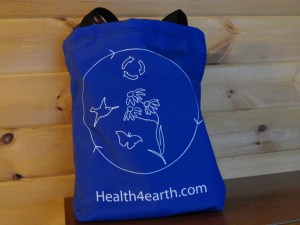
Bring you own shopping bag

We now have plastic in our water and in the fish we eat. Do we really want to put plastic fibers into our bodies every time we eat and drink?

I have three simple thoughts about litter and recycling today: First, countries that have less plastic have less litter. Second and third, if everyone would recycle more, and change the plastic bag habit, it would make a big difference on our planet.

Here is an interesting plastic comparison for you.  This is based on observation during the past month while I have been travelling through Central Asia and Iran. Central Asia uses very little plastic except for black plastic bags for purchases and plastic bottles for soda.  Iran by contrast uses lots of plastic. Beside plastic bottles, restaurant food, hotel towels, and many things that don’t need to be, are wrapped in plastic. Plastic cups and straws are used in Iran, but I saw none in Central Asia. Where would you guess there is a terrible litter problem? The contrast was enormous.  I brought Iranian plastic home to recycle.

Governments clearly need to become aware of the problem, and businesses like Coca Cola need to take more responsibility for the plastic they produce.

While I was thinking about this I came across an excellent essay by ECOwatch with great suggestions for everyone (see below) But keep it simple and by recycling and reducing  plastic bags you can make a big difference on our earth!

From Ecowatch:

  • Complain to retailers. Pressure retailers to do away with over-packaging.
  • Support plastic bag bans, polystyrene foam bans and bottle recycling bills.
  • Use natural clothing fiber rather than synthetic clothing, as synthetic cloth releases plastic fiber in every wash cycle.
  • Choose to reuse. Neither plastic shopping bags nor plastic water bottles can be easily recycled.
  • Deposit return schemes are highly effective ways to reduce plastic bottle waste. In Germany, where a bottle-return program is in place, nearly 98 percent of plastic bottles are returned.
  • Recycle. If you must use plastic, try to choose #1 (PETE) or #2 (HDPE), which are the most commonly recycled plastics.
  • Avoid plastic bags and polystyrene foam as both typically have very low recycling rates.