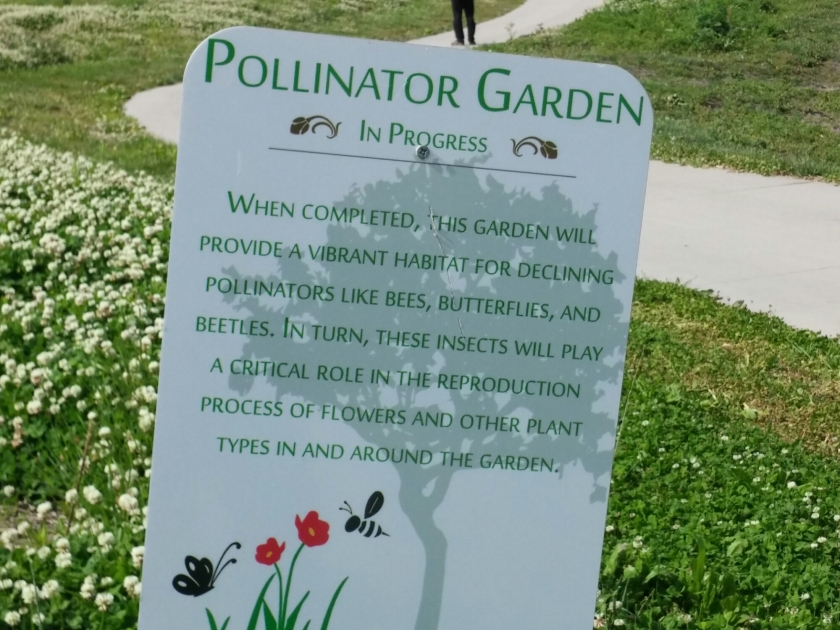
Minneapolis is a city of lakes. “Walking the lake” is a big deal for most of us, and the lakes are magnets for people from all over the Twin Cities metro area and state. I am impressed with this educational campaign taking place along the walking paths of the Minneapolis lakes.
Is this how lakes should look? We all need to do better.
It looks like a thirsty future for the world. The Pacific Standard Magazine has just publish a map of the world’s troubled waters and some of the politics around water. More things you can do to protect our water bodies here.
How can you help our pollinators? Our pollinators are struggling to survive. There are things we can do in our yards to help pollinators. The mono-culture of perfect green turf grass lawns does nothing to help our struggling pollinators.
Blue Salvia are loved by bees. (not native)
I have been on a road trip from Minnesota, through Iowa, Missouri, Kansas, Nebraska, and South Dakota, and have been amazed at the manicured thick turf grass that dominates in parks and lawns. Turf grass has no value for pollinators, and when fertilized adds unhealthy chemicals harmful to pollinators, humans, pets, wildlife and our water bodies. Adding a diversity of fresh new plants and removing some lawn can make a big difference for our pollinators.
Walking a trail in Lincoln, Nebraska I was thrilled at their efforts to help our pollinators. They are allowing clover and native plants to grow. I even saw a few milkweed popping up.
Just a few changes can make a big difference for pollinators.(bees, butterflies, and birds)
Spring is a fabulous time to add new plants to your yard. A wide diversity of plants helps
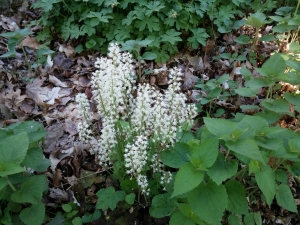
Foam flower is an early blooming plant
our pollinators. Native plants don’t need chemicals so they are the healthiest for you, children, pets, and the pollinators. More garden diversity, and less chemicals creates a win-win for our earth and us all!
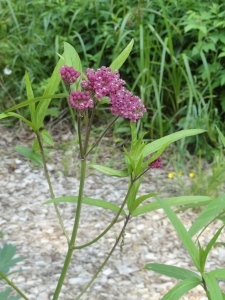
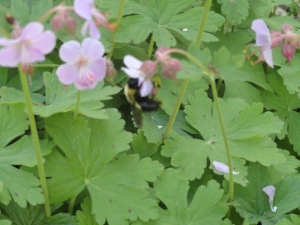
Always consider how to add more milkweed. Swamp milkweed has been the most successful for me.Wild geranium, easy to grow, is loved by bees and butterflies and is early blooming
• Challenge yourself to focus on the first of the 3 R’s and REDUCE your consumption • To better visualize your efforts, use a glass jar or bowl to collect your waste for the day • Use cloth produce bags for buying in bulk • Visit a local farmer’s market for fresh produce, meats and cheeses. • Bring lunch in a glass container or jar. • Carry washable utensils and a cloth napkin in your lunch bag or purse. • Take this day to de-junk your mailbox by removing yourself from mailing lists of unwanted promotions and catalogs. Earth 911
This is a good list, but to be really zero waste you need to compost food
The first Earth Day on April 22, 1970, was a day set aside to think about creating lifestyles to reduce waste and destruction of our environment.
One of the main messages many of us heard that day was that human life can continue on Earth only if people cooperate with nature. Strides have been made over the past 46 years in cleaning up many rivers and lakes, recycling, protecting natural ecosystems, becoming more aware of hazardous materials, and the list goes on. But we have a long way to go if we are to live in a sustainable way in harmony with nature.
There are things to do and things not to do when it comes to being a good steward of our planet, but one of the best may be to take pleasure in the true beauty of the Earth’s ecosystems and its creatures. Too, take time to learn about some of the plants and animals that share the Earth with us. It’s just about impossible to destroy something you understand and love.
Throughout the year, and especially April 22, with the wonders of spring all around us, we should make a point to get out and observe. Every forest, wetland and prairie remnant is full of spring signs — evidence that our Earth is designed as a place for life, no matter what foolish acts people may commit. Jim Gilbert http://www.startribune.com/appreciating-earth-s-beauty-is-one-way-to-steward/376565231/
What is organics? Organics recycling includes collecting fruits, vegetables, bones,
Food Scraps Turned Into Compost
meat, breads, eggshells, non-recyclable and food-soiled paper, and more for composting. The new organics recycling program is an easy way for residents to reduce waste. The trucks haul this waste to the compost site where it is turned and heated and it turns into valuable compost to be used for gardening.
Please come to the event below to learn about Minneapolis’s new program and how to participate in this great program!
The Tangletown and Lynnhurst Neighborhood Associations are co-hosting a celebration of Minneapolis’ new organics recycling program on Saturday March 19th from 10am-1pm at the Lynnhurst Community Center (1345 W Minnehaha Parkway). Enjoy free pizza, games, children’s activities, and demonstrations. Stop by briefly or stay to catch a workshop at 10:30am or 11:45am.
Get your questions answered, sign up to be a volunteer Compost Captain, and enter to win a door prize. The first 200 attendees can also pick up free compostable bags. More info (and RSVP) at https://www.facebook.com/events/550666345107610/ Hope to see you there!
“A new study published in the Journal of Industrial Ecology shows that the stuff we
Do we need all the things we buy?
consume—from food to knick-knacks—is responsible for up to 60 percent of global greenhouse gas emissions and between 50 and 80 percent of total land, material, and water use” From Audubon and Grist.org
This post is a follow-up to two of my earlier posts. Every time we make purchases we need to weigh what the impact is to the earth. Purchasing high quality items that will last, fixing broken things, bundling our errands, and becoming climatarians are a few easy things to start with.
“Some of us have become “anti-consumers”. Think 3 times before you purchase. Is it necessary? Can I get it second hand? Can I make it myself or just do without? #VoluntarySimplicity may be our only hope.”
The 2016 theme for International Women’s Day is “Planet 50-50 by 2030: Step It Up for Gender Equality”.
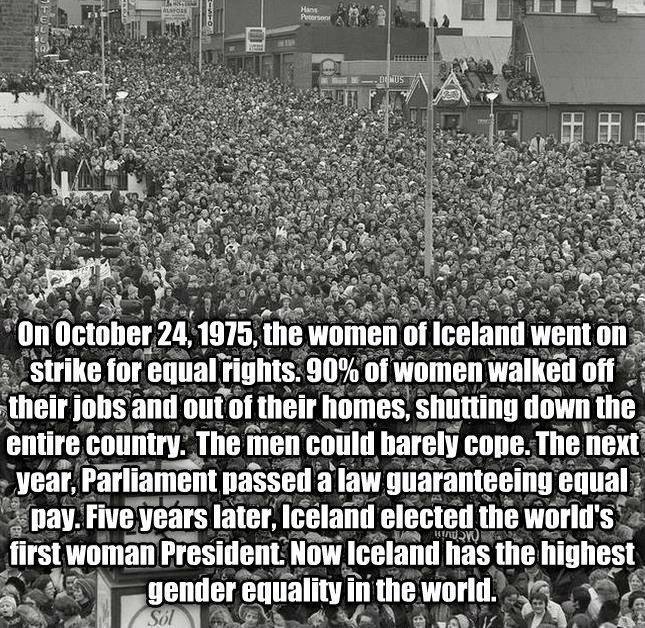
International Women’s Day is a time to reflect on progress made, to call for change and to celebrate acts of courage and determination by ordinary women who have played an extraordinary role in the history of their countries and communities. Women still have high hurdles and a long way to go.
An interesting article below about, Annie Griffiths, a National Geographic photographer: “Early in her career as a globe-trotting photographer for National Geographic, Annie Griffiths witnessed the profound impact of climate change on women and girls in developing countries. They were the ones who went in search of water. They nursed the sick as diseases spread. And when climate disasters hit, it was the women who stayed behind to see their children and parents to safety, often at their own peril.” http://www.startribune.com
How can E-Commerce be more environmentally friendly?
As a person who prefers to walk or take the bus to do my shopping, I thought Fed Ex and UPS delivering packages was a good thing; it cut down on my driving. packages came in cardboard, not plastic, and it seemed like an efficient way to shop. I don’t like some of the oversize shipping boxes, or the Styrofoam and packing peanuts I see littering the street. The article below came as a surprise to me.
What can you do instead? 1. Bundle your own shopping trips into one trip. 2. Slow down, do you really need an item shipped to you in 2 hours? 3. BUY LESS 4. Return Packing peanuts to UPS. 5. Reuse packaging.
What can shippers do to be more sustainable? Refuse to use Styrofoam? Bundle their deliveries? What do you think?
Biodegradable packing materials offer a low-waste alternative to polystyrene packing peanuts. High-profile companies, including Dell and furniture-maker Steelcase, have already embraced a foam-like packaging made from mushrooms, eliminating the waste from polystyrene.
When shipping packages yourself, simply use paper from your recycling bin to insulate breakables rather than reaching for polystyrene peanuts. Crumpled newsprint, junk mail and other waste paper will do the job just as well and will be far easier for your recipient to recycle.
Plant your yard with plants the bees, butterflies and birds love
Each of us is so unaware of the damage we are doing to our earth. This week I was at a seminar on pollinators. Minnesota has lost two of its native butterflies, the Dakota Skipper and Poweshiek Skippering. and many more bees and butterflies are declining in numbers. Also, I was surprised so many people don’t know about neonicotinoids. Neonicotinoids are harmful systemic pesticides that weaken pollinators
Round up kills the plants that bees and butterflies need for food and egg laying !
Why is there is so much buzz about bees during the winter? The United Nations announced that we are loosing many of our important pollinators that are vital to the pollination of many important food crops.
What is causing this loss? The major reasons we are loosing species of native butterflies, bees and birds is because of mono-crop planting, habitat loss, and our obsession with pesticides. The combination of these three is making it hard for pollinators to survive.
Even a small yard can make a difference for pollinators. First, add more native plants to your yard, they don’t need chemicals. Plant for different bloom times, diverse flowers, and never purchase a plant treated with neonicotinoids ! Be careful and read directions with any chemicals you use on your yard….Try to go without! Finally, bees and butterflies love blooming dandelions and clover…Let them bloom, then weed them out!
Native plants are needed as host and nectar plants as our native butterflies, bees and birds go about pollinating our food plants as they forage for their own sustenance.
Native plants have deep roots which absorb excess rainfall and prevent water from running directly into our rivers and streams helping to provide clean water for everyone.
Native plants instead of turf lawns help reduce our carbon footprint.
“We need to work collectively together and stop procrastinating. We need to support leaders around the world who do not speak for the big polluters or the big corporations but who speak for all of humanity, for the indigenous people of the world, for the billions and billions of underprivileged people who will be most affected by this, for our children’s children, and for those people out there whose voices have been drowned out by politics and greed.”