June on Lake Superior

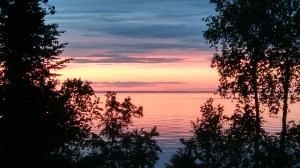
Magnificent skies

June is a month of variety, fresh green plants, and interesting skies. As the month ends, I reflect on the beauty of Lake Superior and the landscape that surrounds it. The length of the days and natural beauty is energizing. Everyday differs with the direction of the wind, and the big lake is usually part of this equation.
The birds are secretly nesting and raising their young, but I watch an unaware flicker fly in and out of her nest hole with food.

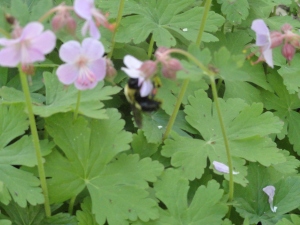
Wild geranium, easy to grow, is loved by bees and butterflies.


White Admiral Butterfly
Lupine on Lake Superior


The lupine, wild geraniums, Canada anemone, thimbleberry, and raspberries bloom while the milkweed takes over the garden path.

And.. everyday enjoys a new butterfly.


Celebrating Butterflies

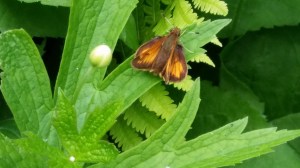
Hobomok skipper on Canadian anemone

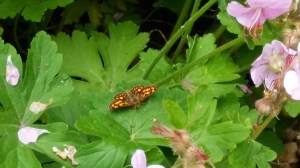
I love butterflies, and National Pollinator Week gives me an excuse to concentrate on what brings butterflies to my yard and to my walking routes. This week I learned two new skipper butterflies: the hobomok skipper and Arctic skipper.  Both are crazy for wild geranium, The yellow swallow-tail, painted lady and admirals are plentiful now also, and a few monarchs are checking out the milkweed.  Also, this week I saw one pearl crescent and a silvery blue.

Arctic skipper on wild geranium
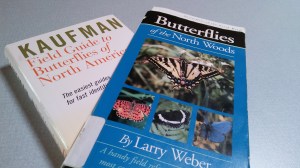
Favorite butterfly books

Below are two books that help me identify butterflies, and here is an on-line butterfly guide.

Have fun land I hope you enjoy butterflies as much as I do!  Get out for a walk and look!


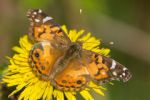
An American painted lady

Happy Summer!

Get Outside and Enjoy!

Today is a new day. It’s the first day of summer. Go for a walk, listen to the birds chirping. Take in the fragrance of the Earth. And resolve to keep fighting for what you believe in.” Dan Rather


Enjoy!

” I allow myself to appreciate each moment for the richness it brings to my life.” Attitude of Gratitude


I Love Parks and Monuments!

Battle of Gettysburg, 1963

Earlier this month I took a road trip from Minnesota to Washington, D.C. We traveled the back roads through Indiana, Ohio, and Pennsylvania. Everyday we would stop and hike in a park we came across. It was an amazing experience. Everyday we saw different trees and plants, different landscapes and birds, and a divergent mix of people. It was a lesson in diversity and beauty.
We stopped at monuments, state parks, county parks and national parks. The day we were at Gettysburg, I sat outside and ate lunch at the entrance to Gettysburg, and watched the people as they entered the park headquarters. I was struck by the diversity of people entering. It was a diverse group, of mixed ethnicity, and a range of militia t-shirts to “War is not the answer” shirts. The diversity was so interesting!

Parks and monuments are places we can all come together. They are places the wildlife can thrive, and where we all should feel welcome! In these politically divided times they are a place where everyone can meet, learn and enjoy. Parks and monuments of all kinds are what really show the strength of America! They take you to a history, gratitude and beauty of what our county truly represents.  You leave feeling intense patriotism in your heart! Please support and love these amazing treasures.

To learn more about the battle of Gettysburg click here.

Monument to President Lincoln

And read the Gettysburg Address

Give Your Yard a Dose of Happy

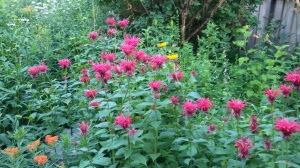
Deep-rooted plants absorb more water than turf grass. Cone flowers, bee balm, and black-eyed Susan

Just making a few adjustments to your yard can make big difference for our climate. If everyone does a little bit, it adds up to a lot! Some amazing statistics on our lawns from “greener lawn” below:

*Grass covers more land in the US than any other crop.

*It’s estimated that there’s up to three times more acres of lawns than corn, according to NASA

Fritillary butterfly on bee balm.

*Homeowners use up to 10 times more chemical pesticides per acre on their yards compared to what farmers use on their crops, according to the U.S. Fish and Wildlife Service.

Some other ideas to slow climate change and help pollinators:

**plant a rain garden

** Add diversity

** Love pollinators

** More on bees an butterflies

Minnesota Public Radio on a “greener” lawn:

Grass isn’t greener

Adding new pollinator plants is not easy if you are a hosta gardener or a new gardener.

I would start small by adding a few of these: purple cone flowers, black-eyed Susan, bee balm, a few asters, and columbine.  I suggest these because many garden stores sell them, they are easy to grow, add diversity, and are loved by pollinators.

We Love Science!

Science is real, it is not opinion. Science can be proven, it isn’t an alternative fact. Business profits rule in this administration, and without help from science, business won’t thrive either.

Can you think of anything in our lives that does not deal with science?   Scientists have gotten us to where we are in civilization, and we still have a long way to go to cure cancer, Alzheimer’s, MS, ALS, heart disease….and the list goes on. Science research must be funded to keep us safe and healthy.

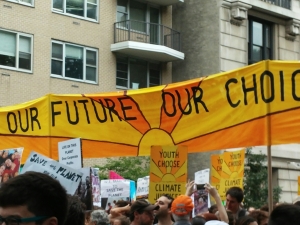
Saturday I marched with 40,000 other people in Chicago saying to this administration , “Science Is Important!” “Business profits don’t keep us healthy” “Fund science research”

Read more about the marches here.


Celebrate Our Earth

Happy Earth Day, I hope you can get outside and enjoy the marvelous spring changes! Go for a walk.

The first Earth Day on April 22, 1970, was a day set aside to think about creating lifestyles to reduce waste and destruction of our environment.

One of the main messages many of us heard that day was that human life can continue on Earth only if people cooperate with nature. Strides have been made over the past 47 years in cleaning up many rivers and lakes, recycling, protecting natural ecosystems, becoming more aware of hazardous materials, and the list goes on. But we have a long way to go if we are to live in a sustainable way in harmony with nature.

There are things to do and things not to do when it comes to being a good steward of our planet, but one of the best may be to take pleasure in the true beauty of the Earth’s ecosystems and its creatures. Too, take time to learn about some of the plants and animals that share the Earth with us. It’s just about impossible to destroy something you understand and love.

Throughout the year, and especially April 22, with the wonders of spring all around us, we should make a point to get out and observe. Every forest, wetland and prairie remnant is full of spring signs — evidence that our Earth is designed as a place for life, no matter what foolish acts people may commit.” Jim Gilbert, Startribune