What a crazy start to summer. First a scary high windstorm came through, knocking out power and downing lots of trees. The winds shifted from the north to the south and it became extremely hot and humid. There were warnings to stay inside it was so hot. Even worse the United States bombed Iran.
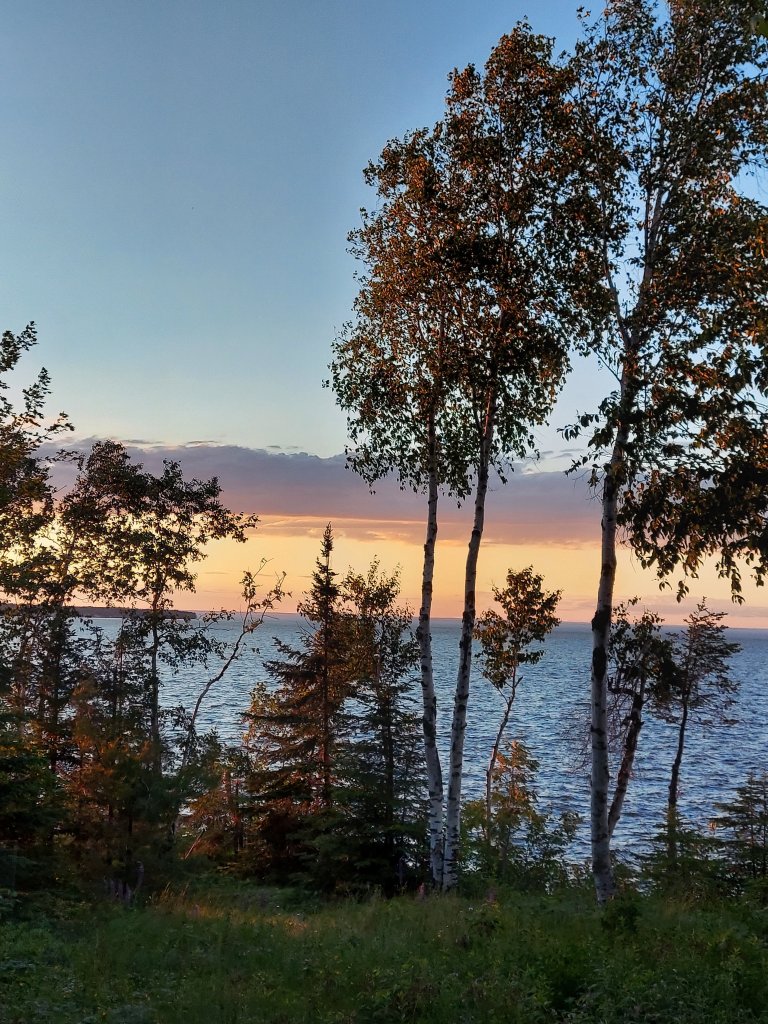
A cold wind coming across the big lake
The power is back on, the birds are back singing and the butterflies seem to have survived the storm, and we will never know the harm the United States did to the people of Iran.
I hope your summer is special, that you are able to spend time outside, and enjoy the long days. Everyday work for peace and justice and speak out!
We need to work harder to protect our nation’s water!
Water is life It is so important for healthy living. Every day each of us must do what we can to protect our planet’s precious water.
It is shameful the poor job we do to take care of our fresh water. Our fresh waterways are teaming with microplastics, nitrates and forever chemicals. None of these are safe for human exposure.
Today I am focusing on two crucial pollutatnts to our water. PFAS chemicals and nitrates. In 2023 the Minnesota legislature passed a strict law restricting PFAS (fovever chemicals) Unfortunately, many companies with PFAS in their products are trying to weaken Minnesota’s PFAS legislation. Read more about it below:
First, here is information on efforts to weaken Minnesota’s new PFAS(forever chemical law)
At least 70 million Americans get their water from a system where toxic PFAS “forever chemicals” were found at levels that require reporting to the Environmental Protection Agency. That’s according to new data the EPA released in its ongoing 5-year review of water systems across the nation. The number will almost certainly grow as new reports are released every three months. USA Today, March 21.2024
Amara’s Law is being implemented well, and Minnesota is better for it. We are incredibly grateful for our allies, whose hard work and determination helped pass such monumental legislation. But now, Amara’s Law is at risk once again. Bills HF 1627 and HF 81, authored by Rep. Josh Heintzeman, R-Nisswa, plan to irresponsibly gut the law, continuing to put polluters before people.
Finding safer PFAS alternatives has the potential to be profitable for businesses of all sizes. Capitalism is meant to push society forward, driving change and fostering new ideas. It was not built to just accept the first product that completes a goal, especially when it poisons people and the environment. We have met innovators and entrepreneurs who are creating effective alternatives to PFAS — they just need support. But they don’t get a chance because large corporations come and try to pick apart critical legislation. Minnesota continues to be poisoned, people continue to get sick, children like Amara continue to die.
Second, we have been unable to control farm run off. This pollutes our ground water our streams and people’s wells. It is dangerous for people, fish and animals. There is no excuse for letting this go unchecked! Nitrate pollution in water is caused by excess nitrogen from agricultural sources. Nitrates and organic nitrogen compounds from fertilizer and manure enter groundwater through leaching and reach surface water through runoff from agricultural fields. Nitrate contamination occurs in surface water and groundwater, leaching into the soil and from there into the water supply from various sources. A high level of nitrate makes water unsuitable as drinking water.
73 percent of Minnesota nitrate pollution comes from cropland, primarily through agricultural drainage systems below cropped fields and by nitrate pollution leaching into groundwater, and then moving underground until it reaches streams. 78% of nitrate pollution to the Mississippi River in our state is fr…See more on fmr.org
The ground-breaking feature documentary Plastic People investigates our addiction to plastic and the growing threat of microplastics on human health. Almost every bit of plastic ever made breaks down into “microplastics.” It was first shown at SXSW and this is one of the first community showings in the country.
Date: Wednesday, September 25th
The doors open at 6:00 for tabling and the film starts at 6:30.
There will be a short discussion following the screening lead by Lucy Mullany with Eureka Recycling and Mary Kosuth, who is finishing a PhD in microplastics at the University of Minnesota and is a featured scientist in the film.
The film is free.
The location is Hamline University, Drew Science 118, 1536 Hewitt Ave, St Paul, MN 55104.
I love summer and the long rich days, and the summer days get even longer as you go north! Holding onto summer daylight and comfortable temperatures fades as the calendar turns to fall. Already the nesting birds have migrated south, and I miss their joy. I also miss the magnificent butterflies, and there was a summer shortage this year that concerns and scares me.
.
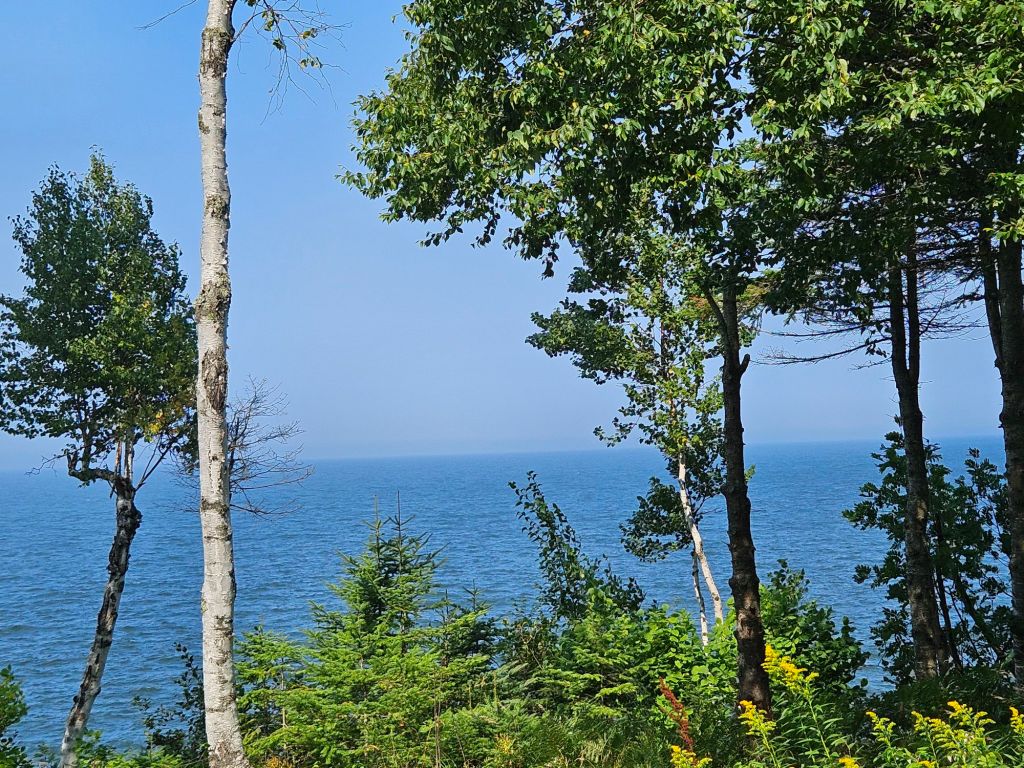
A foggy wet horizon on Lake Superior
Summer brings joy, and the nature of that joy diminishes with the fading daylight. Below are some of the last plants standing:
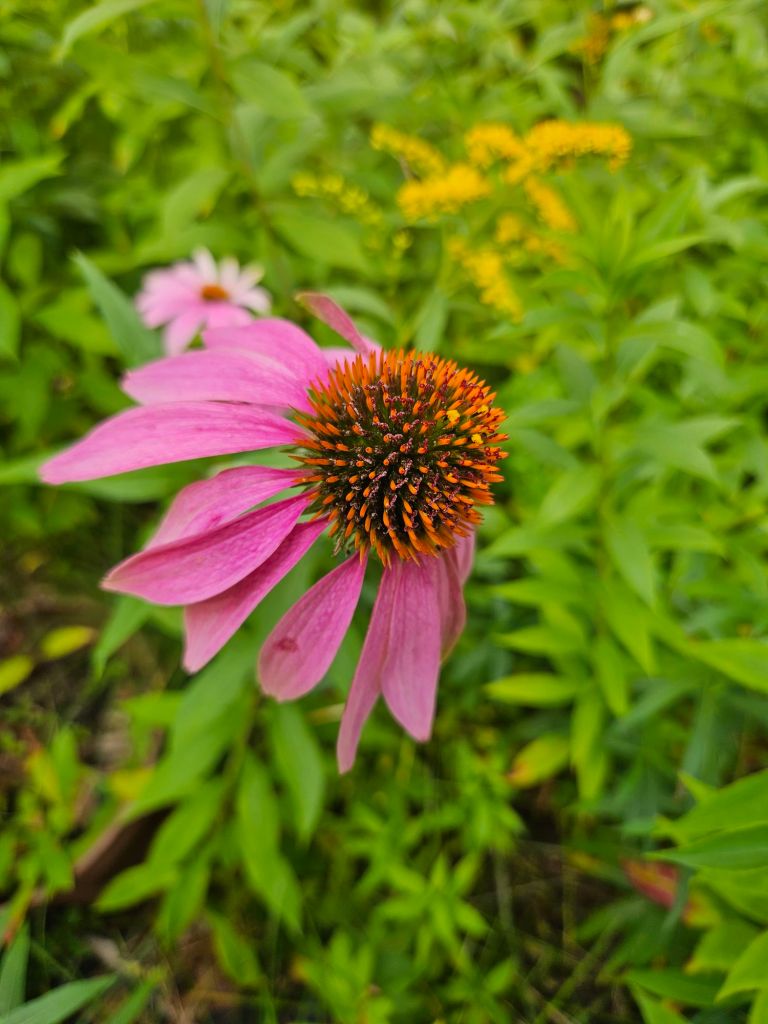
I love the red stemmed asters!A carpet of big leaf astersPurple cone flower
Summer could be defined by comfortable days, and Lake Superior wind pattern dominance which shifts from hot and humid to breezy and cool. This [ast summer was weird how much moisture was in the air. Many mornings it was hazy looking across the big lake. Warmer air holds more moisture, and it was a humid summer. We have just lived through the most humid summer on record. Read about it here.
The grouse and crows seem happy, the pileated woodpeckers seem happy, and squirrels and white tailed deer are overjoyed. What happened to winter? The sun is shining and the snowstorms forgot to hit the south shore of Lake Superior. The biggest surprise is golden eyes on Lake Superior already migrating through.
But what made me the happiest was that I saw an eagle swimming on Lake Superior. It was amazing! It looked like she was doing a swimming crawl stroking with her enormous wings.
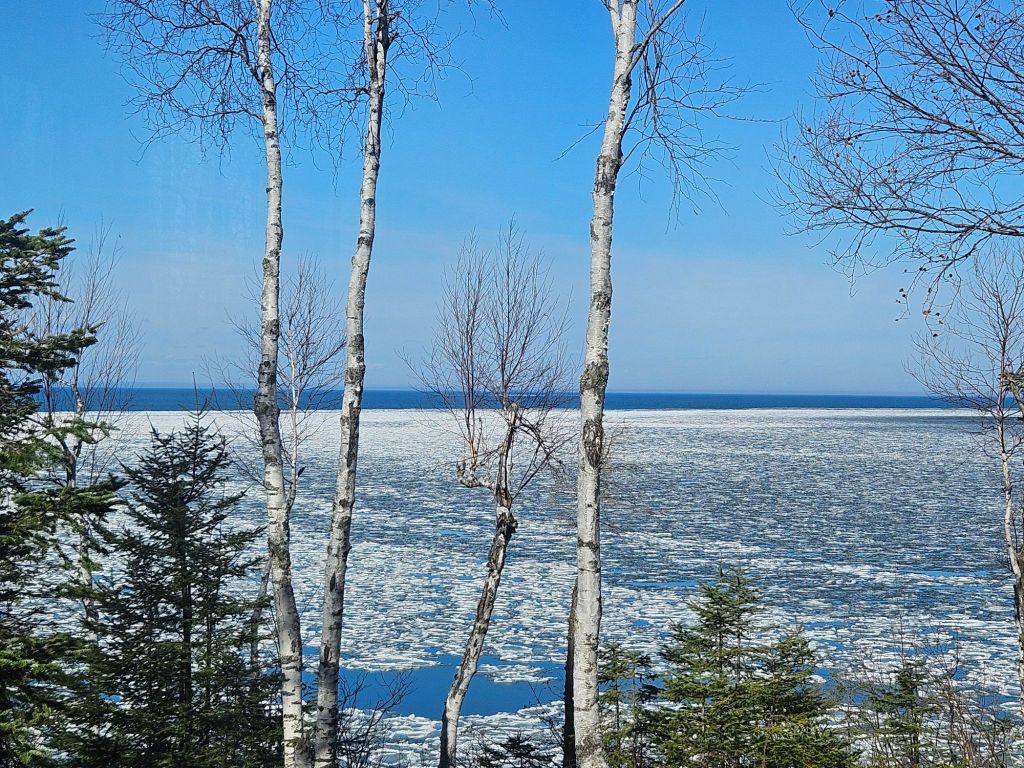
The warmest February and winter on record, but it is worrying for the future when there isn’t ice on the big lake. More evaporation, more algae and a challenge for the fish to find food.
This is not ice cover. It is slush that moves around the big lake depending where the wind is blowing from.
On what should have been a beautiful Lake Superior morning, smokey air was creeping across the big lake from fires burning in Canada. Luckily, most days are filled with brisk clear Lake Superior air.
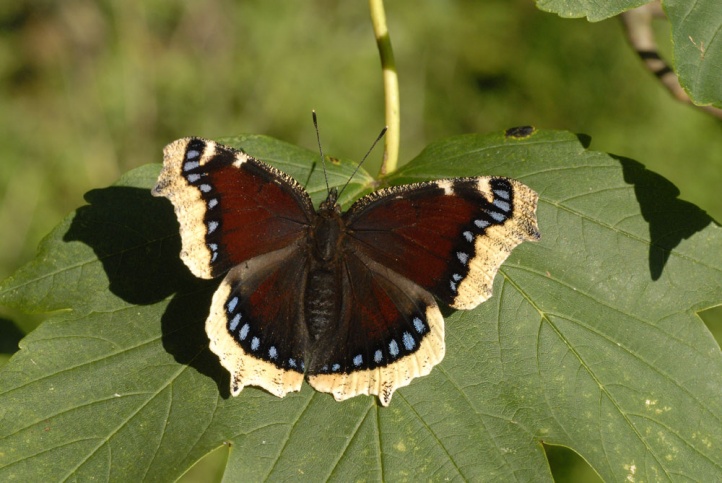
Amazing butterflies, the Compton tortoiseshell.
Sounds of robust birds singing fill the woods. The chestnut sided warbler, song sparrows, oven bird, indigo buntings, red-eyed vireo and many others sing all day long.
The butterflies are the very best, and the contrast to so few butterflies in urban areas is striking. Every amazing butterfly that lives in June is here. They seem to love the host plants I have planted to get them to begin the next generation of butterflies. There is hope for the future if we could get over our addiction to pesticides and plant pollinator gardens.
Milkweed is a wonderful host plant.
The swallow tail is one of the easiest butterflies to identify.
Seeing the bear, fox and big bucks and deer have been a surprise. After several years of scarcity, they are back, and the squirrels, chipmunks and bunnies are almost non-existent.
Bunch berries will have red berries later in the summer.
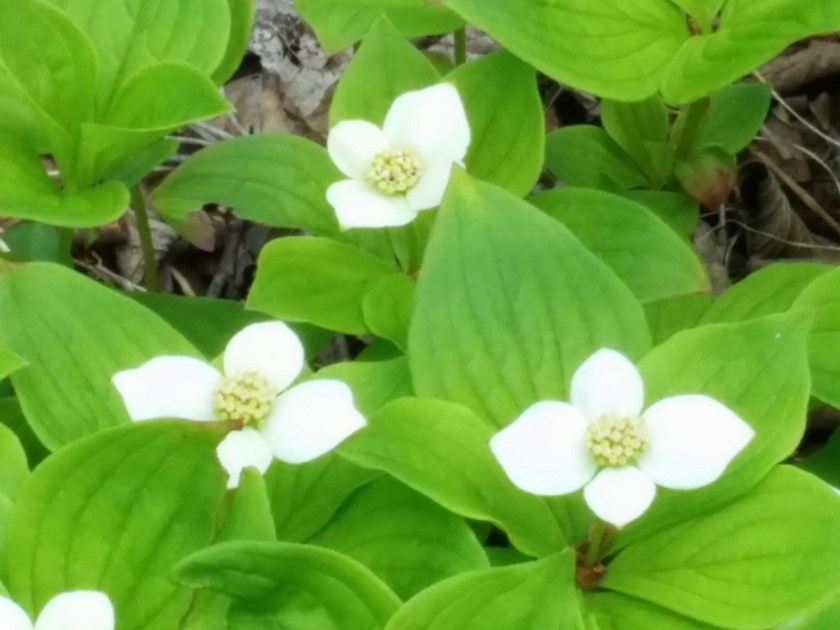
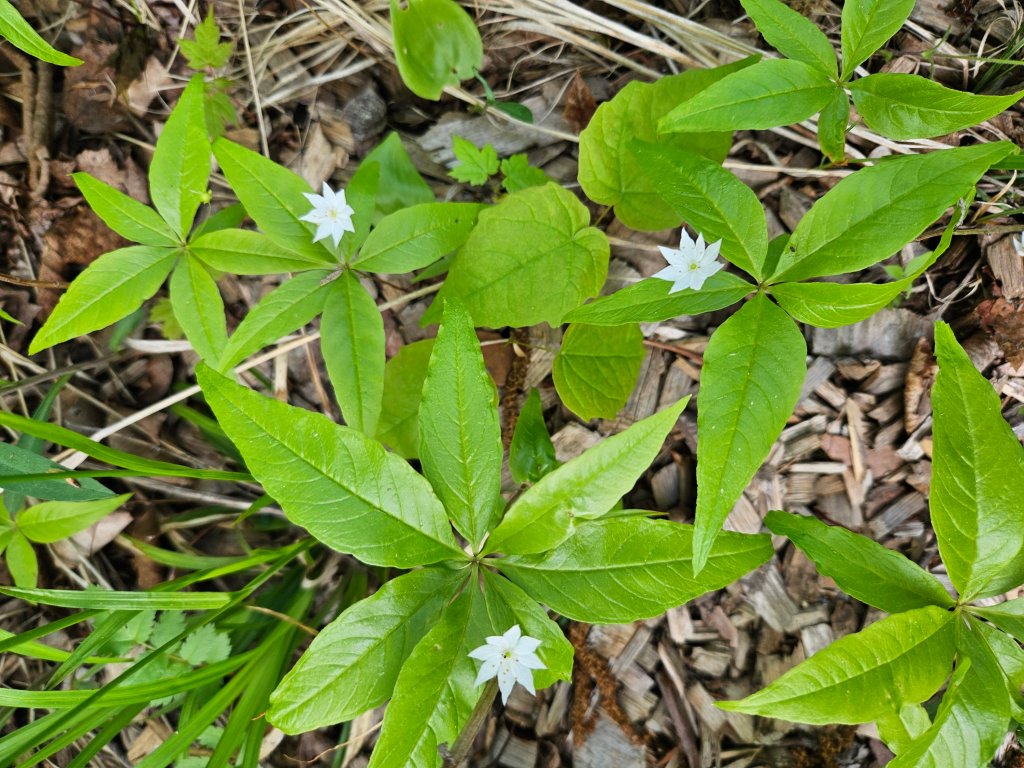
June in the north country of Minnesota and Wisconsin are famous for the beautiful but non-native lupine. They grow in patches everywhere. This year I was struck by all the June white plants blooming. and have enjoyed enormous fields of daisies. I especially love the delicate star flower, the false lily of the valley, the hardy Canada anemone, and classic north woods bunch berries. To experience these beauties, you need to get out of your cars and walk!
I am sorry to see the month of July come to an end. Lake Superior keeps the hot temperatures to the south, and the temperature has been comfortable, but the lake has been unusually cold.
It has been an incredible summer for birds. The singing has now somewhat subsided, but in early summer we were thrilled to hear many birds singing we hadn’t heard for a few years. Mornings were so pleasant with purple finch, red starts, song sparrows, chestnut sided warblers, Northern parulas, and red-eyed vireos belting out their beautiful songs. Even though the singing has now subsided, we have an active crowd of baby birds trying to fill their hungry stomachs. Red starts and song sparrows were underfoot as I worked in my garden.
Many birds nest here because we have so many insects and caterpillars to feed their babies. This week we had many birds trying to eat the ripe elderberry berries. Today we had flickers, downy woodpeckers, chickadees, and cedar wax wings trying to hover and snatch one of these delicious berries. I’m sure they wish they could hover and fly like the hummingbirds.
The hummingbirds think they are king of the mountain. Life is a game to them as they wiz around. Even though they are the smallest they are the most aggressive and most visible. Their assertive behavior is entertaining as they are protect “their food.” I am sure the baby hummingbirds are learning from mom how to behave and survive.
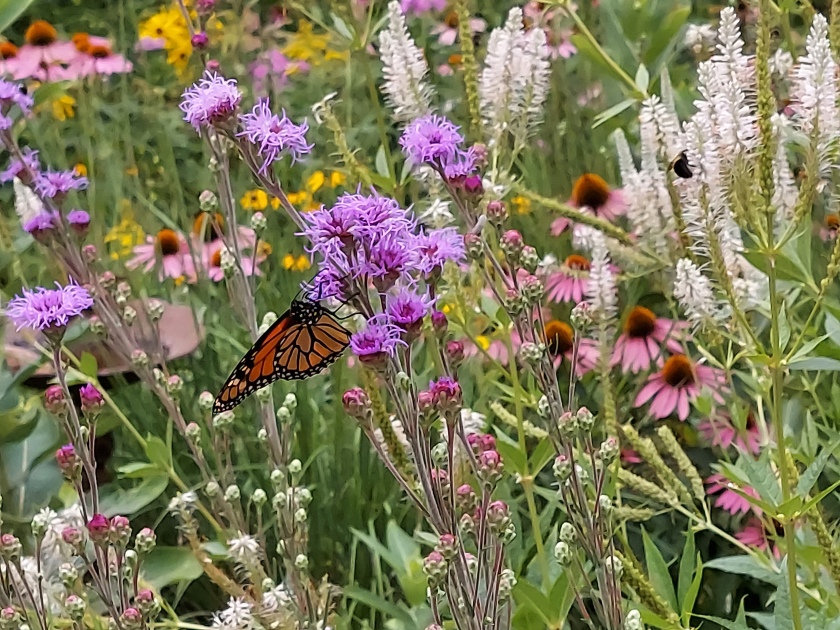
Monarch butterflies visit daily
The number of butterflies has also subsided since early July, but a monarch makes a daily pilgrimage to our yard visiting the milkweed. Unfortunately, butterfly caterpillars don’t survive long because there are many baby birds to be fed. I hope that some survive as butterflies,
An American Lady caterpillar on pearly everlasting, it probably became bird food!
Spring arrives and shakes us out of all the darkness in our world! After a violent storm last night, I was worried about migrating birds and butterflies. Somehow, they manage to arrive and today I was treated to my first Painted Lady butterfly, a hummingbird, wrens and a Swainson’s Thrush.
Native plants create healthy food, homes and a resting spot for birds and butterflies.
It’s World Migration Week! On this big week of migration what can you do to create a healthier and friendlier environment? Find the migration happening in your county here: BirdCast – Bird migration forecasts in real-time
Would you like your yard to be a resting spot for nature? My yard is for the birds. First, we never use chemicals as we try to create bee, butterfly and bird habitat. Lawn chemicals aren’t healthy for people and they sure aren’t healthy for wildlife either. Native plants do not need chemicals so they are a win-win. Start small, with easy to grow wild geraniums, bee balm and asters. These three plants will get you blooms in the spring, summer and fall, and they will bring joy to you and wildlife.
Bee balm is a magnet for birds, bees and butterflies!
“We can no longer simply “let nature take its course” and expect the return of productive ecosystems. Humans have meddled in too many ways that prevent nature from healing itself. We have introduced over 3,400 species of invasive plants to which local wildlife is not adapted, and we have eliminated the top predators that used to keep deer, raccoon, skunk, and possum populations in check. If we remove an essential part of an ecological community, we must replace it through active management or the system will collapse.” Doug Tallamy
My third idea for a healthy yard is creating a bee yard, and they are beautiful right now. The flowers of a bee lawn provide food (nectar and pollen) for pollinators. Bee lawns are environmentally friendly because they are managed using low-input methods that generally use less fertilizer and pesticides. Bee lawns can still be used recreationally by your household like a regular lawn. A bee lawn can attract over 50 species of native bees.
Ruffed grouse scare me as they fly up as I walk into my yard. A flock of juncos fly into our yard, robins are devouring the Mt. Ash berries, yellow-rumped warblers are diving to eat flies off our house. The nuthatch and blue jays are emptying the feeder, the goldfinch are munching on something in a dead white pine, and woodpeckers are busy making their marks on trees. Yes, it is October on the big lake and we are all getting ready for the winter months ahead. All the energy and activity makes us happy.
For many days thick Fog hung thick over the lake signaling the drought has subsided and rain is again common. After many dark days the sun is welcome
Beautiful October
It has been an unusual Superior Views summer with a sun that seemed more intense than usual, and winds off the lake that were calmer than most summers. Sadly, wild fires from Canada and Northern Minnesota polluted the air quality for weeks at a time.
The warmer than normal summer changed the pattern of the plants and trees. The leaves turned earlier than normal and the flowers bloomed weeks earlier than usual. Actually, I think the native plants and flowers enjoyed the warm temperatures and milder winds, but the trees suffered with the heat and drought.
Lake Superior is not for sale! A local resident is trying to sell ground water for profit.












 Health4earth