Halloween Fun

Halloween is a day that is looked forward and cherished by many.

It is also a day that brings lots of extra waste- extra plastic and waste through costumes and decorations. What if we try to reduce so much waste and use what we have?

Instead of buying so much plastic waste maybe make ghosts out of old sheets or make a scarecrow out of old clothes and save money, too

Embrace Halloween as a day to be creative.

Halloween can be a creative time to decorate and create a costume. I look forward to the creative thinking that come to my door. Being creative is more fun!

The hardest part of a plastic-free holiday is finding plastic-free candy, How about apples or tangerines?

Here are some good candy tips tips from Beyond Plastic: Pick plastic-free packages. If you need to stick to packaged candies, there are some options that come wrapped in foil or small thin cardboard boxes. Candies like Dots, Milk Duds, and Junior Mints come in small cardboard boxes, Tootsie Rolls and other fruit chews and Dubble Bubble come wrapped in paper, and there are many small Halloween-themed chocolates that come wrapped in foil that, at least in theory, could be collected and recycled.

Instead of buying a new costume, consider setting up a costume swap party with friends (see some tips here) or creating a homemade costume where face paint replaces a plastic mask. Perhaps there is even the option to rent a costume for the night.

For decorations, look around your home and in nature to see what can be upcycled to help set the scene for Halloween. Cardboard boxes could easily be made into tombstone decorations. String or rope can create thick spider webs. If you are wanting to purchase decor, consider looking for items that will last for several Halloweens.

What about choosing real pumpkins over plastic versions? Not only can you carve how you want, you can roast the seeds. And when done, the pumpkin can be turned into soup or cut into pieces to decompose in a garden or composted.

This year let’s make the Halloween treat a reduction in waste. Here are some good ideas from Beyond Plastic

What are your ideas to reduce waste?

Buy Nothing Day

Use your power as a consumer to create a better world!

Today is Buy Nothing Day, it is a day to turn our back on the awful obsession with consumerism we have in the United States. The things we purchase put stress on all our resources, water, air, time, energy, and landfills. All the stuff we buy contributes to the climate crisis! Do you really need more junk? Give thanks for what you have and all the people in your life. Be grateful for our beautiful planet, and for all you have. Instead of shopping spend your day outdoors or spend time doing something creative. Instead of shopping for happiness take deep breaths and do something you love. All the state parks in my state are free today, and I’m off for a long walk!

From Thanksgiving to New Year’s Day, household waste increases by more than 25%. Added food waste, shopping bags, packaging, wrapping paper, bows and ribbons all adds up to an additional 1 million tons a week to our landfills. (Source: EPA

The Story of Stuff – Story of Stuff  

 A consumer is powerful. The choices we make, and what we purchase changes marketing and products, and as consumers we can make a big difference by the choices we make.  These choices can make a positive change on the environment creating a more sustainable world. 

  • Heighten your awareness of packaging and waste, choosing products with minimal or no wasteful plastic packaging. 
  • Always shop with reusable bags. 
  • Never purchase products with glitter or Styrofoam. They can’t be recycled and are harmful to wildlife.
  • Shop reuse stores. Some of my favorite clothes and items come from consignment stores. 
  • Shop bulk items. 
  • Shop in bulkBuying in bulk is a good way to manage food waste, and plastic waste. Bring your own bags or containers. 
  • Shop retailers that pay living wages and are local over big box stores. 
  •  Buy nothing and reuse what you have! 
  •  Purchase items that will last instead of cheap junk. 
  •  Avoid all single-use plastic 
  • Make your own choices and be creative, don’t be owned by corporations like Apple, Target, Amazon etc. 

Zero Waste Wednesday

end food waste
Help the environment by reducing food waste

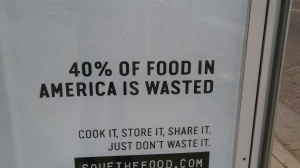
Food waste is a waste of water, a waste of energy and transportation, and a waste of time and labor. Making an effort to reduce food waste is an important thing we can all do for the economy and the Earth. In America 40 percent of the food produced is wasted!

We waste too much food, and there is a food crisis with this pandemic. Many are unemployed, and lines are long at food shelves, which are experiencing a massive demand. A  big disconnect, many are starving, and at the same time we waste lots of food! Today, no recipe required, instead of throwing food away use your creativity to create a meal with left overs and produce you have in your house. Can you make an omelet, soup, wrap, or stir fry with what you have? Have fun, be creative!

“Even before COVID-19, Americans, on average, were tossing away more than a pound of uneaten food per person each day, amounting to some 400 pounds of food thrown out annually. That’s far more than any other wealthy country — about 50% more food waste per capita than France and nearly double that of the U.K. According to U.S. government estimates, the cost of U.S. food waste comes out to $161 billion annually. The environmental costs are abysmal.” Read the article by Amanda Little  here.

These are important facts we should be aware of, from the IPCC, Intergovernmental Panel on Climate Change: Food production causes 30 % of greenhouse emissions, 80% of global deforestation, and uses 70% of the world’s fresh water!

Too much food is waste!
How can you use those leftovers?


Great suggestions for reducing your food waste.

Make your Wednesday zero waste!

Using Food a WIN-WIN


 Cook it,   Soup it,   Taco it,    Stir fry it,   Eat it,   Freeze it,   Share it 

                             Be creative

How did you manage your Thanksgiving left overs? What do you generally do  with left over food? 40% of the food  in the United States is not eaten, and ends up in our landfills causing an enormous waste of our precious resources. Wasting food is an enormous waste of water, money, time, labor, energy and transportation.  The Natural Resources Defense Council (NRDC) has an incredible education campaign to inform the public how much we are wasting.  For example the production of one egg takes 55 gallons of water!Their website is savethefood.com

So let’s get creative and “Save the Food.” One of my favorite cooking activities is to reinvent leftovers into a new lunch or dinner. Stir fry, soups, tacos, enchiladas, salads, fried rice, and many other things lend themselves to create special meals of uneaten foods.

Not only does wasting food, waste valuable resources and lots of water, but also food in our landfills decomposes creating and giving off methane gas which is a harmful air pollutant contributing to global warming.
From Thanksgiving to New Year’s Day, household waste increases by more than 25%. Added food waste, shopping bags, packaging, wrapping paper, bows and ribbons all adds up to an additional 1 million tons a week to our landfills. (Source: EPA)

Have a fun holiday month, but make a creative difference by reusing, planning, seriously cutting waste, and saving food from your garbage!

The story of a strawberry here: https://www.youtube.com/watch?v=WREXBUZBrS8