Pollinators and Climate

Happy Juneteenth**and Happy Pollinator Week! Both important in making the world a better place to live.
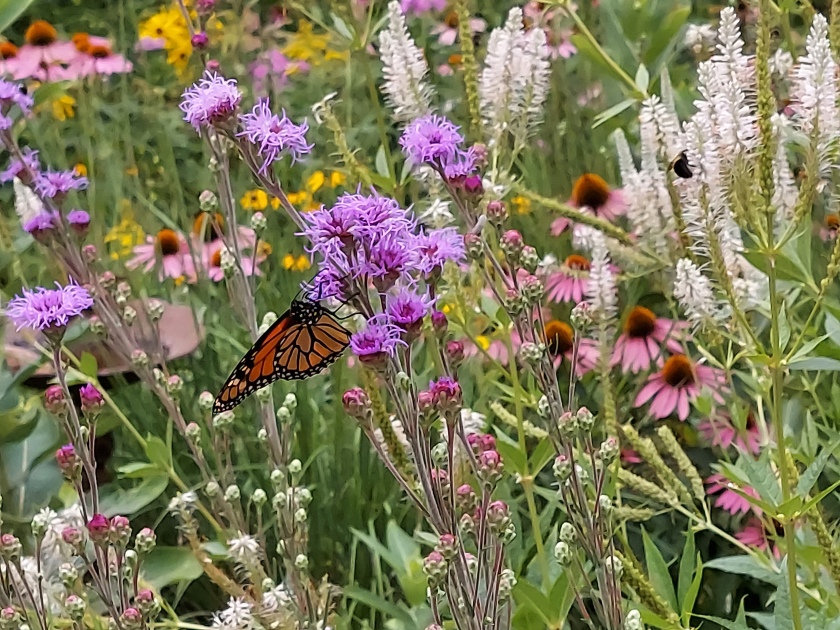
This mix of native plants attracts bees, butterflies, and singing birds.

Bee balm is one of the best plants for pollinators.

Pearly everlasting is a host plant for the painted lady butterfly. Picture of her catterpillar.

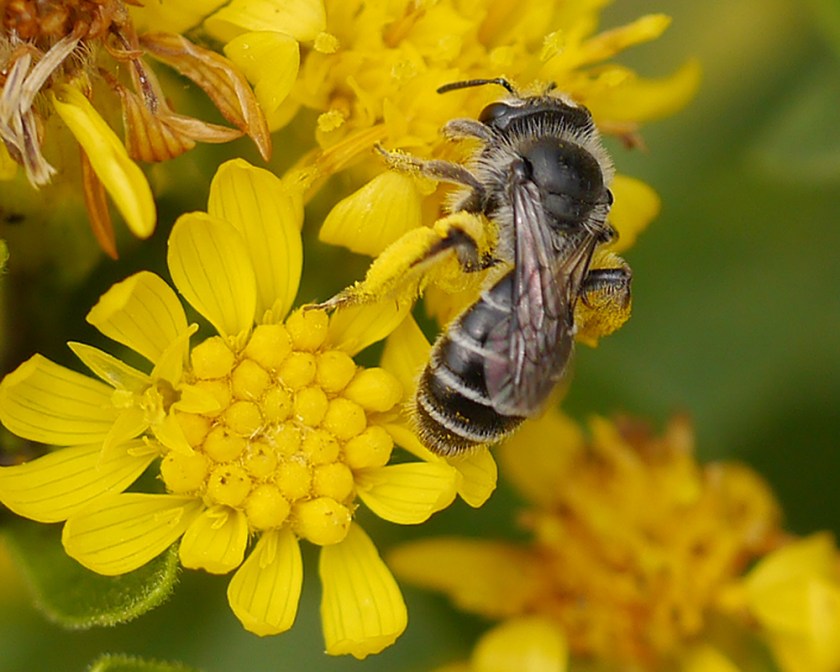
An unsung hero of the pollinator world.

June 19 to June 25, is pollinator week highlighting the importance of pollinators to our world and our survival. Drought, floods, storms, chemicals and loss of habitat are hard on our pollinators, and there are things we can do to ensure their survival.

Pollinators bring me joy and I can’t imagine a world without butterflies, dragonflies, hummingbirds and beautiful singing birds. Take time this week to think about what you can do to help the pollinators of our world. Maybe decide to stop putting chemicals on your yard, plant some native plants, or take out some grass lawn for more garden.

This Pollinator Week is emphasizing the connections between climate and pollinators. Pollinators are dying because their food and homes are disappearing, diseases have increased, and rising temperatures and natural disasters are affecting their ability to survive – all of which are related to climate change. At the same time, the conservation of pollinators and their habitats can help combat climate change by supporting healthy ecosystems, air, soil, water, and plants. Combined, these results make planet earth a safer place for us to live. These are big problems and the efforts that are made around North America and globally during Pollinator Week can help provide real solutions for the pollinators we all love. https://pollinator.org/pollinator-week

https://journeynorth.org/pollintorpatches/featured/06142023-2023-national-pollinator-week

4 steps to help bring back pollinators: https://www.xerces.org/bring-back-the-pollinators

https://www.audubon.org/native-plants

**Juneteenth is the “longest-running African-American holiday,” and it recognizes June 19, 1865, as the date that news of slavery’s end reached slaves in Texas and other states in the southwest—formalizing their emancipation after the end of the Civil War a month earlier. It also came two years after President Abraham Lincoln signed the Emancipation Proclamation.

World Bee Day

Bees like yellow, but they also love purple.

Bees are facing many stressors because of climate change, loss of habitat, too many chemicals and disease.

On World Bee Day plant some seeds bees love like bee balm(menardia) Culver’s Root, hyssop, Joe Pye weed, or asters. Also, consider a bee lawn https://beelab.umn.edu/bee-lawn

Celebrating Bees

https://www.earth.com/news/world-bee-day-highlights-urgent-need-to-protect-pollinators/

Outdoor May

There’s just something about being outside that seems to lift your mood and bring on the happy. Happy May!!

I hope you can spend lots of hours outside this May. Clean air is crucial to being outside! What can you do to ensure our air is clean?

Native plants bring birds butterflies and bees into your yard. They also need no chemicals, and create cleaner air!

Hooray for May. It has been a long snowy winter where I live. This May get outside to experience the beauty of nature. Time outside demands fresh air. It’s a big frustration for me when I go outside, and someone is using a smelly lawn mower/leaf blower, or the airplanes overhead are spewing bad air Why people need to idle their engines as they read their phones is a mystery to me? Please turn your engine off. **This May spend time outside and work for clean air! There’s just something about being outside that seems to lift your mood and bring on the happy. 

I have just been out walking along a river near my house. It was so quiet, the baby leaves are just popping on the trees. Manny rich colors, and wow, beautiful wildflowers appearing! I saw my first bull snake. Pay attention and nature will award you!

Things to do this May:

-Read this article about being outside: Fifteen benefits of being outside: https://blog.biotrust.com/benefits-of-exercising-outside/

-Work for clean air. Never idle your car engine, don’t use your power lawn mower or leaf blower, and please avoid outdoor fires. All these polluting activities contribute to our climate crisis. Every action matters!

-Two or more days a week leave your car in the garage.

-Take a breath, clean air! Thank you.

-Clean air is an environmental justice issue. Read about it here. Never support the burning of garbage or chemical recycling.***

-Plant a few native plants to bring bees butterflies and birds and clean air into your yard. https://health4earth.com/2022/08/26/wow-an-attractive-healthy-lawn/

-Participate in No Mow May https://www.ecowatch.com/no-mow-may-uk.html No Mow May is under way! #NoMowMay encourages people to resist the call of the lawn mower and leave lawns untouched until the end of May for the benefit of: pollinators, biodiversity and clean air!

-Enjoy a peaceful bike ride away from traffic!

**Idling your car wastes fuel, money, and causes air pollution and health problems. It is better to turn off the ignition if waiting more than 10 seconds, as restarting the car does not use more gas than idling.

***What is chemical recycling? The process primarily involves converting plastic into fuel that is then incinerated. Far from actual recycling, it’s really just an expensive and roundabout way of burning fossil fuels. The chemicals industry is lobbying hard to get two types of these plastic-to-fuel incinerators — pyrolysis and gasification — exempt from regulations under the Clean Air Act. 

The Actions For Happiness groups has a calendar of activities to help make May meaningful and kinder!

https://www.lung.org/blog/environmental-justice-air-pollution

Wow, An Attractive Healthy Lawn

Every person on earth bears responsibility for good earth stewardship” Pope Francis

Northern Pearly Eye

How did we ever get sold on the fact that a green monoculture of a turf lawn was a good thing everyone wanted to copy? I love walking in green spaces, but should a green space have more variety than being just like everyone else trying to be like everyone else. Has our climate crisis brough us to a time we question the feasibility of maintaining something that harms instead of adding a positive to our environment?

What is my problem with a turf grass lawn?

First it takes lots of water to keep it green and needs poisonous chemicals. We have been in a drought, and homeowners are watering the sidewalk and the street trying to keep their lawns green. A weed free lawn requires lots of chemicals which run down the street into the storm drains and then into our lakes and streams where they stimulate the growth of algae. See the evidence on ponds and lakes covered with algae muck which can be fatal to dogs and wildlife. Muck covered lakes is not a natural happening!

A monoculture turf grass lawn has no benefit to pollinators. Pollinators love flowers free of chemicals and plants that are native to the area. They also like color and fragrance. The best is native plants have deep roots and can survive without much water.

Deep rooted native plants

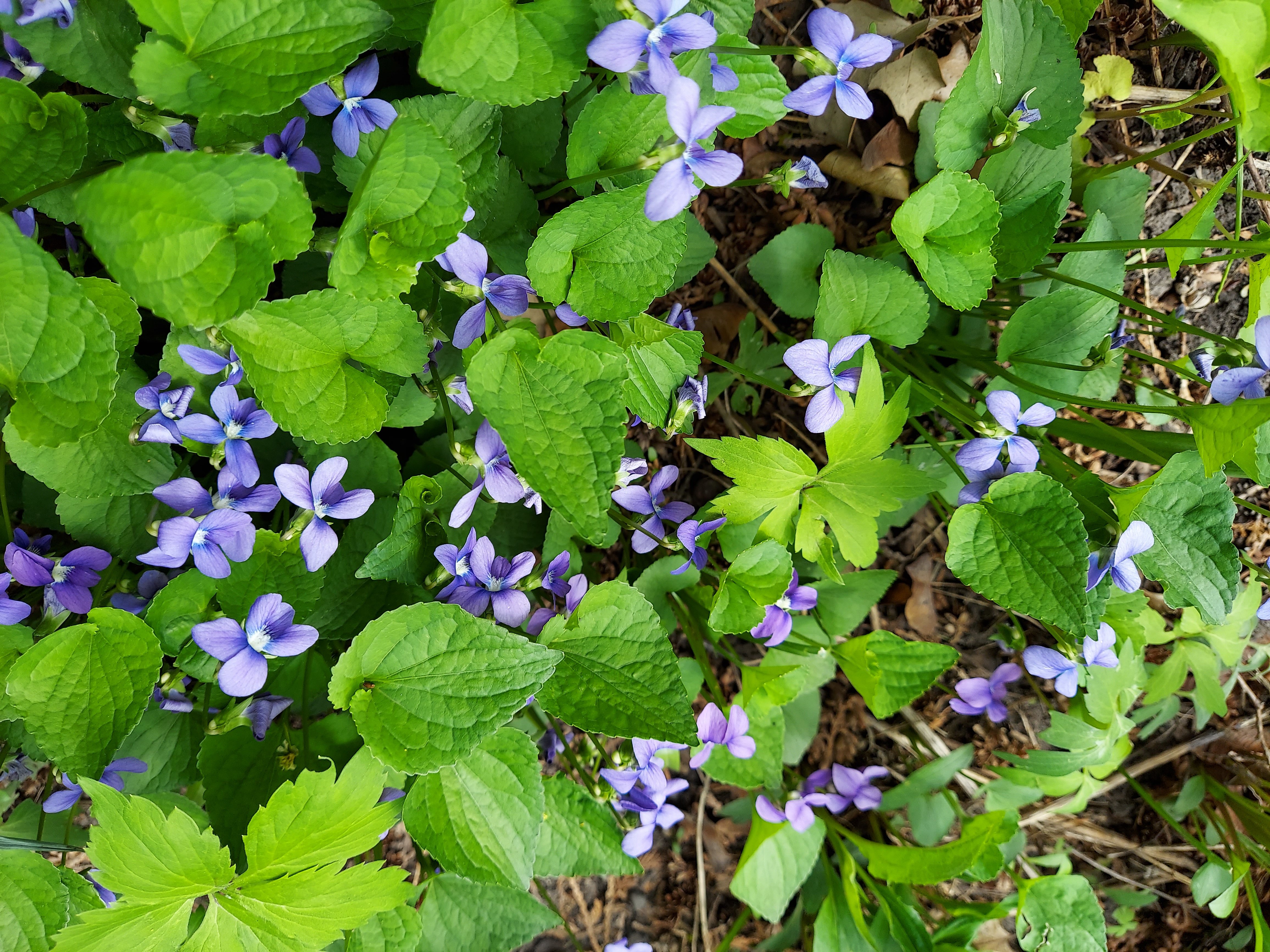
You can create a friendly yard by just not mowing it, but I recommend thinking about a happy bee lawn. Bee lawns composed of various low growing plants don’t require chemicals and are not toxic to humans and pets. Also children can run and play on them just like turf grass. The butterflies and bees love diversity, scent and color. Some of my favorites are native violets and barren wild strawberries, both are very easy to grow and can be mowed a few times a summer. See the link below on bee lawns. Some people like non-native clover and creeping Charlie.

Violets are great for bee lawns.

Start with a small section of your yard, mow it short and work in some seeds (violets, strawberry, clover, creeping thyme, heal all) with a rake or hoe, and keep moist until you get some new sprouts. Find seeds at https://www.prairiemoon.com/

Nature’s Best Hope: https://www.bing.com/videos/search?q=doug+tallamy+videos&view=detail&mid=AB8B87BD969B5366B02BAB8B87BD969B5366B02B&FORM=VIRE by Doug Tallamy

How to save the planet starting with your yard: https://slate.com/podcasts/how-to/2022/08/how-to-save-the-planet-with-native-plants?fbclid=IwAR37nC8uiu9P6EoaXAF1Edm16g3zjKTCdx8zm1vH1JaZQdw0G9kQBqUgvK0

Mowing lawns as the climate warms (startribune.com) 

Endangered migrants come in all shapes and species (startribune.com)

https://www.pennlive.com/life/2022/08/bee-lawns-a-lazy-mower-way-to-help-pollinators.html

Everyday appreciating our beautiful earth, and working for healthy communities through less chemicals, less waste, And more fun!

Leave Those Violets

Beautiful violets are popping up all over our yards, and gardeners either love or hate them. I am a lover of violets. My love affair started when I learned they were the host plant to the fritillary butterfly. How could violets be a fritillary host plant? The timing of these butterflies and the blooming violets were so mismatched. This post is to try to explain how important violets are to the fritillary butterfly.

Violets are the only host plant for the fritillary butterfly.

During the past month millions of blue violets have been pulled out of gardens and lawns. It is unfortunate because the overwintering caterpillar of the fritillary butterfly is just climbing out of its winter leaf letter hiding place looking for violets to sustain their life cycle. The fritillary caterpillar will eat only one thing, its host plant—violets.

The fritillary caterpillars emerge out of the leaf litter where they have wintered, into a few weeks of munching on violets. The caterpillars eat at night so we don’t see them. Next, the caterpillar forms a secretive well-hidden chrysalis, and a few weeks later a beautiful fritillary will evolve from its chrysalis.

Fritillary on thistle

What do these beautiful butterflies’ nectar on? Not violets, but the fritillary’s preferred native nectar plants include milkweeds, Joe Pyes, native thistles, coneflowers, and wild bergamot (bee balm) Plant these native plants to keep the new butterflies in your yard!

After mating, the female fritillary looks for violets to lay her eggs on or near. These eggs grow into caterpillars that will overwinter in the leaf litter surrounding the violet. The caterpillar wakes up around the time the spring violets emerge and the cycle begins again.

I think the best way to create fritillary habitat is to have a dedicated spot in your yard where violets can thrive. Maybe a place where you can allow the leaf litter to stay. Also, creating a bee lawn is a wonderful way to sustain these pleasant violets and the fritillary butterflies too. https://extension.umn.edu/landscape-design/planting-and-maintaining-bee-lawn

A Resting Place for Migrants

Spring arrives and shakes us out of all the darkness in our world! After a violent storm last night, I was worried about migrating birds and butterflies.  Somehow, they manage to arrive and today I was treated to my first Painted Lady butterfly, a hummingbird, wrens and a Swainson’s Thrush.

Native plants create healthy food, homes and a resting spot for birds and butterflies.

It’s World Migration Week! On this big week of migration what can you do to create a healthier and friendlier environment? Find the migration happening in your county here: BirdCast – Bird migration forecasts in real-time 

Would you like your yard to be a resting spot for nature? My yard is for the birds. First, we never use chemicals as we try to create bee, butterfly and bird habitat.  Lawn chemicals aren’t healthy for people and they sure aren’t healthy for wildlife either. Native plants do not need chemicals so they are a win-win. Start small, with easy to grow wild geraniums, bee balm and asters. These three plants will get you blooms in the spring, summer and fall, and they will bring joy to you and wildlife.

Bee balm is a magnet for birds, bees and butterflies!

Here are some other ideas to get you started:

Plants for Birds (audubon.org)

How you can help North American birds during migration : Life Kit : NPR

For Earth Day, plant native plants, practice benign neglect (newstimes.com) 

Why Native Plants Are Better for Birds and People | Audubon

BirdCast – Bird migration forecasts in real-time 

Buying Bee-Safe Plants – Make a Commitment to Talk to Your Nursery! (google.com) 

“We can no longer simply “let nature take its course” and expect the return of productive ecosystems. Humans have meddled in too many ways that prevent nature from healing itself. We have introduced over 3,400 species of invasive plants to which local wildlife is not adapted, and we have eliminated the top predators that used to keep deer, raccoon, skunk, and possum populations in check. If we remove an essential part of an ecological community, we must replace it through active management or the system will collapse.” Doug Tallamy

Foreword by Doug Tallamy: The Woods in Your Backyard preview (instructure.com)

An easier way to welcome migrants and create habitat for them is to NO Mow May

No Mow May Affiliate Spotlights: Appleton, WI and Lawrence University – Bee City USA 

No Mow May: 8 Reasons to Let Your Lawn Grow This Month – Bob VIla 

My third idea for a healthy yard is creating a bee yard, and they are beautiful right now. The flowers of a bee lawn provide food (nectar and pollen) for pollinators. Bee lawns are environmentally friendly because they are managed using low-input methods that generally use less fertilizer and pesticides. Bee lawns can still be used recreationally by your household like a regular lawn. A bee lawn can attract over 50 species of native bees.

https://extension.umn.edu/landscape-design/planting-and-maintaining-bee-lawn

Make May Meaningful

Working together, if everyone does a small part it can add up to a big whole.

May is an exciting month. The days are getting longer, and after a cold spring the changes in nature will be enormous and fast. I hope you can get outside every day and enjoy the beauty of the plants, birds, and butterflies of our planet.

Early blooming native plants. Enjoy!

If you breathe, you should care about clean air. The wild fires have begun, and people are driving their cars, using lawn mowers, blowers and spreading chemicals. All these things contribute to dirty air.

How can we make May meaningful? You can choose to do some of these things to help create clean air for all of us.

-Never idle your car engine. Turn off your car when waiting or using your phone. Idle Threat: Turn Off Your Engine If You’re Waiting 10+ Seconds – Emagazine.com

-Participate in No Mow May No Mow May: 8 Reasons to Let Your Lawn Grow This Month – Bob VIla

-Plant natives and don’t use chemicals on your lawn. The Power of Trees – Health4earth

-Reduce your plastic footprint. The production of plastic pollutes our air, and plastic sheds chemical into our bodies and air. The burning of plastic in garbage burners creates more pollution! What is Microfibers Pollution and Why is It Bad? – Ocean Clean Wash 

-May Ukraine find peace. Take three breaths for peace in Ukraine.

-Find meaningful activities at the Actions for Happiness calendar:

Peace for Ukraine

The Power of Trees

“Trees are sanctuaries. Whoever knows how to speak to them, whoever knows how to listen to them, can learn the truth.” Herman Hesse

Are you planting trees on this Arbor Day weekend?

Trees are fascinating in every season.

A resting place for birds.

Every tree is unique, and some species are more beneficial to wildlife than others. Always try to plant trees native to your area. https://www.nwf.org/NativePlantFinder/Plants https://www.dnr.state.mn.us/trees/native-trees.html

Oak trees are the best for wildlife. Many species of animals, birds, butterflies and insects use oak trees for food and shelter. Entomologist Doug Tallamy says native oaks are the most powerful of all for our environment. oaks: the most powerful plant of all, with doug tallamy – A Way To Garden

Trees do a lot for us. The invigorating feel we get when out in nature improves our health. Trees help clean the air, capture carbon, create homes, shelter and food for wildlife. Trees stop erosion, help manage flooding, and their shade can help cool our homes and our bodies!

Trees remove carbon dioxide from the atmosphere through photosynthesis and store carbon in their wood. The older the tree, the more climate benefits it provides. The shade from trees also lessens the need for cooling in buildings, which reduces carbon dioxide and other pollutants from power plants.

For example, an oak tree with a 20-inch diameter – big enough that an adult could barely wrap their arms around – reduces carbon in the atmosphere by about 1,000 pounds annually. The energy that tree saves is enough to charge your smartphone about 55,000 times!

Trees provide many additional benefits. That same tree near a single-family home provides overall benefits of about $200 per year by increasing the property value, conserving electricity, intercepting and filtering stormwater, and improving air quality. Imagine the benefits multiplying for each tree in your neighborhood! Hennepin County

Learn more about the climate fighting power of trees and find a list of trees that can thrive into the future on Hennepin County’s Climate Action website.

How does climate change threaten birds, and how does planting natives help?

“Our warming world poses profound challenges to conservation. Audubon’s report “Survival By Degrees: 389 Bird Species on the Brink,” published in October 2019, found that as many as 389 out of 604 bird species in North America could be at risk of extinction due to rising temperatures. Learn more at climate.audubon.org. The report showed that in order to protect birds, we need to reduce the emissions that cause the warming and protect the places on the ground that birds need now and in the future. Planting native grasses, trees, and shrubs does both. First, replacing lawns with native plants lowers the carbon produced and water required to maintain them. And native gardens also help birds be as strong as possible in the face of the climate threat—by providing food, shelter and protection. Native plant patches—no matter how small—can help bird populations be more resilient to the impacts of a warming world.” Audubon.org

Reading list:

10 Soccer Fields of Tropical Primary Forests Were Lost Every Minute in 2021 – EcoWatch

Oaktober: The Importance of Oak Trees – Nature’s Perspective Landscaping (naturesperspective.com)

5 Simple Steps to Birdscape Your Yard | Sierra Club  

Where Do Pollinators Go in the Winter? | Xerces Society

An Amazing Ecosystem

Native plants and trees create their own living ecosystem. The plants, wildlife, birds and 🦋 butterflies all work together to support a thriving environment.

The fall and winter seasons are no different . Birds eat the seeds off my native plants all fall and winter. Leaf litter contains habit and hiding for moths, butterflies and other wildlife. So what do we do with all this leaf litter?

These are my leaf litter suggestions:

— keep your sidewalks, driveways, and streets free from leaves. Lakes and rivers are polluted by too many leaves flowing into storm drains which drain into Lakes and streams.

–Leave you plants standing until spring, they also add food and habitat.

–Never use a leaf blower, they are too hard on everything your ecosystem is creating.

–Gently rake leaves into your gardens. This is wonderful mulch and plant protection. Leaves nurture the soil.

–Winter and spring garden surprises will create joy. Watch for birds, wildlife, and early insects.

–Cut plants off in the spring and work the leaves into your soil.

Pollinator Passion

“Nature is a way to escape to a healing place!” John Caddy

First there were four, then there were seven, now there are over ten monarch butterflies playing tag in my yard. This has been going on for two months. Monarchs are passionate for meadow blazing star (Liatris), and they get excited when the blazing star is blooming.  Watching them makes one happy.

Monarch butterflies love blazing star!

Our world is in crisis and we need to find ways to lessen stress on our Earth.  We know droughts, incredible heat, fires, floods, and smoky air are causing people, trees and wildlife to move to safer places or even die. Human behavior has helped to create this awful situation, and new paradigms are needed to lessen our carbon footprint. We already know that the world needs us to drive less, use less water, eat less meat, buy less, and reduce our plastic footprint.

What can we do more of that is actually good? Making a healthy change to your yard by planting native plants is a positive action you can take. Deep-rooted native plants are a win-win for our earth! They do not need chemicals and they do not need watering.

The native plants growing in my yard have produced way beyond my expectations during this harsh summer environment. Because deep-rooted plants don’t need to be watered and don’t use chemicals they create a healthier environment, and an important way to help our Earth.  Planting earth friendly plants will bring more birds and butterflies to visit your yard.  A pollinator garden brings joy many months of the year, but especially in July and August when the pollinators are crazy over nectaring plants.

How do you create this healing place for yourself and the birds and butterflies in your neighborhood? Remove some hostas and turf grass and replace them with native deep-rooted plants. You can create your own eco-system of life in your own yard. Start simple!

milkweed

Start by planting some milkweek and bee balm

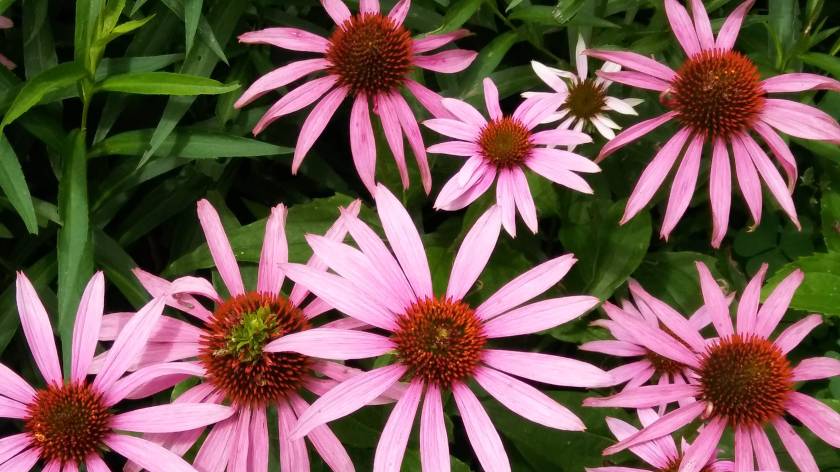
and purple cone flowers.

Every yard should have purple cone flowers

Native gardens are an eco-system of their own creating food and joy for pollinators and humans alike! Create your own escape from the world by using deep-rooted plants to invite birds, butterflies and other wildlife into your space. Many birds raise their babies on the insects and caterpillars they find in the pollinator garden. Birds eat seed from the native plants all year. The goldfinch are already eating away on the bee balm, cone flowers and brown eye Susan.

hummingbirds love cardinal flowers

Cardinal flowers will bring humming-birds to your yard, but cardinal flower is not drought tolerant.

Reading list:

Study: Birds Are Linked to Happiness Levels – EcoWatch 

Wild Ones Introduces Free, Native Garden Designs – Wild Ones: Native Plants, Natural Landscapes

Earth Overshoot Day Moves Forward By Nearly a Month – EcoWatch

How Non-Native Plants Are Contributing to a Global Insect Decline – Yale E360 

Could Las Vegas’s Grass Removal Policies Alter the Western US Drought-Scape? | Sierra Club

Pollinator-Friendly Alternative to Hosta and Daylily – Monarch GardensCornus alternifolia Pagoda Dogwood | Prairie Moon Nursery

Weed garden wins RHS gold at Tatton Park flower show – BBC News 

Soft Landings – Bee and Pollinator Books by Heather Holm (pollinatorsnativeplants.com)

Top US scientist on melting glaciers: ‘I’ve gone from being an ecologist to a coroner’ | Climate change | The Guardian