Climatarian, A New Resolution!

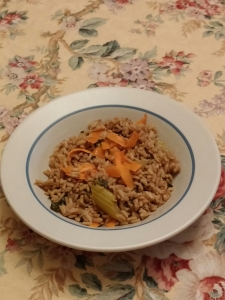
Lentil Stew for Meatless Monday
Lentil Stew for Meatless Monday (lentils from Montana, carrots and onions grown in Minnesota)

My series on reducing waste continues, #31daysoflesswaste

What is a Climatarian?

A Climatarian diet involves choosing what you eat based on the carbon footprint of the food, and using your power as a consumer to drive down the production of beef and lamb which have the biggest impact on our climate.  A climatarian is about eating local food to reduce transportation and reducing food waste.

Climatarian defined in NYT’s top food words 2015: http://nyti.ms/1SZ0jFc see http://bit.ly/goclimatarian for more info

What on Earth is a climatarian?

http://www.climates.network/climatarian

https://health4earth.com/meatless-mondays/

My easy suggestions to become a Climatarian

  • Celebrate Meatless Monday, and a few other days also
  • Shop food co-ops and eat locally grown foods.  Even in December I can find foods  grown in Minnesota and Wisconsin.
  • Walk or take the bus shopping, and grow and preserve your own food
  • Eliminate beef and reduce cheese consumption
  • Compost all food waste


Entertaining? Three Easy Ways to Cut Landfill Waste

Dr Seuss
Dr Seuss

My series, 31 days of less waste continues. Three easy ways to cut landfill waste this week:
** Always use real plates, cups, glasses and silverware.

If you lack enough real dishes

Use real dishes
Use real dishes

for your party or dinner, borrow from a friend or relative. The quality of your party improves 100% even if everything doesn’t match. It will still make your event special. Using paper/plastic plates and glasses creates lots of landfill waste.


** A very wasteful trend has developed. Often the only water served at parties is water in small plastic bottles. Serve municipal water in real glasses. A great way to cut waste and save money is to drink water from public water systems. Run tap water through a Brita or other water filter and you have water better than bottled water. Water filters can be recycled at Terracycle.com

No need for plastic bottles!

** Get in the habit of using reusable table napkins. Make your own napkins from remnant pieces

Cloth napkins are the best!

or purchase napkins from reuse stores. Use your imagination, wash cloths or bandanas also make good napkins. They don’t need to match, I like a contrasting colors look.


From Thanksgiving to New Year’s Day, household waste increases by more than 25%. Added food waste, shopping bags, packaging, wrapping paper, bows and ribbons all adds up to an additional 1 million tons a week to our landfills. (EPA)

ECO Gift Wraping

Gifts in reusable cloth bags

Day 13, of 31 days of less waste

Below ideas from Yogajournal.com

Have you ever waded knee-deep through the detritus of discarded paper, tissue, and ribbon after a gift-opening frenzy and thought, “What a waste”? Well, you’re right. According to Use Less Stuff, during the holiday season Americans throw away 25 percent more trash than usual—or 25 million tons of garbage. What’s more, many wrapping materials are not recyclable because they have a high metal content

6 Eco-Friendly Ways to Wrap Gifts

  • Furoshiki is a type of traditional Japanese wrapping using cloth. Take any square of cloth—a bandana, a scarf, or even a cut-up shirt or pair of jeans—lay it out in a diamond shape, and center the gift on it. Flip the southern corner of fabric up over the gift, tucking the cloth under if necessary, and bring the north corner over the top and let any extra material hang. Then tie the east and west corners at the top of the gift.
  • Decorate a paper bag with stencil or crayon.
  • Use an out-of-date map or some sheet music.
  • Recycle vintage containers, such as cigar, shoe, or hat boxes.
  • Incorporate environmentally friendly items, such as raffia, string, or strips of cotton or silk, in lieu of synthetic ribbon.
  • Use natural gift-box fillers, such as leaves, straw, pine needles, or shredded recycled paper scented with a few drops of essential oil.

My favorites for wrapping gifts are:

My husband's gift wrapping
My husband’s gift wrapping

** Use washable, reusable shopping bags as gift bags

** I reuse the gift bags from last year for this year’s gifts.

** Use light hand towels or cloth napkins.

** Use wrapping paper made of recycled materials

http://www.yogajournal.com

https://www.bridgingthegap.org/using-less-stuff/

Surprise of the Year/Lake Superior

Lake Superior in winter, Is this a thing of the past?
Lake Superior in winter, Is ice a thing of the past?

Lake Superior a Climate Change Antenna

Over 90% of global warming is in the oceans.  A decades long research on 235 lakes shows that, “Lake Superior is one of the more rapidly warming lakes” The big lake is warming even faster than the oceans!  My unscientific observation is that it seems like the days the wind off the lake are fewer.  But that happens when warmer winds from the west and south dominate! Also part of our warming climate.

So why is it important?

1. Toxic clouds of algae can bloom.  And run-off from the land makes this worse!

2. Fish populations are altered, which has been going on for a while!

3. The worst: Invasive species can find a new home!

More reasons to reduce you carbon footprint.

See the story below:

http://www.startribune.com/world-s-lakes-are-warming-up/362719881/

Sunset on Lake Superior

Cut food waste day 12, Meatless Monday

My series, 31 days of less waste continues:

I love risoto
I love risotto

Clean out the Refrigerator Risotto
Food waste is a waste of energy. Growing shipping and packaging of products takes lots of energy. What are your ways to reduce food waste?
I have always been intimidated by risotto, but after my recent trip to Eastern Europe and many delicious meals, I knew I could become good at making risotto.
This is my vegan, Meatless Monday recipe. Serve with fruit, salad and a veggie patty. Top with whatever nuts you might have, the garnish of cheese will make it vegetarian, not vegan.

Clean out the Refrigerator Risotto
– 1 small onion or leftover onion
– 1 cup rice (I use brown, white rice is easier and faster)
– 2 cups of water or more
– 1 clove garlic (optional)
– vegetables or leftovers to use up (I used collard greens , parsley, celery, and carrots)
– 1 tsp. salt
– garnish with nuts (optional)
– oil for browning onions and veggies. I use olive or coconut.
Process:
Stir fry onion in oil until it starts to brown, add vegetables and continue to stir fry for few minutes, next add rice for about 3 minutes and salt. Throw in any other left overs. Next, I add about 1/2 cup of warm water, stirring every few minutes, and adding more warm water as the water is absorbed. When the rice is soft and creamy, it is ready to serve. About 30-35 minutes.
Easier method:
After the rice and vegetables are slightly browned add the 2 cups water and place in an oven dish in the oven @ 350 degrees for 30 minutes.

Enjoy!

Erase Plastic Pollution

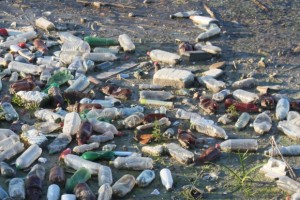
Do we want water that looks like this?
Do we want waterways that looks like this?

My series on less waste continues:

We can all do something about this tremendous influx of trash and I will be posting ideas for 31 days on how to reduce trash and waste:

Plastic, what an amazing and awful product at the same time.! It is cheap and it is light.  Unfortunately, it has become an enormous environmental problem.  Many lack the personal responsibility to get single-use plastic bottles and bags to the recycle bin.  Many developing nations I visit seem oblivious to it, except in tourist areas! Days 6 through 11 of #31daysofreducingwaste are going to focus on how we can have less plastic pollution.

So what is the problem with plastic? Many say the materials in plastic cause cancer. Plastic will never dissolve, but will break into thousands of pieces of litter. The plastic in the oceans will be here on earth for hundreds of years and it will be found in the intestines of many fish, turtles and birds.  Plastic creates a terrible waste and litter problem.  According to the http://blog.oceanconservancy.org/tag/plastic/   If left unchecked, there could be 250 million tons of plastic in the ocean by 2025 — about one pound of plastic for every three pounds of fish. We can’t let this happen.

Avoid plastic, fill your glass or metal bottles with liquid

Avoid plastic, fill your glass or metal bottles with liquid

** The best way to reduce plastic trash is NOT to drink bottled water. Bring a reusable water bottle to work, school, and for all your adventures.

**Avoid plastic bags. Always bring your reusable shopping bags.

Shopping bags made from recycled plasstic
Shop with reusable bags

** How can you avoid baggies?  I love these wpid-wp-1418350258136.jpegcompostable wax paper bags

** Reuse and recycle all plastic bags.

Please recycle plastic bags at grocery stores!

* Reduce packaging: Try to purchase items with no packaging or packaging that can be recycled.


** Never purchase items that contain microbeads :  https://health4earth.com/2014/07/16/what-products-contain-microbeads/


From Thanksgiving to New Year’s Day, household waste increases by more than 25%. Added food waste, shopping bags, packaging, wrapping paper, bows and ribbons all adds up to an additional 1 million tons a week to our landfills. (Source: EPA)

http://washburn.mpls.k12.mn.us/washburn_green_team_video.html  This is a great video made by my local high school students on reducing trash.


Superior Views, November and December

In all things of nature, there is something of the marvelous.” Aristotle

Lake Superior in November

Both November and December have been unseasonably warm! Warm sunny days alternating with rainy days.  It is quiet, very quiet.  Crows, the call of the pileated, and bald eagles maintaining a continuous chatter are about the only sounds.  Even the big lake has been on the quiet side especially with the wind from the SW.

Eagles sit in this white pine tree

Rough grouse and mystical snow buntings entertain as they fly up from the roadside. The large number of chickadees and grey squirrels is unusual, and I assume the mild weather has something to do with their numbers. Both chickadees and squirrels peek through the windows of our house watching our household. Chickadees were still eating flies off our house the first week of December, but cooler nights have turned the chickadees to the feeders, plants and trees.

An occasional 1000 foot ore boat passes through on horizon

While I was delighting in the charming chickadees. These stories about chickadees came from one of my favorite bird authors:  http://www.startribune.com/chickadees-go-to-charm-school/360852661/

Superior Views, my observations on Lake Superior


Reduce Carbon Emissions, Day 5

960133_616554661744515_1305522394_nThis is Day 5, of a series of blogs on #31daysofreducingwaste. Today I am posting ideas from the New York Times on ways to reduce carbon waste.

To me these ideas seem easy, and I hope you can find something new you can do to reduce carbon waste and pollution.

Below is from the New York Times

What You Can Do About Climate Change

By JOSH KATZ and JENNIFER DANIEL DEC. 2, 2015

 Simple Guidelines for Thinking About Carbon Emissions

Global climate: it’s complicated. Any long-term solution will require profound changes in how we generate energy. At the same time, there are everyday things that you can do to reduce your personal contribution to a warming planet. Here are some simple guidelines on how your choices today affect the climate tomorrow, and reduce carbon waste

1.You’re better off eating vegetables from Argentina than red meat from a local farm.
 

Eating local is lovely, but most carbon emissions involving food don’t come from transportation — they come from production, and the production of red meat and dairy is incredibly carbon-intensive.

Emissions from red-meat production come from methane, a potent greenhouse gas. Experts disagree about how methane emissions should be counted in the planet’s emissions tally, but nearly everyone agrees that raising cattle and sheep causes warming that is an order of magnitude more than that from raising alternate protein sources like fish and chicken (the latter of which have the added benefit of creating eggs).

According to researchers at Carnegie Mellon, a typical household that replaces 30 percent of its calories from red meat and dairy with a combination of chicken, fish and eggs will save more carbon than a household that ate entirely local food for a full year.

Yes, eating nothing but locally grown fruits and vegetables would reduce your carbon footprint the most. But for people not ready to make that leap, reducing how much meat you eat matters more than going local.

2.Take the bus.
 

To give ourselves a good shot at avoiding severe effects such as widespread flooding of coastal cities or collapse of the food supply, scientists have determined there’s only so much carbon dioxide we can safely emit. Divvying up this global carbon fund among the world’s population (and making some assumptions about future emissions) gives you the average amount each person can burn per year over a lifetime — an annual “carbon budget.”

The current per capita emissions for Americans is about 10 times this limit, and given the relative affluence of this country, our emissions will not get down to the average anytime soon. But they can still fall from where they are. Consider this: If you drive to work alone every day, your commuting alone eats up more than your entire carbon budget for the year. Taking the bus — or biking! — would sharply reduce your output.

3.Eat everything in your refrigerator.
Scientists have estimated that up to 40 percent of American food is wasted — which amounts to almost 1,400 calories per person every day. Food waste occupies a significant chunk of our landfills, adding methane to the atmosphere as it decomposes. Even more important, wasted food adds to the amount of food that needs to be produced, which is already a big part of our carbon load.

How can you waste less? For food shopping, plan out meals ahead of time, use a shopping list and avoid impulse buys. At home, freeze food before it spoils. If you find yourself routinely throwing prepared food away, reduce portion sizes.

4.Flying is bad, but driving can be worse.
 

Remember that annual carbon budget we talked about? One round-trip flight between New York and Los Angeles, and it’s all gone. Fliers can reduce their footprint somewhat by traveling in economy class. First-class seats take up more room, which means more flights for the same number of people. On average, a first-class seat is two and a half times more detrimental to the environment than coach.

But as bad as flying can be, driving can be even worse. A cross-country road trip creates more carbon emissions than a plane seat. And while a hybrid or electric car will save on gas mileage, most electricity in the United States still comes from fossil fuels.

If you really want to mind your carbon emissions, taking a train or a bus is best, especially for shorter trips. Or try that Internet thing: A Skype call or Google Hangout produces very little carbon dioxide.

5.Replace your gas guzzler if you want, but don’t buy a second car.
 

Before you even start driving that new car to add to your first one, you’ve already burned up three and a half times your annual carbon budget. How? By encouraging the manufacturing of all of those raw materials and metals.

Yet there’s a break-even point at which the carbon savings from driving a new, more efficient car exceeds the carbon cost required to produce it. For example, on average, trading in a 15-mile-per-gallon S.U.V. for a 35-m.p.g. sedan offsets the extra manufacturing costs within two years.

Anything you do to improve mileage will reduce your carbon output. Keeping to the speed limit and driving defensively can improve your mileage by more than 30 percent, according to the Department of Energy. Even something as simple as keeping your tires inflated and having your engine tuned up can give you up to a 7 percent bump in m.p.g. — and an average carbon savings of about what you’d save from eating only local foods all year.

6.Buy less stuff, waste less stuff.
It’s not just car manufacturing that adds to carbon emissions. Other consumer goods can have a huge impact: Making that new MacBook Pro burns the same amount of carbon as driving 1,300 miles from Denver to Cupertino, Calif., to pick it up in person.

At the other end of the product life cycle, reducing waste helps. Each thing you recycle is one fewer thing that has to be produced, and reduces the amount of material that ends up in landfills. But the recycling process consumes energy as well, so — depending on the material — it may not be as helpful as you might think. Recycling a magazine every day for an entire year saves less carbon than is emitted from four days of running your refrigerator.

It’s better not to consume the raw materials in the first place, so you may want to think carefully about whether you’re really going to use something before you buy it.

NYTimes.com     http://www.nytimes.com/interactive/2015/12/03/upshot/what-you-can-do-about-climate-change.html?_r=0

Below is my post on reducing carbon

https://health4earth.com/easy-things-you-can-do-to-help-stop-climate-change/

Purchasing recycled products saves raw materials


What an Enormous Waste!

How many people have to die before responsible gun owners are convinced that our right to life outweighs their right to own a gun?

This is Day 4 of #31daysoflesswaste
I never thought I would post the following for my 31 day series.
Is there a more enormous waste than children, college students or anyone being killed in the prime of their lives? The United States has lost all good sense when it comes to violence. We aren’t safe in our schools, churches, holiday parties, public buildings or on the street.
It seems hopeless, but there are things you can you do???
1. Lock up: If you have gun in your home make sure it is locked up.
2. Don’t reinforce violence by watching violent TV shows, movies or video games.
3. Vote! Vote only for candidates that support background checks on all gun sales, support an assault weapon ban, and support purchase of only one gun a month.

4. Speak out: Contact your elected officials and tell them how you feel. Write letters to the editor.

Is This Working?
Is This Working?


A Good Reason to Be Conservative

11703236_908335322566446_6098173936904503204_oIf everyone did just a bit, it could add up to a “whole lot!” Health4earth

My series, 31 Days of Less Waste continues:

Day 3 of 31 days of less waste. and another day of solidarity with the Paris Climate Summit.  Change and saving our planet starts with all of us! Today’s post is on driving conservatively.  Don’t waste gas, become an ECO driver!

What can we all do to reduce the emissions we put in the air we breathe?

  1. Drive less: I am fortunate to have good bus service, and can walk to shopping and many of my activities.  Our car often stays in the garage for weeks at a time. We even hauled our Thanksgiving turkey home on the bus!

2.  Car pool: Most cars have only one person. Not only is this boring, but it is   wasteful! You can change this. Make travel fun, offer rides to co-workers, classmates, and  others going to your events. Even one-day a week would make a difference!

3. Become an ECO driver:  Drive the speed limit and accelerate gently.

4. Maintain your car: Keep tires inflated, filters replaced, and make sure your automobile/truck aren’t emitting excess pollution.

http://www.earth911.com/living-well-being/new-drivers-adopt-eco-friendly-habits/