Corporate Greed and Our Health

It is horrifying we have to fight our own government to save the

My yard without chemicals

environment” Ansel Adams

We now have a government that is dismantling all protections the American people have from corporate America.  Corporate profits now take priority over the health of people, wildlife and the entire planet earth. The United Nations released a report this week stating how harmful pesticides are to people and the planet.

“The chronic overuse of pesticides across the world has caused “catastrophic” harms to human health, human rights and global biodiversity, according to a report presented to the United Nations human rights council Wednesday.

The UN-solicited study on toxic chemical impacts to global food sources criticizes pesticide manufacturers’ “systematic denial” of the broad harms caused by their products and calls for a transition to healthier farming methods that move away from the current dependence on pesticides.” Read about it here. And more about it from Ecowatch.

And read about the state of our bees from pesticide use and habitat loss.

In his book, Poison Spring: The Secret History of Pollution and the EPA, published in 2014, E. G. Vallianatos, who worked for the EPA for 25 years, wrote:

“It is simply not possible to understand why the EPA behaves the way it does without appreciating the enormous power of American’s industrial farmers and their allies in the chemical pesticide industries, which currently do about $40 billion per in year business. For decades, industry lobbyists have preached the gospel of unregulated capitalism and Americans have bought it. Today, it seems the entire government is at the service of the private interests of America’s corporate class.”

We can only control our corner of the world.  I hope you will think twice before putting pesticides on your yard, and speak out against the use of chemicals in agriculture and in our parks!

Jane Goodall: How Can We Believe It Is a Good Idea to Grow Our Food With Poisons?

March 15, Action

A March 15 action item: Send a postcard to Donald Trump. Send at least one card, but it is hard to stop at one.  Weekly, I have been sending postcards, and it is good for the soul.
What issues are you passionate about? What are you upset about? What do you think of the first few weeks of this administration? Time is now to express your thoughts. March 15, is “Send a Postcard to Donald Trump Day.”
Spread the word! Everyone on Earth should let Donald J. Trump know how he’s doing as the president of the United States.
No postcards? Make you own. Cut 4 inch by 6 inch pieces from poster board. Walgreens usually has poster board, but they also might have postcards.
On March 15th, mail your messages to:

Donald J. Trump
The White House
1600 Pennsylvania Avenue NW
Washington, DC 20500

My postcards this week will be about clean water/clean air, the Great Lakes Restoration Fund, healthcare for everyone, enormous tax cuts for billionaires, travel bans, and all the lies coming out of this White House. I believe in being positive, don’t loose sight of the important issues facing us all. There are so many concerns and so many issues, go for it!!  Remember, Wednesday, March 15. Thank you.

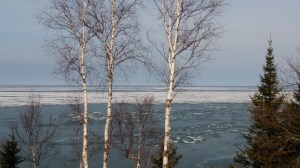
March on Lake Superior

The lake is full of moving slush

March brings melting snow, longer days and deep blue sun,

Hope of spring and then a big snow fall!

but then a big dump of new snow. Today the lake in front of my house is full of white slush, but two days ago it was empty of snow, ice, or any sign of winter. With the winds and currents the lake is constantly refreshing itself!

15 degree temps and there were fishermen in a small boat fishing in the ice chunks
15 degree temps, and there were fishermen in a small boat fishing in the ice chunks

I am Hopeful

Hope for wildlife
Hope for wildlife

This is a collection of hopeful stories I have read the past week.

I love the hopeful stories of this past week. These are stories that give an exciting projection of what the world is going to be like in the future. This is my occasional series on hopeful good news stories happening throughout the world.

1. Cedar Rapids, Iowa is planting 1,000 acres of native prairie to create bee/butterfly/bird/wildlife habitat by planting native prairie plants.   99.99% of Iowa’s native habitat is gone. Information at Iowa  Let’s hope other communities will do the same!

2. IKEA has created growrooms which are large, multi-tiered spherical gardens that are designed to sustainably grow enough food to feed a neighborhood.

3. India: This one is beyond my understanding: Scientists in India have captured carbon and are turning it into baking soda.  Read about it at India

English: No name baking soda

4. Indonesia: Indonesia, a nation of many islands, has strong goals to cut plastic use. Read about it here.  wpid-20151101_155242.jpg

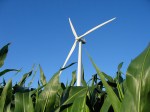
5. Texas: “I never thought that wind would pay more than oil,” said a Texas landowner. Wind power is paying ranchers more money for wind than oil. Read about it at Texas.

wind-turbine-cornfield

6. Hope for the Paris Climate Agreement.  Ivanka Trump and her husband seem to support the historic climate deal.

7. Copenhagen now has more bikes than cars which is no surprise if you visit this biking city. Their bikes lanes are as wide as car lanes.  See video bikes in Copenhagen


Water Is Life

We can't take clean water for granted!
We can’t take clean water for granted!

No one should be allowed to pollute our water ways, no one! The water we have on earth is the only water we will ever have and we must take care of it. Mr. Trump has proposed to roll back regulation for our waterways, but says he is for clean water??? The water on earth belongs to all of us, not to just big business or farmers, but to everyone. We depend on clean water for drinking and recreation, and wildlife needs clean water for survival.  We cannot choose profits over the health of people. It will take time and much litigation to eliminate these rules, but we all need to speak out for clean water. Read about rolling back clean water protection here.  Pay attention to actions not to worthless talk!

Donate to the following organizations that litigate for clean water:

NRDC, (Natural Resources Defense Council)

Earth Justice


The Horrifying Impact of Plastic Pollution

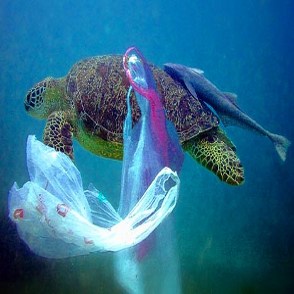
This is the third blog this week I have done on plastic. If this doesn’t cause you to reduce plastic use, nothing will.  Plastic is harmful to wildlife, but it is also ending up in our food. Make reduction of plastic-use a daily habit.

Photo: Shutterstock


“The horrifying impact of plastic pollution on marine life is well documented.  Greenpeace found that plastic pollution in the ocean has negatively affected at least 267 species worldwide, including 86 percent of all sea turtle species, 44 percent of all seabird species and 43 percent of all marine mammal species. Large pieces of plastic floating in the ocean are easily mistaken for food by seabirds, whales, dolphins and turtles. When plastic is ingested by these animals, it blocks their digestive tracts and gets lodged in their windpipes, cutting off or filling their stomach, which results in malnutrition, starvation and death. It also causes fatalities due to infection, drowning and entanglement.” Earth911. Read the entire article here 

Simple ways to reduce your plastic pollution:

Bring you own bag
Bring you own bag
  1. Start simple and add one idea at a time
  2. Bring your own shopping bags
  3. Buy bulk and refill your own containers
  4. Don’t purchase bottled water
  5. Say “No” to straws, plastic spoons, forks, and knives
  6. Always choose glass containers over plastic!
  7. Never purchase Styrofoam (Be aware of meat and produce trays)

Good Ideas to Reduce Plastic

turtle-plastic by ecomena.org

This is an excellent blog on reducing plastic from http://www.ecomena.org. It is so simple!
Ecomena’s top ways to reduce plastic are:
1. Bring your own shopping bags
2. Buy bulk and refill your own containers
3. Don’t purchase bottled water
4. Say “No” to straws

Read the entire blog here

And, Health4earth on Refuse Plastic 

Bring your own water bottle


Some co-ops and grocery stores have fabulous selections of soaps and oils to refill your bottles

Surprising Microfibers in Fish and Food.

Jon Platek
by Jon Platek

Living in a cold winter climate, I love my fleece shirts, and have been struggling with this information for a few months trying to ignore the facts.
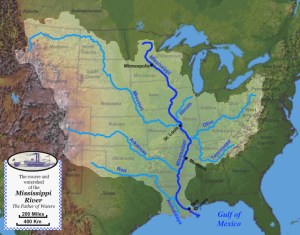
Studies have shown the Mississippi River is full of these microfibers. These are even smaller than microbeads.   Microbeads in soaps, make-up, and toothpaste created much worry and Congress has banned them. However, new studies are showing that microfibers are worse for us and wildlife than microbeads. Yikes, very confusing.  Read the entire article on the Mississippi River study

Information from NPR:

The innovation of synthetic fleece has allowed many outdoor enthusiasts to hike with warmth and comfort. But what many of these fleece-wearing nature lovers don’t know is that each wash of their jackets and pullovers releases thousands of microscopic plastic fibers, or microfibers, into the environment — from their favorite national park to agricultural lands to waters with fish that make it back onto our plates.
This has scientists wondering: Are we eating our sweaters’ synthetic microfibers?
Probably, says Chelsea Rochman, an ecologist and evolutionary biologist at the University of Toronto, St. George. “Microfibers seem to be one of the most common plastic debris items in animals and environmental samples,” Rochman says.
In fact, peer-reviewed studies have shown that these synthetic microfibers — a type of plastic smaller than a millimeter in length and made up of various synthetic polymers — have popped up in table salt in China, in arctic waters and in fish caught off the coast of California. These tiny fibers make up 85 percent of human debris on shorelines across the globe, according to a 2011 study. They’re basically inescapable. So it’s not unlikely they’re finding their way into the human diet, especially in seafood.” NPR

Fleece keeps us warm!

I hope that municipalities will come up with filters that will take these fibers out of our water during sewage treatment, or filters will become available to put on our washing machines, but until then we can wash our fleece less and try to consider some alternative natural clothing like wool and cotton.

  1. Wash fleece less often.
  2. Stay informed on microfibers
  3. Wear cotton and wool

https://health4earth.com/2014/07/16/what-products-contain-microbeads/

Happy Valentine’s Day

wpid-wp-1423799335727.jpegValentine’s Day has always been one of my favorite days, and this year we need to clear our heads and celebrate harder than ever. We all can find something to love. Because I have a passion for our earth.  My suggestions are about loving the earth.  What do you love??

My suggestions for loving the earth today, tomorrow and forever.

Reduce your plastic use and always bring reusable shopping bags

Recycle, Recycle, and Recycle some more

Turn off lights and electronics

Buy Less and reuse what you have

Pick Up trash and litter. Any litter can end up in streams, lakes and oceans

Walk and use public transit.  How many days can you go without a car?

Appreciate the beauty of the earth

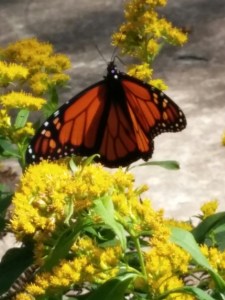
Plant seeds of milkweed, cone flowers, bee balm, asters, and Liatris to bring butterflies birds and bees to your yard.  And never use chemicals
Happy Valentine’s Day wp-1455333450127.jpeg

And from Climate Reality, 25 ways to show the love