“We have the choice to use the gift of our life to make the world a better place–or not to bother” Jane Goodall
Our actions and daily choices speak to the world we want to create. This holiday, we can choose to make friendly choices for our planet. Instead of buying new decorations use what you have and follow these simple steps to make your decorations, gifts, and gatherings more sustainable: Seven tips for an earth-friendly holiday season (worldwildlife.org)
Look at the materials gifts are made from and keep sustainability in mind. Use paper products made from recycled materials and avoid single-use plastics that can’t be recycled. Buying secondhand items like vintage clothes, furniture, and refurbished technology is another great way to gift more sustainably.
Look for cards and wrapping paper made from recycled materials. Avoid foil-backed cards or those with **glitter—which aren’t recyclable.
Glitter is a microplastic!
** Reasons to avoid glitter:
A few facts about glitter will surprise you!
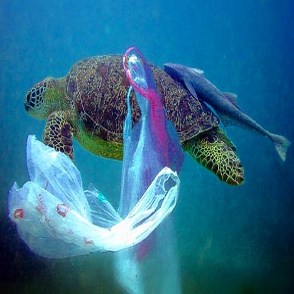
Glitter is made of a microplastic known as Mylar, which is hurting ocean life
This plastic accounts for 92.4% of the 5.25 trillion pieces of plastic in the ocean
Marine life is mistaking glitter for food, which is damaging their livers
Every tiny sparkly bit takes thousands of years to break down
Happy December! We have many challenges as a society. Community health is important to me. Making our streets safe, clean air and clean water should be top priorities for us all. Covid-19 is not going away, and we need to still wear masks, social distance and get vaccinated. We can’t have healthy communities unless everyone is healthy and everyone works to make it a reality. Kindness is an important aspect of healthy communities, make it a priority for your day.
Every day work for kinder and healthier communities!
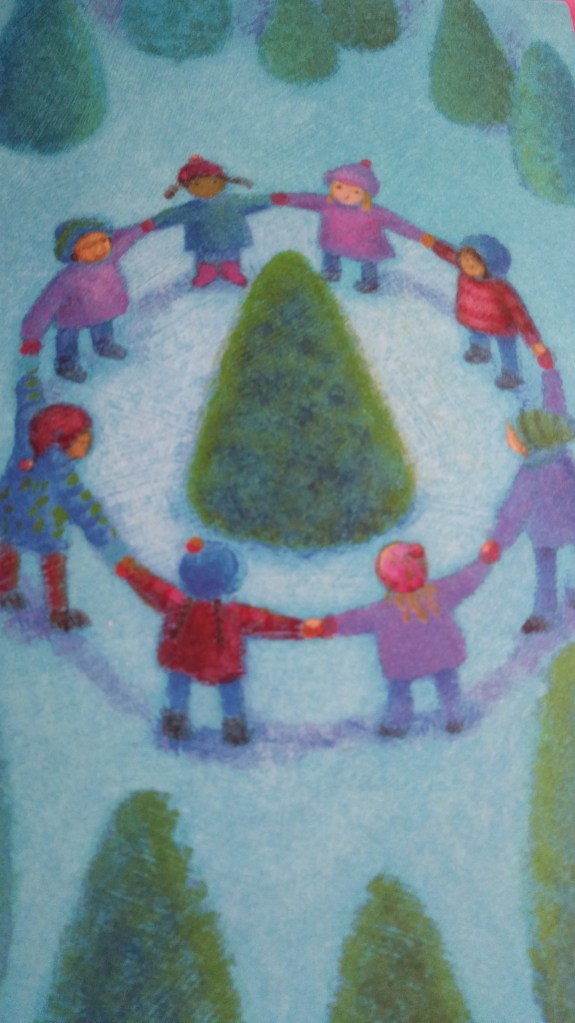
Kindness creates a ripple, keep kindness going! Make our communities kindness healthy! Kindness ideas below.
Smile and Be Kind!
Nothing exists by itself alone. We all belong to each other; we cannot cut reality into pieces.
Native plants and trees create their own living ecosystem. The plants, wildlife, birds and 🦋 butterflies all work together to support a thriving environment.
The fall and winter seasons are no different . Birds eat the seeds off my native plants all fall and winter. Leaf litter contains habit and hiding for moths, butterflies and other wildlife. So what do we do with all this leaf litter?
These are my leaf litter suggestions:
— keep your sidewalks, driveways, and streets free from leaves. Lakes and rivers are polluted by too many leaves flowing into storm drains which drain into Lakes and streams.
–Leave you plants standing until spring, they also add food and habitat.
–Never use a leaf blower, they are too hard on everything your ecosystem is creating.
–Gently rake leaves into your gardens. This is wonderful mulch and plant protection. Leaves nurture the soil.
–Winter and spring garden surprises will create joy. Watch for birds, wildlife, and early insects.
–Cut plants off in the spring and work the leaves into your soil.
The official Adopt-a-Drain Fall Leaf Cleanup Week kicks off Monday, October 11th, and runs through Sunday, October 17th.
Leaves in the street plug storm drains and pollute our waterways.
Storm drains feed directly into our local lakes and rivers, unfiltered, so it’s important to keep them clear for cleaner and healthier waterways. Fall is an especially important time to keep the leaves that are collecting on our streets and sidewalks out of our storm drains. While they might be “natural” debris they become pollution when large quantities hit the water, break down, and become food for algae.
We are at the end of World Clean Up Month. As we pick up trash and works to keep our Earth clean, I always wonder, “What can we all do to keep the Earth cleaner and healthier?”
Bring your reusable water container.
My reuseable lunch containers
Today I walked by a car that had it’s back seat full of bottled water, and too often I see people with grocery carts full of bottled water. Why not purchase a large reusable container and fill that at a store? You could save hundreds of plastic bottles from ending in the landfill and live a more sustainable life.
I have confidence in our public water supply. I know where I live it is safe!
What are the costs of bottles water to our environment? A study done in Spain answers this question. Recycling and water in every community is different so we can’t make big generalizations, but in the United States recycling of plastic is only 9 tp 11% which makes bottled water awful for the environment. Also, the production of plastic uses fossil fuels and pollutes our air.
The study found that the environmental toll of bottled water was 1,400 to 3,500 times higher than that of tap water.
Another problem with bottled water is that companies like Nestle take free public water from aquifers to bottle and sell to the public. This is happening on Lake Superior right now (Lake Superior is not for sale). What a racket! Maine has passed a law to make companies responsible for recycling their products instead of the taxpayers. Read about it here Maine Will Make Companies Pay for Recycling. Here’s How It Works. – The New York Times (nytimes.com)
World Cleanup Day addresses the issue of waste and litter across the globe. On September 18, the international day of service gets communities involved to keep their own neighborhoods clean and sustainable.
We are all in this together. Let’s keep her clean!
So much of litter is plastic waste that easily flows into our rivers and streams, and then all the way to the Gulf of Mexico or Atlantic or Pacific Oceans.
Plastic litter is harmful to wildlife!
This is an productive day to get out and pick up trash. Wear gloves, bring a bag and get outside to pick up the trash in your neighborhood or choose an area you know needs to be picked up.
Good luck, be safe, watch for traffic, and enjoy your outside time! Thank You!
“Nature is a way to escape to a healing place!” John Caddy
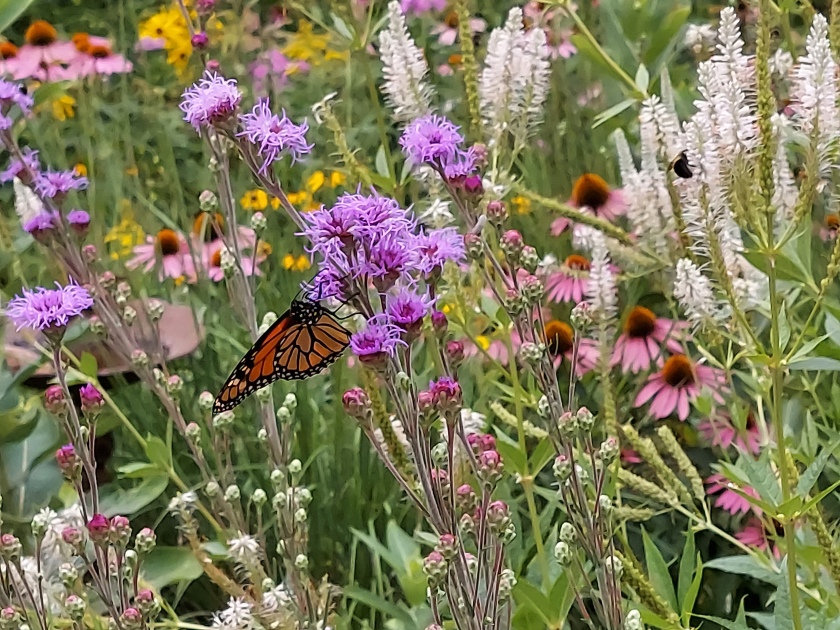
First there were four, then there were seven, now there are over ten monarch butterflies playing tag in my yard. This has been going on for two months. Monarchs are passionate for meadow blazing star (Liatris), and they get excited when the blazing star is blooming. Watching them makes one happy.
Monarch butterflies love blazing star!
Our world is in crisis and we need to find ways to lessen stress on our Earth. We know droughts, incredible heat, fires, floods, and smoky air are causing people, trees and wildlife to move to safer places or even die. Human behavior has helped to create this awful situation, and new paradigms are needed to lessen our carbon footprint. We already know that the world needs us to drive less, use less water, eat less meat, buy less, and reduce our plastic footprint.
What can we do more of that is actually good? Making a healthy change to your yard by planting native plants is a positive action you can take. Deep-rooted native plants are a win-win for our earth! They do not need chemicals and they do not need watering.
The native plants growing in my yard have produced way beyond my expectations during this harsh summer environment. Because deep-rooted plants don’t need to be watered and don’t use chemicals they create a healthier environment, and an important way to help our Earth. Planting earth friendly plants will bring more birds and butterflies to visit your yard. A pollinator garden brings joy many months of the year, but especially in July and August when the pollinators are crazy over nectaring plants.
How do you create this healing place for yourself and the birds and butterflies in your neighborhood? Remove some hostas and turf grass and replace them with native deep-rooted plants. You can create your own eco-system of life in your own yard. Start simple!
Start by planting some milkweek and bee balm
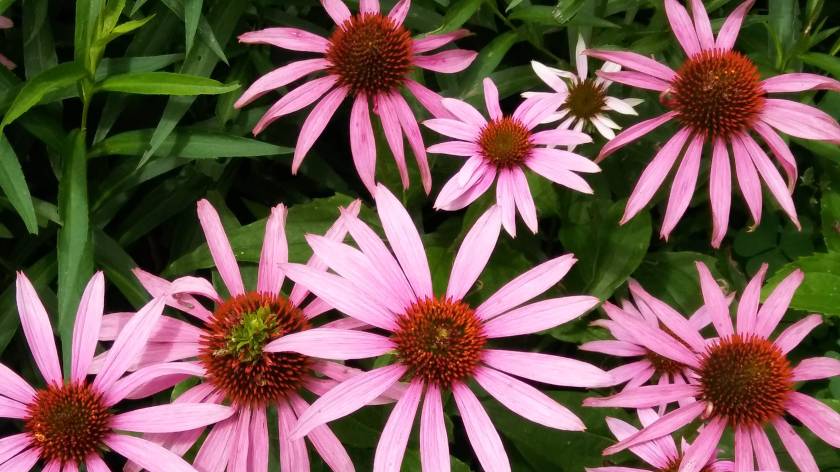
and purple cone flowers.
Deep rooted plants don’t need to be watered
Native gardens are an eco-system of their own creating food and joy for pollinators and humans alike! Create your own escape from the world by using deep-rooted plants to invite birds, butterflies and other wildlife into your space. Many birds raise their babies on the insects and caterpillars they find in the pollinator garden. Birds eat seed from the native plants all year. The goldfinch are already eating away on the bee balm, cone flowers and brown eye Susan.
Cardinal flowers will bring humming-birds to your yard, but cardinal flower is not drought tolerant.
The best time to start Plastic Free July was on July 1, but the second best time is today. Become aware of the plastic you use everyday all year! Plastic Free July is a world wide movement to become aware of the amount of plastic we use in our lives. It is about finding alternatives to the tons of plastic the world uses everyday. We are filling our bodies, our oceans, rivers and land with plastic. Plastic that will survive hundreds of years. Reducing our single-use consumption can make a big difference.
Reuse and Refuse plastic!
So what are single use plastics? Single-use plastics are items meant to be trashed after use. Single-use plastics are used for packaging and items such as bottles, wrappers, straws, and bags.
Survey your garbage, what plastic does it contain? Can you recycle any of it? What does it tell you about your choices and purchases? What plastic items do you think you could do without? Is there someway you can have less plastic garbage?
Don’t try to go plastic free to start, it’s close to impossible in the world we are living, but awareness and one item at a time is success!
“Please, No straw!”
What is one plastic item you can give up? Baggies? Produce bags? Bottled water? Plastic straws? Plastic utensils? Styrofoam? For the next two weeks, don’t purchase or use that item. Hopefully, you can live without that product, and then choose another plastic item you can also end using. Keep it simple, don’t try to do too much. Simple steps will lead to more success and less frustration. There is nothing easy reducing plastic in our plastic world. Good luck as you begin a new journey of more sustainable and healthy living.
Reusable cloth produce bags
Ask me if you need help, I have been on this plastic free journey for years, and constantly learn new ways to reduce plastic. It is rewarding to know you have lightened your plastic footprint. Good luck!
Model a new way forward: “When we use disposable items, we send a message: this is what we want, keep it up, make more of this. When we refuse, and choose reusable, we model another way forward. Our choices can make a difference. Let’s make them count!” PlasticfreeTuesday
Do the best you can until you know better, then do better” Maya Angelou
Covid-19 has been a plastic disaster. As we climb out of this abyss we must take single-use plastic seriously. We also need to hold companies accountable for bad packaging.
Why as taxpayers and citizens are we paying the price of this environmental disaster of plastic while the creators of this packaging have no responsibility? The landfills in the county where I live are full, and plastic trash can last for hundreds of years, maybe forever! What are the manufacturers of this plastic thinking other than profit? As consumers we are also at fault. If we keep buying this plastic packaging they will keep making it!
Work to reduce your plastic footprint
How can we all reduce our landfill trash? Surveying my garbage I find I have way too much plastic that cannot be recycled, and most of it is # 7 plastic that cannot be recycled. Why would companies use plastic that can’t be recycled? I decided to ask them. I sent an emails or telephoned Wyman’s Blueberries, Bob’s Red Mill, Morning Star and Gardein. A few companies admitted they wished their packaging was better, but it was a freshness and a cost issue to stay competitive. What about the costs to the environment and our health?
#7 plastic is a mixture of different plastics and it is designed to make it hard to know what it contains. It can contain harmful chemicals like BPA. Don’t purchase it, and don’t purchase any plastic that can’t be recycled!
Model a new way forward: “When we use disposable items, we send a message: this is what we want, keep it up, make more of this. When we refuse, and choose reusable, we model another way forward. Our choices can make a difference. Let’s make them count!” PlasticfreeTuesday
Also choose reusable masks and gloves!
Bob’s Red Mill was the most disappointing of the companies I contacted. They sell lots of products, many that are hard to find, and have a monopoly on some products. Bob’s has a trusted reputation of being healthy and sustainable. I am sad they use awful # 7 packaging, and at our house we won’t purchase their products or any #7 plastic until their packaging improves.
Please recycle plastic bags at grocery stores!
The good news is that by being a smarter shopper it is possible to find items that are packaged in recyclable #4 plastic. These #4 bags need to be dropped off at grocery stores for store recycling. They should not be placed with your normal plastic recycling because they disable the sorting machines.
Bring your own reusable bags.
Lets hold plastic producers accountable and avoid harmful plastic. It is always best to reuse bags and containers when possible, but sadly that often is not an option. However, with new awareness we can do better, one plastic item at a time.