What Have We Done To Our Water?

20151118_125037.jpg
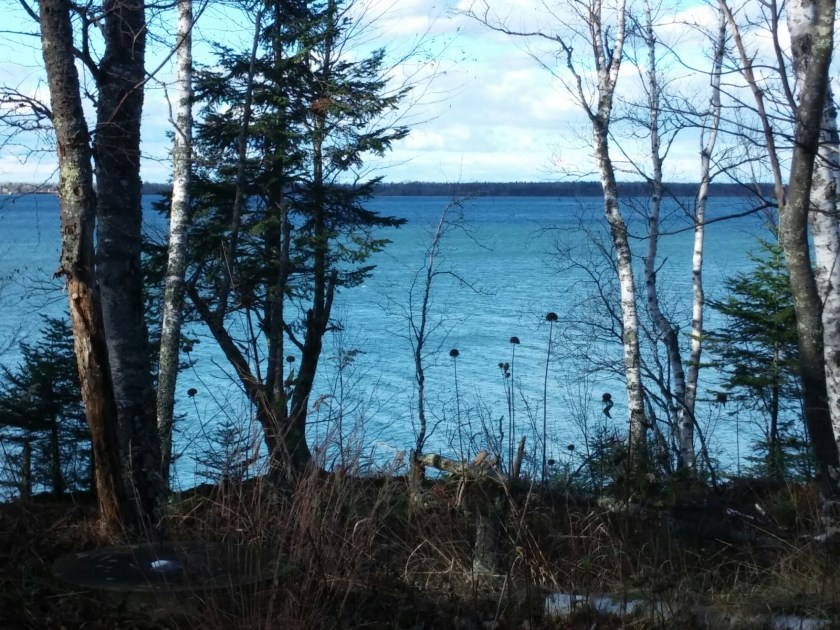
A buffer strip along Lake Superior

This morning I was walking a bridge crossing the Big Blue River in Nebraska.  Never have I seen a river so full of sediment!  The name “Big Blue” was full of irony for me.  I know many of the local water sources in this area of Nebraska are poisoned with nitrates, and children should not be drinking this water. Farming areas of Iowa and Minnesota are having the same water pollution problem. The major source of nitrates are fertilizers on farm fields, and farmers are not regulated by the Clean Water Act. We are all guilty of dirty water and can do much better at protecting our waters.  The run-off from our houses, driveways and roads are major contributors to our polluted lakes rivers and streams.  Farmers need to better, but so do all of us!

10 actions you can take to improve lakes, rivers and streams from Hennepin County.

When it rains, the storm water that runs off driveways, lawns, houses and parking lots can carry pollutants like oil, paint and chemicals down storm sewers and into nearby lakes, streams and rivers. By taking the following easy, no-cost or low-cost steps, you can have a big impact on reducing runoff and protecting our water resources and wildlife habitat. Hennepin County


1. Use your runoff

You can keep water in your yard and reduce runoff by directing downspouts onto your lawn or garden or into a rain barrel. Rainwater is free and naturally “soft,” so it is ideal to use in watering your lawn or garden.

2. Don’t rake grass clippings and leaves into the street

Leave them on your lawn, use them for compost, or bag them up. Grass clippings and leaves left in the street end up in the storm sewer, where they are carried to nearby lakes and streams. Clippings and leaves contain phosphorus and other nutrients that feed algae and other aquatic plants. This can cause excess algae growth that can negatively impact other plants and wildlife and can be unsafe for pets.

3. Scoop the poop

Grab a bag when you grab the leash and pick up after your pets. Pet waste left on the ground can be washed into lakes and rivers with rainwater and runoff. Pet waste contains bacteria that can cause illness in humans and animals.

4. Use chemicals wisely

Read and follow the label instructions when using herbicides and pesticides. Use the minimum amount needed to control the problem. If you can, consider using alternative or natural remedies to control weeds and pests, or remove the problem by hand.

5. Fertilize smart

Sweep up any fertilizer that spills onto hard surfaces. Excess fertilizer washes away into nearby lakes or streams where it can feed algae, causing rapid growth known as algae blooms. Algae blooms stress fish and wildlife and make swimming and fishing unpleasant or impossible.

6. Keep a healthy lawn

A healthy, vigorous lawn needs less watering, fewer chemicals and less maintenance. Aerate your lawn periodically to loosen the soil. Seed bare patches to prevent erosion and soil loss. Mow at a higher setting. Grass mowed to a height of 2 ½ to 3 inches develops deeper, healthier roots and has a competitive advantage over weeds.

7. Plant a rain garden

Rain gardens are depressions planted with a diverse mix of native wildflowers and grasses

Rain gardens collect water run-off

designed to collect rainwater and allow it to soak into the soil. This will reduce the water running off your property into storm sewers.

8. Replace turf with native plants

Swap some of your high-maintenance lawn for low-maintenance native ground cover, plants or grasses. Many native plants develop deeper root structures than turf grass, which reduces runoff by allowing for better water infiltration.

Deep-rooted plants absorb more water than turf grass

9. Reduce your footprint

Replace some pavement – such as a walk, patio or driveway – with pavers or pervious pavement. The porous surface will allow water to seep through.

10. Adopt a storm drain

Keep neighborhood storm drains free of leaves, seeds and grass clippings. Storm drains are directly connected to nearby water bodies. Water running into storm drains can carry with it anything dumped nearby including leaves, grass clippings, soil, oil, paint and chemicals. Keeping storm drains clear will protect the water quality of nearby lakes, streams and rivers.

***If you own property on a lake, pond, river or stream you should install a tree and plant buffer strip to keep pollutants from running into the water.

Minnesota Public Radio is doing a fabulous series on protecting our water. More from MPR here.

Another list of ways to protect our water from the NRDC.

The sun makes the Big Blue look blue. It is thick with sediment.

A Win-win for Pollinators and People

How can you help our pollinators? Our pollinators are struggling to survive.  There are things we can do in our yards to help pollinators. The mono-culture of perfect green turf grass lawns does nothing to help our struggling pollinators.

Blue Salvia are loved by bees.
Blue Salvia are loved by bees. (not native)

I have been on a road trip from Minnesota, through Iowa, Missouri, Kansas, Nebraska,  and South Dakota, and have been amazed at the manicured thick turf grass that dominates in parks and lawns.  Turf grass has no value for pollinators, and when fertilized adds unhealthy chemicals harmful to pollinators, humans, pets, wildlife and our water bodies.  Adding a diversity of fresh new plants and removing some lawn can make a big difference for our pollinators.

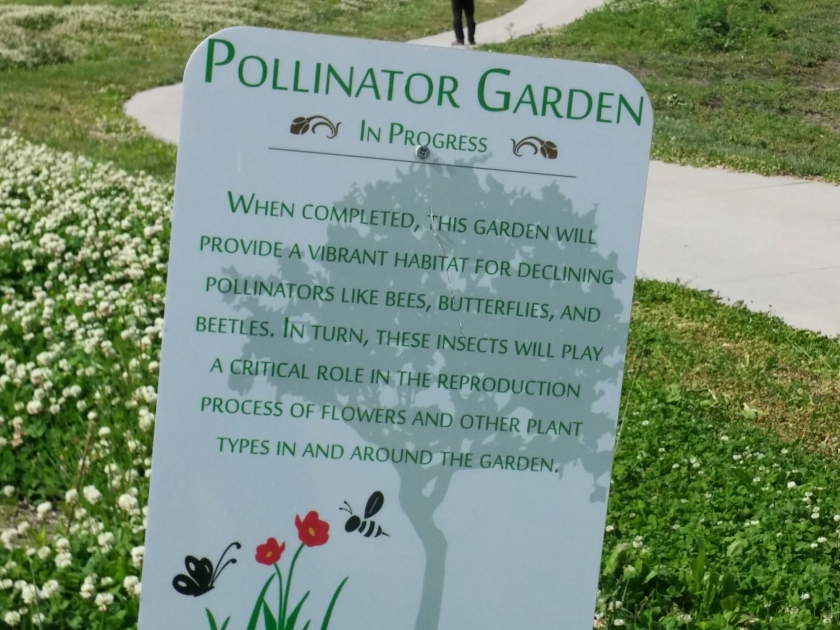
Walking a trail in Lincoln, Nebraska I was thrilled at their efforts to help our pollinators. They are allowing clover and native plants to grow. I even saw a few milkweed popping up.

Just a few changes can make a big difference for pollinators.(bees, butterflies, and birds)

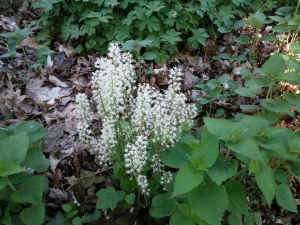
Spring is a fabulous time to add new plants to your yard. A wide diversity of plants helps

Foam flower is an early blooming plant

our pollinators. Native plants don’t need chemicals so they are the healthiest for you, children, pets, and the pollinators.  More garden diversity, and less chemicals creates a win-win for our earth and us all!

Here is a good article on creating more diversity for pollinators.

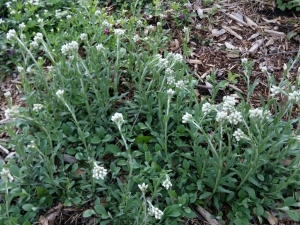
Pussy toes add texture and interest
An early blooming plant, pussy-toes add texture and interest, and is a host plant to the painted lady butterfly

image

Allowing the violets, Virginia waterleaf and dandelions(until they go to seed), and clover can create easy gardening and great pollinator habitat.


http://www.startribune.com/flower-power-season-long-blooms-are-a-win-win-for-people-and-pollinators/378411041/

https://health4earth.com/add-fun-pollinators-to-your-yard/

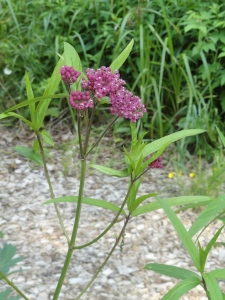
Always consider how to add more milkweed. Swamp milkweed has been the most successful for me.
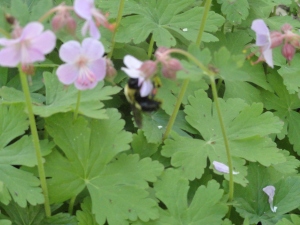
Wild geranium, easy to grow, is loved by bees and butterflies.
Wild geranium, easy to grow, is loved by bees and butterflies and is early blooming

30 Day Challenge

Get Outside and Enjoy!

Healthy Planet=Healthy People

This is the best 30 day challenge ever! Spend 30 minutes outside everyday for 30 days.

“Want to feel healthier, happier and more peaceful? Add a daily dose of nature to your routine.

Most of us spend too much time in front of screens and too little time outdoors. It’s time to fall (back) in love with nature!

This May, the David Suzuki Foundation is challenging you and people around the world to join the 30×30 Challenge by spending 30 minutes a day in nature for 30 days. Our goal is simple: to reconnect human beings with nature for the sake of their health and mental well-being.”  David Suzuki

Take the challenge here

Happy May, get out and enjoy!

Walk* Bike *Garden*Bird Watch* Breathe* Love the earth

Enjoy!
Enjoy!

http://30×30.davidsuzuki.org/

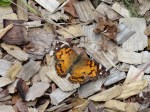
The first day of the challenge I saw a painted lady and red admiral butterflies, and a

Painted Lady
Painted Lady

swimming otter.  I heard lots of woodpeckers and chickadees.

Everyday, Earth Day

The earth is what we all have in common”  Wendell Berry

Yesterday, we saw the first Compton Tortoiseshell of the season

Happy Earth Day, hope you can get outside and enjoy the marvelous spring changes!  Go for a walk.

From http://www.startribune.com

The first Earth Day on April 22, 1970, was a day set aside to think about creating lifestyles to reduce waste and destruction of our environment.

One of the main messages many of us heard that day was that human life can continue on Earth only if people cooperate with nature. Strides have been made over the past 46 years in cleaning up many rivers and lakes, recycling, protecting natural ecosystems, becoming more aware of hazardous materials, and the list goes on. But we have a long way to go if we are to live in a sustainable way in harmony with nature.

There are things to do and things not to do when it comes to being a good steward of our planet, but one of the best may be to take pleasure in the true beauty of the Earth’s ecosystems and its creatures. Too, take time to learn about some of the plants and animals that share the Earth with us. It’s just about impossible to destroy something you understand and love.

Throughout the year, and especially April 22, with the wonders of spring all around us, we should make a point to get out and observe. Every forest, wetland and prairie remnant is full of spring signs — evidence that our Earth is designed as a place for life, no matter what foolish acts people may commit.                                       Jim Gilbert   http://www.startribune.com/appreciating-earth-s-beauty-is-one-way-to-steward/376565231/

http://www.startribune.com/today-s-earth-day-but-people-should-care-about-the-planet-every-day/376648961/  Dennis Anderson

10562721_920150908051554_7226343502310981013_o

Jeff Bridges On Single-Use Plastic

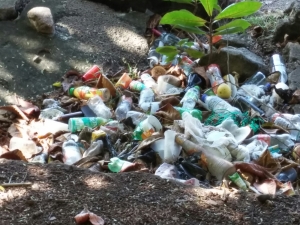
Is this the way we want our lakes, streams and oceans to look?

Jeff Bridges has taken on plastic waste and has an excellent video and list of ways to reduce your plastic pollution.  See his video here.

Here are 10 easy ways to reduce your plastic footprint:

Bring your own shopping bag to the grocery store

Stop buying bottled water – Use a reusable bottle instead

Say no to straws

Stop using disposable razors – Buy one with a replaceable cartridge

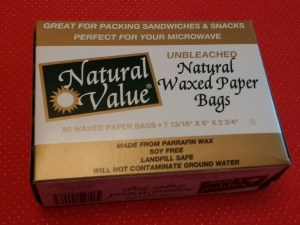
Ditch the plastic baggies – Wax paper and mason jars work wonders in the kitchen

Avoid using plastic utensils – Bring your own fork when you eat out

Choose glass over plastic

Buy the powdered version – Liquid versions of soaps and detergents tend to come in plastic bottles, powdered products come in cardboard boxes

Cut out the BPA – If a plastic bottle has a 3,7 or PC sign, it contains the most toxic types of plastic

Follow #RefusePlastic on social media for more ideas and to join the conversation

http://www.startribune.com/is-plastic-permanent-well-it-s-our-legacy-at-least/375907301/

This is an argument against Jeff Bridges video.  Fish, birds, other wildlife, our oceans and all of us are being harmed by plastic.  The below argument is very weak:

http://www.startribune.com/politifact-is-plastic-permanent-no-it-goes-away-sooner-or-later/375907261/

Never use baggies again:

wpid-wp-1418614582040.jpeg

http://www.plasticpollutioncoalition.org/  Plastic is a substance the earth cannot digest!

Where Have All the Pollinators Gone?

Plant your yard with plants the bees, butterflies and birds love

Each of us is so unaware of the damage we are doing to our earth.  This week I was at a seminar on pollinators.  Minnesota has lost two of its native butterflies, the Dakota Skipper and Poweshiek Skippering.  and many more bees and butterflies are declining in numbers. Also, I was surprised so many people don’t know about neonicotinoids.  Neonicotinoids are harmful systemic pesticides that weaken pollinators

Round up kills the plants bees and butterflies love!
Round up kills the plants that bees and butterflies need for food and egg laying !

Why is there is so much buzz about bees during the winter?  The United Nations announced that we are loosing many of our important pollinators that are vital to the pollination of many important food crops.

What is causing this loss? The major reasons we are loosing species of native butterflies, bees and birds is because of mono-crop planting, habitat loss, and our obsession with pesticides.  The combination of these three is making it hard for pollinators to survive.

Even a small yard can make a difference for pollinators.  First, add more native plants to your yard, they don’t need chemicals.  Plant for different bloom times, diverse flowers, and never purchase a plant treated with neonicotinoids ! Be careful and read directions with any chemicals you use on your yard….Try to go without!  Finally, bees and butterflies love blooming dandelions and clover…Let them bloom, then weed them out!

Below is from http://www.wildones.org/ What are native plants?

  • Native plants are needed as host and nectar plants as our native butterflies, bees and birds go about pollinating our food plants as they forage for their own sustenance.
  • Native plants have deep roots which absorb excess rainfall and prevent water from running directly into our rivers and streams helping to provide clean water for everyone.
  • Native plants instead of turf lawns help reduce our carbon footprint.

A Lot more to read:

http://www.theguardian.com/environment/2016/feb/26/decline-of-bees-poses-potential-risks-to-major-crops-says-un

http://www.nola.com/environment/index.ssf/2016/02/wild_bees_path_extinction.html

http://ecowatch.com/2016/02/26/save-the-honeybee/

http://www.xerces.org/providing-wildflowers-for-pollinators/

http://www.npr.org/sections/thetwo-way/2016/02/26/468241649/report-more-pollinators-species-in-jeopardy-threatening-world-food-supply

http://citybugs.tamu.edu/factsheets/ipm/what-is-a-neonicotinoid/

Rising Oceans and A Migrant Crisis

The Oceans Are Rising
The Oceans Are Rising Faster than they have in 3,000 years

2015 was the warmest year on record, and January 2016 was the warmest recorded. Alaska, Minnesota and Wisconsin have enjoyed a mild winter.  The winter warmth has been pleasant, and because this is just weather, it will probably be brutal next year.  It is the long-term trends that are troubling.  Sadly, the problem lies in our oceans.  Eighty to ninety per cent of this heat goes into the oceans.  So of course the oceans are rising with the melting glaciers. Also, as the oceans heat they expand taking up more space. With record warm years, no wonder that the oceans are rising at a very fast rate.

Our planet is already in crisis as migrants are leaving Syria, Iraq, Afghanistan and other countries. We haven’t seen anything in compared to the migrant crisis that will be created by the rising oceans. Those living on the ocean coasts and the islands that will be inundated and disappear will need to find new homes .

The Syrian crisis was caused in part by our warming earth, the continued rising of warm oceans will create migrant problems that will be an even greater challenge! Miami, Venice, Bangladesh and London are a few that could disappear.  Where will these people forced out of their disappearing cities, farms, and villages go?

Denial of our man-made climate crisis will not continue to work, and everyone needs to take personal responsibility to reduce their carbon footprints.  Just committing to turning off lights and to drive less can make a big difference.  What is one thing you do?

Read more below:

https://www.washingtonpost.com/news/energy-environment/wp/2016/02/22/seas-are-now-rising-faster-than-they-have-in-2800-years-scientists-say/

https://www.washingtonpost.com/news/capital-weather-gang/wp/2016/02/23/as-the-arctic-roasts-alaska-bakes-in-one-of-its-warmest-winters-ever/?utm_content=buffer586cc&utm_medium=social&utm_source=twitter.com&utm_campaign=buffer

http://www.slate.com/blogs/bad_astronomy/2016/02/17/january_2016_was_the_hottest_january_on_record.html

A Low Salt Diet Is Best!

Keep our lakes clean and beautiful

Most of us in the north county enjoy a beautiful snowfall, but hate ice.  Even with a mild winter, there is thawing, refreezing and ice!  As I walk through neighborhoods I see salt residue sitting on sidewalks and streets.  Please sweep this up. The salt runs into our lakes and streams and is very harmful to fish and plant life.  Highway departments, businesses and homeowners all need to be conscious of the salt they use.  My local hardware store has a corn-based product they claim works well that is lake-friendly.

It takes only one teaspoon of road salt to permanently pollute 5 gallons of water. Once salt is in the water, there is no way to remove it. Salt harms fish, plant life and the over all quality of the lake or stream.

Suggestions to protect our lakes and waterways:

  1. Always shovel sidewalks and driveways.
  2. Remove ice on days when melting is occurring.
  3. Redirect your drain-spouts so they don’t drain on to the sidewalk. Capture water run-off in a rain-garden.
  4. Be safe, and try to avoid the ice in the first place which I know can be impossible.  A tiny amount of salt can go a long way.
  5. Sweep up any salt after the ice melts!
  6. Check out great winter salt suggestions: https://www.wisaltwise.com/
Rain gardens collect water run-off