Invest in Women

International Women's Day

https://www.un.org/en/observances/womens-day

From the United Nations:

Here are five key areas needing joint action:

  • Investing in women, a human rights issue: Time is running out. Gender equality is the greatest human rights challenge, benefiting everyone.
  • Ending poverty: Due to the COVID pandemic and conflicts, 75 million more people have fallen into severe poverty since 2020. Immediate action is crucial to prevent over 342 million women and girls living in poverty by 2030.
  • Implementing gender-responsive financing: Conflicts and rising prices may lead 75% of countries to cut public spending by 2025, negatively impacting women and their essential services.
  • Shifting to a green economy and care society: The current economic system disproportionately affects women. Advocates propose a shift to a green economy and care society to amplify women’s voices.
  • Supporting feminist change-makers: Despite leading efforts, feminist organizations receive only 0.13% of official development assistance.

This International Women’s Day, let’s unite to transform challenges into opportunities and shape a better future for all!

Winter is a “no snow”

Superior Views for winter 2024

The grouse and crows seem happy, the pileated woodpeckers seem happy, and squirrels and white tailed deer are overjoyed. What happened to winter? The sun is shining and the snowstorms forgot to hit the south shore of Lake Superior. The biggest surprise is golden eyes on Lake Superior already migrating through.

But what made me the happiest was that I saw an eagle swimming on Lake Superior. It was amazing! It looked like she was doing a swimming crawl stroking with her enormous wings.

The warmest February and winter on record, but it is worrying for the future when there isn’t ice on the big lake. More evaporation, more algae and a challenge for the fish to find food.

This is not ice cover. It is slush that moves around the big lake depending where the wind is blowing from.

https://www.mprnews.org/story/2024/02/22/wheres-the-ice-historic-low-superior-and-great-lakes-ice-cover

https://www.cnn.com/2024/02/11/weather/midwest-non-winter-el-nino/index.html

Contribute to Peace

I’m for anything that is peaceful and kind. Get outside in March and please contribute peace to a Mindful March

Mindfulness helps us respond more wisely, especially in difficult times. So let’s pause, breathe and choose to live mindfully this month. By cultivating inner peace we can contribute to peace in the world around us too.

Look for beauty and live with awareness and kindness every day!

Consumer Reports

Producers of packaging need to be held responsible for how they are exposing consumers to harmful chemicals.

Chemicals in plastic packaging can leak into our food. Also, the plastic breaks into tiny particles (microfibers) that we consume when we are eating. None of this can be healthy for the consumer.

Harmful material in our food is upsetting. Producers of plastic need to be held responsible for the packaging they use. Corporations think they should regulate themselves. That is clearly not working! We need tough standards for our food packaging, but also in cosmetics, toys and other packaging as well.

Consumer Reports sent a letter to General Mills this week over relatively high levels of plastic chemicals called phthalates found in several products, including Cheerios, Yoplait, Progresso vegetable soup and cans of Annie’s organic cheesy ravioli.

Phthalates are “plasticizers” used in the production of plastic to make them stronger and softer and are commonly used in vinyl flooring, shampoos and plastic packaging. Health impacts in humans need further study, says the Centers for Disease Control and Prevention, but scientists have found strong associations between chronic exposure and issues with reproductive systems and child development.

Read the entire article:

Just a year ago, the board at General Mills said that General Mills needed to reduce the plastic in their packaging https://foodindustryexecutive.com/2022/09/general-mills-shareholders-support-plastic-reduction-proposal-preliminary-results/

More articles:

Walter Morris, “Hyattsville residents raise concerns about plastic pellets spilled in train derailment,” NBC4 Washington, October 3, 2023.
2. Neel Dhamesha, “The massive, unregulated source of plastic pollution you’ve probably never heard of,” Vox, May 6, 2022.
3. Karen McVeigh “Nurdles: the worst toxic waste you’ve probably never heard of,” The Guardian, November 29, 2021.
4. Karen McVeigh, “Nurdles: the worst toxic waste you’ve probably never heard of,” November 29, 2021.
5. Lisa Frank, “New bill would stop companies from dumping plastic,” U.S. PIRG, May 25, 2022.
6. “Our waters shouldn’t be dumping grounds for plastic,” U.S. PIRG, October 3, 2023.
7. Doyle Rice, “Oh, yuck! You’re eating about a credit card’s worth of plastic every week,” USA Today, June 12

The Year of the Dragon

Happy New Year!

Wishing you good luck and good fortune in 2024, the year of the dragon.

The Vietnamese are so happy traveling home, decorating, planting red and gold flowers. I have been in Vietnam for the past month and loved their excitement.

We can learn something from them: Be kind, be happy, honor our ancestors, and eat healthy food

Red and gold decorations and red and gold flowers.

The year of the dragon

Vietnamese flag

A beautiful country

Cave of the Buddhas in Laos

Seven story pagoda

https://www.chinahighlights.com/travelguide/special-report/chinese-new-year

Plastic in our Food and Water

Many reasons to use a non-plastic reusable water bottle.

New studies on plastic start to emerge.

In a trailblazing new study, researchers have discovered bottled water sold in stores can contain 10 to 100 times more bits of plastic than previously estimated — nanoparticles so infinitesimally tiny they cannot be seen under a microscope.

Disposed plastic water bottles blanket a beach in New Taipei, Taiwan in 2022.

The plastic water bottle industry is booming. Here’s why that’s a huge problem

At 1,000th the average width of a human hair, nanoplastics are so teeny they can migrate through the tissues of the digestive tract or lungs into the bloodstream, distributing potentially harmful synthetic chemicals throughout the body and into cells, experts say.

One liter of water — the equivalent of two standard-size bottled waters — contained an average of 240,000 plastic particles from seven types of plastics, of which 90% were identified as nanoplastics and the rest were microplastics, according to the new study. https://www.cnn.com/2024/01/08/health/bottled-water-nanoplastics-study-wellness/index.html?utm_term=17051508781315d4f59f626ee&utm_source=cnn_Weekly+LBB+Automated&utm_medium=email&bt_ee=uul4Fxg9FZKZA30rzJn08%2BUBxjUR1MOAuPwj1fjq3OFfXysulwJVn0gwksla8rm%2B&bt_ts=1705150878134 Source CNN

And from Consumer Reports:

Another new report finds that 84 out of 85 supermarket foods and fast foods had plastic chemicals in them — including cereal, yogurt and even baby food.1

We shouldn’t be so nonchalant about harmful chemicals in the food we eat, and especially not in the food we serve to babies.

Tell the U.S. Food and Drug Administration: Test for, limit and, wherever possible, eliminate plastic chemical contamination in food.

Among the chemicals found in the food were “plasticizers” like BPA, once found in so many plastic water bottles, and phthalates, a chemical used to make plastic more durable.

Companies have allowed these plasticizers into a dizzying range of food products. But they seem to have forgotten to ask themselves: Should we?

After all, chronic exposure to plasticizers can disrupt the production and regulation of estrogen and other hormones, and potentially increase the risk of birth defects, cancer, diabetes, infertility, neurodevelopmental disorders, obesity and other health problems.2

We can’t keep letting companies get away with this “ask for forgiveness, not permission” approach to harmful substances in our food.

Join PIRG in urging the FDA to help get plastic chemicals out of our food. Add your name

1. Jonathan Stempel, “Consumer Reports finds ‘widespread’ presence of plastics in food,” Reuters, January 4, 2024

Plastic and Human Health

I hope we can all start the year with hope for peace and joy and a healthier cleaner planet. Every action we take matters Our collective actions, can contribute to positive change and help us to feel we are making a difference, and we are!

If plastic were a country, it would be the fifth largest emitter of green house gases!

Easy ways you can reduce your plastic footprint:

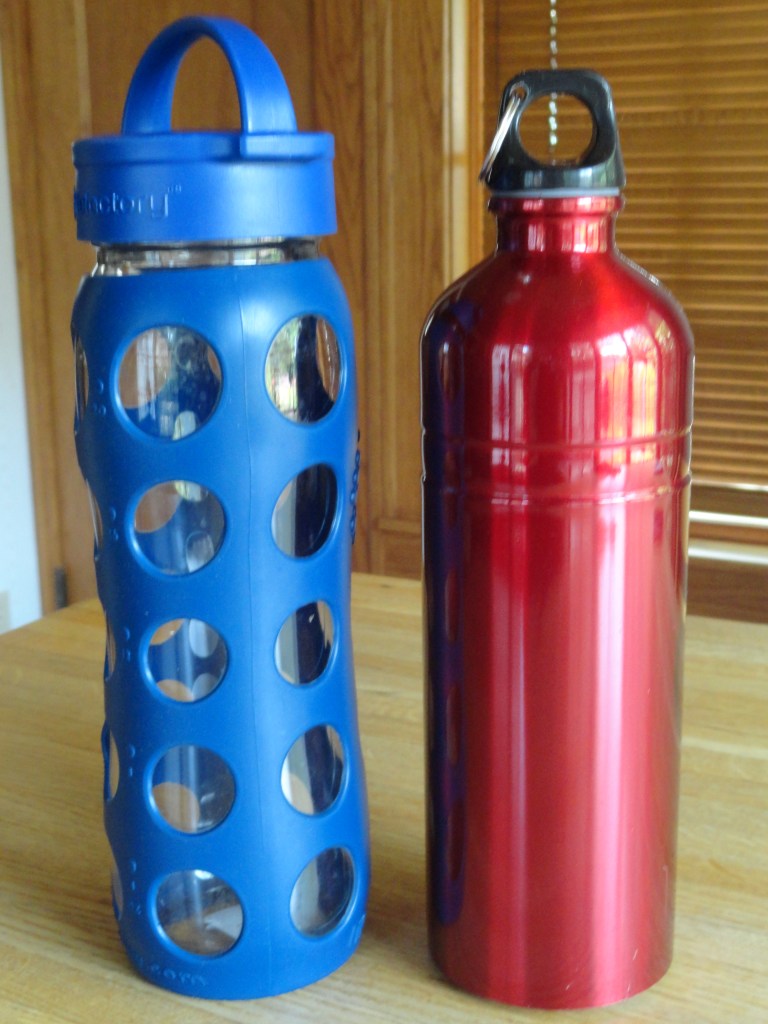
  • Always carry a reusable glass or metal water bottle, and reusable shopping bags with you.
  • Learn to refuse single-use plastics, such as plastic water bottles and coffee cups, straws, plastic bags and plastic utensils. 
  • Purchase fruit and produce in the bulk section, and don’t place items in plastic bags. 
  • Always search out products in glass jars instead of plastic containers. 
  • When you must buy plastic products, choose ones that you can recycle rather than ones you must put in the trash. 
  • Bring your own containers and shop the bulk section of your local food coop.
  • Purchase clothing made from cotton and wool instead of polyester or poly fibers. https://www.npr.org/2023/07/19/1188343293/is-toxic-fashion-making-us-sick-a-look-at-the-chemicals-lurking-in-our-clothes
  • Store food in glass containers instead of plastic.
  • Ditch the baggies!

Why you should reduce your plastic exposure?

From Beyond Plastic:

file:///C:/Users/healt/Downloads/Plastics+and+Human+Health+Dec+2023.pdf

Over 98% of plastics are made from fossil carbons such as oil and gas. Turning these substances into plastics involves the addition of petrochemical additives – quite a lot of them. Over 13,000 chemicals are known to be involved in the production of plastic.
More than 2300 of these are “chemicals of concern.” Some are highly toxic, and
include carcinogens, neurotoxicants, and endocrine disruptors. These chemicals pose serious risks to human health because they can leach or migrate at every stage of plastics’ life cycle.

Food Packaging: When food or beverage is packaged in plastic, chemical
additives can leach into what we eat.

Microplastics: Plastics don’t biodegrade; they break up into smaller and
smaller pieces known as micro- and nanoplastics, which are so small that they
become caught up in the air we breathe, the water we drink, and the food we
eat. These pieces are present almost everywhere researchers have ever
looked, including inside the human body. Scientists have detected plastic
particles in human lung tissue, intestinal tissue, blood, breast milk, the muscle
of the heart, and both sides of the placenta – including inside fetuses and
newborn babies.


Cell damage: Plastic particles inside the body can irritate, inflame, and even
puncture cells. This is especially concerning in the intestine and lung, where
microplastics make direct contact with thin, sensitive tissue.


Chemical leaching: Microplastics never stop leaching their chemical contents.
Once they are inside the human body, they can act like tiny trojan horses,
spilling out chemical additives for as long as they are present.
Over 98% of plastics are made from fossil carbons such as oil and gas. Turning these substances into plastics involves the addition of petrochemical additives – quite a lot of them. Over 13,000 chemicals are known to be involved in the production of plastic.
More than 2300 of these are “chemicals of concern.” Some are highly toxic, and
include carcinogens, neurotoxicants, and endocrine disruptors. These chemicals pose serious risks to human health because they can leach or migrate at every stage of plastics’ life cycle.

Cancer: Many of the chemical additives in plastics are known to cause cancer.
Bisphenol A, phthalates, and polyvinyl chloride, for instance, are welldocumented carcinogens.


Endocrine Disruption: A great number of additives mimic hormones and
disrupt signaling throughout the body. They can scramble appetite cues and
metabolism, leading to obesity, diabetes, high blood pressure, and heart
disease. They can hijack reproductive signals, speeding puberty, lowering
sperm counts, and prompting infertility. Endocrine disruptors are also
associated with cancer – especially breast, prostate, and testicular cancers.
Neurological Effects: Endocrine disruption can disturb brain development,
leading to lower IQ, ADHD, and autism-spectrum disorders.
Go to http://www.beyondplastics.org and email us at beyondplastics@bennington.edu
to learn about the tools we have to reduce our exposure to harmful plastics and petrochemicals.
Besides limiting your own personal plastic use, what can be done?
Nearly half of all plastics manufactured today are single use items and
packaging. Legislation that reduces the production of these items and
mandates extended producer responsibility will go a long way toward
relieving health risks. It is vital that lawmakers regulate the chemical content
and toxicity of plastic. Many of the chemicals used to manufacture plastic are
unnecessary and can be banned and substituted with safer alternatives.
The brains and bodies of infants, fetuses, and small children undergo
exquisitely complicated and carefully timed changes. When these are
disrupted, the effects can be permanent – and profound. Infants and fetuses
also face risks of prematurity, stillbirth, low birth weight, birth defects of the
reproductive organs, impaired lung growth, and childhood cancer.

A Kinder World

Every action matters! As we start 2024 many of us think of ways to resolve to make things better for our families, our friends and for the world. Below is the Action for Happiness calendar for January. Maybe just choose one action you like and do it over and over. Kindness is like a ripple; it grows and grows. Take deep breaths, smile, listen, and enjoy! Good Luck

Happy Winter Solstice


The return of light and hopefully greater understanding, empathy and compassion as the world struggles through 2 wars, and lots of conflict and mistrust. Sending wishes for peace this holiday season.

Slowly the days become longer

The equator divides the Earth into the Northern Hemisphere and the Southern Hemisphere. When the Northern Hemisphere has summer the Southern Hemisphere has winter.  On December 21, in the Northern Hemisphere the Earth’s tilt starts to slowly tilt back towards the sun. This slow nod to the sun causes our seasons and longer days.

Many cultures celebrate the return of the sun:

The best about the solstice in the north is that the days start to get longer. We begin to move from so much darkness to brighter longer days. Daily change is slow, but by mid January you can notice the days are becoming longer! Many cultures and people celebrate this return to light. https://www.express.co.uk/life-style/life/1539015/stonehenge-winter-solstice-celebrations-traditions-evg  

Many Native American communities have long held solstice ceremonies, explained University of Illinois Urbana-Champaign scholar Rosalyn LaPieran Indigenous writer, ethnobotanist and environmental historian.

Less Waste for the Holidays

We are in a climate crisis, a waste crisis, and a plastic crisis. The last thing we need is for people to purchase more landfill junk. Everyone has a right to clean water and clean air. Buying less stuff, and producing less waste helps keep our water and air clean.

Purchase items of quality and things you really need this holiday. Also, become aware of the plastic that you send to the landfill.

Zero Waste is moving from our throw-away and overconsumption culture to a more sustainable way of reusing and refusing.

Food waste in landfills produces harmful methane gas.

The EPA reports that garbage increases 25% between Thanksgiving and New Year’s. Here are new ways to reduce your waste.

Gifting with less waste

Buy less, give more  

Wrapping with less waste

Tell Amazon: It’s time to move beyond wasteful single-use plastic packaging 

Refurbished gifts

Fixed for the Holidays 

Tell Amazon: We need repair scores

Reduce food waste

How to reduce food waste and save money this holiday season 

Tell Congress: Pass this bill to combat the worst kind of food waste
Federal food donation protections info
Calculator to figure out how much food to serve
Leftover ideas