Processed Food

I found this so interesting from the New York Times. All this processed food has also led to the explosion of plastic packaging. Plastic and processed food are full of chemicals. Chemicals we don’t want in our bodies or in our environment.

Ultraprocessed nation

Humans have been processing food for millenniums. Hunter-gatherers ground wild wheat to make bread; factory workers canned fruit for soldiers during the Civil War.

But in the late 1800s, food companies began concocting products that were wildly different from anything people could make themselves. Coca-Cola came in 1886, Jell-O in 1897, and Crisco in 1911. Spam, Velveeta, Kraft Mac & Cheese and Oreos arrived in the decades that followed. Foods like these often promised ease and convenience. Some of them filled the bellies of soldiers in World War II.

Vintage advertisements for Jell-O and Coca-Cola.

Eventually, these products overtook grocery shelves and American diets. Now they are among the greatest health threats of our time. How did we get here? Today’s newsletter is a tour through food history.

Wartime innovation

A black-and-white photograph of a soldier wearing a helmet and leaning out of a hole in the ground. There is a small pan in front of him and a box that says “breakfast.”
During World War II, shelf-stable foods were developed to feed soldiers. 

During World War II, companies devised shelf-stable foods for soldiers — powdered cheeses, dehydrated potatoes, canned meats and melt-resistant chocolate bars. They infused new additives like preservatives, flavorings and vitamins. And they packaged the foods in novel ways to withstand wet beach landings and days at the bottom of a rucksack.

Vintage advertisements for Tang and Spam.

After the war, food companies realized that they could adapt this foxhole cuisine into profitable convenience foods for the masses. Advertisements told homemakers that these products offered superior nutrition and could save them time in the kitchen. Wonder Bread commercials from the 1950s, for instance, claimed its vitamins and minerals would help children “grow bigger and stronger.” An ad for Swift’s canned hamburgers boasted that they were “out of the can and onto the bun” in minutes.

An ad that looks like it’s from the 1950s shows a woman pulling a TV dinner out of a freezer.
Getty Images

More women found work outside the home, and by the mid-1970s, they spent much less time cooking. But they were still expected to feed their families. Fish sticks, frozen waffles and TV dinners filled modern freezers, and convenience foods became more popular. These products weren’t all ultraprocessed — some were just whole foods that had been frozen or canned with a simple ingredient, like salt. Still, people got used to the idea that packaged goods could replace cooking from scratch.

An explosion

An illustration of photos of foods including cans of soda and iced tea, bags of chips, waffles, fruit snacks and boxes of Lean Cuisine.

By the 1970s, innovations in fertilizer, pesticide and crop development, along with farm subsidies, led to a glut of grain. Companies turned it into ingredients like high-fructose corn syrup and modified starch to fill sugary cereals, sodas and fast foods.

In the 1980s, investors wanted food manufacturers to show larger profits, so they developed thousands of new drinks and snacks and marketed them aggressively. (Have a look at how the ads changed over the last century.)

A blurry image of an adult and child looking at a cartoon tiger holding a box of Frosted Flakes.

The tobacco companies Philip Morris and R.J. Reynolds diversified into the food industry, dominating it through the early 2000s. They applied the same marketing techniques that they crafted to sell cigarettes — targeting children and certain racial and ethnic groups. Kraft, owned by Philip Morris, created Kool-Aid flavors for the Hispanic market and handed out coupons and samples at cultural events for Black Americans.

Obesity tripled in children and doubled in adults between the mid-1970s and the early 2000s.

A health crisis

A pair of hands holds a hamburger over a tray of school lunch and a bag of Cheetos. The tray holds French fries with ketchup, and a salad.
Getty Images

By the 21st century, you couldn’t walk through a school cafeteria, a supermarket or an airport without being inundated by ultraprocessed foods. Obesity kept rising, and food companies addressed it by making products they marketed as “healthier,” like low-carb breakfast cereals, shakes and bagels; artificially sweetened ice creams and yogurts; and snacks like Oreos and Doritos in smaller, 100-calorie packs.

They were popular, but they did not make us healthier. Scientists soon linked ultraprocessed foods to Type 2 diabetes, cognitive decline and cardiovascular disease. For generations, obesity had been seen as a problem of willpower — caused by eating too much and exercising too little. But in the last decade, research on ultraprocessed foods has challenged that notion, suggesting that these foods may drive us to eat more.

Today, scientists, influencers, advocates and politicians publicly condemn ultraprocessed foods, which represent about 70 percent of the U.S. food supply. Health Secretary Robert F. Kennedy Jr. calls them “poison.”

Are we at a tipping point? Maybe. There are signs that people are eating slightly fewer of these foods. But our reliance on ultraprocessed food was “decades in the making,” one expert told me, and “could take decades to reverse.”
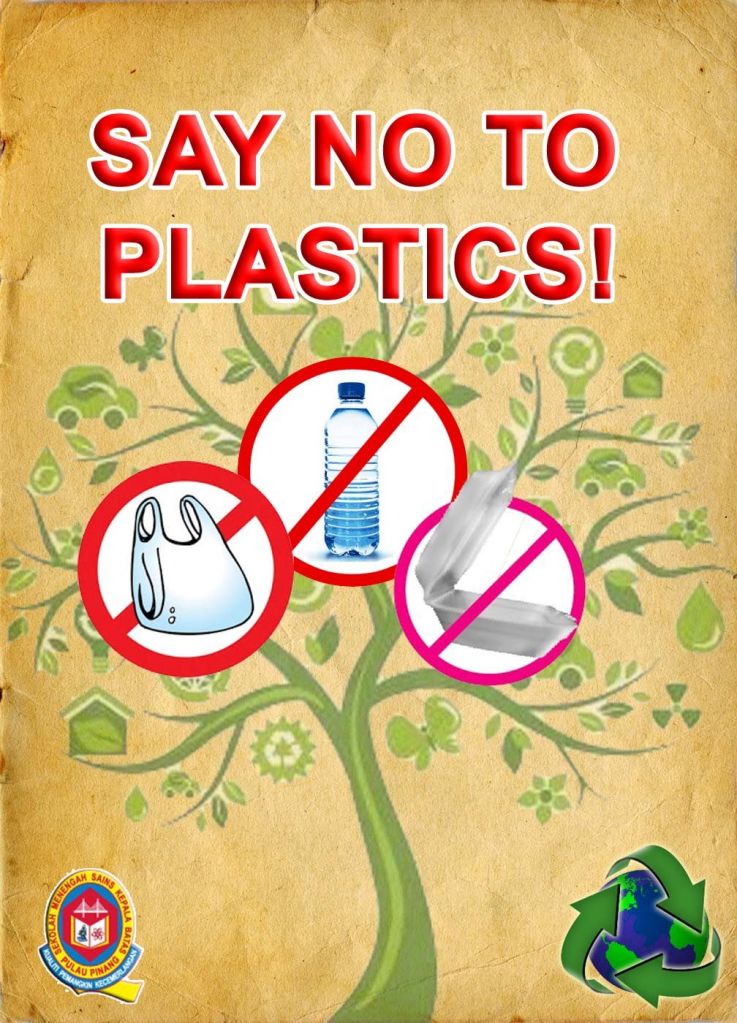
No Lake Is Safe From Microplastics

We all need to examine the amount of plastic we purchase, and figure how we can reduce the plastic we are exposed to and disperse into our environment.

Plastic is harming our health and our environment.

By Mary Koseth and Katelynn Rolfes

From the Minnesota Reformer

Microplastics have become a significant environmental concern across the world due to their widespread presence in various ecosystems, potential harm to wildlife and marine life, and the uncertainty surrounding their long-term effects on human health. 

This summer, concerned citizens across Minnesota worked with staff from Environment Minnesota Research & Policy Center to test 40 Minnesota lakes for microplastics

When we analyzed the water samples the results were clear: No Minnesota lake is safe from microplastics. 

Last week, Environment Minnesota Research & Policy Center released a report, Microplastic in Minnesota: A Survey of our “10,000 Lakes.

The report presents the test results, from the northern coast of Lake Superior to the wouthwest corner Minnesota, and includes recommendations to tackle the problem. In our citizen-science research project, the 40 samples were filtered using a funnel, flask and filters which had a pore size of 0.45 microns. The goal was to capture any tiny bits of plastic that were tough to spot with only our eyes. The types of plastic we searched for were microfibers, films, fragments and microbeads. We found all of these types save for microbeads, commonly found in beauty products prior to their banning in 2015. 

The results of this survey should set off alarm bells for Minnesotans who love our lakes. Minnesota’s waterways are a source of peace for people, a critical habitat for wildlife, and part of our state’s identity. 

Our report underscores that microplastic pollution is not an “over there” problem. It’s a “right here” problem that none of us can afford to ignore. But fortunately for us, this isn’t a hopeless situation, and there are many ways we can take action. As individuals, as community members, as whole nations, we can uphold human and environmental health and justice with our creative ideas and bold visions. Everyone has something to offer. When it comes to microplastic pollution, it’s all hands on deck. 

The report outlines a broad range of various ways to tackle the problem. These include fighting fast fashion and excess textile waste, and changing Minnesota law to allow local governments to restrict single-use plastics like plastic bags

We need to take a lot of steps to protect our lakes and health from microplastic pollution, but to start, we need to move away from single use plastics. Nothing we use for a few minutes should be able to pollute our environment for hundreds of years.

What You Should Know

About Plastic

Every year the countries of the world produce more plastic, and there is no end in sight. Production. of plastic keeps growing.

The list below is composed by the Plastic Pollution Coalition. Let’s work every day to reduce our consumption of plastic. Never use plastic utensils, plastic bags or straws

  • Plastic never goes away. It doesn’t break down; it only breaks up into smaller and smaller pieces. These microplastics and nanoplastics are harmful and are everywhere now, including in our bodies. 
  • Plastic pollutes the environment, wildlife, and people.
  • Plastic is not safe. Plastic leaches toxic chemicals and sheds plastic particles at all stages of its existence. 
  • Plastic especially harms communities living near petrochemical and plastic infrastructure. 
  • The more plastic companies make and we use, the more we contribute to pollution and climate change.
  • Plastic was not designed to be recycled, and most plastic does not get recycled in the way we’ve been led by industry to believe.
  • To solve the plastic pollution crisis, industries must stop producing so much plastic. Instead of single-use plastics, we need to use nontoxic reuse and refill systems and regenerative materials.
  • Taking action on an individual level, using less plastic, and demanding policy action to hold producers accountable can help support the systemic changes to shift away from society’s reliance on plastics.

1. Ernie Mundell, “You might inhale 68,000 microplastics per day,” United Press International, July 31, 2025.
2. Sharon Udasin, “Humans may be inhaling 100 times more microplastics than previously assumed, scientists warn,” The Hill, July 30, 2025.
3. Yue Li, Le Tao, Qiong Wang, Fengbang Wang, Gang Li and Maoyong Song, “Potential Health Impact of Microplastics: A Review of Environmental Distribution, Human Exposure, and Toxic Effects,” Environment & Health, August 10, 2023.
4. Julia Shumway, “Oregon’s Bynum, Merkley and Florida Republicans target microplastics with new bill,” Oregon Capital Chronicle, July 17, 2025.

Plastic Free July

Yay, It’s Plastic Free July. Join millions of people working to reduce their plastic use

Start refusing plastic today!

We have a plastic problem. Plastic pollutes our earth from it’s extraction to it’s end of life.It pollutes our water air and land. Plastic is made of fossil fuels and contains harmful chemicals are needed to make it plastic. It breaks down into tiny fibers called microplastics. These tiny microplastics have been found in our brains, blood and in every organ in or body. Do you want plastic in your brain? Plastic permeates our lives, and we would all be healthier by reducing our plastic use.

Plastic may feel convenient, but the long-term costs are serious:• Only 9% of all plastic ever made has been recycled• The rest ends up in landfills, waterways, or breaks down into microplastics. Some of these microplastics end up in fish, plants, animals and human beings. Reducing your plastic exposure is not easy, but it is important.

We all see plastic litter that is harmful to our waterways and our environment, but we are just be learning that plastic contains harmful chemicals and that it breaks down into microfibers. We can’t see these chemicals or the microfibers that can harm our bodies.

Plastic contains thousands of harmful chemicals that are especially harmful to children. These chemicals leach from plastic containers into our food and bodies. Plastic chemicals contain serious hormone disrupters that can cause obesity, diabetes, cancers and birth defects.

Plastic also sheds into small flakes of microfibers that have been found in every organ of our bodies. https://www.cnn.com/2024/06/19/health/microplastics-human-penises-study-scli-intl-scn-wellness Microfibers enter our bodies from the air, water, our clothing, our food and it’s packaging.

While it’s practically impossible to eliminate plastic from modern life, there are a number of steps you can take right now to cut back.

Good ideas from Consumer Reports:

Do: Drink tap water.
Don’t: Rely on bottled water.

Water from plastic bottles has about double the microplastic level of tap water on average, according to a 2018 study published in the journal Frontiers in Chemistry. So unless your tap water is contaminated with unsafe elements, such as lead, it’s probably best to drink tap. Fill up a metal reusable bottle for when you go out. You can always filter your tap water. Depending on the filter, that may further reduce microplastic levels. (Check CR’s ratings of water filters.)

Do: Heat food in or on the stove, or by microwaving in glass.
Don’t: Microwave in plastic.

Some heated plastics have long been known to leach chemicals into food. So if you’re warming up food, use a pan in the oven or on the stove, or if you’re microwaving, use a glass container. Also, avoid putting plastics in the dishwasher because of the high heat involved in cleaning.

Do: Buy and store food in glass, silicone, or foil.
Don’t: Store food in plastic, especially plastic that may contain harmful chemicals.

The American Academy of Pediatrics has said that plastic food containers with the recycling codes 3, 6, and 7 may contain potentially harmful chemicals, unless they’re labeled “biobased” or “greenware.” Don’t store food in these types of containers. Instead, use containers made of glass or silicone, or wrap your food in aluminum foil. If you’re storing food in or eating food out of plastic containers, know that plastics with recycling codes 1 and 2 are more likely to be recyclable—though they are usually recycled into lower-quality plastics. And there still may be harmful or unknown chemicals in any type of plastic.

Do: Eat fresh food as much as possible.
Don’t: Rely on processed food wrapped in plastic.

The more processed or packaged a food is, the higher the risk that it contains worrisome chemicals. Food cans are often lined with bisphenol A (or similar compounds). Buy fresh food from the supermarket, and—as much as possible—try to use refillable containers if your market allows. (Of course, with shopping made difficult by the coronavirus pandemic, prioritize your health and shop however is most feasible and safest.) Certain markets let you fill up cardboard or reusable containers with bulk items and weigh them, or you can use your own mesh bags for produce. Raw meat and fish need to be kept separate for safety reasons, but ask the store fishmonger or butcher to wrap these foods in wax paper instead of plastic. Take cloth—not plastic—reusable bags to the store to take your groceries home.

Do: Vacuum regularly.
Don’t: Allow household surfaces to get dusty.

The dust in your house could be loaded with microplastics and chemicals that are found in plastic, such as phthalates. Cleaning up dust may help reduce the amount of plastics you inhale, especially if you are stuck inside for long periods of time during a period of social distancing. CR recommends vacuuming regularly with a HEPA filter, which is best for trapping dust. (Check CR’s ratings of vacuums.)

Do: Work with your community.
Don’t: Assume your impact is limited to what you do in your personal life.

Legislation to limit the use of single-use plastics and plastic production may pull the biggest levers, but joining forces with community-level recycling groups can truly make a difference. Look for so-called zero-waste groups, which can offer guidelines for how to recycle or compost all your garbage—and which lobby for local rules that can restrict throwaway items. When possible, shop at markets that source goods locally, so they don’t require as much packaging and shipping. Seek out groups such as Upstream, a nonprofit working to create reusable takeout packaging for restaurants. And when possible, educate yourself about and support any city, county, and state legislation limiting single-use plastics.

My list to reduce your plastic footprint:

  • Always carry a reusable glass or metal water bottle, and reusable shopping bags with you.
  • Learn to refuse single-use plastics, such as plastic water bottles and coffee cups, straws, plastic bags and plastic utensils. 
  • Purchase fruit and produce in the bulk section, and don’t place items in plastic bags. 
  • Always search out products in glass jars instead of plastic containers. 
  • When you must buy plastic products, choose ones that you can recycle rather than ones you must put in the trash. 
  • Bring your own containers and shop the bulk section of your local food coop.
  • Purchase clothing made from cotton and wool instead of polyester or poly fibers. https://www.npr.org/2023/07/19/1188343293/is-toxic-fashion-making-us-sick-a-look-at-the-chemicals-lurking-in-our-clothes
  • Store food in glass containers instead of plastic.
  • Ditch the baggies!

1.Guardian: https://www.theguardian.com/environment/article/2024/aug/21/microplastics-brain-pollution-health

2. Environment andHealth: https://pubs.acs.org/doi/10.1021/envhealth.3c00052

3. UN Environment Programme: https://www.unep.org/news-and-stories/press-release/plastic-pollution-environmental-injustice-vulnerable-communities-new

4. Sandra Laville, “Single-use plastics a serious climate change hazard, study warns,” The Guardian, May 15, 2019.
5. “What do plastics have to do with climate change?” United Nations Development Programme, November 15, 2022.
6. Oliver Milman, “‘Deluge of plastic waste’: US is world’s biggest plastic polluter,” The Guardian, December 1, 2021.

Blue Zones and Our Planet

The choices we make for food are some of the most powerful we make for the planet. Reducing our meat consumption, reducing foot waste, and reducing plastic packaging make a huge impact.

This is such a thoughtful Earth Day post by Dan Buettner. I need to share it! Enjoy.

“On the places where people live the longest, Earth Day isn’t a date on the calendar.

It’s a way of life.

In Ikaria, Greece, families gather around tables that haven’t changed much in generations—bowls of beans, fresh vegetables, wild herbs, and homemade bread. In Okinawa, Japan, elders still tend small garden plots, growing the same nutrient-rich foods they’ve eaten since childhood. In Nicoya, Costa Rica, meals are cooked slowly, with care—and rarely, if ever, wasted.

No compost bins. No food miles calculators. Just deeply rooted habits that naturally care for the Earth.

1. The quiet climate action on your plate

Globally, what we eat has a bigger impact on the planet than how we commute or what we recycle. But in blue zone communities, where chronic disease is rare and centenarians are common, food systems look strikingly different from the modern industrial model.

People grow what they can, shop close to home, and cook meals from scratch. It’s not about perfection—it’s about patterns. These aren’t grand gestures or sweeping declarations of sustainability. They’re quiet, everyday acts: soaking beans overnight. Picking greens before lunch. Making soup with what’s left in the fridge.

Over time, those patterns add up—not just to better health, but to a lighter impact on the Earth.

2. Plants, beans, and the power of simplicity

At the heart of every long-lived kitchen is a humble foundation: beans. Black beans in Nicoya. Garbanzo beans in Ikaria. Soybeans in Okinawa. They’re eaten nearly every day, often with greens, grains, or root vegetables.

This isn’t just a healthy way to eat—it’s one of the most sustainable. According to environmental researchers, shifting toward a plant-forward diet can significantly reduce greenhouse gas emissions, conserve water, and use less land.

And yet, the secret isn’t just what’s on the plate. It’s the simplicity of it. Meals are built around a few affordable, nourishing ingredients. They’re not flashy, but they’re deeply satisfying—and deeply kind to the planet.

3. Homegrown, seasonal, and slow

Long before “farm-to-table” became a restaurant trend, it was simply how people ate. In blue zones, food is closely tied to the rhythms of the land. Tomatoes are eaten in summer. Squash in fall. Greens in spring. Root vegetables in winter.

Backyard gardens are common. So are farmers’ markets and community exchanges, where excess harvests are shared instead of tossed. Eating this way naturally cuts down on packaging, long-haul transportation, and overprocessing.

But more than that, it builds connection—to the Earth, to the seasons, and to each other. In every longevity hotspot, food isn’t just fuel. It’s a daily relationship with the land.

4. Fewer packages, more presence

A meal made from scratch doesn’t just nourish your body. It also avoids the packaging, additives, and excess waste that come with processed convenience foods.

In blue zones, people rarely rely on single-use plastics or highly packaged meals. Leftovers are stored in reused jars. Lunches are wrapped in cloth. Bread is baked, not bought. There’s a natural resourcefulness that comes from making do with what you have—and wasting as little as possible.

But the deeper benefit might be this: when meals take time, they also become something to slow down for. Cooking becomes a ritual. Eating becomes a shared experience. And in a world that often feels rushed, that presence is a gift—to both you and the planet.

5. A better way, one bite at a time

You don’t need to grow your own food or cut out all packaging to make a difference. Start with what feels doable.

Try cooking one plant-forward meal each day. Choose in-season produce when you can. Make beans in big batches. Learn one simple recipe that becomes your new staple. Keep a cloth tote in your car. Compost your scraps if you’re able.

Small changes, done consistently, can be powerful. And they often ripple out—toward better health, deeper joy, and a gentler impact on the Earth.

This Earth Day, remember: the way we eat is one of the most personal—and powerful—climate choices we make.

And if it also adds years to your life? Even better.
” Dan Buettner

In the blue zone of Sardinia, akentannos is a toast often used. It means ‘May you live to be 100 years.’

Akentannos!

…And tread lightly on our Earth!

World Water Day

We need to work harder to protect our nation’s water!

Water is life It is so important for healthy living. Every day each of us must do what we can to protect our planet’s precious water.

It is shameful the poor job we do to take care of our fresh water. Our fresh waterways are teaming with microplastics, nitrates and forever chemicals. None of these are safe for human exposure.

Today I am focusing on two crucial pollutatnts to our water. PFAS chemicals and nitrates. In 2023 the Minnesota legislature passed a strict law restricting PFAS (fovever chemicals) Unfortunately, many companies with PFAS in their products are trying to weaken Minnesota’s PFAS legislation. Read more about it below:

First, here is information on efforts to weaken Minnesota’s new PFAS(forever chemical law)

At least 70 million Americans get their water from a system where toxic PFAS “forever chemicals” were found at levels that require reporting to the Environmental Protection Agency. That’s according to new data the EPA released in its ongoing 5-year review of water systems across the nation. The number will almost certainly grow as new reports are released every three months. USA Today, March 21.2024

I’m 22, with a new job focused on clean water. Here’s why I’m doing it.

Amara’s Law is being implemented well, and Minnesota is better for it. We are incredibly grateful for our allies, whose hard work and determination helped pass such monumental legislation. But now, Amara’s Law is at risk once again. Bills HF 1627 and HF 81, authored by Rep. Josh Heintzeman, R-Nisswa, plan to irresponsibly gut the law, continuing to put polluters before people.

Finding safer PFAS alternatives has the potential to be profitable for businesses of all sizes. Capitalism is meant to push society forward, driving change and fostering new ideas. It was not built to just accept the first product that completes a goal, especially when it poisons people and the environment. We have met innovators and entrepreneurs who are creating effective alternatives to PFAS — they just need support. But they don’t get a chance because large corporations come and try to pick apart critical legislation. Minnesota continues to be poisoned, people continue to get sick, children like Amara continue to die.

Second, we have been unable to control farm run off. This pollutes our ground water our streams and people’s wells. It is dangerous for people, fish and animals. There is no excuse for letting this go unchecked! Nitrate pollution in water is caused by excess nitrogen from agricultural sources. Nitrates and organic nitrogen compounds from fertilizer and manure enter groundwater through leaching and reach surface water through runoff from agricultural fields. Nitrate contamination occurs in surface water and groundwater, leaching into the soil and from there into the water supply from various sources. A high level of nitrate makes water unsuitable as drinking water. 

73 percent of Minnesota nitrate pollution comes from cropland, primarily through agricultural drainage systems below cropped fields and by nitrate pollution leaching into groundwater, and then moving underground until it reaches streams. 78% of nitrate pollution to the Mississippi River in our state is fr…See more on fmr.org

Way: Something smells with the feedlot trend, and it’s more than just the manure

Clean water is important to our survival.

Reduce your microplastic exposure

Plastic is everywhere. Plastic breaks down into harmful pieces called microplastics. We consume them when we use plastic water bottles, plastic containers and utensils. Below is an article from Wirecutter on how to avoid plastic. It is excellent.

Our bodies are taking in plastic, and it’s more than nature intended.

1. Cut back on bottled water

Some research indicates plastic bottled water may be a significant source of microplastics. While scientists are still studying just how significant, one study from 2019 of water and other commonly consumed food and drink found it to be the most concentrated source.

There is emerging evidence that on average, bottled water contains more microplastics than tap. (One study published in 2024 suggests that we have underestimated measured concentrations.)

Drinking bottled water in a pinch isn’t the end of the world, but if you have concerns about it, you could always consider carrying a reusable steel or glass bottle or tumbler when out and about.

2. Get an NSF-certified water filter

Switching to tap water from plastic bottled water will likely significantly reduce your routine exposure to plastics. But while the average plastic water bottle contains more microplastics and nanoplastics than tap, research shows that tap water may also be a source of microplastics.

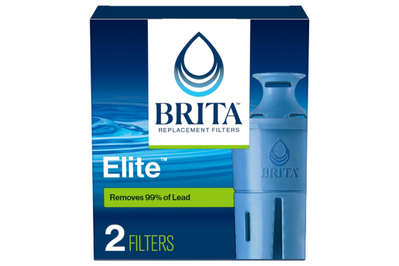
Several of our water filter picks are specifically NSF/American National Standards Institute–certified to reduce microplastics, which means they’ve been rigorously tested in an accredited lab. They’re certified only to reduce since the filters cannot guarantee total elimination. Our picks include under-sink filters, such as the Aquasana AQ-5200, and the Brita Elite.

Brita Elite Filter

Yes, it’s ironic that most NSF/ANSI-certified water filters contain plastic. But any microplastic shedding from using the plastic filter is likely to be minimal, as long as you avoid running hot water through the filter and store your water in the fridge, since heat accelerates plastic degradation.

Research suggests that boiling tap water, cooling it, and then filtering it may be especially effective at reducing microplastics, although it’s less practical for most people than simply using a filter.

3. Don’t use plastic to store food

Plastic food storage and packaging is so common that it’s difficult to avoid entirely. But your safest bet is to avoid storing food or liquid in plastic when possible and to minimize exposing any plastic (even those that say they’re BPA-free or microwave-safe) to high heat. Sunlight, acids, and physical erosion can also degrade plastic.

4. Don’t reuse single-use plastics for food and drinks

It’s great to reuse single-use plastic—just not for food. Unless you’re using the plastic in the freezer, save it for something that isn’t food storage or reheating, said Dr. Gillian Goddard, an endocrinologist and author at ParentData, a science-based online resource for parents. That means don’t reuse plastic takeout containers, breastmilk bags, or drink bottles.

5. Don’t microwave in plastic

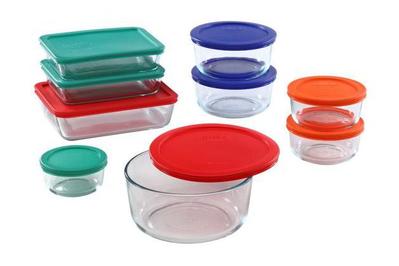
Avoid microwaving or heating food or water in plastic—even if it says it’s microwave-safe, said Tracey Woodruff, director of the Program on Reproductive Health and the Environment at University of California San Francisco. Instead, consider glass or ceramic. The Pyrex Simply Store 18-Piece Set is our pick for the best food storage containers, and they survived our drop tests, stack neatly, and come with user-friendly lids (although you may not want to microwave the plastic lids). Our runner-up, the leakproof Glasslock 18-Piece Container Set, is another great option.

Top pick

6. Wash plastic by hand

Dishwasher temperatures run very hot and can degrade plastic—even dishwasher-safe plastic—and lead to microplastic shedding. Try to wash your plastic food containers by hand.

7. Use wood or bamboo cutting boards

Some research suggests that plastic cutting boards can be a significant source of microplastics in your diet, since repeated cutting on their surface can dislodge particles that adhere to food. Wood cutting boards also have some other advantages: They’re better for your knife blades and last longer than plastic when properly taken care of.

Take special steps for infants and young children

Infants may be exposed to microplastics and nanoplastics in much higher concentrations than adults. Research shows that this exposure may be cause for concern, particularly at critical stages of early development. But much like health risks to adults, it’s important to think of microplastics exposure as just one piece of a child’s overall health.

“I emphasize that before putting much energy and resources into minimizing unknown risks, it is worth attending to reducing the risks we know about,” said Dr. Carlos Lerner, a pediatrician and professor of clinical pediatrics at UCLA Health. He cited following safe sleep recommendations for infants, avoiding secondhand smoke, and practicing good nutrition as examples.

If you want to take a more precautionary approach, avoid using plastic to warm formula or breastmilk. This is the main point of advice from the experts I spoke with, as well as the Cleveland Clinic.

1. Avoid microwaving or heating formula in plastic

Recent evidence shows that polypropylene-bottle-fed babies may swallow very high levels of tiny plastics due to the high temperatures used to sterilize bottles and prepare formula, as well as shaking the bottles to mix. If you want to feed your baby warmed formula and use plastic bottles, consider premixing the formula in a glass container, then cooling it down before transferring it to the feeding bottle.

2. Rinse heat-sterilized plastic bottles before adding formula or breastmilk

If you use heat to sterilize plastic bottles, leave them to cool then rinse them several times before filling them with formula or breastmilk, Lerner suggested.

3. Consider glass or silicone over plastic bottles

If your baby prefers warmed milk or formula, consider heating it in a glass or silicone bottle. (If you don’t use a bottle warmer, we have advice about how to safely do this without one.)

4. Wash hands before eating

For young kids who eat with their hands, try to establish a habit of handwashing before eating, said Woodruff. While handwashing is not always possible, it can help reduce exposure from touching microplastics in dust and soil (and maybe, just maybe, stem the tide of germs).

How worried should you be about microplastics?

Scientists are still studying the exact connections between these teeny tiny pieces of plastic and human health. But it’s clear that exposure to plastic—whether it’s those tiny particles, the chemicals they leach, or a combination—is being linked to a variety of worrying health issues.

Some of those connections still require more research, such as ties to colon cancerrespiratory diseasemetabolic function, and disruption to endocrine systems, while others—like a recent study that found those with levels of plastics in their arteries were at a higher risk for heart attacks, strokes, and death—seem a little more clear.

It’s important to remember that these links point to concerns about the impact of microplastics on public health, but they are not specific, predictable outcomes. “What I’m thinking about is population risk, not a risk to a specific individual,” said Goddard.

The tricky thing is that microplastics and nanoplastics are impossible to avoid, no matter how diligent you are: They’re in the air we breathe, our drinking water, and our food. But scientists aren’t sure what levels of microplastics and nanoplastics we’re each taking in from those sources.

The oft-cited estimate that the average person eats a credit card’s worth of plastic every week has been called into question. But our bodies are certainly taking in plastic, and that’s more than nature intended.

Given the growing body of evidence, it’s possible that we’ll start to see more public health measures that address microplastic pollution. Until then, taking care of your overall health is the first line of defense, followed by taking reasonable steps to reduce microplastic exposure.

dHere is the link if you would like to read their recommendations https://www.nytimes.com/wirecutter/reviews/how-to-avoid-eating-microplastics/

Sources

  1. Tracey Woodruff, director of the Program on Reproductive Health and the Environment at UCSF, phone interview, April 25, 2024
  2. Gillian Goddard, MD, endocrinologist and adjunct assistant professor at NYU Langone Hospital and author of “Hot Flash” newsletter from ParentData, phone interview, April 26, 2024
  3. Carlos Lerner, MD, pediatrician at the Children’s Health Center at UCLA and professor and Jack H. Skirball endowed chair in Pediatrics at UCLA, email interview, April 26, 2024
  4. Hayley Goldbach, MD, board-certified physician and dermatologic surgeon at Brown University, email interview, April 29, 2024

Make Plastic-Free Fun

It’s Plastic Free July!

We have a plastic problem. Manufacturing plastic creates air pollution, single-use plastic ends up in the ocean, toxic chemicals, and microplastics find their way into our food and water. Plastic permeates our lives, and we would all be healthier by reducing our plastic use.

Make it fun this month as you try to reduce the plastic you expose your family and yourself to plastic. See below for ideas to reduce your plastic exposure.

We all see plastic litter that is harmful to our waterways and our environment, but we might just be learning that plastic contains harmful chemicals and that it breaks down into microfibers. We can’t see the chemicals or the microfibers that can harm our bodies.

Plastic contains thousands of harmful chemicals that are especially harmful to children. These chemicals leach from plastic containers into our food and bodies. Plastic contains serious hormone disrupters that can cause obesity, diabetes, cancers and birth defects.

Plastic also sheds into small flakes of microfibers that have been found in every organ of our bodies. https://www.cnn.com/2024/06/19/health/microplastics-human-penises-study-scli-intl-scn-wellness Microfibers enter our bodies from our food, drinks, water, air and synthetic clothing. We ingest about a credit card of plastic a week.

Below are two lists of ways you can reduce plastic. Choose one or two ways and work for success. Good luck!

6 Ways to Use Less Plastic from Consumer Reports

While it’s practically impossible to eliminate plastic from modern life, there are a number of steps you can take right now to cut back.

Do: Drink tap water.
Don’t: Rely on bottled water.

Water from plastic bottles has about double the microplastic level of tap water on average, according to a 2018 study published in the journal Frontiers in Chemistry. So unless your tap water is contaminated with unsafe elements, such as lead, it’s probably best to drink tap. Fill up a metal reusable bottle for when you go out. You can always filter your tap water. Depending on the filter, that may further reduce microplastic levels. (Check CR’s ratings of water filters.)

Do: Heat food in or on the stove, or by microwaving in glass.
Don’t: Microwave in plastic.

Some heated plastics have long been known to leach chemicals into food. So if you’re warming up food, use a pan in the oven or on the stove, or if you’re microwaving, use a glass container. Also, avoid putting plastics in the dishwasher because of the high heat involved in cleaning.

Do: Buy and store food in glass, silicone, or foil.
Don’t: Store food in plastic, especially plastic that may contain harmful chemicals.

The American Academy of Pediatrics has said that plastic food containers with the recycling codes 3, 6, and 7 may contain potentially harmful chemicals, unless they’re labeled “biobased” or “greenware.” Don’t store food in these types of containers. Instead, use containers made of glass or silicone, or wrap your food in aluminum foil. If you’re storing food in or eating food out of plastic containers, know that plastics with recycling codes 1 and 2 are more likely to be recyclable—though they are usually recycled into lower-quality plastics. And there still may be harmful or unknown chemicals in any type of plastic.

Do: Eat fresh food as much as possible.
Don’t: Rely on processed food wrapped in plastic.

The more processed or packaged a food is, the higher the risk that it contains worrisome chemicals. Food cans are often lined with bisphenol A (or similar compounds). Buy fresh food from the supermarket, and—as much as possible—try to use refillable containers if your market allows. (Of course, with shopping made difficult by the coronavirus pandemic, prioritize your health and shop however is most feasible and safest.) Certain markets let you fill up cardboard or reusable containers with bulk items and weigh them, or you can use your own mesh bags for produce. Raw meat and fish need to be kept separate for safety reasons, but ask the store fishmonger or butcher to wrap these foods in wax paper instead of plastic. Take cloth—not plastic—reusable bags to the store to take your groceries home.

Do: Vacuum regularly.
Don’t: Allow household surfaces to get dusty.

The dust in your house could be loaded with microplastics and chemicals that are found in plastic, such as phthalates. Cleaning up dust may help reduce the amount of plastics you inhale, especially if you are stuck inside for long periods of time during a period of social distancing. CR recommends vacuuming regularly with a HEPA filter, which is best for trapping dust. (Check CR’s ratings of vacuums.)

Do: Work with your community.
Don’t: Assume your impact is limited to what you do in your personal life.

Legislation to limit the use of single-use plastics and plastic production may pull the biggest levers, but joining forces with community-level recycling groups can truly make a difference. Look for so-called zero-waste groups, which can offer guidelines for how to recycle or compost all your garbage—and which lobby for local rules that can restrict throwaway items. When possible, shop at markets that source goods locally, so they don’t require as much packaging and shipping. Seek out groups such as Upstream, a nonprofit working to create reusable takeout packaging for restaurants. And when possible, educate yourself about and support any city, county, and state legislation limiting single-use plastics.

My list to reduce plastic:

  • Always carry a reusable glass or metal water bottle, and reusable shopping bags with you.
  • Learn to refuse single-use plastics, such as plastic water bottles and coffee cups, straws, plastic bags and plastic utensils. 
  • Purchase fruit and produce in the bulk section, and don’t place items in plastic bags. 
  • Always search out products in glass jars instead of plastic containers. 
  • When you must buy plastic products, choose ones that you can recycle rather than ones you must put in the trash. 
  • Bring your own containers and shop the bulk section of your local food coop.
  • Purchase clothing made from cotton and wool instead of polyester or poly fibers. https://www.npr.org/2023/07/19/1188343293/is-toxic-fashion-making-us-sick-a-look-at-the-chemicals-lurking-in-our-clothes
  • Store food in glass containers instead of plastic.
  • Ditch the baggies!

1. Sandra Laville, “Single-use plastics a serious climate change hazard, study warns,” The Guardian, May 15, 2019.
2. “What do plastics have to do with climate change?” United Nations Development Programme, November 15, 2022.
3. Oliver Milman, “‘Deluge of plastic waste’: US is world’s biggest plastic polluter,” The Guardian, December 1, 2021.
4. “We know plastic pollution is bad — but how exactly is it linked to climate change?,” World Economic Forum, January 19, 2022.
5. “We know plastic pollution is bad — but how exactly is it linked to climate change?,” World Economic Forum, January 19, 2022.
6. “Reducing plastic waste in the states” U.S. PIRG, July 26, 2022.
7. Celeste Meiffren-Swango, Jenn Engstrom and Mark Morgenstein, “Statement: Amazon to phase out single-use plastic shipping bags,” Environment America, July 19, 2023. https://www.youtube.com/watch?v=80Rya-ZOJ7g (microplastics)

1. “Another PA train derailment, another close call catastrophic accident averted,” PennEnvironment, March 13, 2024.
2. Shannon Osaka, “With microplastics, scientists are in a race against time,” The Washington Post, March 11, 2024.
3. Neel Dhamesha, “The massive, unregulated source of plastic pollution you’ve probably never heard of,” Vox, May 6, 2022.
4. Lisa Frank and Kelly Leviker, “We’re campaigning for Microplastic Free Waters,” U.S. PIRG, April 16, 2024.

Heat Waves

Happy Summer! What are ways we can show our love for our planet?

Below is from the Carbon Almanac :

The ‘official’ start to summer is June 20th in the Northern hemisphere though it seems that the heat of the season has arrived earlier. 

There is a heat dome happening in North America with the mercury reaching temperatures that normally are seen later in the season. In addition, Delhi India recently broke temperature records with a new record of 49.9 degrees Celsius (121.8 degrees Fahrenheit). The previous record was 49.2 degrees Celsius (120.5 degrees Fahrenheit), which happened just two years ago.

High temperatures are particularly problematic for senior citizens as the body doesn’t cool down as easily. By mid century, about 20% of the world’s population will be over 60. If you are 35 years or older now, you are included in that number. Another vulnerable group are the unhoused. 

Human actions are causing climate change which in turn is causing more extreme heat waves. Which can also lead to conditions for forest fires. 

Want to help? Here are some ideas for action.   

Water for Peace, Water for Life

Water is Life, we must do a better job of protecting our waters.

World Water Day March 22, 2024 is the United Nations observance day dedicated to highlighting the importance of freshwater. It serves as a reminder of the critical role water plays in our lives and ecosystems. 

 “Water for Peace” is this year’s theme. fostering peace, prosperity, and conflict prevention in the role water plays in the world.

It is shameful the poor job we do to take care of our fresh water. Our fresh waterways are teaming with microplastics, nitrates and forever chemicals. None of these safe for human exposure. In some places invasiive speciaes have been introduced that also change the entire ecosystem of our water ways.

73 percent of Minnesota nitrate pollution comes from cropland, primarily through agricultural drainage systems below cropped fields and by nitrate pollution leaching into groundwater, and then moving underground until it reaches streams. 78% of nitrate pollution to the Mississippi River in our state is fr…See more on fmr.org

At least 70 million Americans get their water from a system where toxic PFAS “forever chemicals” were found at levels that require reporting to the Environmental Protection Agency. That’s according to new data the EPA released in its ongoing 5-year review of water systems across the nation. The number will almost certainly grow as new reports are released every three months. USA Today, March 21.2024

Careless humans have transported invasive plants and animals with their boats and equipment. Invasive species disrupt aquatic ecosystems, endanger native species, and have far-reaching consequences that harm the eco-system of waterways.

Things are out of balance as we have allowed industry and farmers and all of us the right to pollute our waterways. We can all do better!

https://besjournals.onlinelibrary.wiley.com/doi/10.1111/1365-2664.14387

https://extension.psu.edu/nitrates-in-drinking-water

https://fmr.org/minnesota-nitrate-study-highlights-farm-runoff-pollution

https://www.npr.org/2022/06/22/1106863211/the-dangers-of-forever-chemicals

What are a few things you can do to protect our waterways?

1. Always clean your boats and equipment before entering lakes.

2. Pick up litter

3. Keep the storm drains near your home free of leaf debris and plastic waste.

4. Reduce the plastic you use, and always make sure your plastic waste is in the correct place, either recycling, landfill waste or hopefully to be reused again.

5. Plant deep rooted plants that absorb water runoff, like native grasses and native plants.

6. Create rain gardens or adjust your drain spouts to drain onto your lawn or gardens.

7. Never use artificial turf for landscaping!