How did you manage your Thanksgiving left overs? What do you generally do with left over food? 40% of the food in the United States is not eaten, and ends up in our landfills causing an enormous waste of our precious resources. Wasting food is an enormous waste of water, money, time, labor, energy and transportation. The Natural Resources Defense Council (NRDC) has an incredible education campaign to inform the public how much we are wasting. For example the production of one egg takes 55 gallons of water!Their website is savethefood.com
So let’s get creative and “Save the Food.” One of my favorite cooking activities is to reinvent leftovers into a new lunch or dinner. Stir fry, soups, tacos, enchiladas, salads, fried rice, and many other things lend themselves to create special meals of uneaten foods.
Not only does wasting food, waste valuable resources and lots of water, but also food in our landfills decomposes creating and giving off methane gas which is a harmful air pollutant contributing to global warming.
From Thanksgiving to New Year’s Day, household waste increases by more than 25%. Added food waste, shopping bags, packaging, wrapping paper, bows and ribbons all adds up to an additional 1 million tons a week to our landfills. (Source: EPA)
Have a fun holiday month, but make a creative difference by reusing, planning, seriously cutting waste, and saving food from your garbage!
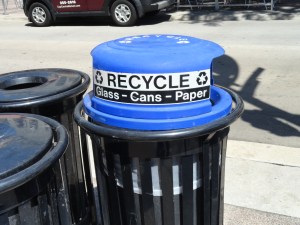
Find a place to recycle your bottles, cans and paper.Say “No” to plastic bags!Bring you own shopping bag
We now have plastic in our water and in the fish we eat. Do we really want to put plastic fibers into our bodies every time we eat and drink?
I have three simple thoughts about litter and recycling today: First, countries that have less plastic have less litter. Second and third, if everyone would recycle more, and change the plastic bag habit, it would make a big difference on our planet.
Here is an interesting plastic comparison for you. This is based on observation during the past month while I have been travelling through Central Asia and Iran. Central Asia uses very little plastic except for black plastic bags for purchases and plastic bottles for soda. Iran by contrast uses lots of plastic. Beside plastic bottles, restaurant food, hotel towels, and many things that don’t need to be, are wrapped in plastic. Plastic cups and straws are used in Iran, but I saw none in Central Asia. Where would you guess there is a terrible litter problem? The contrast was enormous. I brought Iranian plastic home to recycle.
Governments clearly need to become aware of the problem, and businesses like Coca Cola need to take more responsibility for the plastic they produce.
While I was thinking about this I came across an excellent essay by ECOwatch with great suggestions for everyone (see below) But keep it simple and by recycling and reducing plastic bags you can make a big difference on our earth!
From Ecowatch:
Complain to retailers. Pressure retailers to do away with over-packaging.
Support plastic bag bans, polystyrene foam bans and bottle recycling bills.
Use natural clothing fiber rather than synthetic clothing, as synthetic cloth releases plastic fiber in every wash cycle.
Choose to reuse. Neither plastic shopping bags nor plastic water bottles can be easily recycled.
Deposit return schemes are highly effective ways to reduce plastic bottle waste. In Germany, where a bottle-return program is in place, nearly 98 percent of plastic bottles are returned.
Recycle. If you must use plastic, try to choose #1 (PETE) or #2 (HDPE), which are the most commonly recycled plastics.
Avoid plastic bags and polystyrene foam as both typically have very low recycling rates.
Seek out alternatives to the plastic items that you rely on.
Pressure politicians. Governments should be funding research into microplastics and regulating and incentivizing changes in plastic production and consumption.
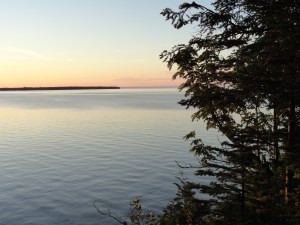
Lake Superior and all lakes are precious, protect them!
This summer I wished I could have given some of our rain to drought stricken North or South Dakota. Everyday on Lake Superior seemed to sprout a rain shower. When I read the water quality of Lake Superior wasn’t superior to other Great Lakes anymore, my first thought was of this summer’s rain. Because of the rainy summer, the lake level became very high, and this high water caused some of the soft lake banks to erode into the lake causing lake sediment. The streams running into the lake bring more sediment into the lake.
An unusual fact about Lake Superior: Many streams and rivers drain into the big lake, but only one river drains out of the lake, the St. Mary’s River, and that is regulated at Sault Ste. Marie. I know the water that flows out through the St. Mary’s River is complicated with many factors, but releasing more water from the lake could probably help water quality of Lake Superior. Read at St. Mary’s River.
We can all do better to protect the water quality this magnificent lake, and other lakes also.
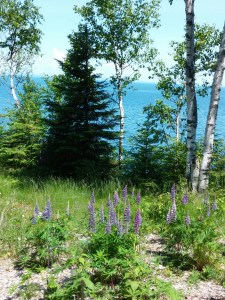
Buffer strips along lakes protect water quality.
Slowing down the water flow can help. Buffer strips of deep-rooted plants along streams and along the lake can reduce sediment run-off, and putting in rain gardens and rain barrels can also slow the water.
The below ideas for protecting our lakes is from the Superiorforum.org , Sigurd Olson Institute, Northland college, the EPA, and Great Lakes Restoration Initiative:
1 .Be conservative with your water use.
2. Recycle as much as you can with the 4 Rs: reduce, reuse, recycle and repair. And….NEVER burn trash.
3. Curb Yard Pollution. Put your lawn on a chemical-free diet!!
4. Stop aquatic invasives by cleaning plants and animals off your boat.
5. Plant native plants, and reduce turf grass.
6. Plant native trees According to Audubon, oak trees are the best for attracting insects and birds.
7. Install a rain barrel
8. Create an energy-efficient home.
9. Bring hazardous waste to waste collection sites.
10. Love our lakes!
I would add a few more:
Plastics have become a big problem for our waterways. Reduce plastic use and be sure any plastic-use is recycled. Also remember to say, “No straw please!”
Micro-fibers in our clothes also are polluting our waterways. As of yet there isn’t a good solution. Read about micro-fibers here.
Always pick up litter.
The water we have on earth is the only water we will ever have, we must take care of it!
October 5 is the national day to do something nice, and after weeks of tragedy and deaths from gun violence and hurricane suffering we need a break. So today get out and smile, be pleasant to everyone you see!
Do something nice for the earth also. Avoid plastic, pick up trash, buy organic, go meatless, leave your car at home, and walk or take the bus. Do something Nice!
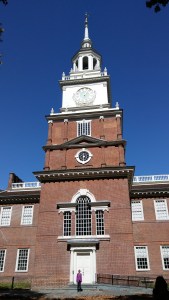
The Liberty Bell in Philadelphia. Does this give some the right to treat others without justice?
The United States was founded on rebellion. Rebellion is what created the Declaration of Independence, the Constitution, and the Bill of Rights. This week I have been to Washington D. C., Philadelphia, and Baltimore visiting historical sites. The United States Capitol was in Philadelphia the first ten years, the 1790s, of its existence while the Washington, D. C. Capitol was being built. According to the park ranger, protests were a constant thing. Protesting for the right of women to vote, and protests to end slavery were often at Independence Hall, where at that time the capital was located. The protesters felt the new government was unjust to exclude women and allow slavery.
Independence Hall had many protests at the beginning of the U.S. government.
Now in 2017 we have athletes protesting police violence towards black men. Many feel the behavior of law enforcement toward black people is not acceptable. This is a way athletes can express their opinions to many people. Unfortunately, in denial of this injustice some have changed the meaning of these protests to be about protesting against the flag and military.
We can’t tell others how they should feel, or what they should think, and we don’t all think and feel alike. In the 1790 some felt the new United States government was unjust. The same is true today, not everyone feels they are treated equally and with justice! Are their complaints justified? Is there equal treatment for all? Do we all have the same liberties and rights? What do you think?
Thoughts for the first day of fall on Lake Superior:
Bees love the fall asters
Crickets sing, eagles whistle, the wind howls and pounds waves against the sandstone bank.
The red tips of the maples, the blooming asters, and the shortening days say one thing, summer has turned to fall!
Summer’s End
By Judith Viorst
One by one the petals drop
There’s nothing that can make them stop.
You cannot beg a rose to stay.
Why does it have to be that way?
There is an unusual explosion of painted ladies this fall
The butterflies I used to chase
Have gone off to some other place.
I don’t know where. I only know
I wish they didn’t have to go, and all the shiny afternoons
So full of birds and sun are done. I do not want them done!
2017 Peace Day Theme: Together for Peace: Respect, Safety and Dignity for All.
The International Day of Peace (“Peace Day”) is observed around the world each year on 21 September. Established in 1981 by unanimous United Nations resolution, Peace Day provides a globally shared date for all humanity to commit to Peace above all differences and to contribute to building a Culture of Peace.
#jointogether
Peace is a goal to which we strive, a state of existence that we want to live in, a way of acting and a feeling of respect. When we work to live peacefully with others it shows the concern and love we express for them. In some cultures, people greet one another by using the word “peace” in their greetings, “peace be to you.” Native Americans when they met with people from another tribe, or when “foreigners” came to them respectfully, the “peace pipe” was shared among those assembled. From early times, cultures have recognized symbols for peace. Voices Education
Wishing kindness on our earth
Today, do something kind for our earth!
Brothers and sisters all are we
Let me walk with my brother and sister
In perfect harmony !
The earth has a natural balance. The prairies, lakes, wetlands, deserts, mountains and oceans and rivers all work together to provide food and habitat for living things. Unfortunately, some places have gotten out of balance. Some areas are suffering terrible drought, and others have more rain and water than they can manage.
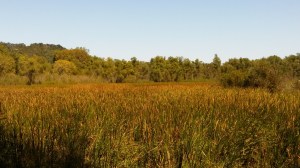
Building cities, driveways, parking lots, and roads changes the earth’s balance. What had been surfaces that were pervious, waterdrained through, are changed into impervious surfaces, that do notdrain. Wetlands have gotten the shaft the past 200 years taking away the natural healing for our earth. Farmers have drained the wetlands to be used for agriculture and cities have drained and paved over these valuable places that naturally clean our water and provide homes for so much wildlife. When you build a city on a wetland you take away the natural ability to drain the area. You also destroy the dynamic life that lives there.
Houston sits on a wetland. Without any regulation parts of Houston were built on a wetlands. The concrete and asphalt took away the earth’s drainage capacity. The original wetland wants to flood, that’s what it is supposed to do, but all the hard paved surface has left only small patches of ground to drain the water and guess what? You have a flooded area.
How can Houston embrace their water? I hope that as Houston rebuilds from Hurricane Harvey they will work to maximize pervious areas, areas that drain, and limit the concrete and asphalt. It is impossible to plan for a 50 inch rain, but with some good science and skilled planning, some houses and many lives can be saved. Regulation and good minds are needed instead of a “Do what you want” attitude. I hope the people of Houston will try! It is so wasteful and expensive not to try to change the way they do things.
Areas need to be created that capture the water so it drains into the earth not into the rivers and streams. Run-off creates polluted water. The earth naturally cleans the water as it is absorbed by the earth. I hope Houston is willing to replace some concrete with renewed wetlands and rain gardens that will keep such destruction from happening again! Homeowners could be required to install pervious or permeable driveways or gardens that absorb water, or some area on their property that absorbs a percentage of water. See permeable driveways for ideas.
I heard one Houston homeowner on the radio, his house had flooded 3 times in the past 5 years. It is insane to keep doing the same thing over and over and expect a different result! Maybe we can all learn something from New Orleans. See below.
After fighting water New Orleans is starting to embrace their water problem with a new paradigm. I hope Houston can learn from them. Read about it at New Orleans.
Also, Mayors along the Mississippi River are embracing wetlands to improve water quality and this will help New Orleans and the Gulf of Mexico, also! Read about at wetlands.
Houston, it’s your turn! Wetlands can soak up lots of flood water. Can you do things differently this time around? Start listening to the scientists, engineers and environmentalists.
Houston helped put a man on the moon. Houston is the leader in the medical field. It could also begin to be a smart, resilient city if it puts its mind to it. That’s all it’s got to do. Read more at Houston.
Scientists, other experts and federal officials say Houston’s explosive growth is largely to blame. As millions have flocked to the metropolitan area in recent decades, local officials have largely snubbed stricter building regulations, allowing developers to pave over crucial acres of prairie land that once absorbed huge amounts of rainwater. That has led to an excess of

 Happy December! Kindness is the light of happiness and of life!
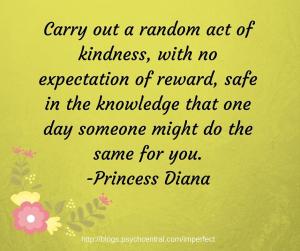 someone who needs help? Give rides to the grocery store, babysit, bring someone a dinner.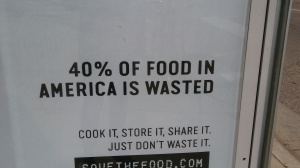









 Health4earth