We all need to examine the amount of plastic we purchase, and figure how we can reduce the plastic we are exposed to and disperse into our environment.
Plastic is harming our health and our environment.
By Mary Koseth and Katelynn Rolfes
From the Minnesota Reformer
Microplastics have become a significant environmental concern across the world due to their widespread presence in various ecosystems, potential harm to wildlife and marine life, and the uncertainty surrounding their long-term effects on human health.
This summer, concerned citizens across Minnesota worked with staff from Environment Minnesota Research & Policy Center to test 40 Minnesota lakes for microplastics.
When we analyzed the water samples the results were clear: No Minnesota lake is safe from microplastics.
The report presents the test results, from the northern coast of Lake Superior to the wouthwest corner Minnesota, and includes recommendations to tackle the problem. In our citizen-science research project, the 40 samples were filtered using a funnel, flask and filters which had a pore size of 0.45 microns. The goal was to capture any tiny bits of plastic that were tough to spot with only our eyes. The types of plastic we searched for were microfibers, films, fragments and microbeads. We found all of these types save for microbeads, commonly found in beauty products prior to their banning in 2015.
The results of this survey should set off alarm bells for Minnesotans who love our lakes. Minnesota’s waterways are a source of peace for people, a critical habitat for wildlife, and part of our state’s identity.
Our report underscores that microplastic pollution is not an “over there” problem. It’s a “right here” problem that none of us can afford to ignore. But fortunately for us, this isn’t a hopeless situation, and there are many ways we can take action. As individuals, as community members, as whole nations, we can uphold human and environmental health and justice with our creative ideas and bold visions. Everyone has something to offer. When it comes to microplastic pollution, it’s all hands on deck.
The report outlines a broad range of various ways to tackle the problem. These include fighting fast fashion and excess textile waste, and changing Minnesota law to allow local governments to restrict single-use plastics like plastic bags.
We need to take a lot of steps to protect our lakes and health from microplastic pollution, but to start, we need to move away from single use plastics. Nothing we use for a few minutes should be able to pollute our environment for hundreds of years.
Yay, It’s Plastic Free July. Join millions of people working to reduce their plastic use
Start refusing plastic today!
We have a plastic problem. Plastic pollutes our earth from it’s extraction to it’s end of life.It pollutes our water air and land. Plastic is made of fossil fuels and contains harmful chemicals are needed to make it plastic. It breaks down into tiny fibers called microplastics. These tiny microplastics have been found in our brains, blood and in every organ in or body. Do you want plastic in your brain? Plastic permeates our lives, and we would all be healthier by reducing our plastic use.
Plastic may feel convenient, but the long-term costs are serious:• Only 9% of all plastic ever made has been recycled• The rest ends up in landfills, waterways, or breaks down into microplastics. Some of these microplastics end up in fish, plants, animals and human beings. Reducing your plastic exposure is not easy, but it is important.
We all see plastic litter that is harmful to our waterways and our environment, but we are just be learning that plastic contains harmful chemicals and that it breaks down into microfibers. We can’t see these chemicals or the microfibers that can harm our bodies.
Plastic contains thousands of harmful chemicals that are especially harmful to children. These chemicals leach from plastic containers into our food and bodies. Plastic chemicals contain serious hormone disrupters that can cause obesity, diabetes, cancers and birth defects.
Water from plastic bottles has about double the microplastic level of tap water on average, according to a 2018 study published in the journal Frontiers in Chemistry. So unless your tap water is contaminated with unsafe elements, such as lead, it’s probably best to drink tap. Fill up a metal reusable bottle for when you go out. You can always filter your tap water. Depending on the filter, that may further reduce microplastic levels. (Check CR’s ratings of water filters.)
Do: Heat food in or on the stove, or by microwaving in glass. Don’t: Microwave in plastic.
Some heated plastics have long been known to leach chemicals into food. So if you’re warming up food, use a pan in the oven or on the stove, or if you’re microwaving, use a glass container. Also, avoid putting plastics in the dishwasher because of the high heat involved in cleaning.
Do: Buy and store food in glass, silicone, or foil. Don’t: Store food in plastic, especially plastic that may contain harmful chemicals.
The American Academy of Pediatrics has said that plastic food containers with the recycling codes 3, 6, and 7 may contain potentially harmful chemicals, unless they’re labeled “biobased” or “greenware.” Don’t store food in these types of containers. Instead, use containers made of glass or silicone, or wrap your food in aluminum foil. If you’re storing food in or eating food out of plastic containers, know that plastics with recycling codes 1 and 2 are more likely to be recyclable—though they are usually recycled into lower-quality plastics. And there still may be harmful or unknown chemicals in any type of plastic.
Do: Eat fresh food as much as possible. Don’t: Rely on processed food wrapped in plastic.
The more processed or packaged a food is, the higher the risk that it contains worrisome chemicals. Food cans are often lined with bisphenol A (or similar compounds). Buy fresh food from the supermarket, and—as much as possible—try to use refillable containers if your market allows. (Of course, with shopping made difficult by the coronavirus pandemic, prioritize your health and shop however is most feasible and safest.) Certain markets let you fill up cardboard or reusable containers with bulk items and weigh them, or you can use your own mesh bags for produce. Raw meat and fish need to be kept separate for safety reasons, but ask the store fishmonger or butcher to wrap these foods in wax paper instead of plastic. Take cloth—not plastic—reusable bags to the store to take your groceries home.
Do: Vacuum regularly. Don’t: Allow household surfaces to get dusty.
The dust in your house could be loaded with microplastics and chemicals that are found in plastic, such as phthalates. Cleaning up dust may help reduce the amount of plastics you inhale, especially if you are stuck inside for long periods of time during a period of social distancing. CR recommends vacuuming regularly with a HEPA filter, which is best for trapping dust. (Check CR’s ratings of vacuums.)
Do: Work with your community. Don’t: Assume your impact is limited to what you do in your personal life.
Legislation to limit the use of single-use plastics and plastic production may pull the biggest levers, but joining forces with community-level recycling groups can truly make a difference. Look for so-called zero-waste groups, which can offer guidelines for how to recycle or compost all your garbage—and which lobby for local rules that can restrict throwaway items. When possible, shop at markets that source goods locally, so they don’t require as much packaging and shipping. Seek out groups such as Upstream, a nonprofit working to create reusable takeout packaging for restaurants. And when possible, educate yourself about and support any city, county, and state legislation limiting single-use plastics.
My list to reduce your plasticfootprint:
Always carry a reusable glass or metal water bottle, and reusable shopping bags with you.
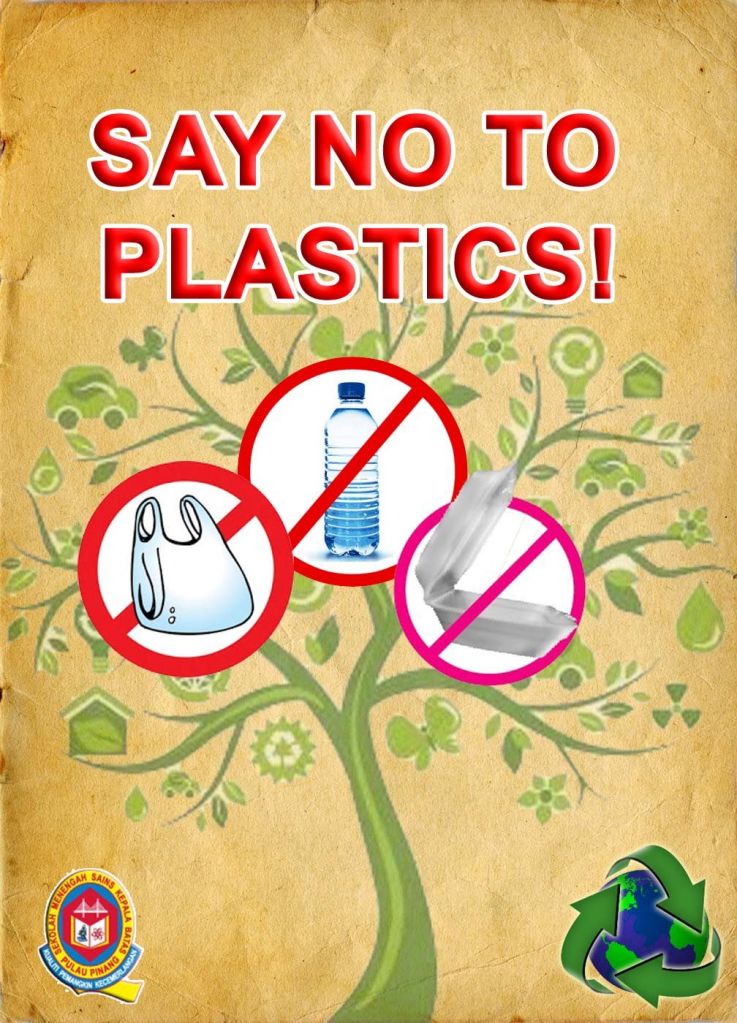
Learn to refuse single-use plastics, such as plastic water bottles and coffee cups, straws, plastic bags and plastic utensils.
Purchase fruit and produce in the bulk section, and don’t place items in plastic bags.
Always search out products in glass jars instead of plastic containers.
When you must buy plastic products, choose ones that you can recycle rather than ones you must put in the trash.
Bring your own containers and shop the bulk section of your local food coop.
March 20 is the first day of spring, International Day of Happiness and Nowruz. Nature has given us the beauty of spring. Be sure you spend time outside every day to appreciate our beautiful Earth. Ancient people celebrated the first day of spring thousands of years ago!
For the Northern Hemisphere, March 20 is the first day of spring. But for 300 million people around the world, it’s the beginning of a new year, too. Nowruz—which means “new day”—is a holiday marking the arrival of spring and the first day of the year in Iran, whose solar calendar begins with the vernal equinox. Nowruz has been celebrated in Iran and the Persian diaspora for more than 3,000 years. Its roots are as a feast day in Zoroastrianism, a religion practiced in ancient Persia that viewed the arrival of spring as a victory over darkness. The holiday survived the Islamic conquest of Persia in the seventh century and the decline of Zoroastrianism’s popularity, and it spread across the globe through the diaspora of Persian people throughout history. (Here’s how Persia became the world’s first true empire.
It is hard to celebrate much happiness with such chaos in the world. Try to spring clean your brain and think about mental health for yourself and those you love. Be good to yourself and be good to the entire world.
This year’s theme is caring and sharing. Make your own happiness special! Go for quiet walks and watch for changes around you as we transition into spring. The birds are returning and the lake near my home is almost losing its winter ice! Soon new buds will be on the trees.
Learn ways to reduce single-use plastic. Join my team here.
Do something positive for yourself, your family and for the planet in February. With so many plastic items in our lives avoiding them may feel impossible, but there is a lot we can do to reduce our plastic footprint. Be part of our Lynnhurst community team, Lynnhurst plasticfree. Please Join with us to learn ways we can reduce our exposure to plastic. There are many activities to choose from, but you can also create your own challenge. Keep it simple, and even choosing one activity will make a difference. You will learn a lot, and have fun during this February challenge. Sign up here:
The Plastic-Free Challenge is a month-long effort starting February 1 to reduce plastic consumption, in ways that fit best for your needs. You only need to choose one activity that works for you, like bringing your reusable shopping bags, or asking not to be given a straw with your drink, or bringing your reusable cup with you for February. Many other ideas will be suggested when you register. Keep it simple. Do a good job on one thing to reduce plastic!
Plastic is made of fossil fuels; it contributes to climate change and is composed of harmful chemicals. Plastic sheds microfibers into our bodies, into our air, and into our water. Studies are showing plastic is unhealthy for us and for the planet. It is important we limit our plastic exposure.
Take care of our bodies, our families and our planet. Reduce your plastic footprint!
Plastic is everywhere. Plastic breaks down into harmful pieces called microplastics. We consume them when we use plastic water bottles, plastic containers and utensils. Below is an article from Wirecutter on how to avoid plastic. It is excellent.
Our bodies are taking in plastic, and it’s more than nature intended.
1. Cut back on bottled water
Some research indicates plastic bottled water may be a significant source of microplastics. While scientists are still studying just how significant, one study from 2019 of water and other commonly consumed food and drink found it to be the most concentrated source.
There is emerging evidence that on average, bottled water contains more microplastics than tap. (One study published in 2024 suggests that we have underestimated measured concentrations.)
Drinking bottled water in a pinch isn’t the end of the world, but if you have concerns about it, you could always consider carrying a reusable steel or glass bottle or tumbler when out and about.
2. Get an NSF-certified water filter
Switching to tap water from plastic bottled water will likely significantly reduce your routine exposure to plastics. But while the average plastic water bottle contains more microplastics and nanoplastics than tap, research shows that tap water may also be a source of microplastics.
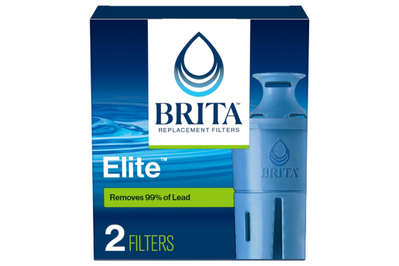
Several of our water filter picks are specifically NSF/American National Standards Institute–certified to reduce microplastics, which means they’ve been rigorously tested in an accredited lab. They’re certified only to reduce since the filters cannot guarantee total elimination. Our picks include under-sink filters, such as the Aquasana AQ-5200, and the Brita Elite.
Yes, it’s ironic that most NSF/ANSI-certified water filters contain plastic. But any microplastic shedding from using the plastic filter is likely to be minimal, as long as you avoid running hot water through the filter and store your water in the fridge, since heat accelerates plastic degradation.
Research suggests that boiling tap water, cooling it, and then filtering it may be especially effective at reducing microplastics, although it’s less practical for most people than simply using a filter.
3. Don’t use plastic to store food
Plastic food storage and packaging is so common that it’s difficult to avoid entirely. But your safest bet is to avoid storing food or liquid in plastic when possible and to minimize exposing any plastic (even those that say they’re BPA-free or microwave-safe) to high heat. Sunlight, acids, and physical erosion can also degrade plastic.
4. Don’t reuse single-use plastics for food and drinks
It’s great to reuse single-use plastic—just not for food. Unless you’re using the plastic in the freezer, save it for something that isn’t food storage or reheating, said Dr. Gillian Goddard, an endocrinologist and author at ParentData, a science-based online resource for parents. That means don’t reuse plastic takeout containers, breastmilk bags, or drink bottles.
5. Don’t microwave in plastic
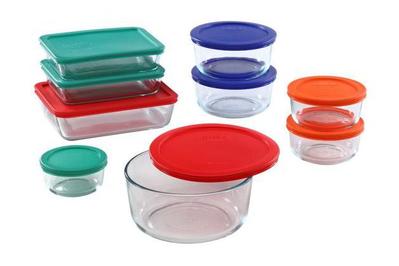
Avoid microwaving or heating food or water in plastic—even if it says it’s microwave-safe, said Tracey Woodruff, director of the Program on Reproductive Health and the Environment at University of California San Francisco. Instead, consider glass or ceramic. The Pyrex Simply Store 18-Piece Set is our pick for the best food storage containers, and they survived our drop tests, stack neatly, and come with user-friendly lids (although you may not want to microwave the plastic lids). Our runner-up, the leakproof Glasslock 18-Piece Container Set, is another great option.
Top pick
6. Wash plastic by hand
Dishwasher temperatures run very hot and can degrade plastic—even dishwasher-safe plastic—and lead to microplastic shedding. Try to wash your plastic food containers by hand.
7. Use wood or bamboo cutting boards
Some research suggests that plastic cutting boards can be a significant source of microplastics in your diet, since repeated cutting on their surface can dislodge particles that adhere to food. Wood cutting boards also have some other advantages: They’re better for your knife blades and last longer than plastic when properly taken care of.
Take special steps for infants and young children
Infants may be exposed to microplastics and nanoplastics in much higher concentrations than adults. Research shows that this exposure may be cause for concern, particularly at critical stages of early development. But much like health risks to adults, it’s important to think of microplastics exposure as just one piece of a child’s overall health.
“I emphasize that before putting much energy and resources into minimizing unknown risks, it is worth attending to reducing the risks we know about,” said Dr. Carlos Lerner, a pediatrician and professor of clinical pediatrics at UCLA Health. He cited following safe sleep recommendations for infants, avoiding secondhand smoke, and practicing good nutrition as examples.
If you want to take a more precautionary approach, avoid using plastic to warm formula or breastmilk. This is the main point of advice from the experts I spoke with, as well as the Cleveland Clinic.
1. Avoid microwaving or heating formula in plastic
Recent evidence shows that polypropylene-bottle-fed babies may swallow very high levels of tiny plastics due to the high temperatures used to sterilize bottles and prepare formula, as well as shaking the bottles to mix. If you want to feed your baby warmed formula and use plastic bottles, consider premixing the formula in a glass container, then cooling it down before transferring it to the feeding bottle.
2. Rinse heat-sterilized plastic bottles before adding formula or breastmilk
If you use heat to sterilize plastic bottles, leave them to cool then rinse them several times before filling them with formula or breastmilk, Lerner suggested.
3. Consider glass or silicone over plastic bottles
If your baby prefers warmed milk or formula, consider heating it in a glass or silicone bottle. (If you don’t use a bottle warmer, we have advice about how to safely do this without one.)
4. Wash hands before eating
For young kids who eat with their hands, try to establish a habit of handwashing before eating, said Woodruff. While handwashing is not always possible, it can help reduce exposure from touching microplastics in dust and soil (and maybe, just maybe, stem the tide of germs).
How worried should you be about microplastics?
Scientists are still studying the exact connections between these teeny tiny pieces of plastic and human health. But it’s clear that exposure to plastic—whether it’s those tiny particles, the chemicals they leach, or a combination—is being linked to a variety of worrying health issues.
Some of those connections still require more research, such as ties to colon cancer, respiratory disease, metabolic function, and disruption to endocrine systems, while others—like a recent study that found those with levels of plastics in their arteries were at a higher risk for heart attacks, strokes, and death—seem a little more clear.
It’s important to remember that these links point to concerns about the impact of microplastics on public health, but they are not specific, predictable outcomes. “What I’m thinking about is population risk, not a risk to a specific individual,” said Goddard.
The tricky thing is that microplastics and nanoplastics are impossible to avoid, no matter how diligent you are: They’re in the air we breathe, our drinking water, and our food. But scientists aren’t sure what levels of microplastics and nanoplastics we’re each taking in from those sources.
The oft-cited estimate that the average person eats a credit card’s worth of plastic every week has been called into question. But our bodies are certainly taking in plastic, and that’s more than nature intended.
Given the growing body of evidence, it’s possible that we’ll start to see more public health measures that address microplastic pollution. Until then, taking care of your overall health is the first line of defense, followed by taking reasonable steps to reduce microplastic exposure.
“ExxonMobil lied to further its record-breaking profits at the expense of our planet and possibly jeopardizing our health” Attorney General Rob Bonta
Plastic is harmful to our earth and to our bodies. The producers of plastic should be held accountable.
“For decades, ExxonMobil has been deceiving the public to convince us that plastic recycling could solve the plastic waste and pollution crisis when they clearly knew this wasn’t possible. ExxonMobil lied to further its record-breaking profits at the expense of our planet and possibly jeopardizing our health,” Rob Bonta, Attorney General, California
A coalition of environmental groups have joined together to take ExxonMobile to court. Surfrider Foundation, the Sierra Club, Heal the Bay, and San Francisco Baykeeper are taking on the world’s largest producer of single-use plastic polymers for their claims about plastic.
The lawsuit was filed in San Francisco, California and states that ExxonMobile knowingly hid the truth about the harm caused by plastic and misled the public about its recyclability.
Niall McCarthy, partner at the law firm that is representing the coalition, said:
“Some of the greatest progress in American history was caused by civil lawsuits holding the powerful accountable for their actions. This is another such case brought by the most prominent environmental nonprofits in California who are willing, for the public good, to take on a company worth billions. The case will expose the devastation caused by single-use plastics and the deceptive recycling myth pushed by plastic producers such as ExxonMobil. The case, at its core, is about accountability. ExxonMobil’s promises of being a good corporate citizen are divorced from the reality of its conduct. As detailed in the complaint, ExxonMobil’s single use plastics are smothering California’s environment.”
We have a plastic problem. Manufacturing plastic creates air pollution, single-use plastic ends up in the ocean, toxic chemicals, and microplastics find their way into our food and water. Plastic permeates our lives, and we would all be healthier by reducing our plastic use.
Make it fun this month as you try to reduce the plastic you expose your family and yourself to plastic. See below for ideas to reduce your plastic exposure.
We all see plastic litter that is harmful to our waterways and our environment, but we might just be learning that plastic contains harmful chemicals and that it breaks down into microfibers. We can’t see the chemicals or the microfibers that can harm our bodies.
Plastic contains thousands of harmful chemicals that are especially harmful to children. These chemicals leach from plastic containers into our food and bodies. Plastic contains serious hormone disrupters that can cause obesity, diabetes, cancers and birth defects.
Water from plastic bottles has about double the microplastic level of tap water on average, according to a 2018 study published in the journal Frontiers in Chemistry. So unless your tap water is contaminated with unsafe elements, such as lead, it’s probably best to drink tap. Fill up a metal reusable bottle for when you go out. You can always filter your tap water. Depending on the filter, that may further reduce microplastic levels. (Check CR’s ratings of water filters.)
Do: Heat food in or on the stove, or by microwaving in glass. Don’t: Microwave in plastic.
Some heated plastics have long been known to leach chemicals into food. So if you’re warming up food, use a pan in the oven or on the stove, or if you’re microwaving, use a glass container. Also, avoid putting plastics in the dishwasher because of the high heat involved in cleaning.
Do: Buy and store food in glass, silicone, or foil. Don’t: Store food in plastic, especially plastic that may contain harmful chemicals.
The American Academy of Pediatrics has said that plastic food containers with the recycling codes 3, 6, and 7 may contain potentially harmful chemicals, unless they’re labeled “biobased” or “greenware.” Don’t store food in these types of containers. Instead, use containers made of glass or silicone, or wrap your food in aluminum foil. If you’re storing food in or eating food out of plastic containers, know that plastics with recycling codes 1 and 2 are more likely to be recyclable—though they are usually recycled into lower-quality plastics. And there still may be harmful or unknown chemicals in any type of plastic.
Do: Eat fresh food as much as possible. Don’t: Rely on processed food wrapped in plastic.
The more processed or packaged a food is, the higher the risk that it contains worrisome chemicals. Food cans are often lined with bisphenol A (or similar compounds). Buy fresh food from the supermarket, and—as much as possible—try to use refillable containers if your market allows. (Of course, with shopping made difficult by the coronavirus pandemic, prioritize your health and shop however is most feasible and safest.) Certain markets let you fill up cardboard or reusable containers with bulk items and weigh them, or you can use your own mesh bags for produce. Raw meat and fish need to be kept separate for safety reasons, but ask the store fishmonger or butcher to wrap these foods in wax paper instead of plastic. Take cloth—not plastic—reusable bags to the store to take your groceries home.
Do: Vacuum regularly. Don’t: Allow household surfaces to get dusty.
The dust in your house could be loaded with microplastics and chemicals that are found in plastic, such as phthalates. Cleaning up dust may help reduce the amount of plastics you inhale, especially if you are stuck inside for long periods of time during a period of social distancing. CR recommends vacuuming regularly with a HEPA filter, which is best for trapping dust. (Check CR’s ratings of vacuums.)
Do: Work with your community. Don’t: Assume your impact is limited to what you do in your personal life.
Legislation to limit the use of single-use plastics and plastic production may pull the biggest levers, but joining forces with community-level recycling groups can truly make a difference. Look for so-called zero-waste groups, which can offer guidelines for how to recycle or compost all your garbage—and which lobby for local rules that can restrict throwaway items. When possible, shop at markets that source goods locally, so they don’t require as much packaging and shipping. Seek out groups such as Upstream, a nonprofit working to create reusable takeout packaging for restaurants. And when possible, educate yourself about and support any city, county, and state legislation limiting single-use plastics.
My list to reduce plastic:
Always carry a reusable glass or metal water bottle, and reusable shopping bags with you.
Learn to refuse single-use plastics, such as plastic water bottles and coffee cups, straws, plastic bags and plastic utensils.
Purchase fruit and produce in the bulk section, and don’t place items in plastic bags.
Always search out products in glass jars instead of plastic containers.
When you must buy plastic products, choose ones that you can recycle rather than ones you must put in the trash.
Bring your own containers and shop the bulk section of your local food coop.
We all can make a difference by reducing our plastic footprint.
The theme for this year’s Earth Day is Planet VS Plastic. The hazards of plastic are great, and we all need to take steps to reduce the harmful effects of plastic pollution in our environment and bodies.
What will you do to help our warming planet?
Greenpeace has nothing to do with this post.
Things you should know about plastic:
Plastic is made of fossil fuels and contains many toxic chemicals that are harmful to our health.
These toxic chemicals leach into our food from plastic packaging.
Plastics break down into microplastic. We each consume about a credit card of microplastic a week from our food and environment. These microfibers are found in our lungs, brains, blood and arteries.
When plastic is recycled it becomes more toxic.
40% of plastic is single-use.
The production of plastic continues to increase.
If plastic were a country, it would be the 5th largest emitter of greenhouse gases. Much of plastic’s pollution affects minorities and people without power.
Clothing with polyester and nylon contain plastic.
The producers of plastic should be held responsible for the harm they create in the environment and our bodies.
By banning the worst forms of single-use plastic, holding plastic producers accountable for their waste, getting wasteful packaging off store shelves, and more — a future beyond plastic is possible.
Microplastic particles are found everywhere on the planet. They are in the air, water, and soil, and they are in us, in every organ of our bodies. This cannot be healthy and we need to decrease our exposure to plastic.
A new study on microplastics finds evidence that that micro plastics could be the cause of heart attacks and strokes. Scary stuff!
Scientists have long known that microplastics can infiltrate the human body. But they didn’t know what the presence of these tiny plastic particles might mean for human health. Until now. A new study published in the New England Journal of Medicine finds that people with microplastics in their heart are at higher risk for heart attack, stroke, and death.






 Health4earth