The power of trees is enormous. They add beauty and quiet to our lives. Trees work to keep our air and water clean, and they keep us healthy and happy. Be mindful of the trees in your life! Trees create that sense of belonging and community, see the video below.
“Whether you plant trees around your home and property, in your community, or in our national forests, they help fight climate change. Through the natural process of photosynthesis, trees absorb CO2 and other pollutant particulates, then store the carbon and emit pure oxygen. Planting trees helps fight climate change.” Arborday.org
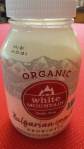
Paper wrapping on toilet paperGlass yogurt jar, and making my own yogurt.
On this Earth Week, can you find ways to reduce your plastic footprint? I am happy with my recent efforts to reduce plastic: Plastic wrapping on toilet paper is gone, milk for yogurt making comes from a reusable bottle, and I refill body lotion jars with scent-free lotion from my local food coop.
Refilling bottles with body lotion reduces lots of plastic!
Plastic is very harmful to our Earth, but it is also harmful to our health. Read about the seven types of plastic and which ones are the most harmful to our human health here. Also, a new study claims we are even inhaling microplastics. We need to become aware of the harm plastic is doing, and I hope you will start the effort to boycott plastic today.
Bring your own reusable bags.
Ideas from my county to reduce plastic. “There are many ways to avoid single-use items. Want a quick list? Pack your lunch in reusable containers. Forgo the straw in your drink. Bring your own mug to the coffee shop. Bring reusable bags, produce bags and containers to the grocery store. Support businesses that serve food on reusable dishes.” Hennepin County
Read about the ten companies that are flooding our planet with throw away plastic. They need to take responsibility for the harm they are doing!
April is Earth Month
April is a month of challenges. Challenges of 30 days of biking or running, 30 days of plastic-free, 30 days of watching birds. 30 days of taking a daily picture, or thirty days of writing a poem for poetry month. The thirty-day challenges are endless.
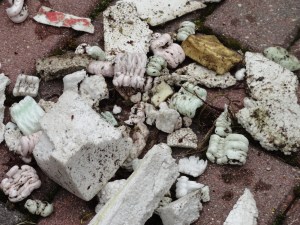
My April challenge is 30 days of picking up trash. The snow has melted and the swollen rivers are subsiding but our beautiful Earth is covered with litter. It is embarrassing to see so much trash and blowing pieces of plastic. Everyday on my walk in April I carry a bag and collect litter, and actually I started my challenge a few days ago. This year I’m looking extra hard for the small plastic scraps like cigarette butts and Styrofoam pieces. This challenge is easier than some of the other 30 day challenges, but this challenge gets you outside, and it really makes a difference for our Earth. Please join me.
April 22 is Earth Day and April 26 is Arbor Day. Please make everyday April day Earth Day.
Have a fun Earth Month, and remember to enjoy our beautiful our Earth.
Get your 30 days of Active April calendar from Actions For Happiness here.
We love lakes, we love rivers and streams, and we love our oceans. March 22, is World Water Day. Clean water is a human right and should be available to every human being. Unfortunately, some of us have too much water, but many don’t have enough water, and the water they have is polluted. I am lucky to live in a place with lots of water, but it is a struggle to keep it clean. Many live with polluted wells and water from farm pollution. Why they have allowed farm run-off to pollute their wells is beyond me??? The farming industry has gotten away with polluting our water, and for some reason they now think they have that right. Where I live, farm run-off is the number one cause for the pollution of our water ways and ground water. Lack of regulation on agriculture can harm water resources when raising pork, beef and other livestock, along with sugar beets, corn and soy beans.
There are industrial cities like Houston, Texas, that allow industry to pollute air and water. Stronger regulation is needed to stop water and air pollution, but that is not happening in the United States anytime soon.
Agriculture and industry are major water pollutants, but so is plastic. As the spring flooding overflows the banks of creeks and rivers the winter trash is getting washed off the land, into our waterways, then into our oceans. With some personal responsibility we all can make a difference with our behavior to water.
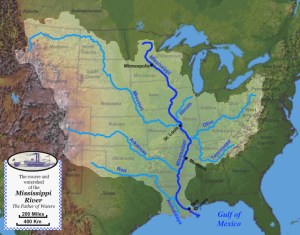
The Mississippi River water shed is flooding carrying plastic and farm pollution to the gulf of Mexico. Graphic by Jon PlatekWhat can we do to keep our water clean?
On this World Water Day weekend I challenge you to go meatless, I challenge you to go plastic-free, and I challenge you to get outside and pick up trash.
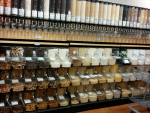
Weigh your container before you fill with bulk items
Shopping at a grocery store or drug store is one of the most frustrating things I do, everything is packaged in plastic. Luckily, I have some excellent food coops a bus ride away from my house. I save containers and refill them with bulk items. A local meat department in a local grocery store will even refill my containers with meat purchases, which even my coops won’t refill. Science 101 has one of the best articles on reducing plastic that I have ever read, and I learned things from them. Start with a few items to refill. When you get the idea and feel comfortable move to add more plastic-free items. Here is Science 101’s article, on easy ways to reduce plastic. Refilling containers can be fun and satisfying.
Nice screw-top glass bottles that I can reuse forever! Buy products in glass, and reusable glass containers are a win-win!
Only 9 percent of the plastic every produced has been recycled, and no one knows how many hundreds of years it will pollute our environment. It breaks into tiny pieces, ends up in our water sources, is in our food and kills wildlife! Why is plastic harmful? Read here.
Coops will help you get started refilling containers, and I am willing to help if you ask. Let’s all work to reduce our plastic foot-print.
Yikes, it’s cold where I live! The high today is -15 F, and with the wind it feels colder. Please don’t feel sorry for us. It is just another extreme, and we are all living in a time of extremes. We have extreme droughts, extreme rains and storms, and extreme heat. Minnesota might be back to 40 degrees in just a few days, a 70 degree high temperature change in a few days! Yes, extreme!
Most of us would rather be here in the cold than in the extreme heat and drought Australia is experiencing. While our cold weather is a short blip, they are experiencing a long-term extreme. Read about it here.
The sun shines, and frost on the window.
There are some advantages to a short cold snap like this. We can hope that some of the invasive bugs that are unchecked because of our warmer winters will be stopped or slowed down. The cold will completely freeze over the lakes which make them safer for winter activities, and can also lessen summer algae. My favorite thing about the cold is that the sun often shines making for beautiful bright days.
Polar Bear weather in the mid-north of the United States
Is this part of climate change? Why does this Arctic air escape the Arctic? The Arctic has warmed faster than the 1.8 degrees the Earth has recently warmed. This warming has weakened the jet stream winds that would normally stay north, but this climate warming has caused these winds to seep south. Our warming planet has confused the jet stream causing them to rush where they normally don’t blow, bringing the Arctic winter cold with them. The extreme heat in Australia is a more serious problem that isn’t a passing scenario like our short-lived northern cold. Yes, our changing climate is real and we are experiencing it every day.
For many of us the past few days have been sad and disappointing. We so want decision makers that we can trust, and who see a vision of justice and respect for all. There is much work to do so we have to jump out of our sadness and work for a better world. Our world still depends on how we each live our life everyday.
The next month is crucial to talk to those running for elected office. Candidates will be everywhere, at your door, at community events and hopefully having debates. Tell them what you expect and what is important so get your one minute speech ready. Take action on the issues that matter to you.
Candidates for office need to hear us say how important clean water and clean air are to us. They need to hear us say that we need plastic bag and Styrofoam bans. They need to hear us say we need easier recycling and organic compost. They need to hear us say it needs to be easier for everyone to vote. They need to hear us say there are too many guns on the street, and of course women’s health care and women’s right to choose. What is important to you? What is your one minute speech? The quality of our world still depends on how we each live our lives. Get out there make things happen: Vote and get others to vote, be healthy and stop using chemicals, pick up trash, and everyday work for zero waste. Our world depends on how we each live our life and there are many people out there doing magnificent things.
“TO BE HOPEFUL in bad times is based on the fact that human history is a history not only of cruelty, but also of compassion, sacrifice, …courage, kindness. If we see only the worst, it destroys our capacity to do something. If we remember those times and places—and there are so many—where people have behaved magnificently, this gives us the energy to act, and at least the possibility of sending this spinning top of a world in a different direction. And if we do act, in however small a way, we don’t have to wait for some grand utopian future. To live now as we think human beings should live, in defiance of all that is bad around us, is itself a marvelous victory.” –Howard Zinn
Plastic lasts more than a lifetime! Humans have created 9 billion tons of plastic since 1950 and most of this plastic still exists on earth. Only 9 percent has been recycled, and 11 percent incinerated. That leaves much of the plastic ever produced floating around in our waterways, poisoning fish, or releasing chemicals in landfills. As citizens of this planet we should be doing everything we can to reduce the amount of plastic we use.
The PBS NewsHour is doing an interesting series on plastic this week. I hope you will watch. See below:
We need some good news, and thoughts of what is possible!
After a summer of hot weather, wildfires, and now hurricane season, some positive thinking energy is needed. This a collection of people, businesses and governments working to do good for our Earth. The following good news stories caught my eye:
I am going to start with two stories from France that were surprising.
A theme park has trained crows to pick up trash, especially cigarette butts. France also has a creative idea to put a tax on packaging that can’t be recycled. It would better if it was a tax on materials that don’t biodegrade, but any kind of tax is a great motivator, and a worthwhile education tool!
Also, in the European Union, the Greek Island of Tilos is going to be the first in the Mediterranean to power itself entirely with wind and solar. Read at renewable energy. And in Eastern Europe, Estonia is offering free public transport nationwide.
And good news in the United States, a non-profit in Durham North Carolina has started a program to use reusable containers for take-out. It is inspiring that Anchorage has banned plastic bags and Kroger stores say they are going to start phasing out single-use plastic bags. Like plastic bags, balloons cause litter and harm wildlife. Think twice before you use balloons, and read what is happening at balloons . Also, very good news, a judge has ruled that the Trump administration can’t change an Obama clean water rule
Good news from the Nature Conservancy: Inspiring stories of climate progress across the globe are a sign of what’s possible. http://bit.ly/2w6ozCt
“Too often leaders believe protecting nature … is at the expense of the economy or human well-being. I couldn’t disagree more strongly. We’ve made great progress quantifying what you can achieve by investing in nature.”











 Health4earth